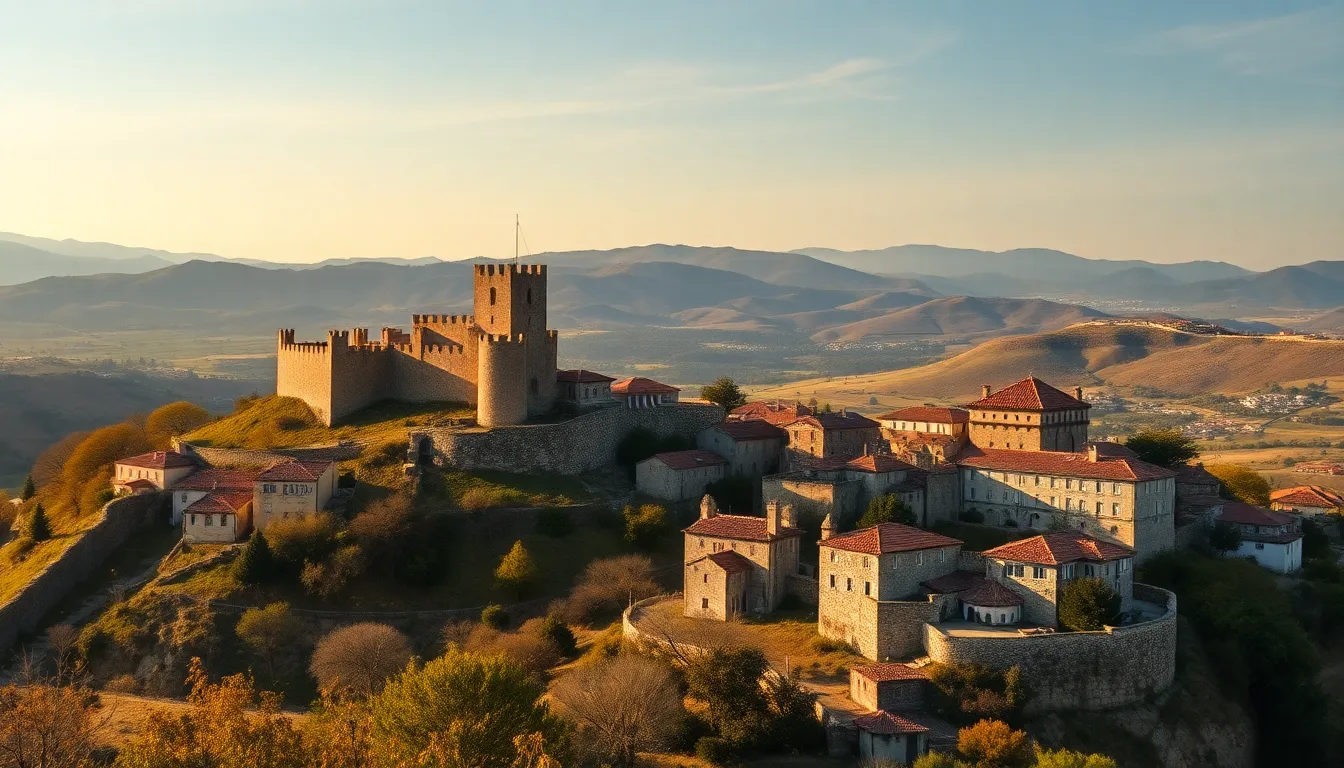
I have stood in a lot of meaningful places with groups over the years. Belmonte still ranks near the top, and it is not because of any grand monument. It is because of what happened in the ordinary stone houses of a small highland town, quietly, for five hundred years.
Belmonte is where a community of crypto-Jews kept their faith alive in secret from the forced conversion of 1497 until the twentieth century. Not for a generation. Not for a century. For five hundred years, behind closed shutters, mothers passing prayers to daughters, the candles lit inside cupboards so no light escaped to the street. When a Polish mining engineer rediscovered them in the 1910s and told them there were other Jews in the world, many of them did not believe him. They thought they were the last Jews on earth.
That story is the reason Belmonte exists on a faith itinerary, and the reason I give the surrounding Beira Interior region a proper place in any serious Portugal trip rather than rushing through it. Let me explain both.
The wider national picture is in our Portugal heritage travel guide. This guide is about the highland interior.
Understanding the Beira Interior
The Beira Interior is the highland region of central-eastern Portugal, up against the Spanish border, anchored by the city of Guarda and dotted with old stone towns: Belmonte, Trancoso, Castelo de Vide and others further south. It is high, granite country, with cold winters and a feeling of remoteness that the coast does not have.
That remoteness is exactly why it matters. After 1497, the crypto-Jewish families who wanted to keep their faith alive needed distance from the centers of Inquisition power. The interior gave them that. These hill towns, far from Lisbon, far from the ports, became the places where hidden Judaism survived longest. The region’s isolation, which kept it poor and overlooked for centuries, is the same isolation that preserved its secret communities. You cannot understand Portuguese crypto-Jewish history without standing in this landscape.
For a faith group, the Beira Interior is also a change of pace and scenery. After the cities and the great monuments, you climb into a quieter, older Portugal. Many of my travelers find this the most moving stretch of the whole trip, precisely because it is the least polished.
Belmonte: The Heart of the Story
Belmonte is a small hilltop town with a castle, a tangle of old streets, and an extraordinary recent history. After the rediscovery of its hidden community in the early twentieth century, the families slowly, cautiously, returned to open Jewish practice over the following decades. In 1996 they consecrated a new synagogue, Bet Eliahu, the first openly built in the town since the medieval period. Belmonte today has a living, practicing Jewish community, descendants of those who never let go.
This is what makes Belmonte unlike any other Jewish heritage site I know. It is not a ruin or a museum of an absent people. It is a continuous thread that was never fully cut. When you visit, you are not only learning history; you are in a place where that history is still breathing.
The Bet Eliahu Synagogue and the Jewish Museum
The Bet Eliahu synagogue, consecrated in 1996, is the spiritual center of the modern community. For groups, a respectful visit, and where possible a connection with the community, is the emotional core of a Belmonte stop. I always treat this carefully: this is a living congregation, not an attraction, and we visit as guests. Our Bet Eliahu synagogue guide covers what to expect.
The town also holds the Jewish Museum of Belmonte, the first of its kind in Portugal, which tells the story of the crypto-Jews and displays the objects and customs of the hidden tradition. It is the right place to begin a Belmonte visit, because it gives a group the context they need before meeting the living community. Our Jewish Museum of Belmonte guide and the broader Belmonte crypto-Jewish community guide go deeper into both.
I tell every group leader the same thing about Belmonte: do not rush it. This is not a thirty-minute photo stop. Give it the better part of a day, let the museum set the context, let the synagogue land in silence, and the town will give your community something it will not forget.
Guarda, Trancoso, and the Wider Region
Belmonte is the heart, but it does not stand alone. The Beira Interior holds a constellation of heritage towns worth weaving into a route.
Guarda, the regional capital and the highest city in Portugal, had a significant medieval Jewish community and preserves traces of its old quarter, along with a fortress cathedral that anchors the Christian heritage of the highlands. Our Jewish heritage of Guarda guide covers it.
Trancoso, a walled town a short distance north, is one of the most rewarding crypto-Jewish sites in the country. Here a knowledgeable guide can show you the doorways where converso families carved hidden symbols, the marks of a community signaling to itself in plain sight. Our Trancoso Jewish heritage guide walks through it.
Further south, beyond the immediate highlands, the lovely town of Castelo de Vide preserves one of the best-kept medieval Jewish quarters in Portugal, with its old synagogue and narrow lanes. It often joins an interior route as the journey turns back toward the south. See our Castelo de Vide Jewish quarter guide.
Together these towns form the spine of the Rede de Juderias, the network of Portuguese Jewish quarters, and the Beira Interior holds its richest stretch. You can read about the whole network in our Rede de Juderias guide.
How to Travel the Beira Interior with a Group
This region rewards a guide who knows it, more than almost anywhere else in Portugal. These are not towns with slick visitor centers and audio guides. The carved doorways in Trancoso, the customs of the Belmonte community, the traces of the old quarter in Guarda: most of this is invisible without someone who can read it for you. Heritage Tours works with local operators throughout the Portuguese interior who know these sites and the families connected to them.
Practically, I give the Beira Interior at least two days within a Portugal itinerary, more if the group is deeply focused on Jewish heritage. Belmonte deserves the better part of a day on its own. Trancoso and Guarda each warrant a half day. Distances between towns are short but the roads are mountain roads, so build in a little extra time.
The interior is high country, so timing matters: winters are genuinely cold, and the comfortable windows are spring and fall. For Jewish groups, fall after the High Holidays is a natural season. Our best time to visit Portugal guide covers the calendar in detail.
For groups of fifteen or more, the group leader travels free with Heritage Tours. Because the interior is usually one leg of a fuller Portugal route, that threshold is easy to reach, and it changes the planning math for the congregation organizing the trip. The 9-day Portugal heritage itinerary shows how the interior connects to the cities, and the Portugal destination page is a good place to start.
FAQ: Belmonte and the Beira Interior
What is Belmonte known for?
Belmonte is a small highland town where a community of crypto-Jews kept their faith alive in secret for roughly five hundred years, from the forced conversion of 1497 until they were rediscovered in the early twentieth century. The community returned to open Jewish practice over the following decades and consecrated a new synagogue, Bet Eliahu, in 1996. Belmonte today has a living, practicing Jewish community, which makes it unlike any other Jewish heritage site in Portugal.
What is the Beira Interior?
The Beira Interior is the highland region of central-eastern Portugal, near the Spanish border, anchored by the city of Guarda and dotted with old stone towns including Belmonte and Trancoso. Its remoteness is exactly why it matters: after 1497, the distance from the centers of Inquisition power made these hill towns the places where hidden Judaism survived longest.
What is there to see in Belmonte?
The main sites are the Bet Eliahu synagogue, consecrated in 1996 and the center of the living community, and the Jewish Museum of Belmonte, the first of its kind in Portugal, which tells the story of the crypto-Jews. The town also has a medieval castle and old streets. A respectful visit, beginning with the museum for context and treating the synagogue as a living congregation rather than an attraction, is the heart of a Belmonte stop.
Which other towns should I visit in the region?
Guarda, the highest city in Portugal, preserves traces of its medieval Jewish quarter and a fortress cathedral. Trancoso, a walled town nearby, has doorways where converso families carved hidden symbols. Castelo de Vide, further south, preserves one of the best medieval Jewish quarters in the country. Together these form the richest stretch of the Rede de Juderias, the network of Portuguese Jewish quarters.
Do I need a specialist guide for the interior?
Yes, more than almost anywhere else in Portugal. Much of the heritage here, the carved doorways, the customs of the Belmonte community, the traces of old quarters, is invisible without a guide who knows the region and its families. Heritage Tours works with local operators throughout the Portuguese interior who know these sites well.
If your community’s reason for coming to Portugal is the crypto-Jewish story, the Beira Interior is where that story lives, and Belmonte is its heart. I would consider it a privilege to help you plan that part of the journey well, because it deserves to be done with care.
Contact us whenever you are ready to talk it through.