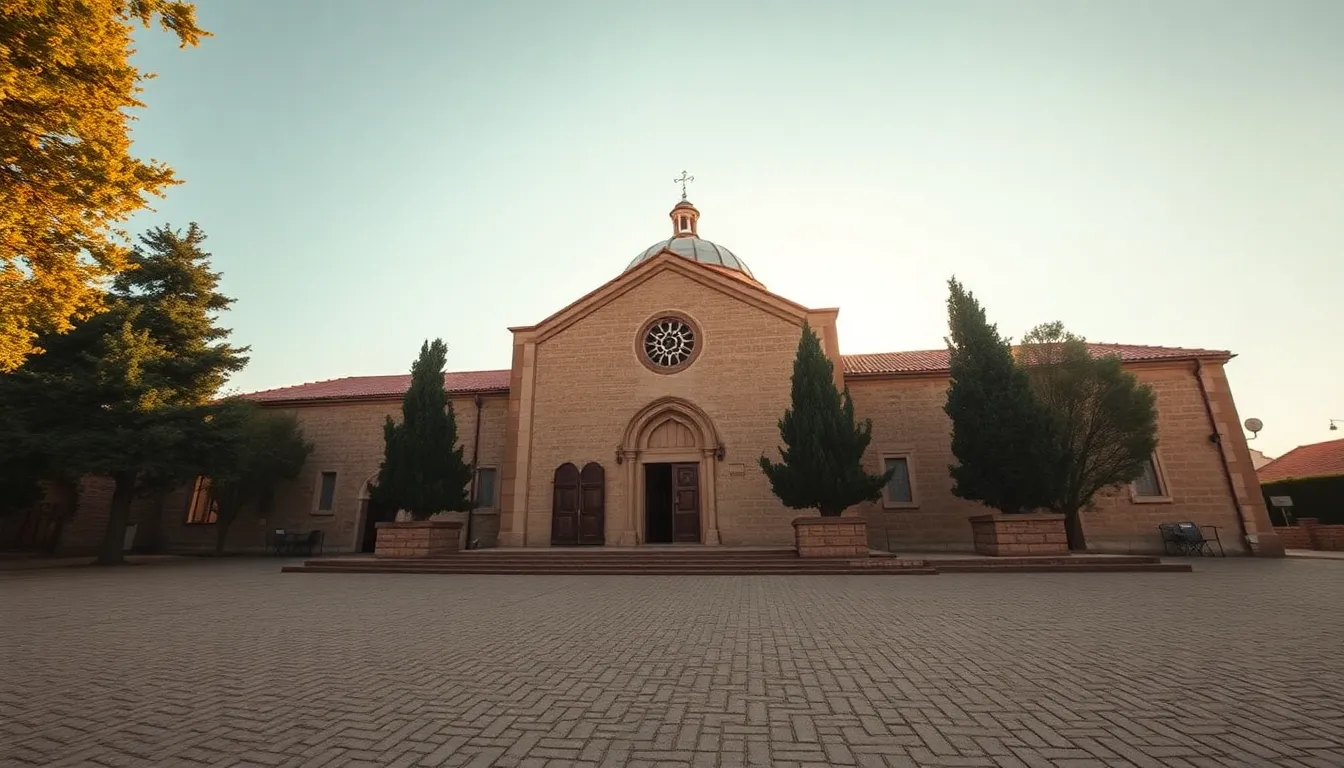
There is a building in Belmonte that does not look like much from the street. Stone, plain, modern, tucked into the old part of the town. If you did not know what it was, you would walk right past it. But when I bring a group inside the Bet Eliahu Synagogue and explain what its existence actually means, the room goes quiet. Because this is a synagogue that, for five hundred years, could not exist. Its doors opening in 1996 was the public end of one of the longest acts of hidden faith in history.
I want to tell you about this synagogue, because the story of the building is the story of a community coming up for air.
Why There Was No Synagogue for Five Hundred Years
To understand why a synagogue opening in 1996 is such a profound moment, you have to remember what came before it.
In 1497, King Manuel I forced every Jew in Portugal to convert to Christianity. He closed the ports so they could not leave and baptized their children against their will. Public Jewish life ended overnight. There were no synagogues because there were officially no Jews. Anyone caught practicing Judaism risked the Inquisition.
The families of Belmonte survived by going underground. They kept Shabbat in closed rooms, observed Passover under the cover of spring cleaning, and passed their prayers from mother to daughter in whispered Portuguese. They could not gather in a synagogue. They could not pray out loud. A building like Bet Eliahu was unthinkable. For twenty generations, the most a Belmonte Jew could hope for was a candle lit where no one could see it.
So when you stand inside Bet Eliahu and the light comes through the windows, understand what you are looking at. This is not just a place of worship. It is the visible answer to five centuries of forced silence.
The Return to Open Practice
The synagogue did not appear on its own. It came at the end of a long, careful process of the community deciding to step back into the open.
After the rediscovery of Belmonte in the early twentieth century, the crypto-Jewish families faced a question their ancestors never could: now that the world knows we are here, and now that we are free to practice openly, will we? It was not a simple decision. The hidden tradition they had preserved was distinct from mainstream Judaism, shaped by centuries of isolation. Returning meant learning, formalizing, in many cases undergoing a formal return to Judaism with the help of rabbis from outside.
Over the decades of the twentieth century, more and more of the community made that return. They began to study Hebrew, to learn the liturgy their ancestors had lost, to rebuild a Jewish life that could be lived in daylight. The opening of the Bet Eliahu Synagogue in 1996 was the moment that journey became permanent and public. After five hundred years, Belmonte had a place where Jews gathered openly to pray.
I find it hard to overstate what that took. These families could have let the secret die. Assimilation would have been easier. Instead they chose to come forward, to claim openly the identity their ancestors guarded at terrible risk, and to build a house of prayer where one had been impossible for five centuries.
What You See Inside
Bet Eliahu is a working synagogue, not a museum, and that matters to how you experience it. The interior is simple and dignified. There is an ark holding the Torah scrolls, a bimah, seating for the congregation. It is the synagogue of a small community, intimate in scale, made for a town rather than a city.
What gives the space its weight is not architecture. It is knowing who prays here. The congregation includes descendants of the very families who hid their Judaism for generations. The Torah is read aloud in a town where, for five hundred years, reading Hebrew aloud could have destroyed a family. When my groups understand that, the plainness of the room stops mattering. The plainness is almost the point. This is not a monument built to impress. It is a home built to belong.
Because it is an active synagogue, visiting respectfully means following the community’s guidance on dress, photography, and timing. A guide with relationships in Belmonte will know when the space is available and how to enter it with the care it deserves. This is not a tourist attraction. It is a community’s prayer space, opened to visitors as an act of generosity.
How the Synagogue Connects to the Rest of Belmonte
The synagogue is one part of a larger story you can experience across the town. Just nearby, the Jewish Museum of Belmonte lays out the full history of the crypto-Jewish community, from the forced conversion through the centuries of secrecy to the return. Seeing the two together is the right way to do it. The museum explains the hiding. The synagogue shows the coming out.
And both sit inside the broader history of Belmonte’s crypto-Jewish community, which is itself the centerpiece of Jewish heritage in Portugal. I always encourage groups to move through these in order: understand the community, walk through the museum, then stand in the synagogue. By the time you reach Bet Eliahu, you feel the full distance the community traveled to get there.
Visiting Bet Eliahu With a Group
Belmonte sits in the interior of Portugal, a few hours from Lisbon, and most groups visit as part of a wider journey through the country. The synagogue, the museum, and a walk through the old streets together make for the better part of a day.
Because Bet Eliahu is a living synagogue serving a small community, access depends on coordination. This is where a guide with genuine local relationships earns their place. The difference between viewing a building and being welcomed into a community’s prayer space comes down to those relationships and the respect you bring.
We plan these visits with local guides who know Belmonte and understand what it means to a Jewish group to stand in a synagogue that took five hundred years to build. For groups of fifteen or more, the group leader travels free, which helps when you are working out the trip with your congregation. You can see how a full Portugal journey comes together on our Portugal destination page or learn how we run group trips through our group heritage tours.
FAQ: The Bet Eliahu Synagogue of Belmonte
When was the Bet Eliahu Synagogue built?
The Bet Eliahu Synagogue opened in 1996. It marked the public return of Belmonte’s crypto-Jewish community to open Jewish practice after roughly five hundred years during which the families kept their faith entirely in secret. It was the first openly functioning synagogue in the town since the forced conversion of 1497.
Why is the 1996 synagogue so significant?
Because for five centuries a synagogue in Belmonte was impossible. After the 1497 forced conversion, public Jewish life in Portugal ended, and the Belmonte families survived only by practicing in hidden rooms. The opening of Bet Eliahu meant that, for the first time in twenty generations, descendants of those families could gather and pray openly. The building is the visible proof of a community that refused to disappear.
Can visitors enter the synagogue?
Yes, with respect and coordination. Bet Eliahu is an active synagogue serving the Belmonte community, not a museum. Visiting means following the community’s guidance on dress, photography, and timing, ideally with a guide who has local relationships and can arrange a respectful visit. Entering is a privilege the community extends, not a ticketed attraction.
What is inside the synagogue?
The interior is simple and dignified: an ark holding the Torah scrolls, a bimah, and seating for the congregation. It is intimate in scale, built for a small community rather than a large city. Its power comes not from architecture but from the knowledge that the people who pray here descend from families who hid their Judaism for five hundred years.
How should I include the synagogue in a Belmonte visit?
Pair it with the Jewish Museum of Belmonte and a walk through the old town. The museum explains the centuries of secrecy, and the synagogue shows the return to open practice, so seeing both together gives the full arc. A meaningful Belmonte visit takes most of a day and is best arranged with a guide who can coordinate access to the synagogue.
If your community is drawn to this kind of story, faith that endured in secret and then stepped back into the light, I would love to help you plan a visit that does it justice. Standing in Bet Eliahu with a group that understands what it represents is one of the most moving things I do in this work.
Contact us whenever you are ready to begin.