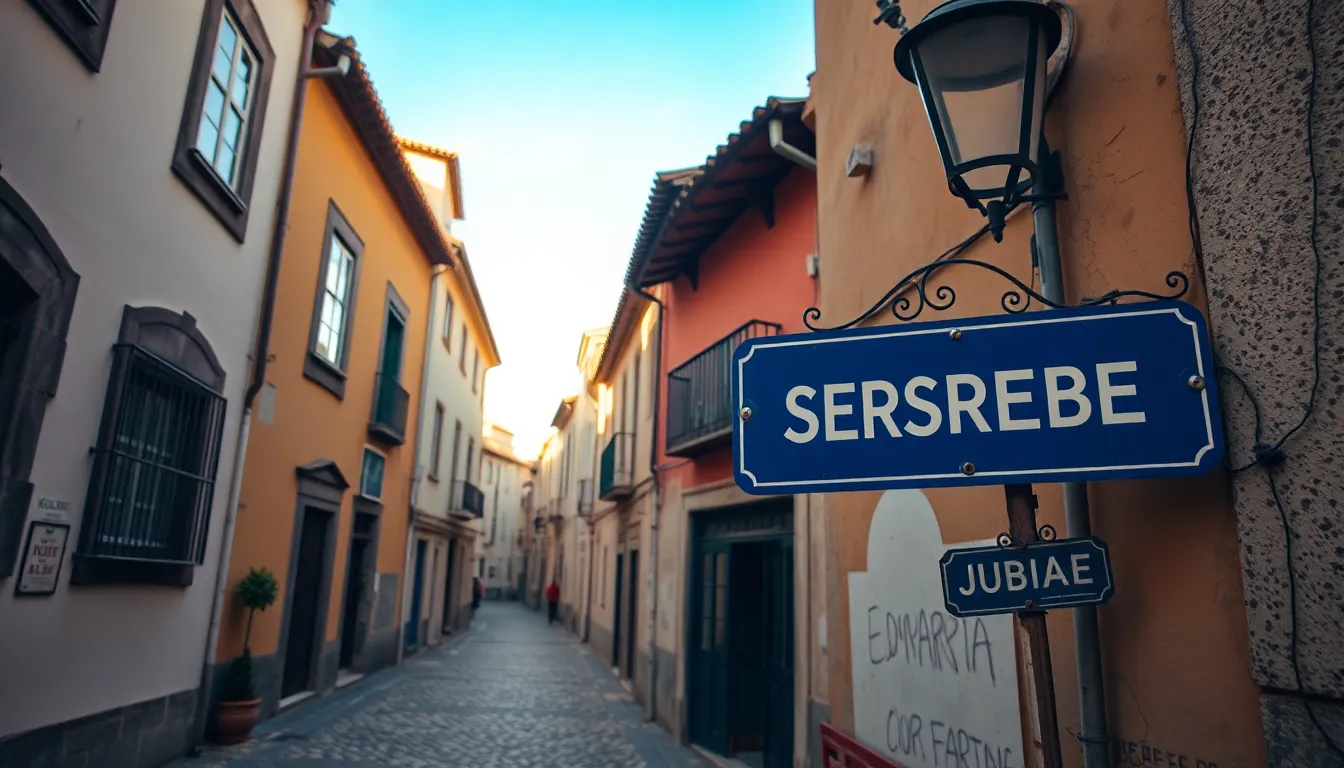
A rabbi I worked with a few years ago said something at the end of a Portugal trip that stuck with me. “I came thinking we were visiting a few old Jewish quarters,” he said. “I’m leaving understanding we visited one community that happened to live in many towns.” That is exactly the shift the Rede de Juderias is built to create, and it is why I want group leaders to understand it before they plan a trip.
Most travelers arrive in Portugal thinking of the Jewish sites as a list: Belmonte, Tomar, Castelo de Vide, Guarda, Trancoso. Each is real and worth its own day. But the Rede de Juderias asks you to see them differently, as a network, a single woven story stretched across the map. Understanding the network changes how you build the itinerary and, more importantly, what your people take home from it.
What the Rede de Juderias Is
The name translates roughly as the Network of Jewish Quarters. It is an association of Portuguese towns and cities that share a documented Jewish history and have committed to preserving, marking, and interpreting their Jewish heritage. The idea borrows from a model that exists across Spain as well, where a similar network links cities with significant Sephardic pasts.
In practice, membership means a town has done the work: identified its historic Judiaria, marked it for visitors, often installed interpretation, and tied itself into a shared route that travelers can follow from place to place. Instead of each town presenting its Jewish past in isolation, the network presents them together, as chapters of one history that played out across the whole country.
For a heritage group, this matters in a concrete way. When a town is part of the network, you can usually count on finding the quarter marked, the story interpreted, and a local commitment to keeping the memory alive. It signals that the town takes its Jewish heritage seriously rather than treating it as a footnote.
Why a Network and Not a Single Site
The Jewish story in Portugal does not live in one place, and that is the point.
Lisbon holds the scale of the original community and the memory of what was lost in the great Judiaria and later the 1755 earthquake. Tomar holds the only intact pre-expulsion synagogue. Belmonte holds the astonishing story of crypto-Jews who kept their faith in secret for 500 years. Castelo de Vide holds one of the best-preserved medieval quarters, with its streets and doorways largely intact. Guarda and Trancoso hold the converso experience under the Inquisition in the highland interior.
No single town tells the whole story. You need the arc: a thriving public community, the forced conversions of 1497, the centuries of secret survival, the work of the Inquisition, and the modern recovery and return. The network exists because the history itself is distributed. To understand what happened to Jewish Portugal, you have to move across the country, and the Rede de Juderias is the thread that connects the stops.
This is why I push back gently when a group leader asks me to “just do the main Jewish site.” There is no main site. There is a route, and the route is the experience. Our Jewish heritage in Portugal overview lays out that full arc, town by town.
How Groups Tour the Network
A thoughtful Rede de Juderias itinerary usually runs 8 to 10 days and moves from the cities into the interior, following the shape of the history.
Most journeys begin in Lisbon, where a guide can walk the Alfama and the footprint of the old Judiaria, and where the scale of the lost community becomes real. From there, groups typically move north to Tomar for the intact synagogue and the Convent of Christ. Then the route turns into the interior highlands, the heart of the converso story: Belmonte for the crypto-Jewish community and its museum, Guarda for the highland quarter and its Inquisition history, Trancoso for the walled town and its heritage center. Castelo de Vide, further south near the border, anchors the Alentejo end of the route with its well-preserved quarter. Many itineraries finish in Porto, at the Kadoorie synagogue, the largest on the Iberian Peninsula, connecting the Sephardic story to the wartime rescue chapter of the 20th century.
What holds this together is not geography. It is the story. The towns are scattered across hundreds of kilometers, but the arc runs straight through all of them. A group that travels the network does not feel like it is hopping between unrelated stops. It feels like it is following one family’s history through the country that shaped it.
Our individual guides go deeper on the key interior stops: the Castelo de Vide quarter, the Jewish heritage of Guarda, and the walled town of Trancoso. Reading them together gives you a sense of how the network’s pieces fit.
Planning a Network Journey for a Congregation
There are a few practical things I want group leaders to know before they map a Rede de Juderias trip.
First, the interior is rural. The highland towns are connected by good roads but real distances, and the experience is unhurried by design. This is not a city-hopping trip with a museum every hour. It is a slower journey through small towns, which is exactly what the subject deserves but which you should set up your congregation to expect.
Second, the guide matters more than usual on this route. In several of these towns, the Jewish heritage is read in streets, doorways, and granite rather than behind glass. A network town will be marked and interpreted, but the difference between a good day and a great one is a guide who knows the families, the local readings, and where to pause. Our interior itineraries are built around exactly those local relationships.
Third, the network is large, and no group does all of it. Part of planning is choosing the chapters that matter most to your community. A congregation with Sephardic roots may want to weight the trip toward the towns where their family names appear in the records. A group focused on the crypto-Jewish story may center Belmonte and the interior. We build the route around your community’s reason for going.
For groups of 15 or more traveling with Heritage Tours, the group leader travels free, which makes the threshold for organizing a congregation’s trip far easier to reach. You can see how the full journey fits together on our Portugal destination page and learn how the group leader experience works on our group tours page.
FAQ: The Rede de Juderias of Portugal
What is the Rede de Juderias in Portugal?
The Rede de Juderias, or Network of Jewish Quarters, is an association of Portuguese towns and cities that share a documented Jewish history and have committed to preserving, marking, and interpreting their Jewish heritage. It links these towns into a shared heritage route that travelers can follow across the country, presenting the Jewish story of Portugal as one connected history rather than isolated sites.
Which towns are part of the Jewish quarter network?
The network includes towns and cities across Portugal with significant Jewish heritage, among them interior highland towns like Belmonte, Guarda, and Trancoso, the well-preserved quarter at Castelo de Vide, Tomar with its intact pre-expulsion synagogue, and larger cities. Each preserves and marks its historic Judiaria as part of the shared route.
How long does it take to tour the Rede de Juderias?
A thoughtful network itinerary usually runs 8 to 10 days, moving from Lisbon and Tomar into the interior highlands and often finishing in Porto. No group visits every town in the network. Part of planning is choosing the chapters that matter most to your community and building the route around them.
Why visit a network of towns instead of one Jewish site?
Because the Jewish story of Portugal is distributed across many places. No single town tells the whole arc, from a thriving public community through the forced conversions of 1497, the centuries of secret survival, the Inquisition, and the modern recovery. The network exists because the history itself is spread across the country, and following the route is what makes the full story land.
Do I need a guide to tour the Jewish quarter network?
A knowledgeable guide makes a major difference. In several network towns the Jewish heritage is read in streets, doorways, and stonework rather than behind glass. The towns are marked and interpreted, but a guide who knows the local history, the family records, and where to pause turns a good visit into a meaningful one. Our interior itineraries are built around these local relationships.
If you are starting to think about a journey across Portugal’s Jewish quarter network, I would be glad to help you shape the route around your community. Contact us whenever you are ready to begin.