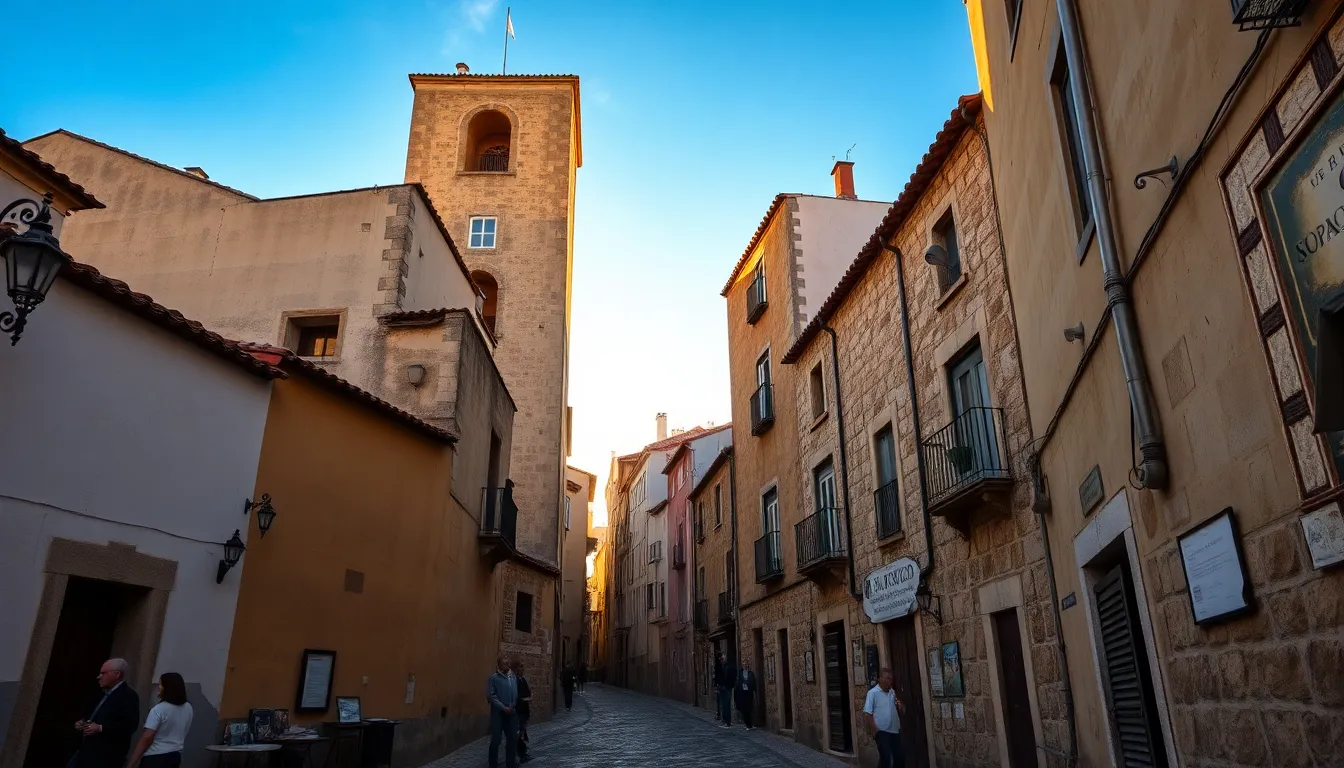
The first time I walked a group up the hill into the old Judiaria of Castelo de Vide, one of the women in the back went quiet. We were standing on a street barely wide enough for two people, granite houses pressing in on both sides, and she said something I have heard in different words from many travelers since: “It looks like nobody told the buildings to forget.”
That is the thing about Castelo de Vide. Most of Portugal’s medieval Jewish quarters were torn down, built over, or so altered by five centuries of change that you need a guide and a good imagination to see them. Here, you mostly just need to look. The streets, the doorways, the layout, much of it is still standing the way it stood before 1497. For a heritage group, that is rare, and it changes the kind of day you have.
Where Castelo de Vide Sits, and Why It Mattered
Castelo de Vide is a hill town in the Alentejo region, in the far east of Portugal, close to the Spanish border. That location is not an accident in the Jewish story. Towns near the frontier drew Jewish families for two reasons. They sat on trade routes between the two kingdoms, and they offered an escape route when the situation turned dangerous.
When Spain expelled its Jews in 1492, many crossed into Portugal looking for refuge, and border towns like this one absorbed some of them. For a few years, before Portugal’s own forced conversions of 1497, the Jewish community here grew. Castelo de Vide became one of the more significant Jewish centers in the interior, with a quarter that climbed the slope below the castle.
Walking it today, you can read the logic of the place. The quarter sits just downhill from the medieval castle, on the shadowed northern face of the hill. Jewish families lived close together, near the protection of the fortress but separate from the main Christian parishes. The streets are steep and narrow. The houses are tall and thin, sharing walls. This was a community built in close quarters, and the stone remembers it.
The Synagogue: The Oldest in Portugal
At the heart of the quarter sits a small building that the town presents as its medieval synagogue, generally dated to the 13th century, which would make it among the oldest synagogue structures in Portugal.
I want to be honest with groups about what the building is and is not. Centuries of reuse and reconstruction mean that not every stone you see is original, and historians debate some of the details. What is not in doubt is the location and the function. This was the religious center of the Jewish quarter, and the building has been carefully restored to interpret that history.
Inside, the space is intimate. There is a reconstructed area marking where the Torah ark would have stood, set into the eastern wall facing Jerusalem, and a section interpreting the role of the women’s gallery. The rooms are small, the ceilings low, the light filtered. Standing inside, you do not feel grandeur. You feel a working community space, a place where ordinary families gathered to pray within walking distance of their homes.
For a group, this is the natural place to pause and tell the larger story. I usually gather everyone in the main room and walk them through the arc: a public community, the forced conversions, the centuries of silence, and the slow work of recovery that brought this building back to memory. The compactness of the room makes that conversation land.
Reading the Doorways: The Converso Marks
The detail that stays with most of my travelers is not inside the synagogue. It is in the streets.
As you walk the Rua da Judiaria and the lanes around it, look at the stone door frames. Many of the medieval houses have tall, narrow Gothic doorways, and a number of them carry a second, smaller opening or a recessed niche in the door post. Local interpretation connects these to the mezuzah, the small parchment that Jewish families fix to their doorframes. Some guides and residents point to particular marks as the spaces where a mezuzah once sat, or where one was pried away.
I am careful here, because not every mark on every door is what tradition claims, and reputable historians urge caution. But the broader point holds and it is moving. This was a neighborhood where Jewish families marked their thresholds, and where, after 1497, those same families had to decide what to do with those marks. Some scraped them off. Some plastered over them. Some, quietly, left them. Walking a street where that decision was made house by house, door by door, is a different experience than reading about it.
I tell groups to slow down on these lanes. The quarter is not large. You can walk its main streets in twenty minutes. But it rewards the people who linger, who run a hand along a door frame, who stand in a doorway and look back down the hill the way a family would have.
The Fountain and the Shape of Daily Life
Below the quarter sits the Fonte da Vila, a graceful Renaissance fountain that served as a gathering point for the lower town. Water shaped daily life in a hill town, and the route between the Jewish quarter and the public fountain was part of the ordinary rhythm of the community: drawing water, meeting neighbors, carrying jugs back up the steep lanes.
I bring groups down to the fountain not because it is specifically Jewish, but because it grounds the human reality. These were not abstractions. They were families who carried water uphill every day, who knew their neighbors, who lived an ordinary life in an extraordinary time. Standing at the fountain and looking back up at the quarter helps people hold both at once.
How a Group Experiences Castelo de Vide
Castelo de Vide works beautifully as a half-day or full-day stop on a Jewish heritage itinerary through the Portuguese interior. It pairs naturally with other quarters in the region and with the broader story we trace across the country. If you are mapping the full journey, our Jewish heritage in Portugal guide lays out how the pieces connect, and the Rede de Juderias network explains how towns like this one are linked into a single heritage route.
The town itself is small and walkable, which suits a group. There is no long bus transfer between sites, no crowds to fight, no ticketing maze. You arrive, you walk uphill into the quarter, you spend unhurried time in the synagogue and the streets, and you leave having actually felt the place rather than checked it off.
For mixed-age groups, one practical note: the lanes are steep and cobbled. People with mobility concerns can manage the lower town and the synagogue area, but the highest streets near the castle are a real climb. We build the pace around the group, and a good local guide knows where to pause and where to turn back.
For groups of 15 or more traveling with Heritage Tours, the group leader travels free, which often makes the difference in bringing a congregation’s trip from idea to reality. You can see how the wider journey fits together on our Portugal destination page and learn how the leader experience works on our group tours page.
FAQ: Castelo de Vide Jewish Quarter
Where is the Castelo de Vide Jewish quarter located?
The Judiaria sits on the northern slope of the hill in Castelo de Vide, a town in Portugal’s Alentejo region near the Spanish border. The quarter climbs the hill just below the medieval castle, centered on the Rua da Judiaria, with the synagogue at its heart. The whole quarter is compact and walkable on foot.
How old is the synagogue in Castelo de Vide?
The town presents its synagogue as dating to roughly the 13th century, which would make it among the oldest synagogue structures in Portugal. Centuries of reuse mean not every element is original, and some details are debated by historians, but the building has been restored to interpret the religious life of the medieval Jewish community.
What are the converso door marks in Castelo de Vide?
Many medieval houses in the quarter have Gothic stone doorways, and some carry small recessed marks or niches in the door post. Local tradition connects these to the mezuzah, the parchment Jewish families fixed to their doorframes. After the forced conversions of 1497, families had to decide whether to remove these marks or leave them. The marks are a tangible trace of that moment, though not every mark is verified.
Is Castelo de Vide worth visiting for a Jewish heritage group?
Yes. It is one of the best-preserved medieval Jewish quarters in Portugal, with streets, doorways, and a synagogue that survive largely intact. The town is small, walkable, and uncrowded, which suits group travel. It works well as a half-day or full-day stop on a wider Portuguese interior itinerary alongside towns like Guarda and Trancoso.
How accessible is the Jewish quarter for older travelers?
The quarter is built on a steep hill with cobbled lanes. The lower town, the fountain, and the synagogue area are manageable for most travelers, but the highest streets near the castle involve a real climb. With a good guide and a pace set around the group, mixed-age groups visit comfortably, with planned places to pause or turn back.
If you are starting to picture this stop in your community’s journey through Portugal, I would be glad to talk it through with you. Contact us whenever you are ready to begin planning.