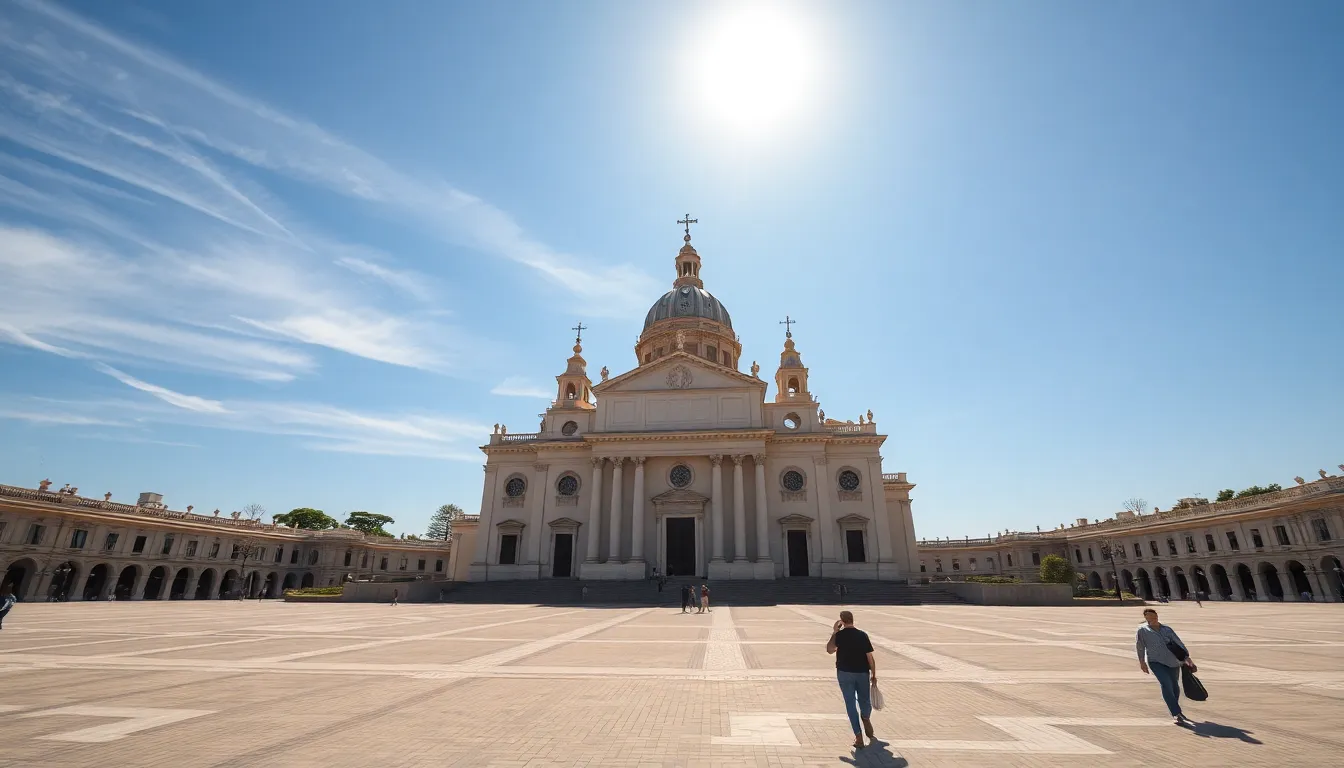
When a pastor tells me their congregation has been dreaming about Fatima for years, I tell them something they do not always expect. Fatima is the heart of a Christian trip to Portugal, but it is not the whole heart. This country holds a thousand years of Christian history, from the founding of the nation under Afonso Henriques to the great monasteries at Alcobaca and Batalha, to Braga, which calls itself the religious capital of Portugal and has the records to back it up.
This ten-day route gives Fatima the time it deserves and surrounds it with the wider Christian story of the country. It is built for a congregation group, mixed ages, mixed mobility, that wants its pilgrimage to be both a spiritual high point and a real education in the faith that shaped this land.
Days 1 and 2: Lisbon, the Capital and Saint Anthony’s City
Most groups arrive in Lisbon, and I give it two days. Begin at the Se de Lisboa, the cathedral, founded in the twelfth century right after the city was taken from Moorish rule. Nearby stands the Church of Saint Anthony, built over the house where Anthony of Padua, who the Portuguese still call Anthony of Lisbon, was born in 1195. For many groups, standing on that spot is the first surprise of the trip.
Day two belongs to Belem. The Jeronimos Monastery is one of the great Manueline churches in Europe, funded by the wealth of the Age of Exploration, and the church itself is a deeply moving space for a Christian group. The Tower of Belem sits a short walk away on the river. I like to end the day with a quiet hour back at the monastery before the afternoon crowds build.
Day 3: Tomar and the Convent of Christ
The drive north to Tomar takes about ninety minutes. Tomar is dominated by the Convent of Christ, the former headquarters of the Knights Templar and later the Order of Christ. The round church at its center, the Charola, was modeled on the Church of the Holy Sepulchre in Jerusalem, and standing inside it your group feels the direct line from the Crusades to Portuguese Christianity. It is a UNESCO World Heritage site, and you could spend half a day there without seeing all of it.
Days 4 and 5: Fatima, the Center of the Pilgrimage
From Tomar, Fatima is about an hour’s drive, and for most groups this is the most anticipated stretch of the entire trip. I give it two full days, because Fatima rushed is Fatima missed.
In 1917, three shepherd children reported a series of apparitions of the Virgin Mary. The final one, on October 13, 1917, was witnessed by an estimated 70,000 people who reported seeing the sun appear to move across the sky. The Church recognized the apparitions in 1930, and Fatima has become one of the most visited pilgrimage sites in the world.
The Sanctuary centers on the Capelinha das Aparicoes, the small Chapel of the Apparitions built on the exact spot. The Basilica of Our Lady of the Rosary holds the tombs of all three shepherd children, two of whom Pope Francis canonized in 2017. The vast Church of the Holy Trinity, finished in 2007, seats over 8,000.
What I tell every pastor is this: build the schedule so your group can attend Mass in the Capelinha and walk the plaza in the early morning before the crowds arrive. Many groups also choose to pray the Rosary on the candlelit procession in the evening. With two days you can do both and still leave room for the group to simply be present. Fatima carries enough weight that it can anchor a whole trip of its own, which the Fatima pilgrimage itinerary is built around.
Day 6: Alcobaca and Batalha, the Two Great Monasteries
West of Fatima sit two of the most important Gothic monasteries in Europe, and a single day can take in both. The Monastery of Alcobaca, founded by the Cistercians in the twelfth century, is austere and immense, and it holds the tragic tombs of King Pedro and Ines de Castro, placed foot to foot so that on the day of resurrection the first thing each will see is the other.
A short drive away, the Monastery of Batalha was built to honor the 1385 victory at Aljubarrota that secured Portuguese independence. Its Unfinished Chapels, open to the sky, are among the most striking spaces in the country. Both are UNESCO sites, and together they tell the story of how faith and nationhood were bound together in medieval Portugal.
Day 7: Coimbra, Faith and Learning
The drive to Coimbra takes about an hour. Coimbra was Portugal’s first capital and is home to one of the oldest universities in Europe, founded in 1290. The Old Cathedral, the Se Velha, is a fortress-like Romanesque church from the twelfth century. The Monastery of Santa Cruz holds the tombs of Portugal’s first two kings. For a Christian group, Coimbra shows how the life of the church and the life of the mind grew up together in Portugal.
Days 8 and 9: Braga, the Religious Capital, and Bom Jesus
Braga is about two hours north, and I give it two days because it earns them. Braga is one of the oldest Christian cities in the world, with a diocese dating to the third century. Its cathedral, the Se de Braga, is the oldest in Portugal.
Just outside the city stands Bom Jesus do Monte, a baroque pilgrimage sanctuary reached by a monumental zigzag stairway lined with chapels and fountains. Pilgrims have climbed those steps on their knees for centuries. Your group can take the historic funicular up and walk down, or climb as far as they are able. The view from the top, with the stairway falling away below, is one of the images people carry home from Portugal.
The second day allows time for nearby Guimaraes, the birthplace of the nation, where Afonso Henriques was born and the first kingdom took shape. Its medieval center is beautifully preserved.
Day 10: Porto and Departure
The drive south to Porto is under an hour. Porto’s cathedral, the Se do Porto, sits high over the old town, and the church of Sao Francisco nearby is famous for its astonishing gilded baroque interior. If your group flies home from Porto, the morning is enough to see both before the airport. If you return to Lisbon, the drive gives you time to reflect on ten days that began with Saint Anthony and ended in the religious capital of the country.
Groups that want to weave in Sephardic and rescue history alongside the Christian route often look at the 9-day heritage itinerary and our Portugal destination page for ideas.
Adapting the Trip for Your Congregation
Ten days gives real flexibility. If Fatima is the whole reason your people are coming, I can build a third day there and trim Coimbra to a stop. If your group is drawn to the monasteries and the architecture, I can add a half day at each. The route is a framework, and we shape it around what your congregation most wants to encounter.
With 15 or more participants, the group leader travels free, which changes the planning conversation with your church and lets the pastor focus on shepherding the group rather than managing the budget. You can see how that works on our group heritage tours page.
FAQ: Planning a Christian Heritage Tour of Portugal
How many days do I need to see Fatima and the rest of Christian Portugal?
Ten days is a comfortable amount of time to give Fatima two full days and still see Tomar, the great monasteries at Alcobaca and Batalha, Coimbra, and Braga in the north. If you only have time for Fatima and the central region, a shorter trip works, but ten days is what lets the pilgrimage breathe inside a fuller picture of Portuguese Christianity.
How much time should we spend at Fatima itself?
I recommend two full days. One day is rarely enough to attend Mass in the Capelinha, walk the plaza in the quiet of early morning, join an evening candlelit procession, and still have time to sit with the experience. Groups that allot only an afternoon almost always wish they had stayed longer.
Is Braga worth the drive north?
Yes. Braga is one of the oldest Christian cities in the world and the religious capital of Portugal, with the country’s oldest cathedral. Bom Jesus do Monte just outside the city is one of the most striking pilgrimage sites in Europe. For a Christian heritage group, skipping Braga means skipping the deepest roots of the faith in this country.
Can this trip work for an older congregation group?
It can, with planning. The monastery and cathedral visits are mostly flat walking, and at Bom Jesus the funicular removes the climb for anyone who needs it. We build in rest, keep drives reasonable, and pace Fatima gently. Tell us about your group’s mobility when we plan, and we will shape the days around it.
When should a church group book a Portugal pilgrimage?
Eight to twelve months ahead is comfortable for a group of fifteen or more. If you want to travel during a major Marian feast or around Easter, when Fatima is busiest, start earlier, closer to twelve to eighteen months, so you can secure hotel blocks near the sanctuary and build your group with enough lead time.
If your congregation has been waiting for the right moment to make this pilgrimage, I would love to help you plan it well. The conversation usually starts with Fatima and grows from there. Contact us whenever you are ready.