How This Itinerary Was Built (What We Prioritized)
When I sit down with a rabbi or pastor to plan nine days in Portugal, the first thing I tell them is this: Portugal is not a country you can rush through and feel like you understood something. The coastal cities are beautiful, yes. But the real depth of this country is in the interior, in towns that most tourists never visit, where the stories of faith and survival are still being told by the people who lived them.
This itinerary was built around a specific idea. It moves from Lisbon, where the Sephardic expulsion of 1497 set everything in motion, through the medieval interior where Jewish families kept their traditions alive in secret for five centuries, and into Fatima and Porto, where Christian and Jewish heritage stand alongside each other in ways that few places in Europe can match.
Every stop earns its place here. If a site is on this list, it’s because it adds something to the story your group will carry home.
Days 1 and 2: Lisbon, Alfama, Belem, and the Memory of the Expulsion
Lisbon is where most groups arrive, and it deserves two full days. Not for the tourist highlights, though those are lovely, but because the city carries layers of history that set the context for everything your group will see afterward.
Start in the Alfama district, the oldest neighborhood in Lisbon. This is where the Jewish quarter once stood before the forced conversions of 1497. The streets are narrow and steep, and if your group walks them slowly, they’ll start to feel the age of this place. The memorial at the site of the 1506 Lisbon massacre is small and easy to miss, but it marks one of the darkest moments in Portuguese Jewish history, when thousands were killed in a three-day pogrom. Standing there with your group, reading the inscription aloud, changes how they understand the rest of the trip.
On your second day, visit Belem. The Tower of Belem and the Jeronimos Monastery are extraordinary examples of Manueline architecture, built during Portugal’s Age of Exploration. The monastery was funded in part by spice trade wealth, and the connection between exploration, faith, and empire is written into every carved stone. For Christian groups, the monastery’s church is a deeply moving space. For all groups, it raises questions worth discussing over dinner that evening.
Day 3: Tomar, the Synagogue That Survived Everything
The drive from Lisbon to Tomar takes about ninety minutes, and it’s worth every minute. Tomar is a small town dominated by the Convent of Christ, the former headquarters of the Knights Templar in Portugal. The convent is massive and layered, built over centuries by the Templars and then the Order of Christ. Your group could spend half a day there and still not see everything.
But the reason Tomar belongs in a heritage itinerary is on a quiet side street in the old town. The Synagogue of Tomar, built in the mid-fifteenth century, is the oldest surviving synagogue in Portugal. It was converted to other uses after the expulsion, serving at different times as a prison, a hay barn, and a warehouse. Today it has been restored and operates as a small museum. The building itself is modest, but the fact that it survived at all, through five centuries of being anything other than what it was built to be, tells your group something important about what endures.
Days 4 and 5: Belmonte, Five Hundred Years of Secret Faith
This is the emotional center of the itinerary, and I always recommend two full days here. Some group leaders ask me why a small town in the Portuguese interior needs two days. After the first visit, nobody asks that question again.
Belmonte is a hilltop town in the Beira Interior region. It is home to the most remarkable story of Jewish survival in Europe. When King Manuel I ordered all Jews to convert or leave in 1497, many officially converted but continued to practice Judaism in secret. In most places, that practice faded within a few generations. In Belmonte, it did not. Families passed down prayers, Shabbat observance, and dietary traditions in complete secrecy for approximately five hundred years, until the community was formally rediscovered in the twentieth century.
In 1996, the community built a synagogue. It is not a museum or a reconstruction. It is an active house of worship for the descendants of those crypto-Jewish families. Visiting it is not like visiting a heritage site. It is like stepping into the end of a story that began in 1497.
The second day allows your group to visit the Jewish Museum of Belmonte, walk the old streets where these families lived, and simply sit with what they have learned. I have seen groups, both Jewish and Christian, deeply moved by Belmonte. The story speaks to anyone who understands what it means to hold onto faith when the world tells you to let it go.
Getting to Belmonte requires planning. It is not on any major bus route, and the roads through the interior are slower than they look on a map. This is one of the places where working with an operator who has local relationships makes a real difference. Heritage Tours coordinates visits with the community in advance, because this is a living community, not a tourist attraction. They deserve that respect.
Day 6: Fatima, One of the World’s Great Pilgrimage Sites
From Belmonte, the drive to Fatima takes about two and a half hours. For Christian groups, this may be the most anticipated day of the entire trip.
Fatima is where, in 1917, three shepherd children reported a series of apparitions of the Virgin Mary. The final apparition, on October 13, 1917, was witnessed by an estimated 70,000 people who reported seeing the sun appear to move across the sky. The Catholic Church officially recognized the apparitions in 1930, and Fatima has since become one of the most visited pilgrimage sites in the world.
The Sanctuary of Our Lady of Fatima is centered on the Capelinha das Aparicoes, the small chapel built on the exact spot where the apparitions occurred. The Basilica of Our Lady of the Rosary holds the tombs of the three shepherd children, two of whom were canonized by Pope Francis. The newer Church of the Holy Trinity, completed in 2007, seats over 8,000.
What I always tell group leaders is this: Fatima is not a place to visit quickly. If your group can attend Mass in the Capelinha, if they can walk the plaza in the early morning before the crowds arrive, they will have an experience that goes beyond sightseeing. For many Christians, standing in Fatima is a defining moment of faith. Build the schedule to honor that.
For Jewish groups passing through Fatima as part of a broader heritage itinerary, the site offers an opportunity to witness the depth of Christian devotion in Portugal and to understand why this country carries faith so seriously in its national identity.
Days 7 and 8: Porto, Sephardic Networks, Rescue History, and the Kadoorie Synagogue
Porto is Portugal’s second city, and it has a Jewish story that is both ancient and remarkably recent.
Start at the Kadoorie Mekor Haim Synagogue, the largest synagogue on the Iberian Peninsula. Built in the 1930s with funding from the Kadoorie family of Hong Kong, it served as a lifeline for Jewish refugees fleeing Europe during World War II. The synagogue is still active and can be visited by arrangement.
The rescue story that every group should hear in Porto is that of Aristides de Sousa Mendes. In June 1940, Sousa Mendes was the Portuguese consul in Bordeaux, France. As Nazi forces advanced, thousands of refugees, many of them Jewish, crowded the consulate desperate for visas. The Portuguese government under Salazar had issued explicit orders to deny visas to refugees. Sousa Mendes ignored those orders. Over the course of a few days, he signed an estimated 30,000 visas, saving thousands of lives. He was stripped of his career, his pension, and his standing. He died in poverty in 1954. Portugal formally rehabilitated him in 1988, and in 2020 the Portuguese parliament voted to move his remains to the National Pantheon. It is one of the most important stories of moral courage in the twentieth century, and it happened here.
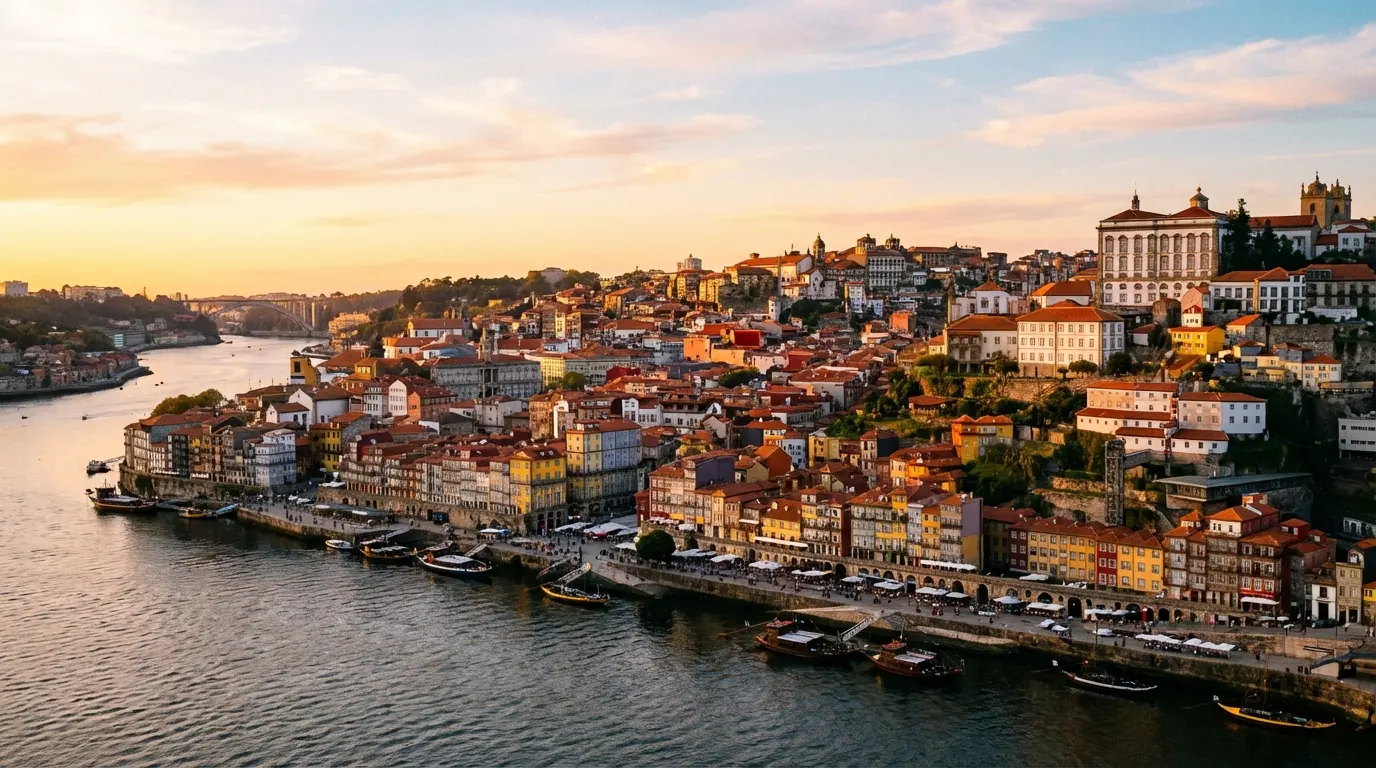
Your second day in Porto allows time for the historic Ribeira district, the port wine cellars in Vila Nova de Gaia, and the Clerigos Tower. Porto is a city that rewards walking, and your group will appreciate the slower pace after the emotional weight of the interior.
Day 9: Sintra, Departure, and What to Carry Home
If your group departs from Lisbon, the drive south from Porto passes through Sintra, one of Portugal’s most striking towns. The Pena Palace and the Moorish Castle sit above the town in a landscape that feels like it belongs in a different century. Sintra is lighter in tone than much of this itinerary, and that lightness is valuable. After nine days of deep heritage content, your group deserves a morning of beauty before heading to the airport.
The drive from Sintra to Lisbon’s airport takes about forty minutes.
What I have found, after years of leading groups through this route, is that the conversation on the bus ride to the airport is different from the one on the first day. People are quieter. They are thinking about Belmonte, about Fatima, about what Aristides de Sousa Mendes did in Bordeaux. A good heritage trip doesn’t just show people places. It gives them something to carry.
Adapting This Itinerary for Your Group
This nine-day route is a framework, not a fixed schedule. Some groups want to add a day in Coimbra, home to one of Europe’s oldest universities and a city with its own Sephardic history. Others want to spend a third day in Belmonte or add Castelo de Vide, another town with significant Jewish heritage sites.
Heritage Tours builds every itinerary around the group leader’s priorities. If you are a rabbi whose community is primarily interested in Jewish heritage, we can weight the itinerary toward the interior. If you are a pastor whose congregation has been planning a Fatima pilgrimage, we can build the schedule so that day is given the space it deserves.
With 15 or more participants, the group leader travels free. That changes the economics of the trip in a meaningful way, and it means the leader can focus on the spiritual experience rather than the budget.
If this route interests you, or if you want to discuss how to adapt it for your community, we would welcome that conversation. You can reach us through our Portugal destination page or contact us directly.
FAQ
What cities should I include in a Portugal heritage itinerary?
A heritage-focused itinerary should include Lisbon for its expulsion history and Manueline architecture, Tomar for the oldest surviving synagogue, Belmonte for the living crypto-Jewish community, Fatima for Christian pilgrimage, and Porto for rescue history and the Kadoorie Synagogue. The interior towns are where the deepest stories live, so resist the temptation to skip them in favor of coastal cities.
Can a Portugal itinerary combine Fatima and Belmonte?
Yes, and it should. They are roughly two and a half hours apart by road, and together they represent the Christian and Jewish spiritual heart of Portugal. The combination gives interfaith groups a particularly powerful experience, and even single-faith groups benefit from understanding both traditions.
How long does it take to travel from Lisbon to Belmonte?
The drive from Lisbon to Belmonte takes approximately three to three and a half hours, depending on the route and stops. Most heritage itineraries break this drive with a stop in Tomar, which is roughly at the halfway point and is a significant heritage site in its own right.
Is 9 days enough for a meaningful heritage tour of Portugal?
Nine days is enough to cover the essential heritage sites with depth rather than speed. You will not see everything Portugal has to offer, but you will have time to sit with what you do see. Groups that try to compress this route into six or seven days consistently report feeling rushed at the sites that matter most.
What should I cut if I only have 6 days in Portugal?
If you must shorten this itinerary, keep Lisbon (two days), Belmonte (one day minimum), and either Fatima or Porto depending on your group’s faith focus. Tomar can be covered as a half-day stop between Lisbon and Belmonte. What you lose with a shorter trip is the breathing room that allows your group to process what they are experiencing.