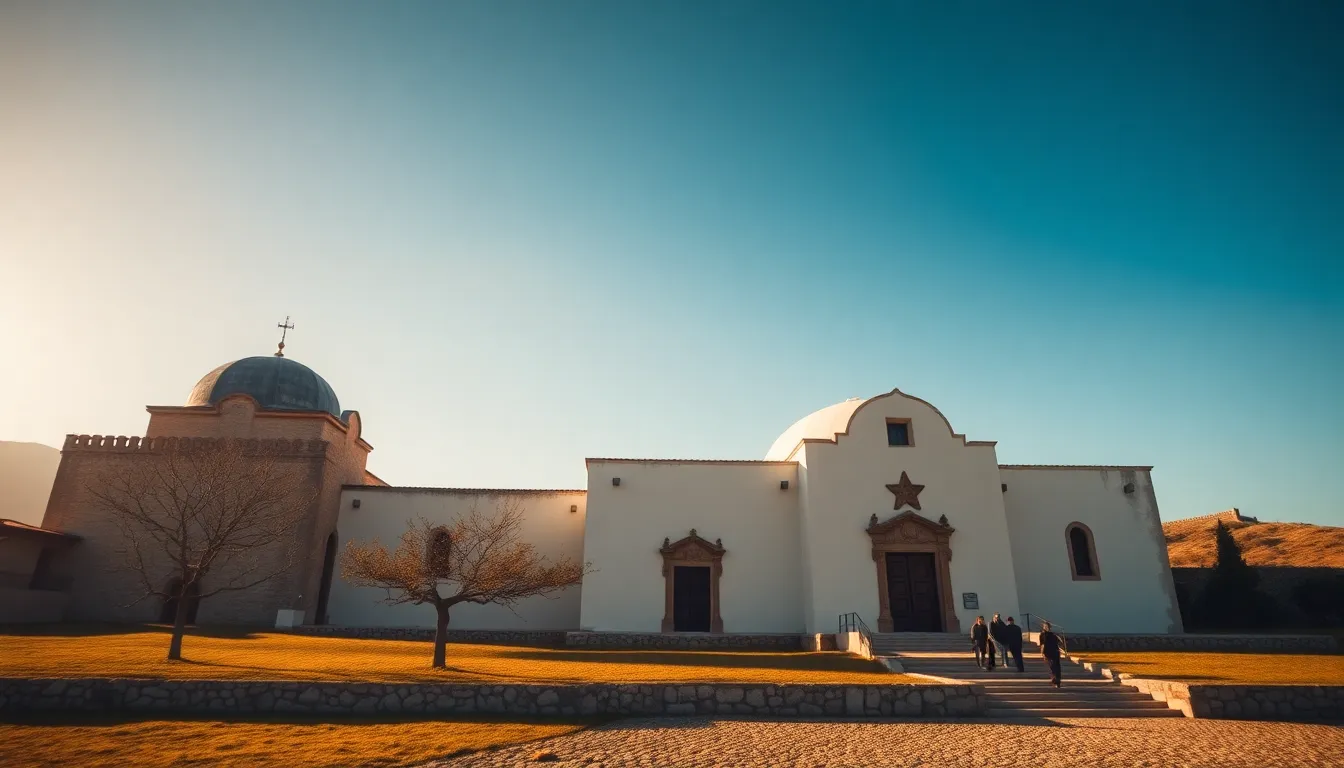
Most museums show you things. The Jewish Museum of Belmonte shows you an absence, and somehow makes it more powerful than any object behind glass. It is the only museum in Portugal dedicated entirely to the crypto-Jewish experience, and the thing it asks you to understand is hard: how do you display a faith whose entire survival depended on never being seen?
I have walked groups through this museum many times, and I have learned to prepare them. Not because it is hard to follow, but because it works on you slowly. You come in expecting a small local museum and you leave understanding something about human endurance that you did not have words for before.
What the Museum Is For
The Jewish Museum of Belmonte, the Museu Judaico de Belmonte, opened in the early 2000s to tell the story of the town’s hidden Jewish community. It is not a museum of ancient artifacts pulled from the ground. It is a museum of a living memory, built by and for a community that spent five hundred years keeping that memory invisible.
That purpose shapes everything inside. The museum walks you through the arc of the story: the Jewish presence in Portugal before 1497, the catastrophe of the forced conversion, the long centuries of secret practice, the rediscovery in the twentieth century, and the return to open Judaism. It is designed so that someone who arrives knowing nothing leaves understanding exactly what these families carried and at what cost.
For a heritage group, this is the room where the history becomes legible. You can read about crypto-Jews in a book and still not quite grasp it. The museum makes it concrete.
The Story It Tells
The museum does not flinch from the hard part, and I respect it for that. The center of the story is the forced conversion of 1497, when King Manuel I ordered Portugal’s Jews to become Christians, closed the ports so they could not flee, and had their children baptized by force. The museum treats this honestly, as the trauma it was. These families did not drift away from their faith. It was stripped from them in public, by the power of the crown.
From there, the museum follows what the Belmonte families did with what they had left. The exhibits explain the secret practices in detail: candles lit in closed cupboards, the Yom Kippur fast disguised as illness, Passover hidden inside spring cleaning, prayers carried in memory because written Hebrew was too dangerous to keep. Seeing these laid out, you start to understand the daily discipline it took. Not a grand heroic gesture, but five centuries of small, careful, repeated acts of faith done in the dark.
The museum also tells the rediscovery story, including the visit of Samuel Schwarz in the early twentieth century, when the families learned they were not, as they had believed, the last Jews on earth. And it carries the story forward to the return, to the formal reconnection with Judaism and the eventual opening of the synagogue. The whole arc, from thriving community to forced silence to open return, lives in these rooms.
What You Actually See
The collection is modest in size and deliberate in focus. You will find ritual objects, documents, and displays that reconstruct the secret practices of the community. The emphasis is less on rare treasures and more on explaining how faith was hidden and kept.
I tell my groups not to rush. The museum rewards reading. The labels and panels do real work here, and the power is cumulative. By the time you reach the section on the return to open practice, you understand the weight of it, because you have just walked through everything that came before.
It is also a relatively small museum, which I consider a strength. You can give it the attention it deserves without exhausting your group. A focused visit of an hour or more lets the story land properly.
One thing I always point out to my groups is how the museum reconstructs the secret practices rather than just describing them. You see how a cupboard could hide a flame, how an ordinary household chore could mask a holy day. That reconstruction does something a paragraph in a book cannot. It makes you understand that this faith survived not through grand gestures but through ingenuity, through ordinary objects pressed into sacred service, through families who turned their own homes into hiding places for God. By the time my groups leave that section, they look at the town outside differently. The houses stop being scenery.
How the Museum Fits the Rest of Belmonte
The museum is one stop in a town that holds the whole crypto-Jewish story. Right alongside it stands the Bet Eliahu Synagogue, which opened in 1996 and represents the community’s return to open prayer. I always pair the two, and I recommend the order: museum first, synagogue second. The museum explains the five centuries of hiding. The synagogue shows you what coming out of hiding looks like. Done in that sequence, the synagogue hits much harder.
Both belong to the larger story of Belmonte’s crypto-Jewish community, and Belmonte itself is the heart of Jewish heritage in Portugal. The museum is where a group new to this history gets its footing before stepping into the rest.
Visiting the Museum With Your Group
The Jewish Museum of Belmonte sits in the old part of town, within easy walking distance of the synagogue and the historic Jewish streets. A group can comfortably take in the museum, the synagogue, and a walk through the quarter in a single visit that fills the better part of a day.
For a faith group, the value of a good guide here is real. The museum tells the story well on its own, but a guide who knows the community can add the human dimension, the names, the families, the present-day reality of Belmonte, that no exhibit panel can carry. That is the difference between learning the history and feeling it.
We build these visits with local guides who know Belmonte and understand what this story means to Jewish travelers. For groups of fifteen or more, the group leader travels free, which makes the planning easier when you are bringing your congregation along. You can see how a full Portugal itinerary fits together on our Portugal destination page, or look at how we run group journeys on our group heritage tours page.
FAQ: The Jewish Museum of Belmonte
What is the Jewish Museum of Belmonte?
It is the museum dedicated to the crypto-Jewish history of Belmonte, telling the story of the town’s hidden Jewish community from the forced conversion of 1497 through five centuries of secret practice to the modern return to open Judaism. It is the only museum in Portugal focused entirely on the crypto-Jewish experience and serves as the place where visitors come to understand this history in depth.
What does the museum exhibit?
The collection includes ritual objects, documents, and displays that reconstruct how the Belmonte families practiced Judaism in secret. The emphasis is on explanation rather than rare treasures: how candles were lit in closed cupboards, how Passover was hidden in spring cleaning, how prayers were carried in memory. The exhibits trace the full arc from the Jewish presence before 1497 to the rediscovery and return.
How long should a visit take?
Plan for at least an hour. The museum is modest in size but cumulative in effect, and it rewards reading the panels carefully. Most groups pair it with the nearby Bet Eliahu Synagogue and a walk through the historic Jewish quarter, which together fill most of a day.
Should I visit the museum or the synagogue first?
Visit the museum first. It explains the five centuries of secret practice and forced silence, which gives the synagogue its full meaning. When you then enter Bet Eliahu, opened in 1996 as the community’s return to open prayer, you feel the distance the community traveled. Done in that order, the experience lands much more deeply.
Is the museum suitable for a faith group?
Very much so. The museum handles the difficult history of forced conversion with honesty and dignity, and it speaks directly to themes of faith, endurance, and return that resonate with Jewish and Christian heritage travelers alike. A guide with local knowledge adds the present-day human dimension that turns a museum visit into a genuine encounter with the living community.
If your community wants to understand the crypto-Jewish story from the inside, the Belmonte museum is where that understanding begins. I would be glad to help you build a visit that gives it the time and care it deserves.
Contact us whenever you are ready to start planning.