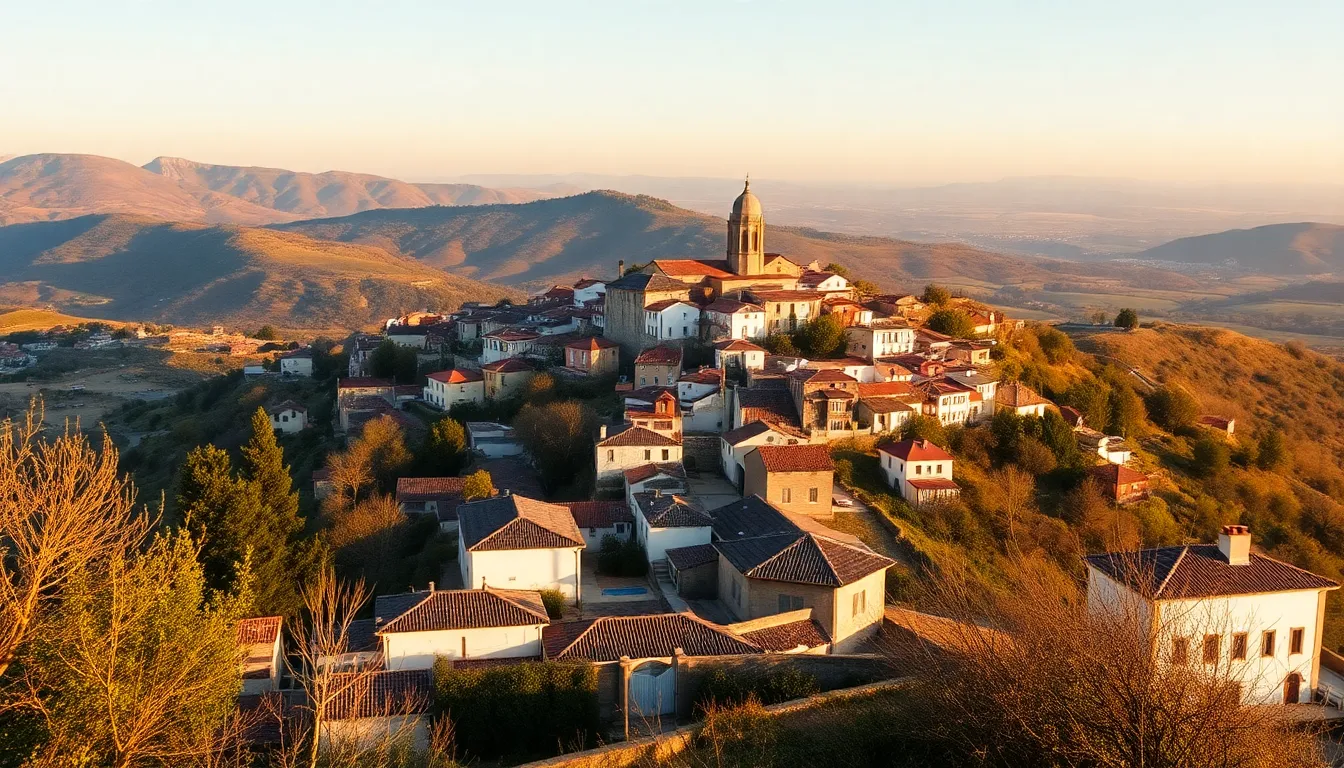
The first time I brought a group to Belmonte, a woman in our group stood in the small synagogue and started to cry before the guide had said more than a few sentences. She told me later that she had read about this town for years and never quite believed it was real. A community that hid its Judaism for five hundred years and came out the other side still knowing who they were. It sounds like a story someone made up to make you feel better about history. It is not. It happened here, in this town, and you can meet the descendants.
I have taken many groups to Portugal over the years, and Belmonte is the place that stays with people longest. Let me tell you why, and what it is actually like to stand there.
What Happened in 1497 and Why It Matters Here
To understand Belmonte, you have to understand what happened to Portugal’s Jews in 1497. King Manuel I, under pressure from Spain, ordered every Jew in the country to convert to Christianity or leave. Then he made leaving nearly impossible. He closed the ports. He had Jewish children taken from their parents and baptized by force. Most families had no real choice. They were baptized against their will and told they were now Christians.
That is the wound at the center of this story. These families did not abandon their faith. It was taken from them in public, by force, in a single brutal stretch of months. What they did next is the part that almost no one expected to survive.
They kept it in private. They went to Mass on Sunday because they had to, and they lit Shabbat candles on Friday night where no one could see. They became, in the language of the period, conversos or crypto-Jews. New Christians on the outside. Jewish in the home, in the heart, in the prayers whispered from one generation to the next.
In most of Portugal, that secret faith faded over the centuries. The Inquisition hunted it down. Families intermarried, forgot, assimilated. But in Belmonte, high in the mountains of the interior, far from Lisbon and the reach of the inquisitors, it held.
Five Hundred Years of Hidden Practice
Here is what I find almost impossible to take in, even after visiting many times. The families of Belmonte kept their Judaism alive in secret not for a generation, not for a hundred years, but for roughly five centuries.
They did it by adapting everything. Shabbat candles were lit inside closed cupboards or behind shuttered windows so no light reached the street. Passover was folded into the rhythm of spring cleaning, so a neighbor who looked in would see only a household scrubbing its floors. The Yom Kippur fast was explained away as sickness. The prayers were memorized and passed from mother to daughter, spoken in Portuguese, because keeping a Hebrew text in the house could get your family killed.
Over that span of time, things shifted. Hebrew words were lost and replaced. Catholic forms crept into the prayers. The practice became something specific to Belmonte, not quite like Judaism anywhere else in the world. But the spine of it never broke. The families knew they were Jewish. They knew their neighbors were not. They married within the community and guarded the secret with a discipline that is hard to imagine sustaining across twenty generations.
When you walk through Belmonte with a guide who knows this history, the town stops being scenic and starts being heavy in a way that is hard to describe. Every old house could have been a place where a family lit candles in a closed room and prayed that no one outside would notice.
The Rediscovery
For most of the Jewish world, Belmonte simply did not exist. The community had hidden so well that even other Jews had no idea it was there.
That changed in the early twentieth century. A Polish mining engineer named Samuel Schwarz, working in Portugal, heard rumors of Jews in the interior mountains. When he reached Belmonte and told the families he was Jewish too, they did not believe him at first. They had been taught for centuries that they were the last Jews left in the world. The idea that Jews still existed openly elsewhere was almost beyond belief.
There is a famous moment in the accounts of Schwarz’s visit. To prove he was really Jewish, he recited the Shema, the central declaration of Jewish faith. The women of the community recognized only one word in his Hebrew prayer: Adonai, the name of God. When they heard it, they accepted him. That single preserved word, carried across five hundred years of secrecy, was enough.
Schwarz wrote about what he found, and the Jewish world learned that an intact crypto-Jewish community had survived in the Portuguese mountains. It was, and still is, one of the most remarkable stories in the whole history of the Jewish people.
Belmonte Today
What makes Belmonte so powerful for a heritage group is that it did not stop at rediscovery. Over the twentieth century, members of the community made the decision to return to open Jewish practice. Many formally returned to Judaism. In 1996 the community opened the Bet Eliahu Synagogue, and Belmonte became, after five centuries, a place where Jews could pray out loud.
Today there is a synagogue, a Jewish museum, and a small but living community. Some of its members descend directly from the crypto-Jewish families who hid their faith for all those generations. When you visit, you are not looking at relics behind glass. You may be standing a few feet from someone whose grandmother lit Shabbat candles in a closed cupboard, who learned to whisper prayers her own mother whispered, who carried something across centuries that the entire weight of an empire tried to destroy.
I tell my groups to slow down here. To not treat Belmonte like a checkbox on an itinerary. The dignity of what these families did asks something of us as visitors. We owe it our attention.
If you want the fuller arc of Jewish Portugal, from Lisbon to the interior, our Jewish heritage in Portugal guide lays out the whole story. To go deeper on the synagogue and the museum specifically, see our pieces on the Bet Eliahu Synagogue of Belmonte and the Jewish Museum of Belmonte.
Planning a Belmonte Visit With Your Group
Belmonte sits in the Beira interior, a few hours by road from Lisbon and reachable on the way to or from Porto. Most groups fold it into a longer Portugal itinerary rather than visiting alone, because the drive through the interior is part of the experience. You pass through the kind of country where a hidden community could go unnoticed for centuries, and the geography starts to explain the history.
A meaningful visit takes the better part of a day: the synagogue, the museum, time to walk the old streets, and ideally a conversation with someone connected to the community. Belmonte is a small place, so a guide who has relationships here makes an enormous difference. The difference between a tour and an encounter is whether anyone opens a door for you.
We build these journeys with local guides who know the interior and understand what these sites mean to Jewish visitors. For groups of fifteen or more, the group leader travels free, which makes the planning conversation with your congregation a good deal more manageable. You can see how we structure a Portugal journey on our Portugal destination page and learn how the group leader experience works through our group heritage tours.
FAQ: Belmonte’s Crypto-Jewish Community
Who are the crypto-Jews of Belmonte?
They are the descendants of Jewish families who were forcibly converted to Christianity in 1497 and continued to practice Judaism in secret for roughly five hundred years. Isolated in the mountains of Portugal’s interior, far from Lisbon and the Inquisition, the Belmonte families preserved Shabbat, Passover, the Yom Kippur fast, and their core prayers entirely in private, passing them from one generation to the next. They were rediscovered in the early twentieth century and many have since returned to open Jewish practice.
How did the Belmonte community keep their faith secret for so long?
They adapted every practice to avoid notice. Shabbat candles were lit inside closed cupboards or behind shuttered windows. Passover was observed under the cover of spring cleaning. The Yom Kippur fast was explained as illness. Prayers were memorized and passed from mother to daughter in Portuguese, since keeping a written Hebrew text could be fatal. The community married within itself and guarded the secret with extraordinary discipline across many generations.
How was the Belmonte community rediscovered?
In the early twentieth century, a Polish mining engineer named Samuel Schwarz heard rumors of Jews in the Portuguese interior. When he reached Belmonte, the families did not believe he was Jewish, because they had been taught they were the last Jews on earth. He recited Hebrew prayers, and the community recognized the word for God, Adonai, which they had preserved across five centuries. His account introduced the Belmonte community to the wider Jewish world.
Can you meet members of the Belmonte community today?
Yes. Belmonte has an active Jewish community, a synagogue opened in 1996, and a museum. Some members descend directly from the original crypto-Jewish families. A visit arranged with a guide who has local relationships often includes the chance to learn from people connected to the community, which is what turns a Belmonte visit from sightseeing into a genuine encounter.
How does Belmonte fit into a Jewish heritage tour of Portugal?
Belmonte is usually the emotional center of a Portugal heritage itinerary. Most groups reach it as part of a longer journey that moves from Lisbon through Tomar and into the interior. A meaningful visit takes most of a day and is best done with a local guide. Because Belmonte is remote and the community is small, advance planning and good local relationships matter a great deal.
If you are thinking about bringing your community to Belmonte, I would be glad to talk it through with you. It is the kind of place that changes how people understand faith and endurance, and helping a group prepare for it is one of the parts of this work I care about most.
Contact us whenever you are ready to start that conversation.