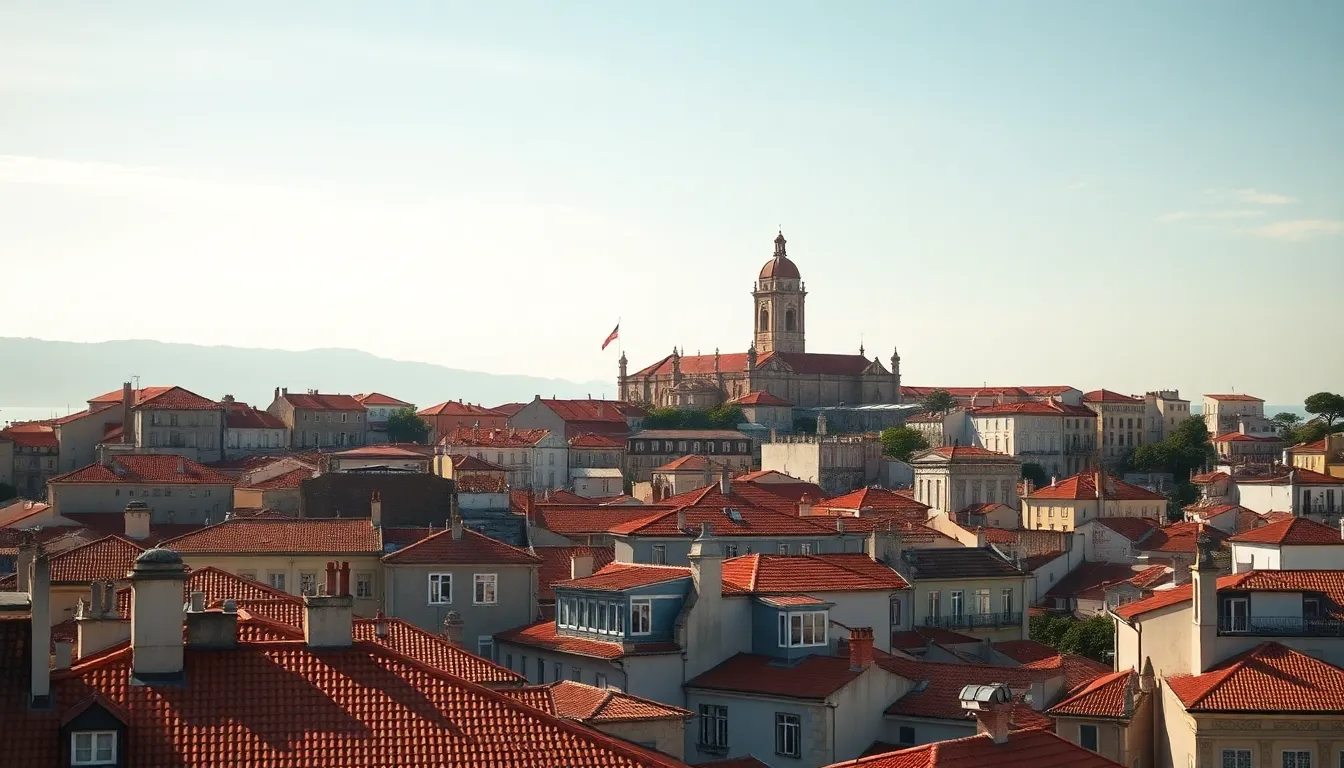
The first time I brought a group into Lisbon, we made the mistake almost everyone makes. We treated it as the pretty arrival city, the place you spend a day before heading to Fatima and Belmonte. By the second trip I knew better. Lisbon is not the warm-up. It is the place where the whole Portuguese story, Jewish and Christian, is written into the streets if you know how to read them.
The challenge with Lisbon is that the heritage is layered, not labeled. There is no single quarter where everything sits behind glass. The medieval Jewish neighborhoods are now ordinary residential lanes. The site of one of the darkest days in Portuguese Jewish history is a small marble memorial most tourists walk straight past. So this guide is really about how to walk Lisbon as a faith group, in a way that surfaces what is actually there.
If you want the wider national picture first, our Portugal heritage travel guide lays out the whole country. This one stays inside the capital.
Reading Lisbon’s Heritage Layers
Lisbon holds three layers worth understanding before you set foot in it.
The first is the medieval city, the one that existed when Lisbon had a large and prosperous Jewish community living alongside Christians and Muslims. The second is the city of the Inquisition and the forced conversions, when that community was destroyed in 1497 and again in the massacre of 1506. The third is the imperial city of Belem, the Lisbon of explorers and gold and the great Manueline monuments built partly on the wealth of those voyages.
A good Lisbon day does not jump randomly between these. It moves through them in order, so your group feels the city change beneath their feet. That is the difference between sightseeing and understanding.
Alfama and the Old Judiaria: The Jewish Layer
Most people think Alfama is the old Jewish quarter. It is more accurate to say Lisbon had several medieval Jewish neighborhoods, and the most important ones, the Judiaria Grande and the Judiaria Pequena, sat in the streets between the cathedral and the river, on the edge of what we now call Alfama and the Baixa.
Walk those lanes today and you will not find a preserved quarter. You will find ordinary Lisbon: laundry on lines, tiled facades, steep stairs. What you find instead are traces. A street name. The shape of a medieval grid. The knowledge, carried by a good guide, of where the synagogues stood before 1497.
This is exactly why Lisbon needs interpretation rather than ticketing. I tell group leaders plainly: in Alfama you are not visiting a museum, you are standing where a community lived and was erased. For most of my groups, that absence lands harder than any preserved building would. You can read the fuller story of these streets in our piece on the Judiaria of Alfama.
The 1506 Massacre Memorial
A few minutes from the cathedral, in the small square of Largo de Sao Domingos, there is a memorial stone to the Lisbon Massacre of 1506. Over the course of three days, a mob killed thousands of New Christians, the forcibly converted Jews of the city, in one of the worst pogroms of the period.
The memorial is modest. A round marble plaque set in the pavement, an inscription in several languages, the word “tolerance” rendered around it. It is easy to miss, and that is partly the point. I always stop a group here, even if only for a few minutes of silence. The square is busy and ordinary, and that contrast, life carrying on over a place of horror, is something faith communities feel deeply. We cover the full history in the Lisbon Massacre memorial guide.
Living Jewish Lisbon
Lisbon today has an active Jewish community, and the principal synagogue, Shaare Tikva, was built in the early twentieth century. For groups who want their visit to connect past and present, not only past, this matters. It is one thing to mourn a destroyed community. It is another to also sit in a working synagogue in the same city. If a Shabbat in Lisbon fits your itinerary, plan it early, because access and timing need coordination.
The Cathedral and Christian Lisbon
Lisbon Cathedral, the Se, sits on the hill above the old Jewish streets, and that geography is not an accident. It was built in the twelfth century, immediately after the Christian reconquest of the city from Muslim rule, on or near the site of the former main mosque. The fortress-like Romanesque front tells you everything about the era: this was a church built as a statement of conquest and permanence.
For Christian groups, the Se is the anchor of Lisbon’s faith story. It is the seat of the city’s Catholic life, the place tied to Saint Anthony of Lisbon, who was born in a house just steps away. Saint Anthony is one of the most beloved figures in the Catholic world, and Lisbon, not Padua, is where his story begins. We dig into both in our guides to Lisbon Cathedral and to Saint Anthony of Lisbon.
What I want group leaders to notice is the relationship between the cathedral on the hill and the Jewish streets below it. They are minutes apart. You can stand in the Se and look down toward where the Judiaria stood. Walking that short distance, in that direction, is one of the most quietly powerful movements you can make with a group in Lisbon. The whole story of medieval Iberian coexistence and its violent end is contained in a five-minute walk.
Belem: The Age of Discovery Layer
A few kilometers west along the river sits Belem, and it is a different Lisbon entirely. This is the imperial city, the launching point for the voyages of the fifteenth and sixteenth centuries, and the place where Portugal poured the wealth of those voyages into stone.
The centerpiece is the Jeronimos Monastery, a vast and intricate building in the Manueline style, Portugal’s own ornate take on late Gothic, woven through with ropes, knots, and maritime symbols. It is one of the great religious buildings of Europe and the burial place of Vasco da Gama. Standing inside it, you understand the scale of ambition that defined Portugal’s golden age. Our Jeronimos Monastery guide covers it in depth, and if the architectural style interests your group, the Manueline architecture guide explains what you are looking at.
I include Belem in Lisbon itineraries for a reason beyond beauty. The age of discovery is where the Jewish and Christian threads of Portugal meet again, because Jewish cartographers, astronomers, and financiers helped make those voyages possible, often in the very years their community was being destroyed. A thoughtful guide can hold both truths at once in Belem: the glory and the cost. That complexity is what makes Portugal such honest ground for a faith group.
How to Structure a Lisbon Visit
For most groups, Lisbon works as a two-day bookend, either at the start of a Portugal trip or the end. Here is the shape I recommend.
Day one stays in the historic core. Begin at the cathedral on the hill, walk down into the old Jewish streets and the Sao Domingos memorial, and let the morning carry the weight of the reconquest, the convivencia, and the destruction. Keep the pace slow. This is not a day for rushing.
Day two goes to Belem for the monastery and the riverfront, where the mood lifts toward exploration and ambition. If your group wants a working synagogue visit or a Shabbat, build it around the calendar rather than squeezing it in.
A few practical notes. Lisbon is hilly, genuinely so, and the historic center involves a lot of steps and cobblestones. For mixed-age groups, factor that in and build rest stops. The famous trams are charming but crowded; I use them sparingly with groups and rely on a coach for the longer hops. And Lisbon’s heritage rewards a guide who knows where the invisible things are, because so much of the Jewish layer in particular is not marked.
For groups of fifteen or more, the group leader travels free with Heritage Tours. That threshold is usually easy to reach when Lisbon anchors a wider Portugal itinerary, and it changes the planning math for the synagogue or church organizing the trip. You can see how a full route fits together in our 9-day Portugal heritage itinerary, and the broader Portugal destination page is a good starting point.
FAQ: Lisbon Heritage Travel
Where was the Jewish quarter in Lisbon?
Medieval Lisbon had several Jewish neighborhoods, the most important being the Judiaria Grande and Judiaria Pequena, located in the streets between the cathedral and the river, on the edge of present-day Alfama and the Baixa. The community was destroyed in the forced conversion of 1497, so today these are ordinary residential streets rather than a preserved quarter. A knowledgeable guide is needed to surface what stood there.
What is the memorial in Largo de Sao Domingos?
It is a memorial to the Lisbon Massacre of 1506, when a mob killed thousands of New Christians, the forcibly converted Jews of the city, over three days. The memorial is a marble plaque set in the pavement with an inscription on tolerance. It is easy to miss but worth stopping at, and it is one of the most affecting points in a Lisbon heritage visit.
Is Lisbon Cathedral worth visiting for Christian groups?
Yes. The Se is Lisbon’s principal Catholic cathedral, built in the twelfth century right after the Christian reconquest of the city. It is the anchor of Lisbon’s Christian heritage and is closely tied to Saint Anthony of Lisbon, who was born nearby. Its hilltop position directly above the old Jewish streets also makes it a powerful place to read the city’s layered history.
What should I see in Belem?
The Jeronimos Monastery is the centerpiece, a masterpiece of Manueline architecture and the burial place of Vasco da Gama. Belem is the city of the age of discovery, and it offers a different mood from the historic core: ambition and exploration rather than medieval and Inquisition history. Most groups give it a half day.
How many days should a faith group spend in Lisbon?
Two days is the right length for most heritage groups. One day for the historic core, the cathedral, the old Jewish streets, and the 1506 memorial, and one day for Belem and the riverfront. If you want a working synagogue visit or a Shabbat in Lisbon, plan it around the calendar in advance.
If Lisbon is going to anchor your community’s Portugal journey, I would be glad to help you shape the days so the heritage actually surfaces rather than slipping past. The capital rewards a slow, well-guided walk more than almost any city I work in.
Contact us when you are ready to start planning.