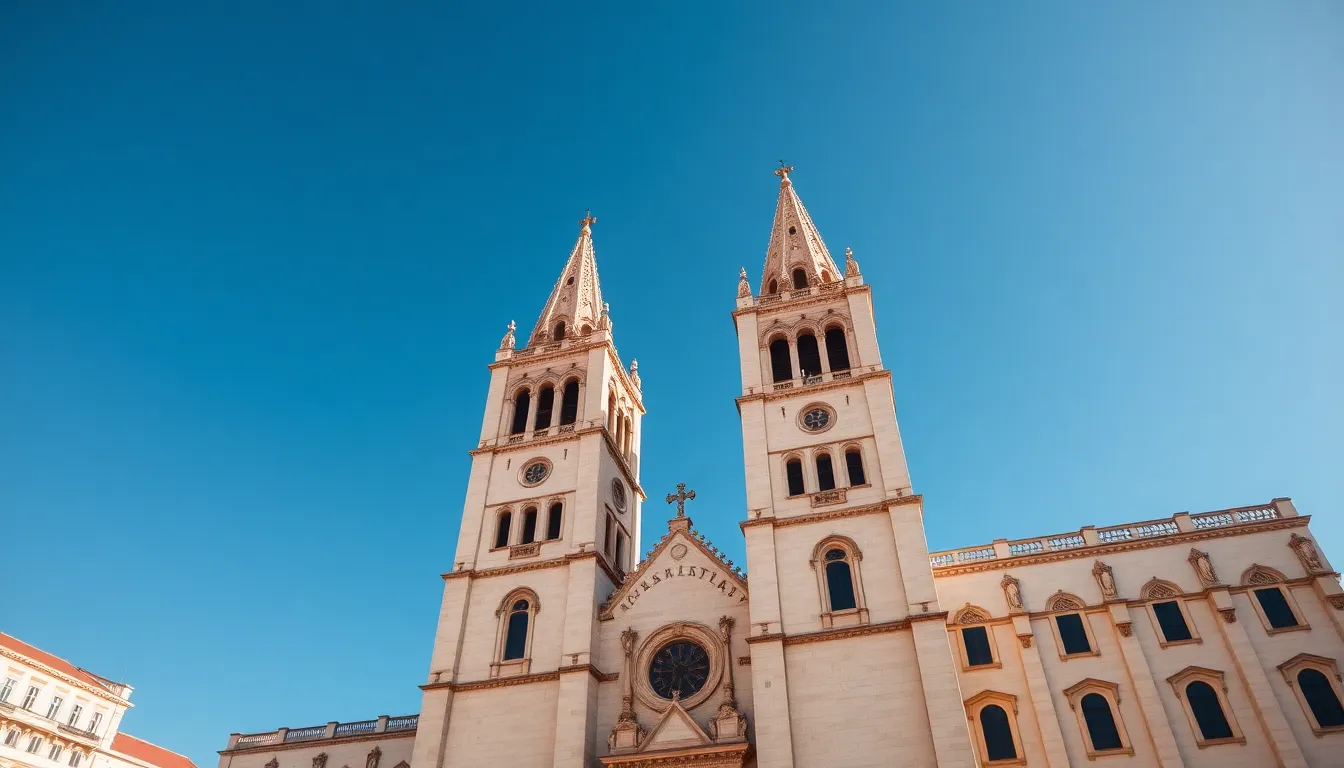
I always bring my groups to the Se de Lisboa early in the trip, usually on the first full day, and there is a reason for that. The cathedral looks like a fortress, and that is not an accident. Standing in front of those heavy twin towers, I tell my groups: this building was raised the same year the city was taken back from Moorish rule, and it was meant to defend the faith as much as house it. Once people understand that, they read the whole cathedral differently.
The Se is the oldest church in Lisbon and one of the most important Christian buildings in Portugal. It does not have the soaring delicacy of the later Gothic and Manueline churches. It has something older and sterner. Let me walk you through it.
A Cathedral Built on Conquest
The Cathedral of Lisbon was begun in 1147, the year King Afonso Henriques, the first king of Portugal, captured Lisbon from the Moors during the Reconquista. The campaign was aided by crusaders who had stopped on their way to the Holy Land, and the taking of Lisbon was understood by everyone involved as a religious act as much as a military one.
When the city fell, the conquerors moved quickly to plant a cathedral on the site. There is a strong tradition that the Se was built directly over the city’s main mosque, which itself had likely stood over an earlier Christian and Roman foundation. That layering, mosque over church over temple, is the physical record of the contested history of the Iberian Peninsula, and you are standing on top of all of it.
The first bishop of the reconquered city was an English crusader named Gilbert of Hastings, a reminder that the Reconquista drew Christian fighters from across Europe.
Reading the Architecture
The Se is fundamentally a Romanesque building, and that is the first thing to teach your group. Romanesque means thick walls, round arches, small windows, and a heavy, grounded feel. The twin bell towers flanking the entrance give the west front its fortress look. In a frontier city that had just changed hands by force, a church that could double as a stronghold was not a strange idea.
Step inside and the nave continues the Romanesque language, solid and dim, the round arches marching toward the altar. But the Se is not all one period. Like most great cathedrals it grew over centuries, and you can read those centuries in the stone.
The ambulatory, the walkway curving behind the main altar, was rebuilt in the Gothic style in the fourteenth century, and the contrast is instructive. Where the Romanesque nave is heavy and earthbound, the Gothic ambulatory is lighter, its pointed arches reaching upward. Walking from one into the other, your group physically moves from one age of faith into the next.
The cathedral has been damaged and repaired many times, most severely by the great Lisbon earthquake of 1755 that devastated the city. Much of what visitors see has been restored, and parts of the building reflect the recovery from that catastrophe. The earthquake is woven into the religious memory of Portugal, and the Se’s survival and rebuilding is part of that story.
There is also a Gothic cloister, partly in ruins, where ongoing archaeological excavation has uncovered Roman, Moorish, and medieval remains beneath the cathedral floor. For a group interested in the deep layering of the site, the cloister excavation makes the history visible in a way that a finished interior cannot.
The Baptism of Saint Anthony
For many Christian visitors, the single most meaningful fact about the Se is this: Saint Anthony of Padua was baptized here.
Anthony is one of the most beloved saints in the entire Catholic world, the patron of lost things, invoked daily by millions. And though the world knows him as Anthony of Padua, the city in Italy where he died and is buried, he was born in Lisbon around 1195, and he was baptized in the Cathedral of Lisbon. The Portuguese, understandably, often call him Saint Anthony of Lisbon.
Inside the Se there is a font traditionally associated with his baptism, marked for pilgrims who come to honor the connection. Just down the hill stands the Church of Saint Anthony, built on the site believed to be his birthplace, with a crypt beneath it. I often pair the two in a single morning, the cathedral where he was baptized and the church where he was born, so the group can trace the beginning of his life across a few hundred meters of the old city.
For Portuguese Catholics, Anthony is not a distant figure. His feast day on June 13 is one of the great celebrations of Lisbon, with processions, street parties, and the famous tradition of mass weddings held in his honor. Understanding how present he still is in the life of the city helps a group grasp why his baptism site carries the weight it does.
Visiting With a Group
A few practical notes from experience.
The Se sits in the Alfama, the old hilltop quarter, on a street narrow enough that the historic tram runs right past the front of the cathedral. That tram, the famous Number 28, makes for a memorable arrival, though with a large group I usually walk in so we stay together. The streets are steep and cobbled, so I always flag the terrain to anyone in the group who finds hills difficult.
Entry to the main cathedral is generally straightforward, with a separate ticket for the cloister excavation and the treasury, which I recommend for groups that want the full historical depth. As with any working cathedral, dress modestly, keep voices low, and check whether services are in progress before planning a group gathering inside. If your group wants to celebrate Mass or hold a moment of prayer at the Se, we arrange that in advance.
I place the Se early in the wider Portugal pilgrimage on purpose. It grounds the group in the founding era of Christian Portugal before they move north to Fatima and the great monasteries. From the Se it is a short walk to the Manueline masterpieces of the Belem district, so the morning can carry your group from the twelfth century to the sixteenth in a single arc. You can see how we frame the Lisbon days on our Portugal destination page.
FAQ: The Cathedral of Lisbon
Why is the Cathedral of Lisbon built like a fortress?
Because it was raised in 1147, the year the city was reconquered from the Moors, on a contested frontier. The thick Romanesque walls and the heavy twin bell towers gave the cathedral a defensive character that suited a city which had just changed hands by force. A church that could also serve as a stronghold made sense in that moment, and the fortress appearance is part of what makes the Se distinctive.
Was Saint Anthony really baptized in the Se de Lisboa?
Yes. Saint Anthony, known worldwide as Anthony of Padua, was born in Lisbon around 1195 and baptized in the Cathedral of Lisbon. The Portuguese often call him Saint Anthony of Lisbon for this reason. A font inside the cathedral is traditionally associated with his baptism, and the Church of Saint Anthony nearby marks the site believed to be his birthplace.
What architectural styles can you see in the cathedral?
The Se is fundamentally Romanesque, with thick walls, round arches, and a fortress-like west front. Later additions brought other styles, most notably the Gothic ambulatory behind the main altar, rebuilt in the fourteenth century, and a Gothic cloister. The building was heavily damaged in the 1755 Lisbon earthquake and restored afterward, so visitors see a layering of periods in a single structure.
Is the Cathedral of Lisbon worth a visit for a faith group?
Yes, especially early in a Portugal pilgrimage. It grounds a group in the founding era of Christian Portugal, carries the Reconquista history in its very stones, and holds the baptism site of one of the most beloved saints in the Catholic world. It also sits a short walk from the Manueline churches of Belem, so a single morning can span four centuries of Portuguese faith.
Can our group hold a service or moment of prayer at the Se?
Yes, with advance coordination, since the Se is a working cathedral with its own schedule of services. We arrange group Mass or a moment of prayer ahead of time so it fits the cathedral’s calendar and your itinerary. Contact us and we will set it up as part of your Lisbon days.
The Se is where I like a Portugal pilgrimage to begin, because everything that follows reads more clearly once a group has stood inside the founding church of Christian Lisbon. If you are planning your community’s journey, reach out and we will build the Lisbon days around it.