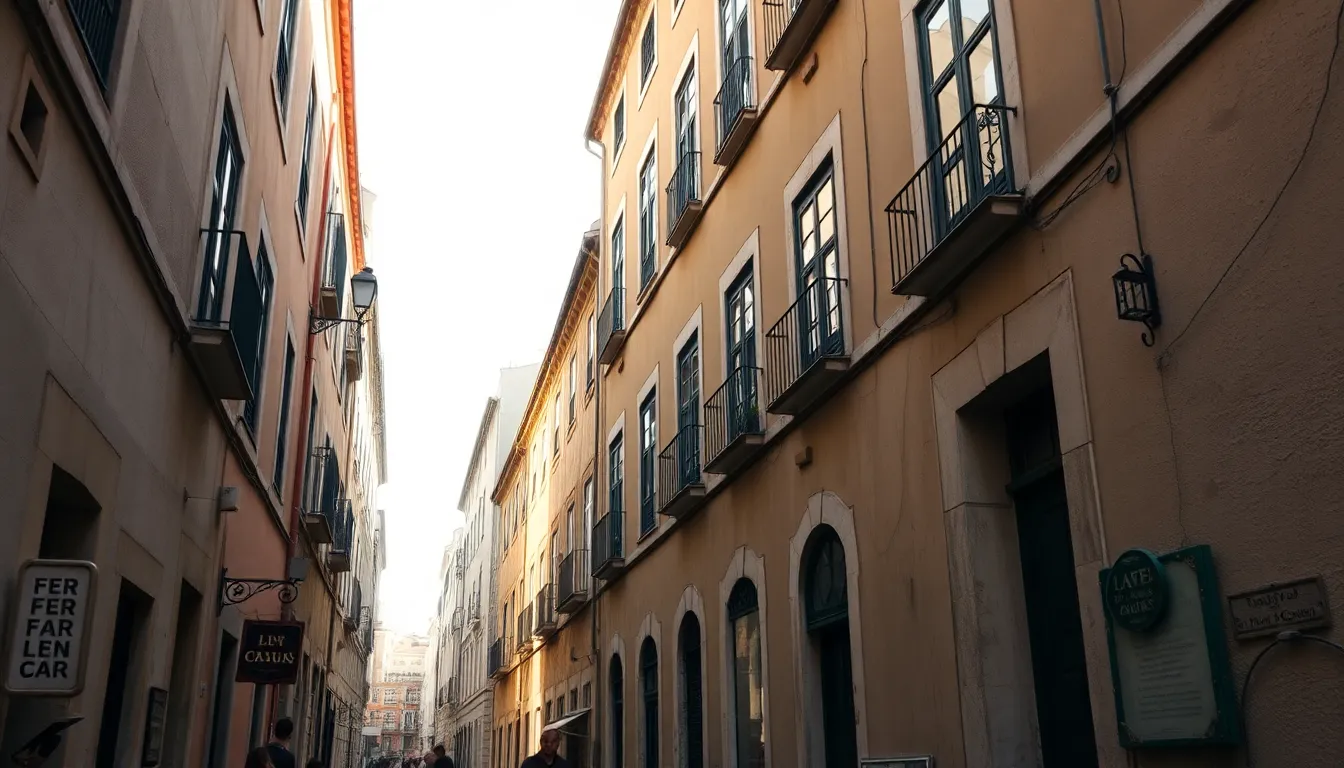
The first time I led a group through the Alfama, one of my travelers stopped in a narrow lane, looked around at the laundry strung between the buildings and the tiled doorways, and asked me where the Jewish quarter actually was. I told her she was standing in it. She did not believe me at first. There was no sign, no plaque, no preserved synagogue to walk into. And that, I told her, is exactly the thing you have to understand before you come here.
The Judiaria of Alfama is not a site you visit. It is a place you read. With the right guide and the right context, the streets themselves start to speak. Without that context, you walk past one of the most important medieval Jewish neighborhoods in the Iberian Peninsula and never know it was there.
Let me walk you through how to see it.
What the Judiaria Was
By the medieval period, Lisbon held one of the largest Jewish communities on the Iberian Peninsula. Jews had lived in the area under Roman, Visigothic, and Moorish rule long before Portugal existed as a kingdom. By the 13th and 14th centuries, the community had organized into formal quarters known as judiarias.
Lisbon did not have one Jewish quarter. It had several. The largest was the Judiaria Grande, the great Jewish quarter, which sat in the lower part of the city near the river. There was also the Judiaria Pequena, the small quarter, and a third called the Judiaria de Alfama, set into the slopes of the hill below the castle in what is now the Alfama district.
These were not ghettos in the later, walled sense. They were defined neighborhoods where the community lived, worshipped, traded, and governed much of its own daily life. The judiaria had its own synagogues, its own butchers and bakers operating under kosher law, its own communal institutions. It had gates that were closed at night, which was as much about the community’s own order as it was about restriction from outside.
To understand the Alfama today, you have to hold this picture in your mind: a dense, living Jewish neighborhood, generations deep, woven into the fabric of one of Europe’s great medieval port cities.
Why So Little Survives
When people arrive expecting a preserved quarter and find ordinary streets, the disappointment is real. So I want to explain plainly why almost nothing visible remains. There are three reasons, and each one matters.
The first is 1497. King Manuel I ordered the forced conversion of all Jews in Portugal. Lisbon’s judiarias did not slowly decline. They were emptied. Synagogues were seized and repurposed. The community that had filled these streets for centuries officially ceased to exist overnight, driven either into exile or into outward conversion and secret practice.
The second reason is the Lisbon Massacre of 1506. Nine years after the forced conversions, a mob in Lisbon turned on the New Christians, the converted Jewish families, and killed thousands over several days. It is one of the darkest episodes in the city’s history, and it tore through the very neighborhoods we are talking about.
The third reason is geological. The great Lisbon earthquake of 1755, followed by a tsunami and fires, destroyed much of the lower city. Buildings that had survived two and a half centuries of repurposing were leveled. What the Inquisition did not erase, the earthquake often finished.
So when I say the Judiaria of Alfama survives as traces rather than monuments, this is why. The wonder is not that so little remains. The wonder is that anything can still be read at all.
How to Read the Streets
Here is where a heritage visit to the Alfama becomes something more than a pretty walk through Lisbon’s most photographed neighborhood. With a guide who knows the medieval street plan, the quarter opens up.
The Street Layout
The Alfama survived the earthquake better than the lower city because of its position on the hillside. Its tangled, narrow streets follow the same lines they did in the medieval period. When you walk these lanes, you are very often walking the exact paths the Jewish community walked. The street pattern itself is a kind of artifact.
Doorways and Markings
Across Portugal, researchers have documented carved markings on doorposts of medieval and early modern buildings, small recesses thought by some to be traces of where a mezuzah was once fixed. These readings are debated, and an honest guide will tell you so rather than pointing at every notch and calling it proof. But in the converso neighborhoods of the Portuguese interior, and in pockets of older Lisbon, the question is a real one worth standing with.
The Site of the Great Synagogue
The Judiaria Grande held the city’s principal synagogue. Its location is documented, even though the building itself is long gone, lost to seizure and then to the earthquake. Standing where a major medieval synagogue once stood, in a city that spent centuries pretending its Jewish history away, is its own quiet experience. There is no building to enter. There is only the knowledge of what was here.
What the Alfama Offers a Heritage Group
I want to be honest about what this visit is and what it is not. If your group is looking for a restored synagogue to tour, the Alfama is not that. For that, you go to the Shaare Tikva synagogue in the newer part of Lisbon, or you travel to Tomar for the intact pre-expulsion building. I always pair the Alfama with at least one of those, because the contrast is the point.
What the Alfama offers is scale and absence. It is where your group understands how large and how rooted Lisbon’s Jewish community was, and how completely it was erased from public view. That understanding is the foundation for everything else you will see in Portugal. The crypto-Jewish story in Belmonte, the survival of the Tomar synagogue, the modern revival at Shaare Tikva, none of it lands the same way without first standing in the Alfama and grasping the size of what was lost.
For groups, I structure the Alfama as a slow walking morning, ideally early before the day-tourist crowds fill the lanes. We trace the boundaries of the old quarters, we stand at the documented synagogue sites, and we talk about 1497 and 1506 in the place where they happened. It is not a long visit in hours. It is a deep one.
The Alfama also connects naturally to the rest of a Lisbon day, the castle above, the river below, the Jewish Museum of Lisbon, which does careful work linking the medieval past to the present community. You can see how we build the wider journey on our Portugal destination page, and the Alfama almost always opens it.
Planning the Visit
A few practical notes from years of bringing groups here. The Alfama is steep and the cobblestones are uneven, so I plan the pace for the whole group, including older travelers. Comfortable shoes are not optional. Mornings are cooler and quieter than afternoons. And a knowledgeable local guide is the difference between a meaningful visit and a confused one, because almost nothing here explains itself.
If you want the deeper background before your group walks these streets, our overview of Jewish heritage in Portugal sets the full historical arc. To see where the story continues, our pieces on the Shaare Tikva synagogue and the Tomar synagogue cover the surviving and revived sites that the Alfama sets up.
For groups of 15 or more, the group leader travels free, which makes the planning math easier when you are building a trip for your congregation.
FAQ: The Judiaria of Alfama
What was the Judiaria of Alfama?
It was one of medieval Lisbon’s Jewish quarters, set into the hillside below the castle in what is now the Alfama district. Lisbon had several judiarias, with the Judiaria Grande being the largest. These were defined neighborhoods where the Jewish community lived, worshipped, and traded, complete with synagogues and communal institutions, before the forced conversions of 1497 emptied them.
Is there anything left of the Jewish quarter in Alfama today?
Not in the form of standing synagogues or preserved buildings. What survives are traces: the medieval street layout the community once walked, documented sites where synagogues stood, and disputed doorway markings. The 1497 conversions, the 1506 Lisbon Massacre, and the 1755 earthquake together erased most physical remains. The Alfama is a place you read with a guide rather than a site you tour.
Why should a heritage group visit if so little remains?
Because the Alfama is where you grasp the scale of what was lost. Understanding how large and rooted Lisbon’s Jewish community was, and how completely it was erased from view, is the foundation for everything else you see in Portugal. It gives weight to the surviving sites at Tomar, the modern community at Shaare Tikva, and the crypto-Jewish story in Belmonte.
What happened in the Lisbon Massacre of 1506?
In April 1506, a mob in Lisbon turned on the New Christians, the recently converted Jewish families, and killed thousands over several days during a time of plague and unrest. It struck the very neighborhoods that had been the Jewish quarters, and it stands as one of the darkest chapters in the city’s history.
How long should we spend in the Alfama?
I plan a slow walking morning, ideally early before the crowds arrive. In hours it is not a long visit, but it is a deep one, tracing the boundaries of the old quarters, standing at the documented synagogue sites, and talking through the history where it happened. I usually pair it with the Jewish Museum of Lisbon or the Shaare Tikva synagogue to complete the picture.
If your community is starting to plan a journey through Jewish Portugal, the Alfama is where I almost always begin the story. I would be glad to talk through how to build it for your group, your pace, and your people.
Contact us whenever you are ready to start that conversation.