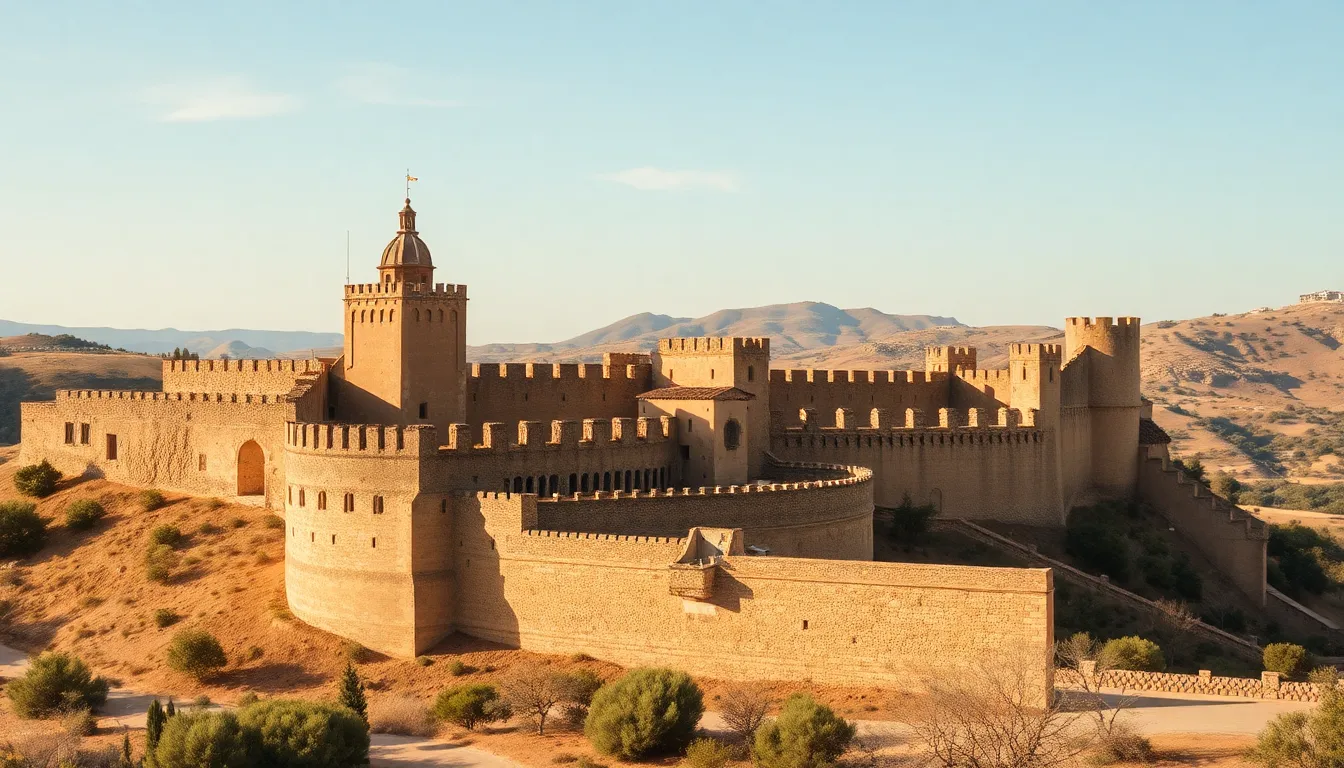
The word “Reconquista” gets thrown around so loosely that I make a point of unpacking it carefully with every group, usually on the bus on a long stretch of Castilian road, because what you think the word means shapes how you read everything you are about to see. People arrive imagining a tidy holy war: Christian knights driving Muslim invaders out of Spain in a single righteous sweep. The truth is far longer, far messier, and far more interesting than that, and a heritage traveler who learns the real story comes away with something a tourist never gets.
So let me give you the honest version, the one I have refined over many trips, and then point you to the sites that let your group stand inside it.
What the Reconquista Actually Was
In the year 711, Muslim armies from North Africa crossed at Gibraltar and within a few years had conquered nearly the entire Iberian peninsula, toppling the Christian Visigothic kingdom. For the next several centuries, most of what is now Spain and Portugal was Al-Andalus, ruled by a series of Muslim states. In the far north, small Christian kingdoms survived in the mountains and slowly, over generations, expanded southward.
That long process of Christian expansion is what later historians named the “Reconquista,” the “reconquest.” The conventional span runs from 718, with a small Christian victory at Covadonga in the northern mountains, to 1492, when the Catholic Monarchs Ferdinand and Isabella took Granada, the last Muslim kingdom. That is 781 years. I say the number slowly to groups because it does the work for me. This was not a war. It was nearly eight centuries of history, longer than the time from Columbus to today, during which dozens of generations were born, lived, and died along a shifting frontier.
Why “Reconquista” Is a Loaded Word
Here is where I ask groups to think carefully. The word “reconquest” implies a single Christian Spain taking back what was rightfully its own. But for most of those eight centuries there was no single Spain and no single project. There were rival Christian kingdoms, Castile, Aragon, Leon, Navarre, Portugal, that fought each other as often as they fought the Muslim states. There were Muslim kingdoms that allied with Christian kings against other Muslims. There were long stretches of peace, trade, intermarriage among elites, and shared culture. The neat idea of an 800-year crusade was largely constructed later, by nationalist historians who wanted a clean founding myth.
None of this means there was no religious conflict; there was, and it was real and often brutal. It means the history is more honest and more human than the myth. I tell groups: hold both truths. Real wars of faith happened here. And so did centuries of coexistence and cross-pollination. A good heritage trip refuses to flatten one into the other.
The Sites That Tell the Story
The remarkable thing about the Reconquista is that you can read all 781 years of it off the landscape, because each phase left its buildings. Here is the route I trace, roughly north to south, early to late.
The North: Where It Began
Covadonga, in the green mountains of Asturias, marks the traditional starting point, the small Christian victory of 718 that the founding myth treats as the spark. The Asturian kingdom that grew from it left tiny pre-Romanesque churches that are among the oldest Christian buildings in Spain.
Further along, the cathedral cities of Castile show the Christian kingdoms at full strength. Burgos, the capital of Castile and the burial place of El Cid, and Leon, with its cathedral of light, are both engines of the southward push and both stops on the Camino de Santiago, which I cover in our spiritual sites guide. The Camino itself is woven into this story; the cult of Saint James, Santiago, became a rallying point for Christian Spain, and the apostle was even invoked as “Santiago Matamoros,” Saint James the Moor-slayer, an image that tells you a great deal about how the later war saw itself.
The Center: Toledo and the Turning Point
The capture of Toledo in 1085 was a hinge of the whole story, the first great city of Al-Andalus to fall to a Christian king. I write about it fully in our Toledo Cathedral guide. Toledo is the single best place to show a group the complexity, because here the layers are physically stacked: a cathedral that was a mosque that was a Visigothic church, two surviving synagogues a few minutes’ walk away, and a few precious centuries when Jewish, Christian, and Muslim scholars translated the learning of the ancient and Islamic worlds together. Toledo is where the “city of three faiths” and the “frontier of holy war” meet in the same streets. Hold both.
The South: Cordoba and the Great Mosque-Cathedral
Cordoba was the capital of Muslim Spain at its height, in the tenth century one of the largest and most learned cities in the world. Its Great Mosque, the Mezquita, with its forest of red and white double arches, is one of the most beautiful buildings on earth. After the Christian conquest of Cordoba in 1236, a cathedral was literally built inside the mosque, so that today you walk through hundreds of Islamic arches and come upon a soaring Gothic and Renaissance church planted in the middle of them. There is no clearer image of the whole Reconquista than that single building. Even the emperor Charles V, who approved the cathedral inside it, is said to have regretted what was lost. Show your group the Mezquita and you will not need to explain the rest.
The End: Granada and 1492
Granada was the last Muslim kingdom, holding out in the south for two and a half centuries after Cordoba fell, and it left the Alhambra, the exquisite palace-fortress of the Nasrid sultans. When Granada surrendered to Ferdinand and Isabella on January 2, 1492, the 781-year process reached its formal end. Standing in the Alhambra, your group is at the closing scene.
But 1492 is also a darker date, and I never let a group leave it on a triumphant note. The same monarchs who took Granada signed the Alhambra Decree expelling the Jews of Spain that same year, ending one of the great Jewish communities of the medieval world. The Muslims of Granada, promised tolerance at the surrender, were within a decade pressured to convert or leave, and the Moriscos were finally expelled in the early seventeenth century. And in 1492 Columbus sailed, an expedition the war’s end helped make possible. So 1492 is the year the Reconquista finishes, the year of expulsion, and the year a new age of empire begins, all at once. That convergence is one of the most powerful conversations a group can have in Spain.
Leading the Reconquista Story Well
For a mixed group, and especially for Jewish travelers, this history has to be handled with care and honesty. The Christian triumph that built the cathedrals is the same triumph that expelled the Jews and the Muslims. A pastor leading a Christian group does that group no favors by telling only the victory; a rabbi leading a Jewish group is standing at the end of a tragedy when the same dates come up. The strength of a heritage trip is that it can hold the whole thing, the achievement and the loss, the coexistence and the conflict, without forcing a single verdict. That is the difference between heritage travel and a highlight reel.
Practically, the Reconquista is less a single itinerary than a thread you can run through a Spain trip. A northern route built around the Camino and the cathedral cities tells the early and middle chapters. A southern route through Toledo, Cordoba, and Granada tells the great turning points and the end. Either way, the through-line gives a group a frame that turns scattered sites into one continuous, honest story.
FAQ: The Reconquista for Heritage Travelers
What was the Reconquista and how long did it last?
The Reconquista was the long process by which Christian kingdoms in northern Spain expanded southward against the Muslim states that had conquered most of the Iberian peninsula in 711. The conventional span runs from a small Christian victory at Covadonga around 718 to the fall of Granada in 1492, about 781 years. Despite the name “reconquest,” it was not a single continuous war but nearly eight centuries of shifting frontiers, rival kingdoms, alliances across religious lines, and long periods of both conflict and coexistence.
Is it accurate to call the Reconquista a holy war?
Partly. Real wars of religion happened during these centuries, and the later Christian campaigns increasingly framed themselves in crusading terms, even invoking Saint James as a Moor-slayer. But the idea of a unified 800-year holy war was largely constructed later by nationalist historians. In reality, Christian kingdoms often fought each other, sometimes allied with Muslim states, and frontier life included trade, intermarriage among elites, and shared culture. The honest picture holds both genuine religious conflict and genuine coexistence together.
What are the best sites to understand the Reconquista?
A few stand out. Covadonga in the north marks the traditional start. Burgos and Leon show the Christian kingdoms of Castile at full strength on the Camino de Santiago. Toledo, taken in 1085, displays the layered city of three faiths. Cordoba’s Mezquita, a cathedral built inside a great mosque, captures the whole story in one building. Granada’s Alhambra marks the end in 1492. Run as a thread through a trip, these sites tell all 781 years on the ground.
Why is 1492 such an important and difficult date?
In 1492 three things converged. Granada fell to Ferdinand and Isabella, formally ending the Reconquista. The same monarchs signed the Alhambra Decree expelling the Jews of Spain, ending one of the great Jewish communities of the medieval world. And Columbus sailed, opening the age of Atlantic empire. So 1492 is at once a date of Christian triumph, of profound loss and expulsion, and of a new global era. For a heritage group it is one of the most powerful and morally complex moments to discuss.
How should a leader present this history to a mixed faith group?
With honesty and balance. The same Christian victory that built the great cathedrals also expelled the Jewish and Muslim communities of Spain. A leader serves the group best by telling the whole story, the achievement and the loss, the coexistence and the conflict, without forcing a single verdict. Jewish travelers in particular are standing at the end of a tragedy when 1492 comes up, and acknowledging that openly is what makes a heritage trip trustworthy rather than triumphalist.
If you want to thread the Reconquista honestly through your congregation’s Spain journey, north or south, I would be glad to help you shape a route that tells the whole story. Start the conversation with us here.