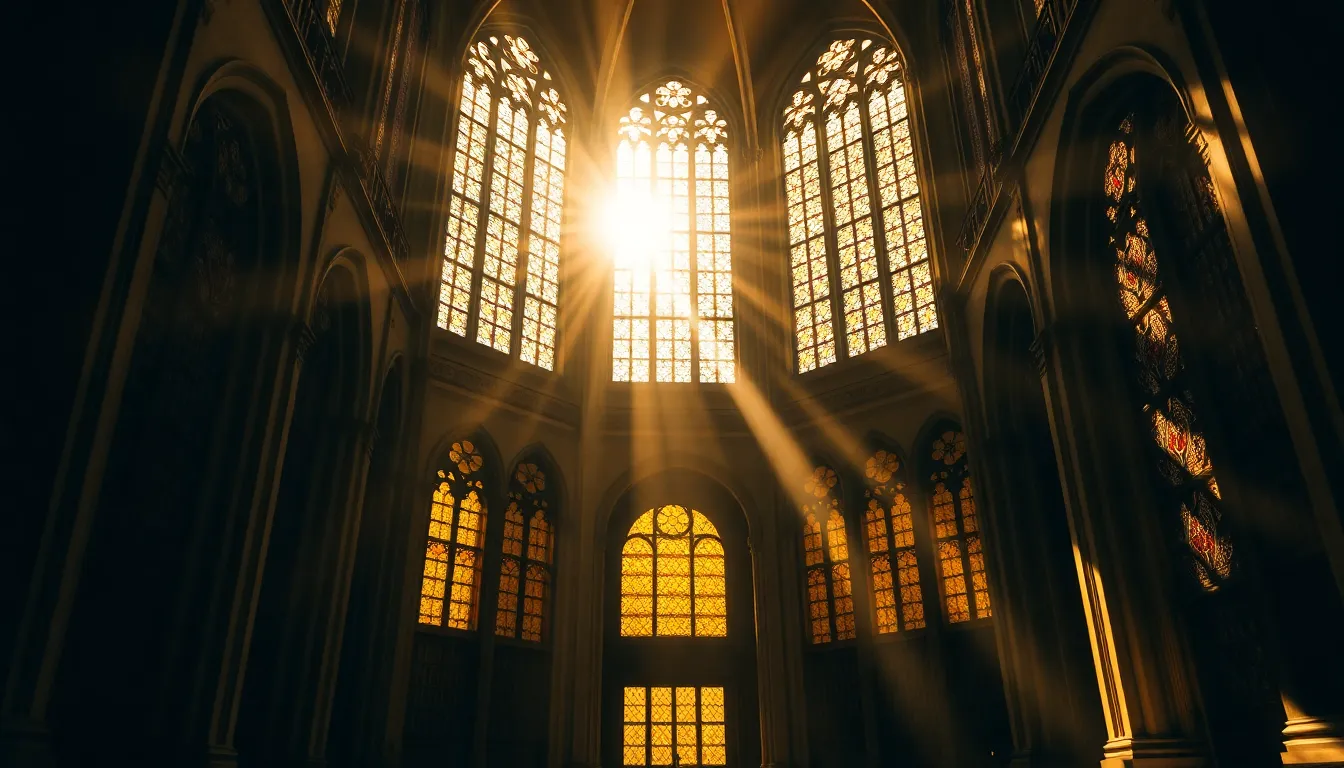
There is a moment I wait for with every group inside Leon Cathedral, and I try not to spoil it in advance. We come in out of the bright Castilian street, the eyes adjust, and then people look up and stop talking. The whole interior is glowing. There is so much stained glass and so little wall that the building seems to be built out of colored light. I have heard people gasp. I have seen group leaders, people who have led trips for years, just stand there with their head tipped back.
Spaniards call it “la Pulchra Leonina,” the beautiful one of Leon. It is one of the purest Gothic cathedrals in Spain, and it sits squarely on the Camino de Santiago, which means it has been receiving footsore pilgrims for the better part of a thousand years. Let me tell you what makes it extraordinary and how to give your group that moment of looking up.
A Cathedral Built to Hold Light
To understand Leon you have to understand what Gothic architecture was trying to do. The medieval mind associated God with light. The whole technical revolution of Gothic building, the pointed arch, the rib vault, the flying buttress, existed to solve one problem: how to make walls that could carry the weight of a tall stone roof while leaving room for windows. The more of the structural load you could move to slender pillars and external buttresses, the more of the wall you could replace with glass.
Leon takes this idea further than almost any cathedral in Spain. Begun in the thirteenth century, around 1205 and pushed forward strongly from the 1250s, it was modeled closely on the great French cathedrals, especially Reims. The builders thinned the walls to the limit and filled the gaps with glass. The result is roughly 1,800 square meters of stained glass, an amount that puts Leon in the company of the most luminous Gothic churches anywhere, including its French models.
The Stained Glass
The windows span from the thirteenth century to the present, with the oldest and finest dating to the High Gothic period. The great rose windows and the soaring upper windows of the nave, the clerestory, are the glory of the place. The lower windows show saints and biblical scenes; the higher you look, the more abstract and brilliant the color becomes, so that the upper reaches of the building dissolve into pure radiance.
I tell groups to do three things. First, just stand near the entrance and take in the whole effect before analyzing anything. Second, walk slowly and watch how the color moves across the stone floor and pillars as you go, because the light is never the same twice. Third, find the great rose window in the west front and give it time. Photographs flatten these windows completely; you have to be in the room.
The other thing I always say: the time of day and the weather matter enormously. A bright morning or late afternoon, when the sun comes through at an angle, sets the windows on fire. An overcast noon is still beautiful but quieter. If your itinerary has flexibility, aim for sun.
The Pilgrim City on the Camino Frances
Leon is one of the great cities of the Camino Frances, the main French route of the Camino de Santiago. By the time pilgrims reach Leon, they have crossed the high plains, the meseta, and the city has long been a place to rest, resupply, and worship before pressing on toward Galicia and Santiago de Compostela. For a thousand years the cathedral has been the spiritual heart of that pause.
This pilgrim context is what lifts Leon above a museum visit for a faith group. Your people are walking into a church built specifically to receive travelers on a sacred journey, in a city whose whole identity was shaped by that road. If your group is walking even a stretch of the Camino, Leon is a meaningful overnight. I write more about the Camino itself in our guide to spiritual sites in Spain.
San Isidoro and the Royal Pantheon
Leon has a second treasure that I never let a group miss, and many tour itineraries skip it. The Royal Collegiate Basilica of San Isidoro, a short walk from the cathedral, is older, Romanesque rather than Gothic. Tucked inside is the Panteon de los Reyes, the Royal Pantheon, the burial place of the medieval kings and queens of Leon. Its low Romanesque vaults are covered in some of the best-preserved Romanesque frescoes in Europe, painted in the twelfth century in colors that are still vivid. People sometimes call it the Sistine Chapel of Romanesque art. It is small, intimate, and far less crowded than the cathedral, and it gives a group an entirely different mood, ancient, painted, and close.
How Leon Fits a Faith Itinerary
Leon and Burgos are the two great Gothic cathedral cities of the northern route, a few days’ walk or a couple of hours’ drive apart on the Camino Frances. I almost always pair them, because they are a beautiful study in contrast. Burgos, which I cover in our Burgos Cathedral guide, is ornate, elaborate, encrusted with chapels and gilding, the church of a powerful court. Leon is purer, lighter, more vertical, a building reduced almost to light and structure. Seeing them within a few days of each other teaches a group more about Gothic architecture than any lecture.
For groups continuing toward Santiago, Leon points the way west. For groups working the cathedral cities of Castile, it pairs with Burgos in the north and, further south, with the very different world of Toledo Cathedral.
Planning the Visit
The cathedral sits in the heart of Leon’s old city, surrounded by walkable squares, cafes, and the famous Barrio Humedo with its tapas bars. This makes Leon comfortable and enjoyable for a group with older members; there is good food, level ground, and pleasant places to sit between visits.
Give the cathedral at least an hour, more if your group lingers over the glass, which they will. Add San Isidoro and the Royal Pantheon, which need about forty-five minutes and reward the detour. If you can, structure the day so you are inside the cathedral when the sun is low and the glass is at its most alive. And build in unhurried time in the squares; Leon is a city that rewards sitting still.
FAQ: Visiting Leon Cathedral
What is Leon Cathedral famous for?
Leon Cathedral is famous above all for its stained glass, roughly 1,800 square meters of it, which makes the interior feel as though it is built out of colored light. It is one of the purest French-style Gothic cathedrals in Spain, begun in the thirteenth century and modeled on great French churches like Reims. Spaniards call it “la Pulchra Leonina,” the beautiful one of Leon. It also sits on the Camino de Santiago, giving it deep significance as a pilgrim church.
Is Leon on the Camino de Santiago?
Yes. Leon is one of the major cities of the Camino Frances, the main French route of the Camino de Santiago. Pilgrims reaching Leon have crossed the high plains, the meseta, and the city has long been a place to rest and worship before continuing toward Galicia and Santiago de Compostela. For a thousand years the cathedral has been the spiritual heart of that stop, which makes Leon a meaningful overnight for groups walking the route.
What is the best time of day to see the stained glass?
A bright morning or late afternoon, when the sun comes through the windows at an angle, sets the glass at its most brilliant. The color spills across the floor and pillars and the upper windows seem to glow from within. An overcast day is still beautiful but quieter and more muted. If your itinerary allows, aim to be inside the cathedral when the sun is out and low in the sky.
What else should a group see in Leon besides the cathedral?
Do not miss the Royal Collegiate Basilica of San Isidoro, a short walk away. Inside it is the Royal Pantheon, the burial place of the medieval kings of Leon, with twelfth-century Romanesque frescoes so well preserved and vivid that the chapel is sometimes called the Sistine Chapel of Romanesque art. It is intimate and far less crowded than the cathedral, and it gives a group an entirely different, more ancient mood.
How does Leon compare with Burgos Cathedral?
They are a wonderful contrast and best seen together. Burgos is ornate and elaborate, encrusted with chapels, spires, and gilding, the church of a powerful royal court. Leon is purer, lighter, and more vertical, a building reduced almost to light and structure. They sit a few days apart on the Camino Frances, so a group can see both within the same journey and learn far more about Gothic architecture by comparing them directly.
If a journey through the cathedral cities of northern Spain appeals to your community, I would be glad to help you weave Leon, Burgos, and the Camino into one trip timed for the best light. Talk it through with us here.