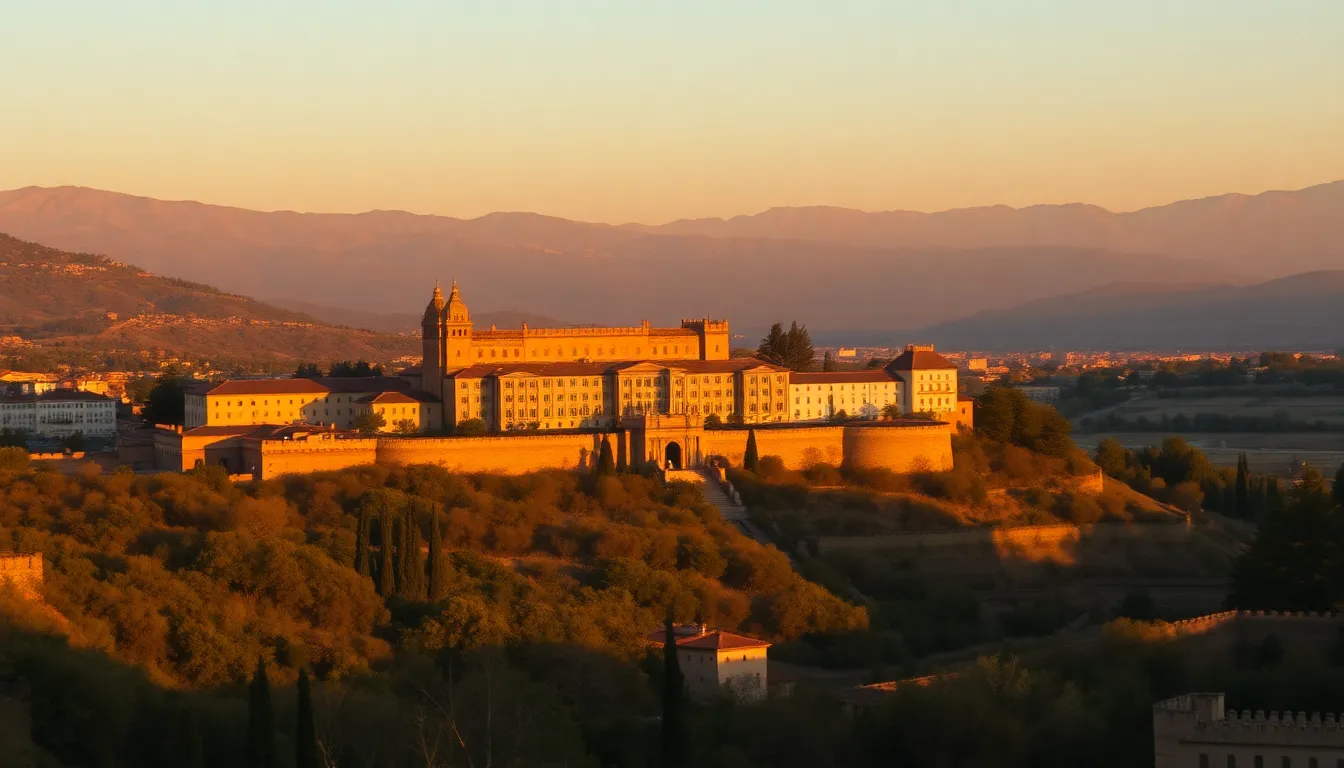
Some groups do not want a focused trip. They want Spain, the whole thing, and they have the time to do it right. When a leader tells me their congregation is ready for the full sweep, this is the route I build: twelve days that run across the three great regions, Castile in the center, Andalusia in the south, and Catalonia in the northeast, with nothing important left out and nothing rushed.
The reason this is twelve days and not ten is that ten days makes you choose. You either skip a Catalan city or you compress Andalusia. Twelve days removes that compromise. Madrid, Toledo, Cordoba, Seville, Granada, Valencia on the coast, Barcelona, and Girona, each with the time it deserves, plus a built-in rest day so the group arrives at the end still wanting more rather than counting the hours to the airport.
This is the complete version of our 10-day Spain heritage itinerary, with the two extra days that turn a strong trip into a complete one. If your community wants the full picture of Jewish, Christian, and Muslim Spain, this is the route.
Days 1-2: Madrid
Your group lands in Madrid and we handle the transfer and hotel. Day one is for rest, no exceptions. Day two begins in earnest at the Prado, which holds a collection most visitors walk past: works documenting Jewish and Christian life in medieval Spain, the cultural world that existed before 1492. Starting here gives the group a visual foundation for everything ahead.
The afternoon of day two is an easy introduction to Madrid itself, the Plaza Mayor, the old center, a city that anchors the trip without being its emotional core.
Group leader note: Jet lag hits older congregants hardest. Schedule the Prado for late morning, not early. Give people a slow breakfast. Retiro Park is a five-minute walk from the Prado and a good place for the group to gather.
Days 3-4: Toledo
We drive south to Toledo and give it two full days, because Toledo is the emotional center of the Spanish heritage story and deserves the time.
Toledo holds two of the three medieval synagogues still standing in Spain. El Transito, built in 1357, carries Hebrew inscriptions naming it a crown of beauty. Santa Maria la Blanca, older by a century, shows the Moorish influence on Jewish life in its white horseshoe arches. The Sephardic Museum, the old Juderia, and the great Gothic cathedral all sit within a walk of each other, because Toledo was shaped by three faiths in close quarters for centuries.
Two days lets the group go below the surface: a full morning in the cathedral for Christian travelers, unhurried time in the synagogues and the Juderia, and an evening when the day-trippers have left and the city belongs to those who stayed.
Group leader note: Toledo’s old city is built on a steep hill with cobblestoned, uneven streets. Plan a slower pace for older congregants and build in seated breaks. The overnight stays mean the group is never rushed by a same-day return to Madrid.
Day 5: Cordoba
We drive south to Cordoba, city of Maimonides. The synagogue is small, one of only three medieval synagogues left in Spain, with stucco and Hebrew inscriptions that echo the Alhambra. The Juderia wears Maimonides openly. Next door stands the Mezquita, a mosque that became a cathedral, with Roman columns, a forest of Moorish arches, and a Renaissance nave inside. With a good guide reading each layer, it becomes the physical history of every faith that ruled Spain.
Group leader note: Cordoba gets brutally hot in summer, past 40 degrees Celsius in the old city. Schedule the synagogue and Mezquita for the morning and take an indoor lunch before the afternoon peak.
Days 6-7: Seville and Granada
Seville is a city of layers: the Alcazar, the cathedral, and the old Jewish quarter of Santa Cruz, where the community lived before the pogroms of 1391. The narrow streets carry that weight, and the cathedral and Alcazar tell the story of a city where power changed hands across centuries.
Granada is the Alhambra, with a Jewish chapter most guidebooks skip. Samuel ibn Naghrillah became the first Jewish grand vizier of a Muslim kingdom, and Jewish scholars served the Nasrid court. The palace your group walks through was shaped in part by Jewish intellectual life. Two days here lets you do both cities without compressing either.
Group leader note: The Alhambra requires advance booking and timed entry. We handle it, but the Granada day is structured around the assigned slot. Plan around it, not the other way around. Evening Alhambra visits, available in some seasons, are genuinely beautiful for groups that can manage the later hour.
Day 8: Rest Day on the Coast
After a week of dense, emotionally heavy history, day eight is a deliberate rest day. We move toward the Mediterranean coast, and the group has a slow day: no synagogue, no cathedral, no timed entry. Just rest, a good meal, and the sea.
I have learned that the rest day is not lost time. It is what lets the second half of the trip land. Groups that push straight through arrive at Barcelona too tired to feel it.
Group leader note: Protect the rest day. The pressure to add a site is real, especially from the most energetic members. But the rest day serves the whole group, and it is the difference between a group that finishes strong and one that limps to the airport.
Day 9: Valencia
We travel up the coast to Valencia, a city most heritage itineraries skip and a real reason this trip is twelve days rather than ten. Valencia had a significant medieval Jewish quarter, and the city blends its Roman, medieval, and modern layers in a way that gives the group a different texture from the inland cities. The cathedral, the old silk exchange, and the historic center make for a rich, less crowded day.
Group leader note: Valencia is the bonus that the extra days buy you. It breaks the long stretch between Andalusia and Catalonia, and because it is off the standard tourist circuit, the group often finds it a welcome surprise. Keep the day relaxed; it sits between two intense regions.
Days 10-11: Barcelona and Girona
We continue to Barcelona, whose Gothic Quarter holds El Call, the medieval Jewish quarter, with a small synagogue of debated but very early date. Barcelona also offers the Sagrada Familia and Montserrat Monastery in the hills nearby for Christian travelers, which the extra time lets us include.
Girona, an hour north, has one of the best-preserved Jewish quarters in Europe and was a center of Kabbalah, home to Nachmanides. The Museum of Jewish History sits inside the Call. Girona is quieter than Barcelona, and for many groups it becomes the high point of the Catalan days.
Group leader note: Barcelona has real pickpocketing near the Ramblas and the Gothic Quarter. Brief your group plainly: bags closed and close, no stopping for street performers, stay together in the crowds. Girona’s Call has steep stairs and rewards a slow pace.
Day 12: Departure from Barcelona
The final day is departure from Barcelona, timed around the group’s flights. If departures are late, a final walk through the Call or a closing reflection at the hotel gives the group a moment to gather twelve days of experience before scattering home.
Group leader note: If the group is flying out of Madrid but ending in Barcelona, the internal flight is about ninety minutes, and we build the transfer timing so there is no rushing. A closing session in the morning is usually worth more than one last site.
FAQ: 12-Day Complete Spain Heritage Itinerary
Why twelve days instead of ten for a Spain heritage tour?
Because ten days forces a choice: you either compress Andalusia or skip a Catalan city. Twelve days removes that compromise. It adds Valencia on the coast, a built-in rest day, and the room to give Toledo, Seville, and Granada the full time they deserve. If your group wants all three regions of Spain without rushing, twelve days is the honest length. If time is tighter, the 10-day itinerary covers the core.
Which regions does this itinerary cover?
All three of Spain’s great heritage regions. Castile in the center, with Madrid and Toledo. Andalusia in the south, with Cordoba, Seville, and Granada. And Catalonia in the northeast, with Barcelona and Girona, plus Valencia on the coast linking the south to the northeast. Between them they hold all three of Spain’s surviving medieval synagogues, the Mezquita, the Alhambra, and the country’s great cathedrals.
Is this trip suitable for a mixed Jewish and Christian group?
Yes, and the extra days make it work even better. In most Spanish cities the synagogues, cathedrals, and the Mezquita sit a short walk apart, so the same day holds meaning for both communities. The twelve-day length lets us add the Christian sites like Montserrat and the Sagrada Familia alongside the Sephardic quarters without cutting either tradition short. For a deeper Sephardic focus, see the 7-day Jewish heritage route.
How do you keep a twelve-day trip from wearing the group out?
The rest day on the coast and the lighter Valencia day are built in for exactly this reason. We also use overnight stays in each city rather than long same-day returns, and we keep transfers comfortable by private coach with hotel pickup and dropoff. Pacing is what makes a long trip sustainable for a mixed-age group, and we design it in from the start.
Can Heritage Tours customize this twelve-day itinerary?
Every itinerary we build is customized. If your group wants three days in Toledo, wants to swap Valencia for more time in Andalusia, or wants to add Santiago de Compostela for a Christian focus, we reshape it. You can read more on our Spain destination page and our group heritage tours page, where group leaders travel free with fifteen or more participants.
If your congregation is ready for the full Spain, all three regions and nothing important left out, I would love to build it with you. Tell me about your group and the time you have, and we will shape the complete trip together. Contact us whenever you are ready to start.