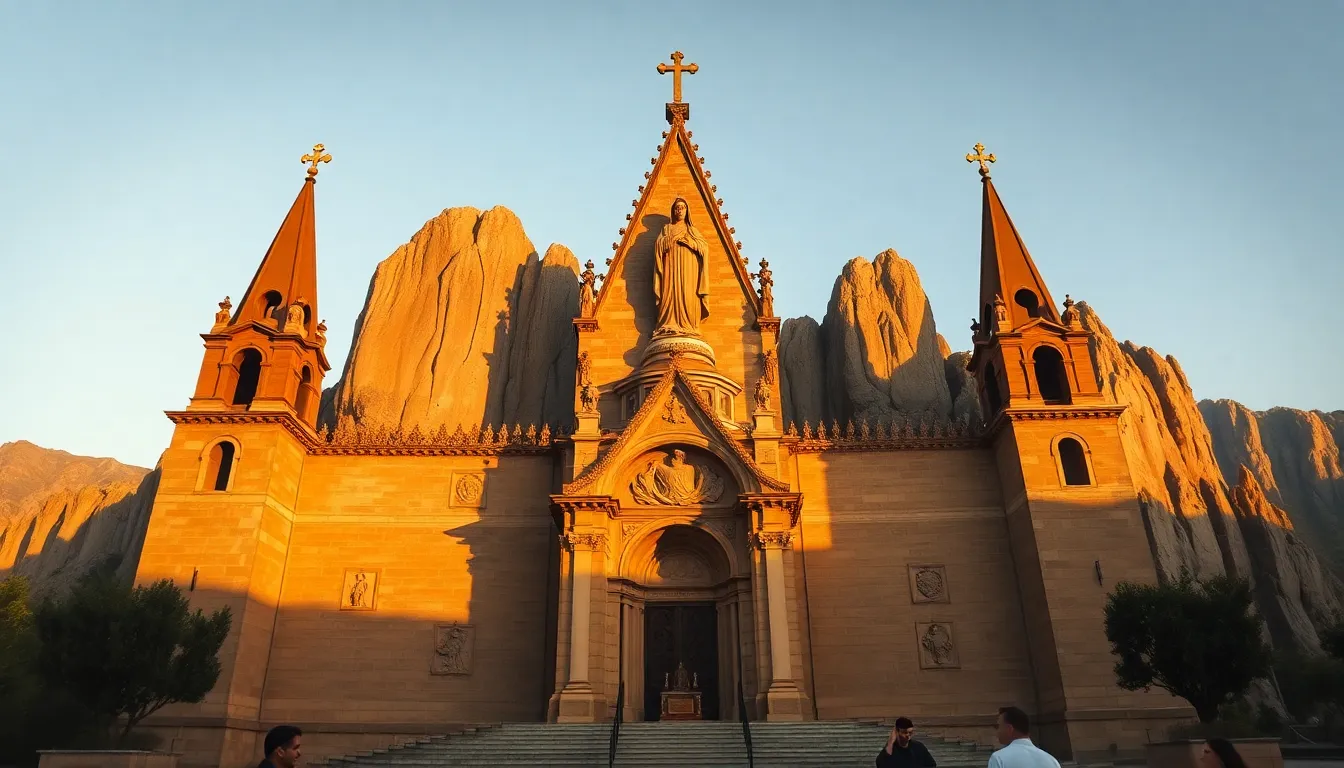
The first time I brought a group to all three of Spain’s great Marian shrines in a single trip, I was not sure it would hold together. Zaragoza, Montserrat, and Guadalupe sit far apart, in three different corners of the country, and each one carries a very different story. By the end of that journey, the pastor traveling with us said something I have never forgotten. He said the distances were the point. Spain does not gather its devotion to Mary in one place. It spreads it across the whole peninsula, and following it teaches you something about the country and the faith both.
If you are a pastor or an educator thinking about a Marian pilgrimage in Spain, this guide is the conversation I have with every group leader before we map the route. Where the shrines are, what each one means, and how to build a journey that connects them without exhausting your people.
Why Spain Is a Marian Country
Devotion to Mary runs through Spanish history in a way that is hard to overstate. The reconquest of the peninsula, the age of exploration, the founding of cities across the New World, all of it carried Marian devotion at its center. Conquistadors named towns after shrines back home. Religious orders carried images of the Virgin across the Atlantic. The result is a country where nearly every region has its own Marian patron and its own sanctuary.
For a heritage group, this means you are not visiting isolated churches. You are tracing a thread that connects medieval legend, the Spanish identity, and the spread of Christianity across two continents. That thread is what makes a Marian pilgrimage in Spain different from a simple tour of beautiful basilicas.
The Basilica del Pilar in Zaragoza
The Basilica del Pilar sits on the bank of the Ebro River in Zaragoza, and it is the oldest of Spain’s great Marian shrines by tradition. The story holds that the Apostle James, while preaching in Spain, received a visit from Mary, who appeared to him standing on a pillar of jasper and asked that a church be built on the spot. That pillar is still venerated inside the basilica today.
What strikes most groups is the scale. The current basilica is enormous, crowned with domes and towers along the river. Inside, pilgrims line up to touch and kiss an exposed section of the pillar through a small opening in the wall behind the chapel. The Pilar feast on October 12 draws crowds from across Spain.
For a Protestant group, I am always direct about the pillar tradition. It is a legend rather than a documented event, and I say so. But the basilica itself, the river setting, and the centuries of devotion that built this place are real and worth standing inside. The Pilar is also one of the easier shrines to reach, sitting between Madrid and Barcelona on the main rail line. If you can only fit one Marian site into a broader Spain itinerary, this is often the practical choice. I cover the full pillar tradition and the basilica’s history in the Basilica del Pilar in Zaragoza.
Montserrat and the Black Madonna
Montserrat sits on a jagged mountain about an hour northwest of Barcelona, and for many groups it is the emotional center of a Marian pilgrimage. The Benedictine monastery has clung to this rock since the 10th century. At its heart is La Moreneta, the Black Madonna of Montserrat, a wooden statue from the 12th century that is the patron of Catalonia.
The setting does a great deal of the spiritual work here. You arrive by cremallera railway or cable car, climbing through serrated peaks that look like nothing else in Europe. The basilica is a working monastery, not a museum. Pilgrims file past the Black Madonna, where many reach out to touch the orb she holds. The Escolania, one of the oldest boys’ choirs in Europe, sings most days, and hearing them in that space stays with people.
For non-Catholic groups, Montserrat works across denominational lines because the mountain itself carries weight. The silence, the height, and the sense of a praying community that has lived on this rock for a thousand years speak to anyone. I walk through the full story of the shrine and its history in the Marian shrines of Spain and the surrounding spiritual landscape.
The Monastery of Guadalupe
Guadalupe lies in the rugged hills of Extremadura, far from the usual tourist routes, and that remoteness is part of its character. The Royal Monastery of Santa Maria de Guadalupe holds a small dark image of the Virgin that became one of the most important shrines in medieval Spain. Columbus came here before and after his voyages. The first Indigenous people brought from the Americas were baptized at this monastery. The connection between this shrine and the Marian devotion that spread across Latin America runs directly through these walls.
The monastery was tended for centuries by the Hieronymite order, and the building itself is a layered treasure of Gothic, Mudejar, and Baroque work. For groups tracing the link between Spanish faith and the New World, Guadalupe is essential. I cover the shrine, its Black Madonna, and the American connection in depth in the Monastery of Guadalupe and its Black Madonna.
Building the Route
Here is the honest challenge with a Marian pilgrimage in Spain. The three great shrines do not line up neatly. Zaragoza sits in the northeast, Montserrat near Barcelona, and Guadalupe deep in the west. Connecting all three in one trip means real driving days or a careful mix of rail and coach.
Most groups I work with do one of two things. Some build a focused northeastern route, pairing the Pilar in Zaragoza with Montserrat near Barcelona, which sit a comfortable distance apart and combine well with a few days in Catalonia. Others commit to the full Marian arc, which means crossing the country and accepting longer transfer days in exchange for the complete picture, including Guadalupe and its New World story.
There is no wrong answer. The right route depends on how many days you have, how much your group can handle on a coach, and whether the American connection at Guadalupe is central to your purpose. This is exactly the conversation I want to have with you early, because it shapes everything else. If you want to see how a Camino-and-shrines pilgrimage gets structured end to end, I lay it out in planning a Christian pilgrimage to Spain.
One practical note that matters for the budget conversation with your congregation: with Heritage Tours, group leaders travel free with fifteen or more participants. That threshold is easier to reach when you start building your group early, so the planning timeline and the route choice are worth settling together near the beginning. You can see how the group leader experience works on our group heritage tours page.
FAQ: Marian Shrines of Spain
What are the most important Marian shrines in Spain?
The three great Marian shrines are the Basilica del Pilar in Zaragoza, the Monastery of Montserrat near Barcelona, and the Monastery of Guadalupe in Extremadura. Each carries a distinct tradition. The Pilar is tied to the Apostle James, Montserrat to the Black Madonna of Catalonia, and Guadalupe to the spread of Marian devotion across the Americas. Many regions also have their own local Marian patrons and sanctuaries.
Can a Protestant group visit Marian shrines meaningfully?
Yes, and many do. The shrines hold real historical and spiritual weight beyond the specific Catholic devotions practiced there. At Montserrat, the mountain setting and the praying community speak across denominations. At Guadalupe, the connection to the age of exploration matters for any group interested in church history. I am always direct with groups about which traditions are legend and which are documented, and that honesty tends to deepen the visit rather than diminish it.
Do I need to visit all three great shrines in one trip?
No, and most groups do not. The three shrines sit far apart, so combining all of them means longer travel days. Many groups pair the Pilar and Montserrat in a focused northeastern route, while groups specifically tracing the New World connection prioritize Guadalupe. The right combination depends on your days available and your group’s purpose.
Is Guadalupe worth the extra travel?
For groups interested in the link between Spanish faith and the Americas, yes. Guadalupe is remote, set in the Extremadura hills, but its connection to Columbus and the first baptisms of Indigenous people from the New World makes it uniquely significant. If that story is central to your group’s purpose, the travel is justified. If your focus is elsewhere, the northeastern shrines may serve you better.
How many days should a Marian pilgrimage in Spain take?
A focused route pairing two shrines with a city base usually works in about seven to nine days. The full Marian arc across the country, including Guadalupe, runs longer, typically ten days or more, because of the transfer distances. We help you match the itinerary to the time your community can commit.
If you are weighing a Marian pilgrimage for your congregation, I would be glad to help you think through which shrines will resonate most and how to connect them without wearing your people out. Reach out whenever you are ready to start that conversation.