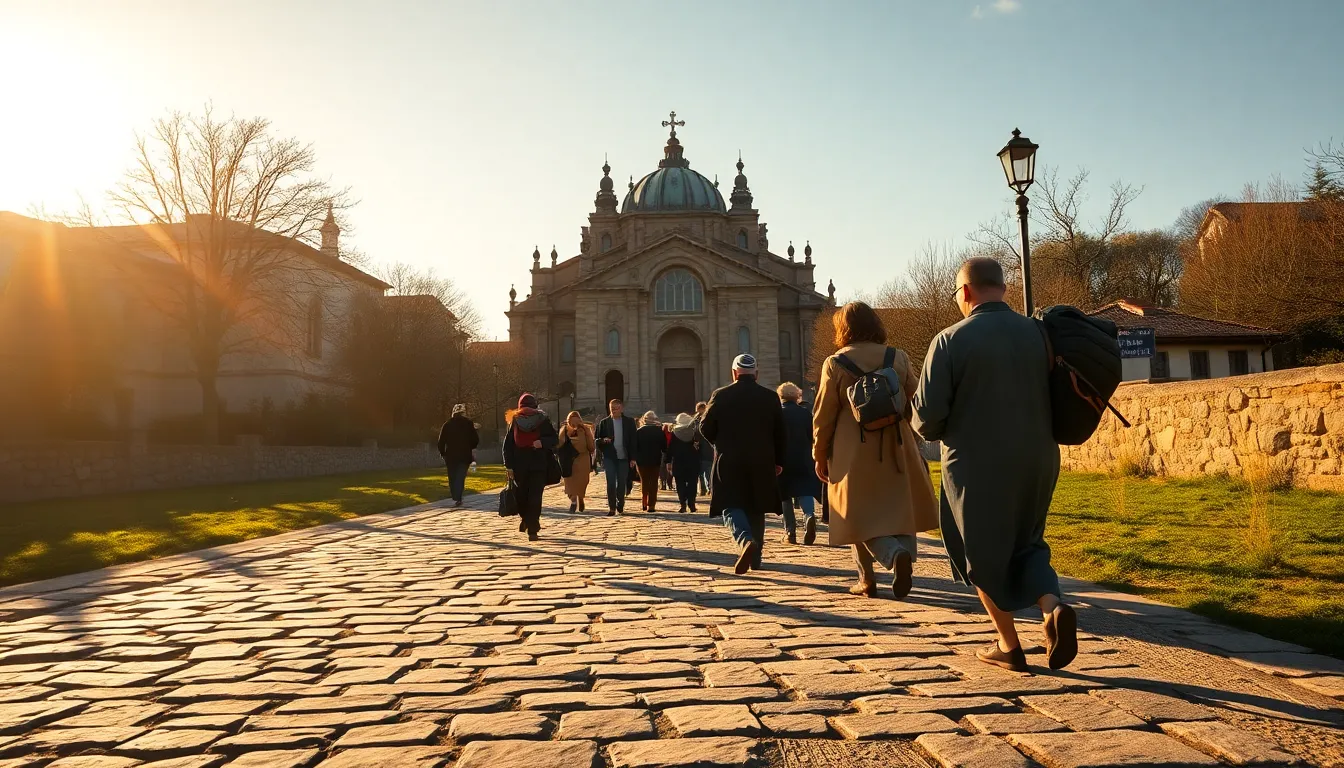
Every Christian pilgrimage to Spain I have planned started with the same problem, and it is a good problem to have. There is too much. The Camino de Santiago alone could fill a trip. So could the great Marian shrines. So could Andalusia’s layered cathedrals. The art of planning a Spain pilgrimage is not finding enough to do. It is deciding what to leave out so the journey has a shape and your people are not exhausted by day four.
If you are a pastor or educator carrying the responsibility of leading a group, this is the planning conversation I have at the start. How to choose a focus, how to structure the days, and how to handle the practical decisions that make or break a group journey.
Start With the Spiritual Purpose, Not the Map
Before we talk about cities or routes, I ask group leaders one question. What do you want your people to encounter? The answer shapes everything that follows.
Some groups come for the Camino, for the experience of walking toward something sacred. Some come to trace Marian devotion across the country. Some want the deep history of Spanish Christianity, the cathedrals and monasteries and the contested, shared faith landscape of the south. Some want a mix. There is no wrong answer, but you have to choose, because Spain is large and these threads run through different regions.
Once the purpose is clear, the map almost draws itself. A Camino-focused group looks to the green north and the route to Santiago. A Marian group looks to the Pilar, Montserrat, and Guadalupe, which I map out in the Marian shrines of Spain heritage guide. A history-focused group looks south to Cordoba and its layered Mezquita-Cathedral and the cities of Andalusia. Knowing your purpose first keeps you from trying to do all of it and accomplishing none of it well.
The Camino as the Spine
For most Christian pilgrimages, the Camino de Santiago becomes the spine of the journey, even if the group does not walk the whole thing. The Camino is not a hiking trail. It is a pilgrimage route walked by Christians since the 9th century, ending at the Cathedral of Santiago de Compostela, where tradition holds the remains of the Apostle James are kept.
The freeing thing for a group leader is that you do not have to walk 800 kilometers. Most groups I lead walk the final stage, from Sarria to Santiago, which takes about five days and qualifies pilgrims for the Compostela certificate. Others walk a single representative day and then travel by coach. Some do not walk at all and simply receive the group at the cathedral for the Pilgrim’s Mass. The spiritual heart of the Camino is the practice of moving toward something sacred, and even a short stretch delivers it.
Attending the Pilgrim’s Mass in Santiago, standing among people who have walked for weeks, is one of the moments groups remember most. When the great Botafumeiro incense burner swings through the transept, the whole cathedral seems to hold its breath. Building your itinerary so the Camino segment leads to this arrival gives the journey a natural climax.
Structuring the Days
The single most common mistake I see in group itineraries is overpacking. A pilgrimage is not a sightseeing race. It is a journey of attention, and attention needs space. Here is how I structure the days to protect that.
Pace for a Mixed-Age Group
Most faith groups span a wide range of ages and abilities. I build days around that reality. One major site in the morning, a relaxed lunch, and an afternoon that is lighter, often a walk, a reflection, or free time. Two heavy site visits in a single day sounds efficient on paper and feels punishing in practice. Where the Camino is involved, I match the daily walking distance to the least able walkers, not the most able, and arrange coach support so no one feels stranded.
Build in Quiet
The sites are beautiful, but beauty alone is not why your people came. I build deliberate quiet into each day, time to sit in a basilica without commentary, a moment for the group to pray or reflect together, an unhurried pass through a shrine rather than a queue. These quiet windows are where the pilgrimage actually happens. A good guide knows when to stop talking, and that restraint is part of what you are paying for.
Leave Room for the Unplanned
The most meaningful moments on a pilgrimage are often the ones no itinerary predicted. A conversation on a path, a small chapel the group stumbles into, an evening that runs long because nobody wanted it to end. An overpacked schedule kills these. I always leave margin in the day so the journey can breathe.
The Practical Decisions
Timing
Spring and fall are the sweet spots for a Spain pilgrimage. The weather is comfortable for walking and outdoor site visits, and the summer heat in the south and on the Camino can be genuinely taxing for a mixed-age group. If your purpose includes a Holy Year observance, such as a Jubilee at Santo Toribio de Liebana, check which years qualify and build toward one. Liturgical timing, around Lent, Easter, or a feast day, can add a layer of meaning worth planning around.
Lead Time
For a group of fifteen or more, I recommend eight to twelve months of planning time. That gives you room to secure good accommodations, coordinate any site access and Camino logistics, and, just as importantly, market the trip to your congregation and build your numbers. Pilgrimages that start late tend to end up with second-choice hotels or struggle to fill the group.
Group Size and the Leader Benefit
One thing worth knowing for the conversation with your church: with Heritage Tours, group leaders travel free with fifteen or more participants. That math matters when you present the trip to your community, and reaching fifteen is far easier with enough lead time to build excitement. Our group heritage tours page explains how the group leader experience works, and you can see the full range of what Spain offers on our Spain destination page.
Logistics That Quietly Make or Break a Trip
The things groups never think about are the things that determine whether a pilgrimage feels smooth or stressful. Coach quality and reliable drivers. Hotels close enough to the sites to walk. Restaurants that can handle a group and any dietary needs. Realistic transfer times between regions, because Spain is large and the great sites are spread far apart. A guide who knows the church history accurately and can frame each site for a faith group. These are not glamorous, but they are where a well-run pilgrimage is actually won.
Putting It Together
A strong Spain pilgrimage usually has three elements. A clear spiritual focus that shapes the route. A Camino segment, even a short one, that gives the journey its pilgrim character and its arrival in Santiago. And a pace that leaves room for quiet and the unplanned. Get those three right and the rest, the cities, the shrines, the cathedrals, falls into place around them. You can see how the individual sites connect across the country in Spain’s spiritual sites.
FAQ: Planning a Christian Pilgrimage to Spain
How long should a Christian pilgrimage to Spain be?
Most group pilgrimages run from about eight to twelve days. A Camino-focused journey that walks the final stage from Sarria to Santiago needs roughly five days for the walk plus time on either end. Routes that add the Marian shrines or the cities of the south run longer because of the transfer distances. We help you match the length to your community’s available time and energy.
Do we have to walk the entire Camino de Santiago?
No. Most groups walk only the final stage, from Sarria to Santiago, which takes about five days and qualifies pilgrims for the Compostela certificate. Others walk a single representative day or do not walk at all and receive the group at the cathedral for the Pilgrim’s Mass. The spiritual heart of the Camino is the practice of pilgrimage, not the distance, so even a short stretch delivers it.
When is the best time to lead a pilgrimage to Spain?
Spring and fall offer the most comfortable weather for walking and outdoor visits, while summer heat in the south and on the Camino can be hard on a mixed-age group. Liturgical timing around Lent, Easter, or a feast day can add meaning, and if a Holy Year observance is part of your purpose, it is worth building toward a qualifying year. We can walk you through the trade-offs for your specific group.
How far in advance should we start planning?
For a group of fifteen or more, plan eight to twelve months ahead. That gives you time to secure good accommodations, coordinate Camino and site logistics, and market the trip to your congregation so you reach the numbers that make the group work. Starting early also makes it far easier to build the excitement that fills a group.
What makes a pilgrimage different from a regular tour?
A pilgrimage is built around spiritual encounter rather than sightseeing. That means a clear spiritual purpose shaping the route, time for prayer and quiet reflection at the sites, a pace that does not exhaust your people, and accurate church-history framing at each stop. The goal is depth, not coverage. We structure pilgrimages so the journey has a shape and a climax rather than a checklist of photographs.
If you are beginning to imagine a pilgrimage for your community, I would love to help you find its focus and build it from there. The first conversation is usually about purpose, and it is my favorite one to have. Get in touch whenever you are ready to start.