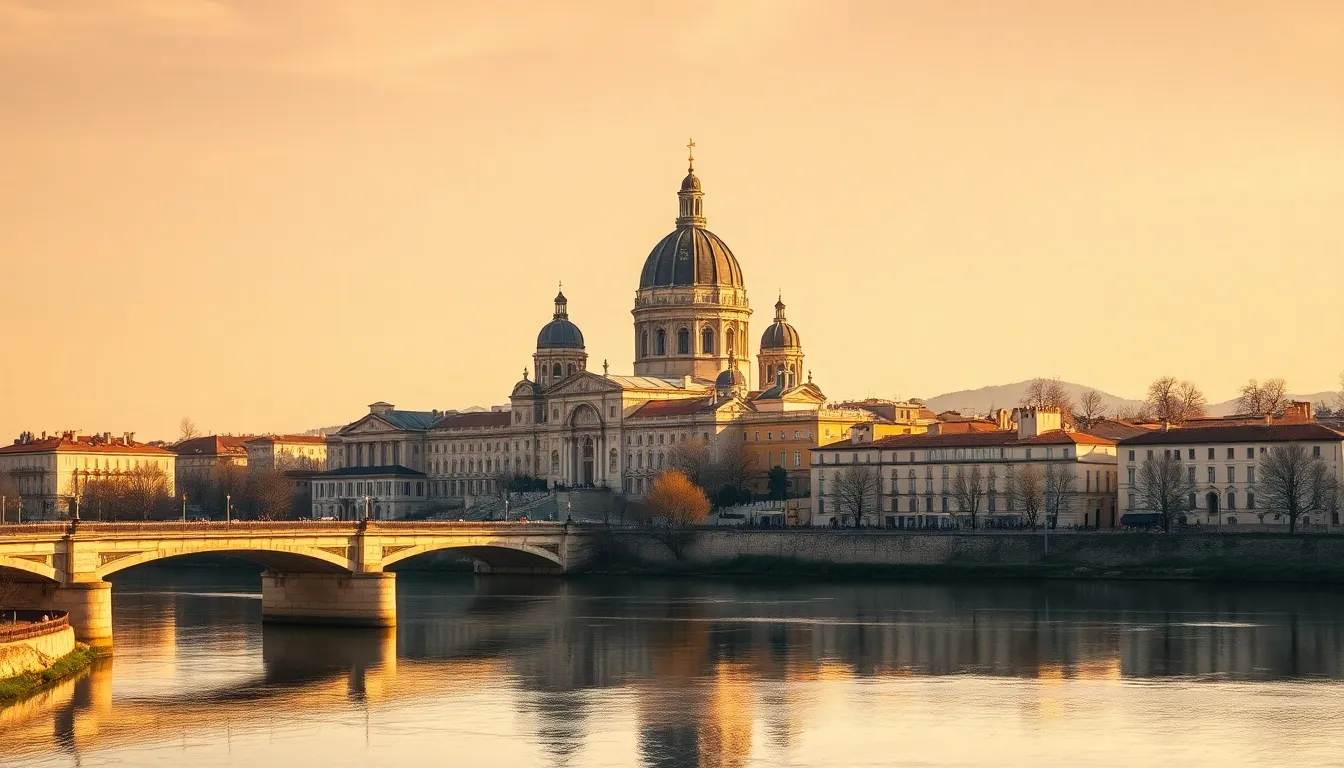
I remember the first time a group of mine came over the bridge into Zaragoza and saw the Basilica del Pilar rise up along the Ebro. Someone in the back of the coach actually gasped. The thing is enormous, a long row of domes and towers running beside the river, and it catches people off guard because Zaragoza is not on most travelers’ Spain lists. That is exactly why I love bringing groups here. They come without expectations and they leave moved.
If you are a pastor or educator considering Zaragoza for your group, this is the background I give before we arrive. The tradition behind the pillar, the basilica itself, and how to make the visit count for your people.
The Pillar Tradition
The story at the heart of this place is one of the oldest Marian traditions in the Christian world. According to the tradition, the Apostle James the Greater was preaching the gospel in Spain, discouraged and with little to show for it, when Mary appeared to him on the bank of the Ebro. She was standing on a column of jasper, and she asked that a church be built on that spot. The tradition holds that this happened while Mary was still living, which would make it one of the earliest accounts of a Marian apparition anywhere.
That pillar, the column of jasper, is still venerated inside the basilica today. It sits within the Holy Chapel, and a small section is left exposed through an opening in the wall behind the chapel so that pilgrims can touch and kiss it as they pass.
I want to be honest with groups about what this is. The pillar tradition is exactly that, a tradition. It is not a documented historical event, and there is no contemporary record of it. I say this plainly, especially to Protestant groups, because I have learned that honesty builds trust and trust deepens the experience. What is undeniably real is that people have believed this story and built on this spot for many centuries, and that devotion is part of the fabric of Spanish faith. You can stand inside that history without having to settle the question of the legend.
The Great Basilica on the Ebro
The basilica you see today is largely a work of the Baroque period, designed in part by Ventura Rodriguez in the 18th century, though the site has held a church since the early medieval era. The scale is what defines it. The building stretches along the riverbank with four corner towers and a cluster of domes, the central ones tiled in patterns of blue, white, yellow, and green that flash in the sun.
Inside, the Holy Chapel, the Santa Capilla, is the focal point. The image of the Virgin del Pilar is small, a wooden statue set atop the venerated column, and she is often dressed in an elaborate mantle that changes through the year. The ceiling frescoes include work by Francisco Goya, who was born near Zaragoza and painted here early in his career. Pointing out the Goya frescoes is one of the small pleasures of guiding here, because most groups do not expect to find him on the ceiling.
The basilica is a working place of devotion, not a museum. On October 12, the feast of the Virgin del Pilar, the city fills for one of the largest religious festivals in Spain, with an immense floral offering arranged into a towering display before the Virgin. If your dates fall anywhere near the feast, know that the city will be crowded and joyful and that hotels book early.
Why Zaragoza Works for a Group
Beyond the basilica itself, Zaragoza has practical advantages that I value when building an itinerary. It sits squarely on the high-speed rail line between Madrid and Barcelona, which means you can reach it easily from either city in under an hour and a half. That makes the Pilar one of the most accessible of Spain’s great Marian shrines.
The old city around the basilica is walkable and rewarding. Just steps away stands the cathedral of La Seo, with its remarkable Mudejar exterior, and below the streets you can see Roman ruins from the city’s founding as Caesaraugusta. For a group, this means a single morning can hold the Marian shrine, a second cathedral, and a layer of Roman history without anyone needing to board a coach.
For groups building a broader Marian route, the Pilar pairs naturally with Montserrat near Barcelona, both sitting in the northeastern arc of the country. I lay out how the major shrines connect in the Marian shrines of Spain heritage guide, and you can see how the Pilar fits into a wider faith itinerary in Spain’s spiritual sites.
Making the Visit Count
A shrine visit can become just another stop if you let it. What I encourage group leaders to do is build in time, not rush. Give your people space to walk the basilica slowly, to sit, to pass the venerated pillar at their own pace rather than in a line that feels like a queue. Where possible, we arrange quieter windows so the experience is not swallowed by crowds.
I also encourage leaders to frame the visit before the group walks in. A few words about the tradition, the honesty about what is legend and what is history, and a sense of why this place matters to Spanish faith. That framing turns a beautiful building into a meaningful encounter. If you want to see how a full pilgrimage gets structured around moments like this, I walk through it in planning a Christian pilgrimage to Spain.
One practical note for the budget conversation with your church: with Heritage Tours, group leaders travel free with fifteen or more participants. That threshold shapes how you build and price the trip, and it is easier to reach when you start gathering your group early. Our group heritage tours page explains how the group leader experience works.
FAQ: The Basilica del Pilar
What is the pillar tradition at the Basilica del Pilar?
The tradition holds that Mary appeared to the Apostle James on the bank of the Ebro River in Zaragoza, standing on a column of jasper, and asked that a church be built there. Because the tradition places this during Mary’s lifetime, it is considered one of the earliest Marian apparition accounts. The pillar itself is venerated inside the basilica today. It is a tradition rather than a documented historical event, and we are always clear about that distinction with groups.
Is the Basilica del Pilar suitable for a Protestant group?
Yes. While the specific devotions are Catholic, the basilica’s scale, its history, the Goya frescoes, and its place in Spanish faith are meaningful to any Christian group. We frame the pillar tradition honestly as a tradition rather than documented history, which most Protestant leaders appreciate. The visit works well as an encounter with Spanish religious heritage rather than a devotional act your group must share.
How do I get to Zaragoza for a group visit?
Zaragoza sits on the high-speed rail line between Madrid and Barcelona, reachable from either in roughly an hour to an hour and a half. This makes it one of the most accessible major shrines in Spain and easy to slot into a broader itinerary. Groups can travel by rail or by coach depending on the wider route.
What else is worth seeing in Zaragoza?
The cathedral of La Seo, with its striking Mudejar exterior, stands close to the basilica. Roman ruins from the city’s founding as Caesaraugusta lie beneath the old town. The streets around the basilica are walkable, so a group can take in the Marian shrine, a second cathedral, and Roman history in a single morning without long transfers.
When is the feast of the Virgin del Pilar?
The feast falls on October 12 and is one of the largest religious festivals in Spain. The city fills with pilgrims and a vast floral offering is arranged before the Virgin. If your trip lands near this date, expect crowds and book accommodations well in advance. It is a remarkable thing to witness, but it requires early planning.
If Zaragoza and the Pilar feel right for your community, I would be glad to help you build a visit that gives your people room to take it in. Get in touch whenever you want to start planning.