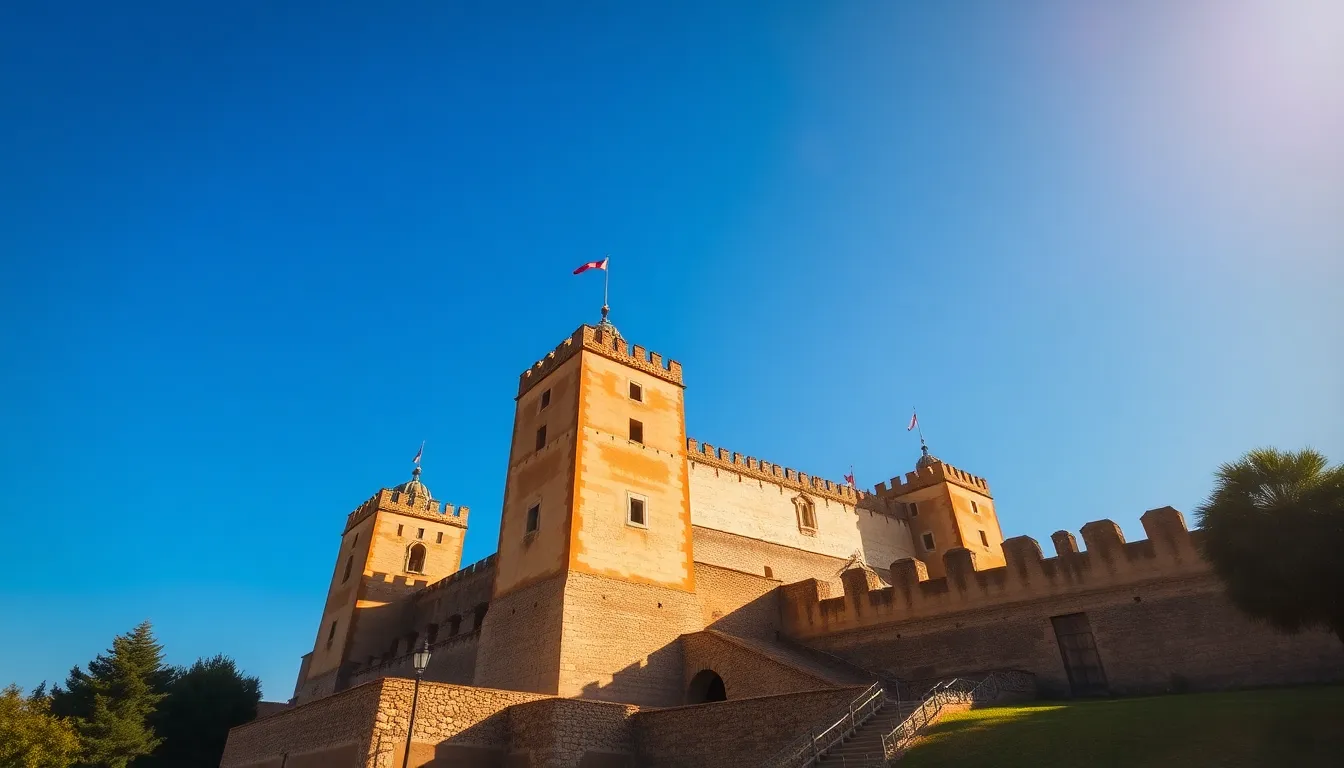
I will tell you the truth about Guadalupe. Getting there is work. It sits in the hills of Extremadura, hours from any major city, on roads that wind through some of the emptiest country in Spain. Every time I plan a route that includes it, part of me wonders if the group will resent the drive. And every time, they do not. Because when you finally come around the last bend and the fortified towers of the monastery rise out of that remote valley, something shifts. This is a place that asked to be hard to reach, and the difficulty becomes part of the meaning.
If you are a pastor or educator weighing Guadalupe for your group, especially if the connection between Spanish faith and the New World matters to you, this is the conversation I have before we commit to the route.
A Shrine in the Extremaduran Hills
The Royal Monastery of Santa Maria de Guadalupe grew up around a small dark image of the Virgin that, according to tradition, was discovered by a herdsman near a river in the early 14th century. A sanctuary was built on the spot, royal patronage followed, and over the centuries the monastery became one of the most important shrines in all of medieval Spain.
The building reflects that long importance. It is a layered work, fortified on the outside like a castle, and inside a remarkable mix of Gothic, Mudejar, and Baroque craftsmanship. The Mudejar cloister, the sacristy hung with paintings by Zurbaran, the carved choir stalls, all of it tells you this was no humble country chapel. Kings came here. The shrine drew pilgrims from across the peninsula. For a group, walking these spaces is a lesson in how central Marian devotion was to the Spanish kingdom.
The Black Madonna
At the heart of the monastery is the image herself, a small carved Virgin and Child, dark in color, set high above the altar in an ornate camarin behind the main church. She is one of Spain’s celebrated Black Madonnas, and like the others, the darkness of the wood is part of what draws devotion to her.
Groups often ask why so many of these revered medieval images are dark. The honest answer is that scholars debate it. Some point to the aging and darkening of the wood and the centuries of candle smoke. Others see deliberate symbolism rooted in medieval readings of scripture. I share both views and let people sit with the mystery rather than handing them a tidy answer. What is not in doubt is the depth of devotion this image has carried for seven centuries.
Visitors who climb to the camarin can view the image up close and, in the traditional gesture, venerate a relic associated with her. For a Catholic group this is a moment of real devotion. For a Protestant group it is a window into how medieval and early modern Spanish faith expressed itself, and I frame it that way so everyone in the group has a place to stand.
The New World Connection
This is what makes Guadalupe essential for groups tracing the spread of Christianity across the Atlantic. Christopher Columbus came to this shrine before his voyages and returned to give thanks after them. The tradition holds that the first Indigenous people he brought back from the Americas were baptized here at the monastery. When Spanish explorers and missionaries carried Marian devotion into the New World, they carried the name and the memory of this place with them.
That thread runs directly through these walls. The devotion to Our Lady of Guadalupe that later flowered in Mexico draws its name from this Extremaduran shrine, though the Mexican story stands on its own with its own apparition tradition. For a group interested in how Spanish faith shaped the Americas, standing in the place where that history began is powerful in a way that no museum can replicate.
I connect Guadalupe to the wider arc of Marian devotion across the country in the Marian shrines of Spain heritage guide, and you can see where it sits among the country’s broader spiritual sites.
The Hieronymites
For most of its history, Guadalupe was tended by the Order of Saint Jerome, the Hieronymites, a Spanish monastic order devoted to a contemplative life rooted in the example of the early desert father and scholar. The Hieronymites shaped Guadalupe into a center of learning, art, and hospitality, running a famous hospital and a school of medicine, and welcoming the pilgrims who made the long journey here.
The order’s presence at Guadalupe ended in the 19th century during the suppression of the monasteries, and the buildings fell quiet for decades. In the early 20th century the Franciscans took over care of the shrine, and they remain its custodians today. Telling groups about the Hieronymites matters, because it explains why this remote monastery became such a center of culture and care. It was not only a shrine. It was a community that served body and mind alongside the soul.
Should Your Group Make the Trip
I will not pretend Guadalupe fits every itinerary. The location is genuinely remote, and reaching it means a real driving day through Extremadura, which can be a long stretch for a coach. For some groups, that cost is too high against the days they have.
But for groups whose purpose centers on the New World connection, on the age of exploration, or on the deeper roots of Marian devotion, Guadalupe earns the journey. I often build it as a deliberate overnight, so the group arrives in the late afternoon, experiences the monastery in quiet, stays in the parador housed in part of the historic complex, and absorbs the place without rushing. That overnight changes everything. The shrine reveals itself slowly, the way it was meant to.
This is the kind of trade-off worth talking through early, and it shapes the whole structure of a pilgrimage. I lay out how those choices fit together in planning a Christian pilgrimage to Spain.
One practical note for your planning: with Heritage Tours, group leaders travel free with fifteen or more participants. Reaching that number is easier when you begin building your group early, and our group heritage tours page explains how the group leader experience works.
FAQ: The Monastery of Guadalupe
Where is the Monastery of Guadalupe and how do you reach it?
The monastery sits in the hills of Extremadura in western Spain, hours from any major city. Reaching it means a real driving day, usually by coach, through remote country. The remoteness is part of its character, and most groups find the journey worthwhile, but it requires building a dedicated travel day or an overnight into the itinerary.
What is the connection between Guadalupe and the Americas?
Columbus visited the shrine before and after his voyages, and tradition holds that the first Indigenous people he brought from the New World were baptized here. As Spanish explorers and missionaries carried Marian devotion across the Atlantic, they carried the memory of this place. The Mexican devotion to Our Lady of Guadalupe draws its name from this Extremaduran shrine, though it has its own distinct apparition tradition.
Why is the Madonna of Guadalupe dark?
Scholars debate it. Some attribute the darkness to the aging of the wood and centuries of candle smoke, while others see deliberate medieval symbolism. We share both views with groups rather than offering one tidy explanation. The image has carried deep devotion for around seven centuries regardless of the cause of its color.
Is Guadalupe worthwhile for a Protestant group?
For groups interested in church history and the spread of Christianity into the Americas, yes. The specific devotions are Catholic, but the historical significance, the New World connection, and the Hieronymite legacy of learning and hospitality speak to any group tracing the roots of Spanish faith. We frame the shrine as a window into that history so every member of the group has a place to stand.
Should we stay overnight at Guadalupe?
We often recommend it. An overnight lets your group arrive in the late afternoon, experience the monastery in quiet, and absorb the remote setting without rushing. Part of the historic complex now houses a parador where groups can stay. Given the long approach, an overnight usually makes more sense than trying to visit and leave in a single day.
If the New World story draws your community and you are weighing whether Guadalupe belongs on your route, I would be glad to help you decide and build the trip around it. Reach out whenever you are ready.