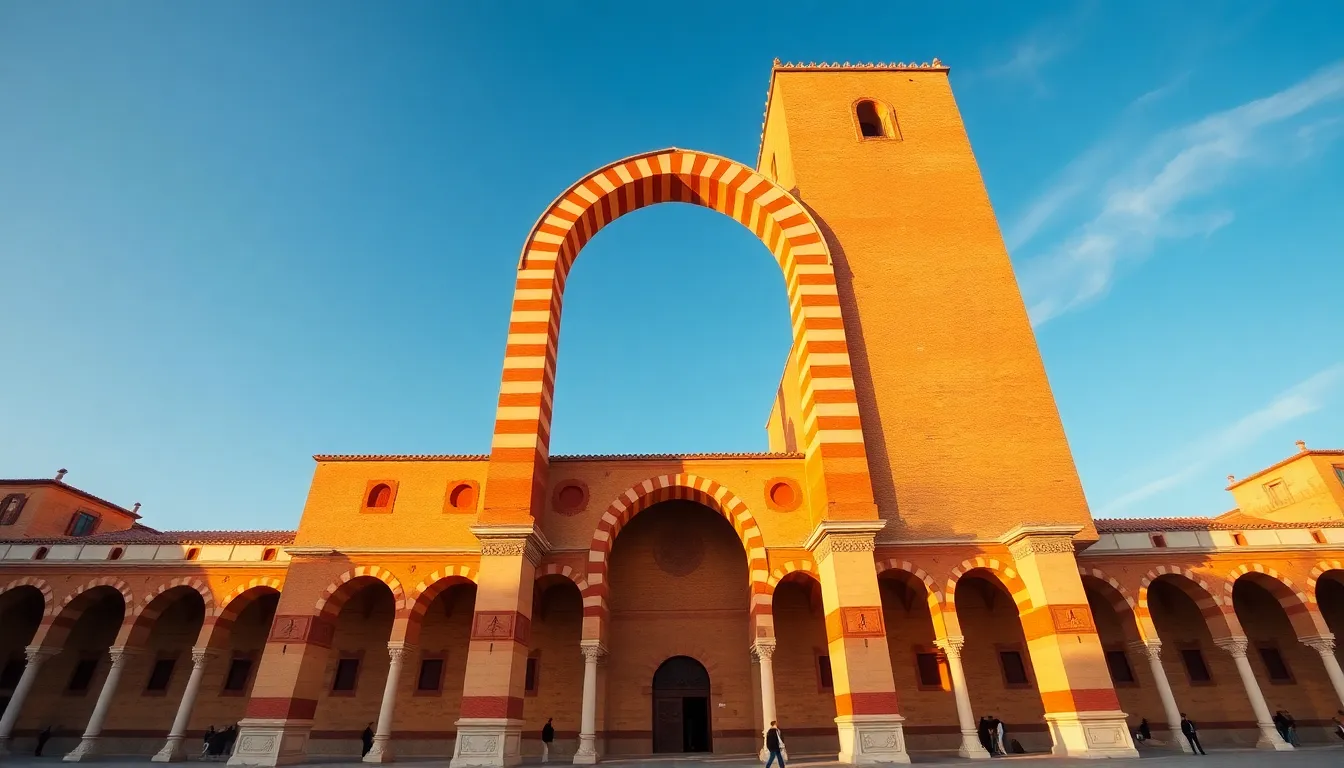
There is a moment that happens with every group I bring to Cordoba, and I have stopped trying to prepare people for it because it works better as a surprise. You walk in from the bright courtyard, your eyes adjust to the dim interior, and suddenly you are standing in a forest of arches, hundreds of them, striped red and white, marching away into the shadows in every direction. People stop talking. And then, a few minutes later, they look up and realize there is a Gothic cathedral rising out of the center of all those arches, and the questions begin.
The Mezquita-Cathedral of Cordoba is the most layered faith site in Spain, and for a group leader it is also the one that requires the most care to present well. If you are a pastor, rabbi, or educator thinking about Cordoba, this is the background and the approach I bring to every visit.
What You Are Actually Standing In
The building’s full story spans more than a thousand years. The site held a Christian church in the Visigothic period. After the Muslim conquest of the peninsula, construction of the great mosque began in the late 8th century under the Umayyad rulers of Cordoba, and it was expanded several times over the following two centuries as the city grew into one of the largest and most learned cities in the medieval world. The famous double arches, with their alternating red brick and white stone, date from this era, an engineering solution that let the builders raise the ceiling height using reused columns of varying sizes.
When Cordoba was taken by Christian forces in the 13th century, the mosque was consecrated as a cathedral. For three centuries it served as a church while keeping its mosque architecture largely intact. Then, in the 16th century, a Renaissance cathedral nave and choir were built directly into the heart of the structure, rising up through the roofline of the old mosque. That is the cathedral your group sees emerging from the arches.
So you are standing in one building that is genuinely both. The arches are the mosque. The soaring nave at the center is the cathedral. Neither erased the other, and that uneasy coexistence is precisely what makes the place so powerful to walk through.
Handling the Layered History with Honesty
This is where a group leader has to be thoughtful, and I want to be direct with you about it. The Mezquita-Cathedral is contested ground, and how you present it matters.
The building is owned and used as a Catholic cathedral today, and Mass is celebrated there. At the same time, it stands as one of the great monuments of Islamic architecture in the world, and there is real and ongoing discussion in Spain about how the site’s Muslim heritage should be named and honored. Some feel the official presentation leans too far toward the Christian story. Others feel the building’s identity as a working cathedral is simply its present reality. There is no neutral way to walk in here, and pretending otherwise does your group a disservice.
What I do with groups is tell the whole story plainly. I do not flatten it into a triumph of one faith over another, and I do not pretend the layers were peaceful when they were not. The reconquest was a conquest. The 16th-century cathedral was inserted over objections, including from the city council of the time. And yet the builders also chose not to tear the mosque down, which is why we can stand in it at all. Holding both of those truths at once is the honest posture, and groups respond to it. They came for history, not for a sermon dressed as history.
For mixed groups, and I lead many, this honesty is essential. A site that holds Muslim and Christian history in tension is not a problem to manage. It is the actual subject. I touch on how Spain’s shared and contested faith history shapes a heritage journey in Spain’s spiritual sites.
Walking the Space with a Group
Practically, the Mezquita-Cathedral rewards a slow, structured visit. I move groups through it in a deliberate order rather than letting everyone scatter.
We usually begin in the Patio de los Naranjos, the courtyard of orange trees, where the ritual washing fountains of the mosque once stood. From there we enter the prayer hall and let the forest of arches do its work in silence before any explanation. Then comes the mihrab, the richly decorated prayer niche that once oriented worshippers toward Mecca, covered in golden Byzantine mosaics that the Umayyad ruler commissioned. It is one of the most beautiful surviving features of the original mosque, and it stops people cold.
Only after that do we turn to the Christian cathedral at the center, the Capilla Mayor and the carved choir, so the group experiences the building in roughly the chronological order it was built. Ending in the cathedral nave, looking back out at the arches stretching away on every side, is the moment when the whole layered history lands.
A guide makes an enormous difference here. The architecture alone is overwhelming, and without context most visitors miss the story entirely and simply photograph the arches. With the right framing, your group leaves understanding not just what they saw but what it means.
Fitting Cordoba into a Heritage Itinerary
Cordoba sits in Andalusia, well connected by high-speed rail to Madrid, Seville, and Malaga, which makes it easy to include in a southern Spain route. The Mezquita-Cathedral is the centerpiece, but the old Jewish quarter, the Juderia, surrounds it, with its narrow whitewashed lanes and a small surviving medieval synagogue a short walk away. For a group, this means Cordoba lets you stand within Muslim, Christian, and Jewish heritage in a single compact district, which is rare anywhere in the world.
That density makes Cordoba a natural anchor for a broader pilgrimage. I show how it connects to the wider arc of Marian and Christian sites in the Marian shrines of Spain heritage guide, and I walk through how to structure a full journey in planning a Christian pilgrimage to Spain.
One practical note for your budget conversation: with Heritage Tours, group leaders travel free with fifteen or more participants. Reaching that number is easier when you start gathering your group early. Our group heritage tours page explains how the group leader experience works.
FAQ: The Mezquita-Cathedral of Cordoba
Is the Mezquita a mosque or a cathedral?
It is genuinely both, layered into one building. It was built as a great mosque under Cordoba’s Umayyad rulers beginning in the late 8th century, then consecrated as a Christian cathedral after the 13th-century reconquest. In the 16th century a Renaissance cathedral nave was built into its center. Today it is owned and used as a Catholic cathedral, while remaining one of the world’s great monuments of Islamic architecture. Both identities are real and present.
How should a group leader present the contested history?
Honestly and completely. We tell the whole story, including that the reconquest was a conquest and that the cathedral nave was inserted over objections. We also note that the builders chose not to demolish the mosque, which is why it survives. We do not flatten the history into a triumph of one faith. Holding the layers in tension is the honest posture, and groups respond to it well, especially mixed groups.
Can you still see the original mosque features?
Yes, extensively. The famous double arches of red brick and white stone, the forest of columns, and the magnificent mihrab with its golden Byzantine mosaics all survive from the original mosque. The Patio de los Naranjos courtyard preserves the layout of the mosque’s ritual washing area. These features sit alongside the later Christian cathedral, which is what makes the building so striking.
Is the Mezquita appropriate for a mixed Jewish-Christian group?
It is well suited to mixed groups precisely because it holds layered faith history. Cordoba also has a surviving medieval synagogue and an old Jewish quarter steps away, so the city lets a group encounter Muslim, Christian, and Jewish heritage in one compact district. With honest guiding, the contested history becomes the subject of the visit rather than a difficulty to avoid.
How much time should we allow for the visit?
Plan for at least a couple of unhurried hours inside, more if your group wants time to absorb it. The interior is large and dense with detail, and rushing it means missing the story. We structure the visit in chronological order, from the courtyard through the mosque prayer hall and mihrab to the Christian cathedral, so the layered history lands clearly.
If Cordoba and the Mezquita-Cathedral belong on your community’s journey, I would be glad to help you present this layered site with the care it deserves. Get in touch whenever you are ready to plan.