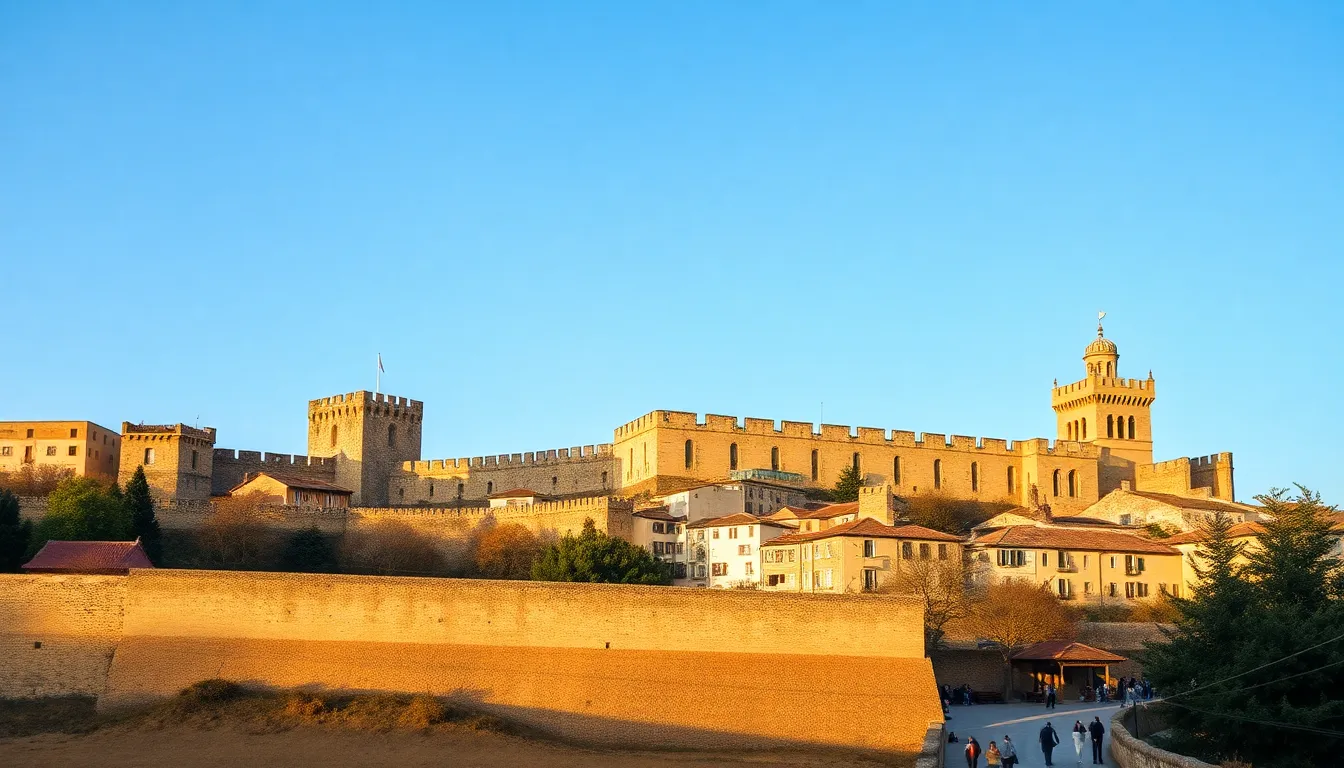
People plan Spain and head straight for the south, for the Alhambra and the white villages. I understand why. But some of the deepest heritage in the country sits in the center, on the high Castilian plateau around Madrid, in cities that most tour groups skip. Toledo, Avila, Segovia, and Burgos are close enough to connect into one route, and together they tell the story of medieval Castile, the kingdom whose monarchs, Ferdinand and Isabella, ended both Muslim and Jewish Spain.
I have brought groups through this central trail for years, and what surprises people every time is how much it holds. Toledo alone is one of the great Jewish heritage sites in the world. Avila and Burgos carry enormous Christian weight. And because these cities sit so close to Madrid and to each other, you can build a rich, connected journey without long travel days. Let me walk you through the route.
Toledo: The Jerusalem of the West
If a group has time for only one city on this trail, I make it Toledo. For centuries it was called the city of three cultures, where Jews, Christians, and Muslims lived together, and the physical evidence of all three is still standing in the same compact old town on its rock above the Tagus River.
Toledo’s Jewish quarter is the most significant in Spain. Two synagogues survive. Santa Maria la Blanca, with its rows of white horseshoe arches, was built by Jewish patrons using Moorish craftsmen, a single building that holds all three cultures in its architecture. El Transito, the synagogue of Samuel ha-Levi, is exquisite, and it now houses the Sephardic Museum, one of the best places anywhere to understand the Jewish history of Spain. Walking the old Juderia between them, your group is walking the streets Sephardic families walked before 1492.
Toledo’s Christian heritage is just as deep. The cathedral is one of the great Gothic cathedrals of Spain, dense with art. The city was home to El Greco, and his work hangs in churches and museums across the old town. And the Moorish layer is everywhere, in the mudejar towers, the old gates, the street plan itself. I usually give a group two days in Toledo. It rewards every hour.
Avila: Walls and the Life of Teresa
A short drive from Toledo, across the plateau, stands Avila, and your group will see it before you arrive, the most complete set of medieval walls in Spain, ringing the entire old town in golden stone. Walking the walls, or simply standing beneath them, is the first thing any group does here.
Avila’s heart, though, is Saint Teresa. The sixteenth-century mystic and reformer was born here, and the city is steeped in her presence. The convent built on the site of her birthplace, the places connected to her life and writing, and the broader Carmelite tradition she shaped make Avila a meaningful stop for Christian groups especially. For pastors, a few quiet hours with the story of Teresa, in the walled city where she lived, is the kind of experience that stays with a congregation.
Avila also held a notable Jewish community before 1492, and traces of the old Juderia remain. It is smaller and quieter than Toledo’s, but I include it, because the pattern across Castile is consistent, every one of these cities had a Jewish quarter, and every one lost it in the same decree.
Segovia: The Aqueduct and the Castle
From Avila it is a short hop to Segovia, and I have written about Segovia in its own full heritage guide, so I will keep it brief here. The Roman aqueduct, two thousand years old and standing without mortar, is the image people carry home. The old Jewish quarter on the southern edge of town, with the Corpus Christi church that was once the main synagogue, fits the Castilian pattern exactly. And the Alcazar at the tip of the ridge, where Isabella was proclaimed queen in 1474, ties Segovia directly to the monarchs who reshaped Spain.
On the trail, Segovia is a natural day, and its compact old town makes it easy for a group to see the Roman, Jewish, and Christian layers in a single connected walk. It pairs especially well with Avila, as the two sit close together northwest of Madrid.
Burgos: The Cathedral and El Cid
Burgos sits further north, and it is the city I add when a group wants the full Castilian arc. Its cathedral is one of the masterpieces of Spanish Gothic, a soaring, intricate building that holds the tomb of El Cid, the eleventh-century warrior who became Castile’s national hero. For groups interested in the Christian and medieval history of Spain, the cathedral alone justifies the trip north.
Burgos was also a major center on the Camino de Santiago, and pilgrims have passed through for a thousand years on their way west to Santiago de Compostela. That connection makes Burgos a natural bridge if your group is combining Castilian heritage with the pilgrim route. It too had a Jewish quarter before the expulsion, completing the pattern one more time.
Because Burgos is further from Madrid than the other three, I include it when a group has the days for it. For shorter trips, Toledo, Avila, and Segovia form a tighter core trail close to Madrid.
What ties these four cities together, beyond geography, is the single decree that ended their shared history. Every one of them had a Jewish quarter. Every one of them had families who had lived there for centuries. And every one of them lost that community in 1492, by order of the Castilian monarchs whose castles and cathedrals your group will stand inside. Walking the trail in sequence makes the pattern impossible to miss. You see the same loss, city after city, written into the same streets that now hold churches where synagogues once stood. For a faith group, that repetition is the lesson. It is one thing to read about the expulsion. It is another to walk through four cities and feel its reach.
Practical Orientation for the Trail
The great advantage of this trail is proximity. Toledo, Avila, and Segovia all sit within an hour or so of Madrid and close to each other, which means short travel days and a Madrid base if you want one. Burgos is further north, reachable by high-speed train or coach, and is best added as an extension rather than squeezed in.
A typical shape runs five to seven days, basing in or near Madrid for the southern cluster and traveling up to Burgos if included. I plan the route to limit long drives, since short hops between close cities are part of what makes this trail comfortable for mixed-age groups.
These are high plateau cities, which means hot summers and genuinely cold winters. Spring and autumn are the best seasons by a wide margin. Avila in particular sits high and cold, so timing matters.
The Castile trail stands well on its own, and it also connects naturally to the rest of Spain. Many groups combine it with the broader Spain heritage journey, continue south to the Andalusia trail, or extend the Camino connection at Burgos onward to Santiago de Compostela.
FAQ: The Castile Heritage Trail
Which Castilian cities should I prioritize with limited time?
Toledo first, always. It is one of the great Jewish heritage cities in the world and holds Christian and Moorish history in the same compact old town. After Toledo, Avila and Segovia are close together and easy to add. Burgos is further north and best reserved for groups with more days. A tight three-city core of Toledo, Avila, and Segovia works beautifully near Madrid.
What makes Toledo so important for Jewish heritage?
Toledo was the leading Jewish city of medieval Spain, with two surviving synagogues. Santa Maria la Blanca shows Jewish, Christian, and Moorish craftsmanship in one building, and El Transito houses the Sephardic Museum, one of the best places anywhere to understand Spanish Jewish history. Walking the old Juderia, your group walks the streets of the community expelled in 1492.
How long does the Castile trail take?
Five to seven days is comfortable. The southern cluster of Toledo, Avila, and Segovia sits close to Madrid with short travel between cities, so you can see a lot without long drives. Adding Burgos to the north extends the trip and is best done when you have the extra days for it.
When is the best time to travel the Castile trail?
Spring (April through June) and autumn (September through October) are by far the best. These are high plateau cities, so summers are hot and winters are cold, with Avila especially chilly given its altitude. Mild seasons make the walking and the walls and aqueducts far more pleasant for mixed-age groups.
Does the group leader travel free on the Castile trail?
Yes. On all Heritage Tours group itineraries through Castile, the group leader travels free with fifteen or more participants. It is our way of honoring the work you put into gathering your community for the journey.
If the central trail is calling your community, I would be glad to help you shape it around your group’s pace and focus. Reach out whenever you are ready and we can plan the route together.