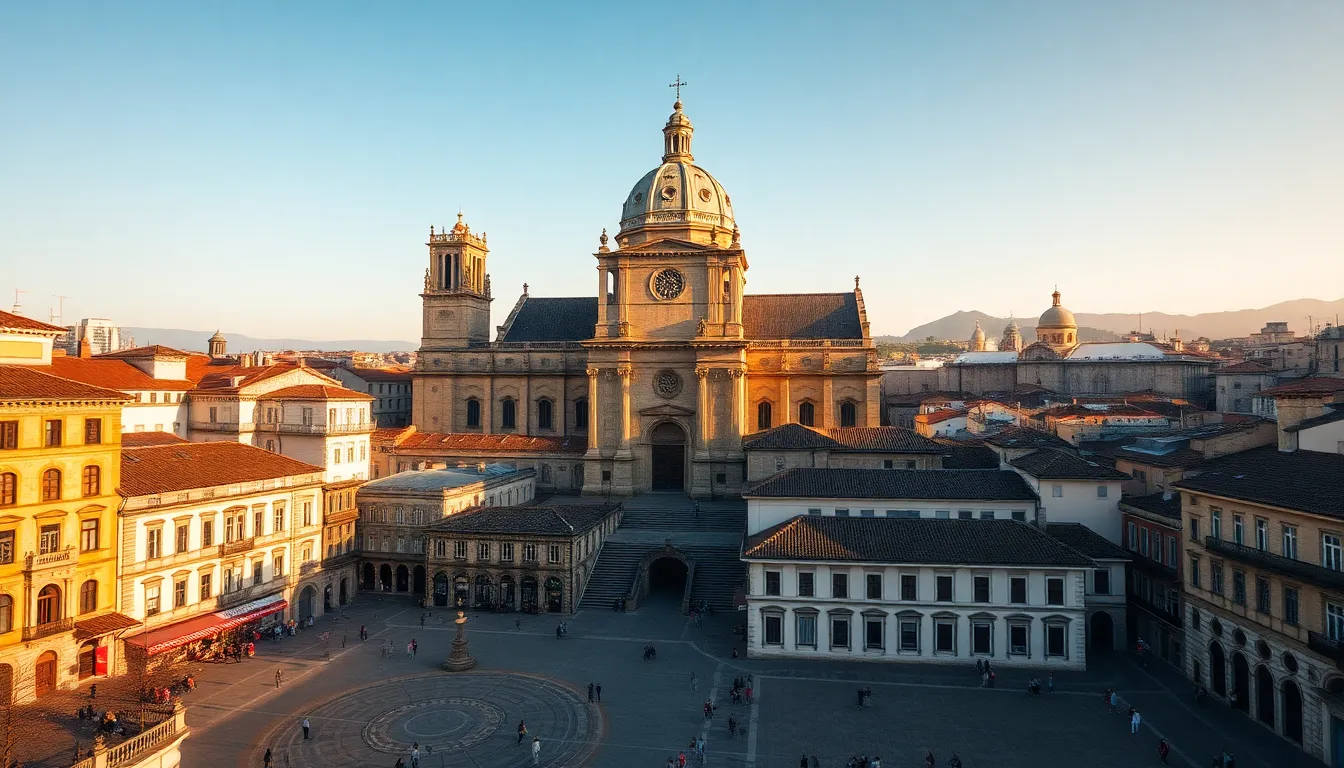
There is a moment in Santiago that I have watched happen to hundreds of people. You come up through the old streets, under an archway with a piper playing, and the square opens in front of the cathedral. And whether you walked five hundred miles to get there or stepped off a bus that morning, something in your chest moves. I have led groups who arrived by coach and still wept in that square. Santiago does that.
For Christian groups, Santiago de Compostela is one of the great destinations of the faith, the end of the Camino, the resting place tradition assigns to the apostle James. But you do not need to walk the Camino to receive what this city offers. Most of the groups I bring arrive by other means and find the old town just as moving. Let me give you the full orientation, the cathedral, the pilgrim city around it, and the medieval streets that hold it all together.
The Cathedral: The Heart of It All
Everything in Santiago points toward the cathedral, and rightly so. Tradition holds that the remains of Saint James the Greater were discovered here in the ninth century, and the cathedral grew up around that tomb over the following centuries. For more than a thousand years, pilgrims have walked across Europe to reach this single building.
The cathedral your group will stand before is layered. The great Romanesque core is wrapped in a dramatic Baroque facade, the Obradoiro front that faces the main square. Inside, the experience is sensory and overwhelming in the best way. The crypt beneath the high altar holds the tomb of Saint James, and pilgrims file down to it quietly. Above the altar, the tradition is to climb the narrow stair behind the statue of the apostle and embrace it, a gesture pilgrims have made for centuries.
If your timing is right, you may witness the Botafumeiro, the enormous silver censer that is swung across the transept on a rope by a team of men, filling the cathedral with incense. It is not swung at every Mass, so I check the schedule in advance when a group has its heart set on seeing it. When it happens, it is unforgettable.
The Pilgrim’s Mass is held daily and is the spiritual center of a visit. Even groups that did not walk the Camino are moved to sit among arriving pilgrims, dusty and exhausted, hearing their countries of origin read aloud.
The Pilgrim City: Understanding the Camino
You cannot understand Santiago without understanding the Camino, even if your group never sets foot on the trail. For over a thousand years, pilgrims have walked here from across Europe along the Way of Saint James. The most famous route, the Camino Frances, runs nearly eight hundred kilometers across northern Spain.
What I always explain to groups is that the Camino is not only medieval history. It is alive right now. Every day, pilgrims arrive in the square in front of the cathedral, having walked for weeks. You see them everywhere in Santiago, the scallop shells on their packs, the worn boots, the particular look of people who have just finished something hard and holy. The Pilgrim’s Office near the cathedral issues the Compostela certificate to those who have walked the final hundred kilometers.
For a pastor, this living tradition is a gift. Even a group that arrives by coach can walk the last few kilometers into the city on foot, entering Santiago the way pilgrims have entered for a millennium. I often build that final short walk into an itinerary. It changes how the arrival feels, and it gives your group a real, bodily taste of the pilgrimage without requiring weeks on the trail.
The Old Town: Stone, Squares, and Silence
The old town of Santiago is one of the best-preserved medieval centers in Spain, built almost entirely in the local granite that turns silver in the frequent Galician rain. It is a place to walk slowly.
Four great squares surround the cathedral, each with its own character, and the Praza do Obradoiro in front of the main facade is where most groups gather. Around it stand the old pilgrim hospital, now a parador hotel, and the buildings of the historic university. The narrow streets running off the squares are lined with churches, monasteries, and the small shops and cafes that have served pilgrims for centuries.
I tell groups not to over-schedule the old town. Part of what Santiago offers is unhurried time, sitting in a square, ducking into a quiet church, letting the rhythm of the pilgrim city settle on you. The Galician food is excellent and worth lingering over, the seafood especially. A long group meal in the old town is part of the experience, not a break from it.
A Note on Galicia and the Wider Region
Santiago sits in Galicia, the green, rainy northwest corner of Spain, and the region shapes the visit. The weather is wetter and milder than central Spain, the landscape is lush, and the culture has its own language and traditions. Groups sometimes extend a Santiago visit to the coast at Finisterre, once thought to be the end of the known world, where many pilgrims continue after reaching the cathedral. It is a moving coda to a Camino-themed trip.
The Galician rain, which I have stopped apologizing for, is part of why the region feels the way it does. The granite glistens, the hills stay green, and the light through the cloud has a softness you do not find in the bright, dry center of Spain. I tell groups not to fight it. A wet afternoon in Santiago, with the cathedral bells ringing across the squares and the smell of rain on old stone, is its own kind of holy. Some of the quietest, most reflective hours my groups have had were spent sheltering in a small church or lingering over a long meal while the rain came down outside.
Practical Orientation for Groups
Santiago has its own airport with connections to Madrid, Barcelona, and several European cities, which makes it more accessible than many people expect. Groups can fly in directly or combine it with a wider Spain itinerary by train or coach.
The old town is pedestrianized and walkable, but it is built on a slope and the granite streets can be slick in the rain, which is frequent in Galicia. I advise groups to bring proper footwear and a rain layer in any season. For mixed-age groups, the walking is manageable but not flat, so I plan rest points around the squares.
On timing, Galicia is mild but wet year-round. Late spring through early autumn brings the most reliable weather, and July marks the feast of Saint James, when the city fills with celebration. That can be powerful for a faith group, but it also means crowds and the need to book very early.
Santiago works beautifully as a focused Christian heritage destination or as part of a larger journey. Many groups pair it with a broader Spain heritage tour, and it complements the inland heritage of the Castilian cities or a southern circuit through Andalusia for a trip that spans the breadth of Spanish faith history.
FAQ: Santiago de Compostela Heritage Travel
Do we have to walk the Camino to visit Santiago de Compostela?
No. Most groups I bring arrive by air, coach, or train and find the cathedral and old town just as moving. That said, walking even the final few kilometers into the city on foot gives your group a real taste of the pilgrim arrival, and I often build that short walk into an itinerary. The full Camino is its own kind of trip and requires weeks.
What is the best thing to see in Santiago cathedral?
The tomb of Saint James in the crypt beneath the high altar is the spiritual center. Attending the daily Pilgrim’s Mass is the experience most groups remember most, especially if the Botafumeiro, the great swinging censer, is in use that day. The Botafumeiro is not swung at every Mass, so check the schedule if your group hopes to see it.
When is the best time to bring a group to Santiago?
Late spring through early autumn offers the most reliable weather in rainy Galicia. The feast of Saint James in late July is a powerful time to be in the city, but it brings large crowds and requires booking far in advance. For a calmer visit with good weather, May, June, and September work well.
How accessible is Santiago for older group members?
The old town is pedestrianized and walkable but sits on a slope, and the granite streets can be slippery when wet. With proper footwear, rest stops around the squares, and a well-planned route, mixed-age groups manage it comfortably. Santiago has its own airport, which keeps travel into the city straightforward.
Does the group leader travel free to Santiago?
Yes. On all Heritage Tours group itineraries including Santiago de Compostela, the group leader travels free with fifteen or more participants. It is our way of honoring the work you put into gathering your community for the journey.
If the end of the Camino is calling your community, I would love to help you plan the arrival. Reach out whenever you are ready and we can shape the trip around what your group most wants to experience.