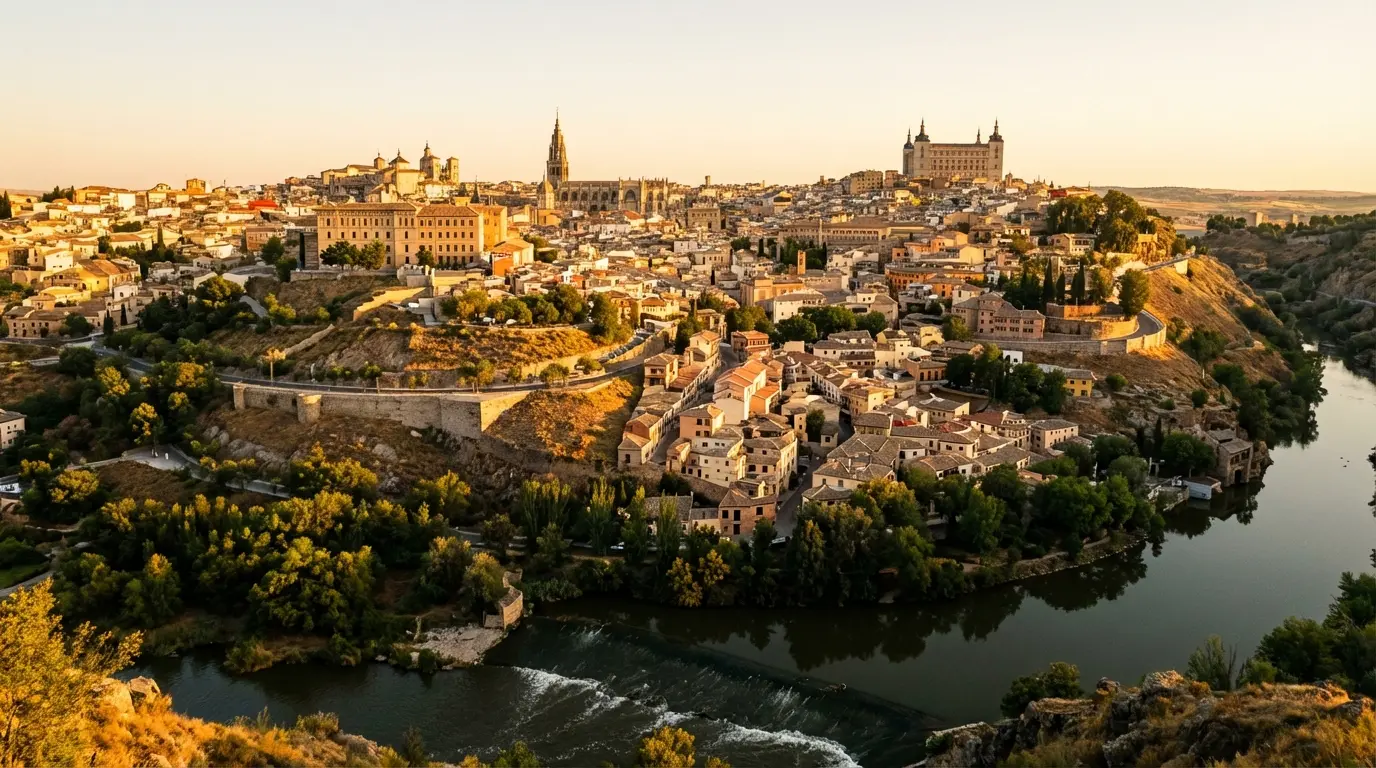
Why Spain Holds a Unique Place in Heritage Travel
Most people think of Spain and picture beaches, tapas, maybe a flamenco show. But if you lead a faith community, you already sense there is something deeper here. Spain is one of the few places on earth where Jewish, Christian, and Muslim civilizations built something together over eight centuries, and where that story ended in a single devastating decree.
I have been working with heritage sites in Spain for over twenty years, and what still strikes me every time is this: the history here is not behind glass. You walk through the same narrow streets in Toledo that Sephardic families walked before 1492. You stand in a synagogue that was converted into a church, and you can feel both stories in the same room. That is what makes Spain different from almost any other heritage destination.
If you are a rabbi or a pastor considering Spain for your community, this guide is meant to give you the full picture, the sacred sites, the history that connects them, and the practical knowledge you need to plan something that will stay with your group long after they come home.
Jewish Heritage: The Golden Age and the 1492 Expulsion
For roughly eight hundred years, Jews lived, worked, and contributed to every aspect of Spanish life. During the Golden Age, particularly in Al-Andalus, Jewish scholars, physicians, and poets reached extraordinary heights. Maimonides was born in Cordoba. The great commentator Abraham ibn Ezra came from Tudela. This was not a marginal community. This was a civilization.
Then, in 1492, Ferdinand and Isabella issued the Alhambra Decree. Every Jew in Spain had to convert or leave. The date is worth sitting with: the same year Columbus set sail, an entire people were told their home of eight centuries was no longer theirs. Estimates suggest between 40,000 and 200,000 Jews left. Many sailed to the Ottoman Empire, where the Sultan welcomed them openly. Others converted under pressure and became conversos, practicing in secret for generations.
Today, the physical evidence of that eight-century presence is still standing. Toledo’s Jewish quarter, with El Transito and Santa Maria la Blanca, is the most visited. Cordoba’s medieval synagogue, one of only three that survived, is small but deeply moving. Girona’s Call, the old Jewish quarter, feels remarkably intact.
For a rabbi bringing a congregation to Spain, these are not museum stops. They are places where your community’s story was lived.
Christian Heritage: From Camino to Cathedral
Spain’s Christian heritage runs just as deep. The Camino de Santiago has drawn pilgrims for over a thousand years, and the Cathedral of Santiago de Compostela remains one of the most important pilgrimage sites in the Christian world. But the Camino is only one thread.
Seville’s cathedral, the largest Gothic cathedral ever built, holds a weight that photographs cannot convey. The Basilica of the Sagrada Familia in Barcelona, still unfinished after more than a century, is an act of faith in stone. The monastery of Montserrat, perched in the mountains above Barcelona, has been a site of devotion and reflection since the 9th century.
For pastors planning a group trip, Spain offers something rare: the chance to walk the same paths that pilgrims have walked for a millennium, to stand in spaces built specifically to bring people closer to God.
Al-Andalus: When Three Faiths Shared One Country
Between roughly 711 and 1492, parts of Spain were governed by Muslim rulers who, for significant stretches, allowed Jewish and Christian communities to live, worship, and contribute to society. This period, known as Al-Andalus, was not perfect. There were persecutions, forced conversions, and episodes of real violence. But there were also centuries of genuine coexistence, convivencia, where scholars from all three faiths translated texts together, shared medical knowledge, and built some of the most beautiful architecture in the world.
The Alhambra in Granada is the most famous surviving example. Cordoba’s Mezquita, originally a mosque and now a cathedral, physically holds both stories in its columns and arches. Medina Azahara, the ruined palace city outside Cordoba, shows what Al-Andalus looked like at its peak.
For heritage groups, Al-Andalus matters because it is proof that coexistence was possible. It did not last, and it was not simple. But the fact that it happened at all, for that long, is something your community can reflect on together.
Planning Your Group’s Spain Heritage Journey
If you are seriously considering Spain for your community, here are a few things I tell every group leader at the start of a planning conversation.
First, Spain is large. You cannot see everything in one trip, and you should not try. A meaningful heritage tour usually focuses on two or three regions. Toledo, Cordoba, and Granada make a strong Sephardic and Al-Andalus itinerary. Barcelona, Girona, and Montserrat work beautifully for a group that wants both Jewish and Christian heritage in Catalonia. The Camino route is its own kind of trip entirely.
Second, timing matters more than most people realize. Spring and early autumn are the best seasons for group travel. Summer heat in central Spain, particularly in Toledo, can be genuinely difficult for groups with older members. And if your community observes Jewish holidays, you will need to work around the High Holiday calendar in September and October.
Third, the right operator makes a real difference. A heritage tour is not the same as a standard group trip. You need someone who understands why you are there, not just where you are going. At Heritage Tours, we build every itinerary around what matters to your specific community. And with 15 or more participants, the group leader always travels free.
If Spain is calling to your community, I would love to talk about what that trip could look like. Explore our Spain heritage tours or reach out directly. There is no obligation, just a conversation about what is possible.
FAQ: Heritage Travel to Spain
What are the most important Jewish heritage sites in Spain?
Toledo’s Jewish quarter is the most significant, home to El Transito Synagogue and Santa Maria la Blanca. Cordoba has one of only three medieval synagogues still standing in Spain. Girona’s Call is one of the best-preserved Jewish quarters in Europe. Beyond these, cities like Lucena, Besalu, and Segovia hold important Sephardic history.
Is Spain a good destination for Christian pilgrimage groups?
Absolutely. The Camino de Santiago is one of the oldest pilgrimage routes in Christianity, and the Cathedral of Santiago de Compostela remains a powerful destination. Spain also holds extraordinary churches and monasteries in Seville, Barcelona, Montserrat, and throughout Castile. For pastors, there is more than enough to build a deeply meaningful group trip.
What was Al-Andalus and why does it matter for heritage tours?
Al-Andalus refers to the period of Muslim rule in parts of Spain, roughly 711 to 1492. During significant stretches of this era, Jewish, Christian, and Muslim communities coexisted and collaborated in ways that shaped European civilization. Sites like the Alhambra, Cordoba’s Mezquita, and Medina Azahara are physical reminders of that period. For heritage groups, it offers a powerful lens on interfaith history.
How far in advance should a group leader book a Spain heritage tour?
Six to nine months is a good window. Popular sites in Toledo and Granada require advance reservations, especially in spring and early autumn. If you are planning around Jewish holidays or church schedules, starting the conversation even earlier gives you more flexibility with dates and accommodations.
Do group leaders travel free on Heritage Tours Spain trips?
Yes. When your group includes 15 or more participants, the group leader travels free. This applies to all Heritage Tours group itineraries, including Spain. It is our way of honoring the work spiritual leaders put into bringing their communities together for these experiences.