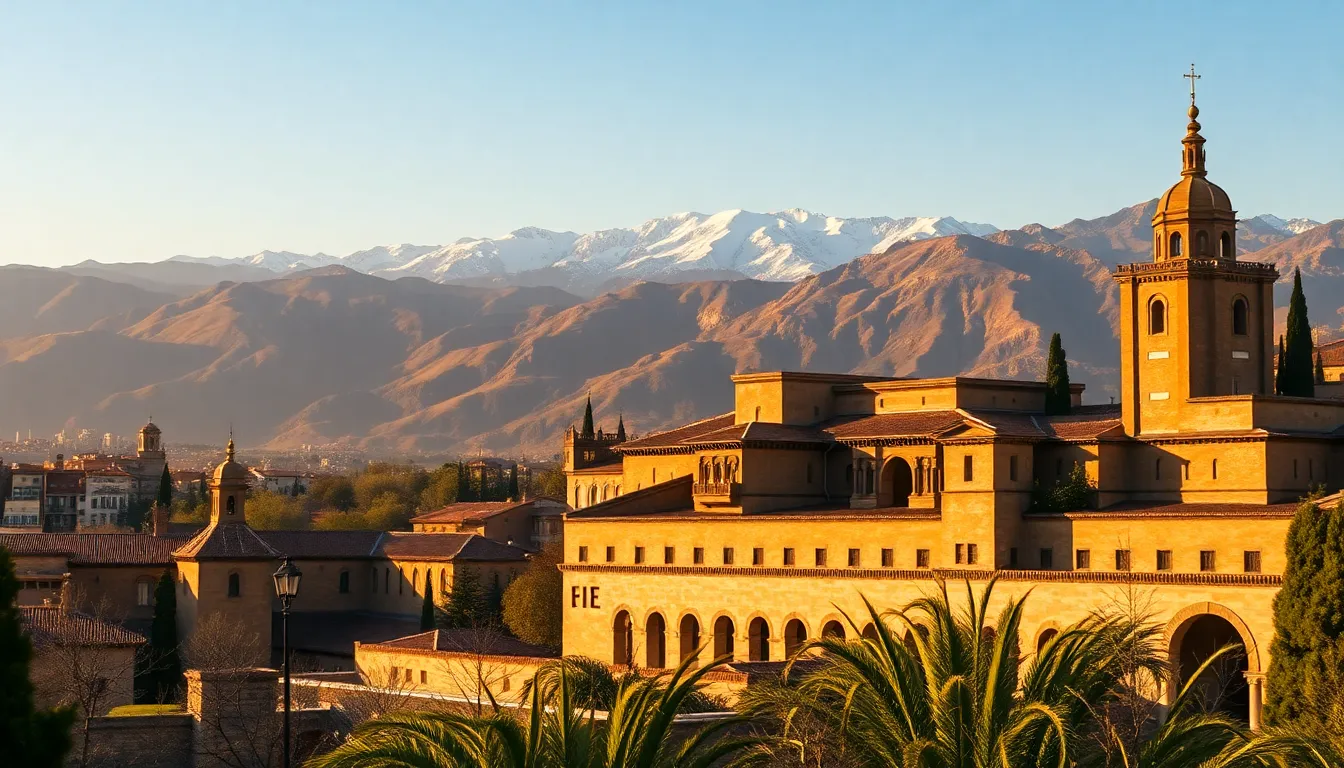
I have a rule when I plan southern Spain for a group: do not treat Seville, Cordoba, and Granada as three separate stops. They are one story told in three cities, and when a group understands them as a connected trail, the whole trip lands differently. By the time you reach Granada and stand in the Alhambra, you are not just seeing a beautiful palace. You are seeing the last act of something you have been following for days.
Andalusia was the heart of Al-Andalus, the part of Spain where Muslim, Jewish, and Christian civilizations lived alongside each other for centuries, and where that coexistence finally collapsed in 1492. Walking these three cities in sequence lets a group feel the arc of it. Let me show you how the trail works and why the order matters.
Why These Three Cities Work as One Trail
Seville, Cordoba, and Granada sit close enough together that you can connect them comfortably in a single trip, and they form a natural geographic line through Andalusia. But the real reason to do them together is historical. Each city peaked at a different moment in the story of Al-Andalus, and visiting them in order lets you trace the whole rise and fall.
Cordoba was the capital of the Caliphate at its tenth-century height, the largest and most learned city in Europe. Seville flourished afterward and became the great Christian city that received the wealth of the New World. Granada was the last Muslim kingdom on the peninsula, holding out until 1492, when its surrender ended Al-Andalus and triggered the expulsion of the Jews in the same year.
I usually run the trail so it builds toward Granada, because Granada is where it all ends, and ending there gives the trip its emotional shape. But the cities are flexible, and the right order depends on your group’s arrival point and pace.
Cordoba: The Caliphate and the Mezquita
Cordoba is where I like a group to begin, because it shows Al-Andalus at its peak. In the tenth century this was the most sophisticated city in Western Europe, a place where scholars from three faiths translated texts, advanced medicine, and built extraordinary architecture.
The Mezquita is the center of any visit. Originally a great mosque, it was converted into a cathedral after the Christian reconquest, and a cathedral was literally built inside the forest of its arches. Walking through it, your group experiences both stories in the same space, the rows of red and white horseshoe arches stretching into the distance, and the soaring Christian nave dropped into the middle of them. There is no clearer physical image in all of Spain of two civilizations occupying one building.
Cordoba’s old Jewish quarter sits right beside the Mezquita, a maze of whitewashed lanes. The medieval synagogue here is one of only three to survive in all of Spain, small and plain and deeply moving. Nearby stands a statue of Maimonides, the great Jewish philosopher and physician who was born in Cordoba. For a rabbi, standing in his birthplace, in the quarter where the community lived, is a powerful anchor for the whole trail.
Seville: The Christian City and the Jewish Quarter
Seville is the largest of the three and has a different energy, grander, warmer, more festive. It became the great Christian city of southern Spain and the gateway to the Americas, and its wealth shows.
The cathedral of Seville is the largest Gothic cathedral ever built, and it carries a weight that photographs cannot convey. It was built on the site of the city’s main mosque, and the mosque’s old minaret, the Giralda, still stands as the cathedral’s bell tower, another building holding two faiths in its stones. Christopher Columbus is entombed inside. Beside the cathedral stands the Alcazar, a royal palace built by Christian kings in the Moorish style, where the craftsmanship of Al-Andalus continued long after the conquest.
What I make sure no group misses in Seville is the Santa Cruz quarter, the old Juderia. This tangle of narrow streets and small squares was the Jewish neighborhood until the violent pogrom of 1391 devastated the community a century before the formal expulsion. Today it is one of the prettiest parts of the city, but I always tell its real history. The beauty and the loss sit together here, the way they do across Andalusia.
Granada: The Last Kingdom and the Alhambra
Granada is the climax of the trail, and there is a reason I build toward it. This was the final Muslim kingdom on the Iberian peninsula, surrendering to Ferdinand and Isabella in January 1492. Months later, the same monarchs signed the decree expelling the Jews. Granada is where Al-Andalus ended and where the story you have been following across three cities reaches its close.
The Alhambra is one of the most beautiful buildings on earth, a palace-city of courtyards, fountains, and impossibly fine carved stucco, set against the snow of the Sierra Nevada. Walking through its halls and gardens, your group sees what the civilization built at its very peak, right at the moment it was about to be lost. The poignancy of that is hard to overstate. Reservations for the Alhambra are essential and sell out far in advance, so this is the one site I book earliest for any group.
Below the Alhambra lies the Albaicin, the old Moorish quarter, a hillside of white houses and narrow lanes with views across to the palace. The old Jewish quarter, the Realejo, sits on the slope below. Standing in Granada, having walked Cordoba and Seville first, your group feels the whole weight of 1492 in a way no single city could deliver.
This is the heart of why I run the three cities as one trail. A group that sees only Granada admires a beautiful palace. A group that has walked Cordoba’s caliphal peak and Seville’s Christian grandeur first arrives at the Alhambra carrying the whole story, and the building stops being a tourist site and becomes the closing chapter of something they have lived for a week. I have watched groups stand silent in the courtyards, not because of the architecture, but because they finally understand what was lost and when. That understanding is the real destination of this trail, and it is why the sequence matters as much as the sites.
Practical Orientation for the Trail
The three cities connect well by high-speed train and coach. Cordoba sits on the main line between Madrid and Seville, and Granada is reachable by train and road from both. A common shape is to fly into Seville or Madrid, work through the cities, and depart from Granada or back through Madrid. For a group, pre-arranged coach transfers between cities give you the most control over timing and luggage.
I plan most Andalusia trails over six to eight days, which gives roughly two days per city without rushing. Andalusia is hot. Summers in Cordoba and Seville regularly pass forty degrees Celsius, which is genuinely difficult for groups with older members. Spring and autumn are far better, and I steer almost every group toward April, May, October, or early November.
Andalusia can stand alone or anchor a wider trip. Many groups combine it with the broader Spain heritage journey, pair it with the Castilian cities to the north, or add Santiago de Compostela for groups that want the Camino tradition alongside the southern story.
FAQ: The Andalusia Heritage Trail
How many days do I need for Seville, Cordoba, and Granada?
Six to eight days is comfortable for the three-city trail, giving you roughly two days per city plus travel between them. You can compress it into less, but Andalusia rewards a slower pace, and the heat and the depth of the sites both argue against rushing. For mixed-age groups especially, I lean toward the longer end.
What order should we visit the three cities?
I usually build toward Granada, because Granada is where the story of Al-Andalus ends in 1492, and finishing there gives the trip its emotional arc. Cordoba first shows the civilization at its peak, Seville shows the Christian city that followed, and Granada shows the final kingdom and the expulsion. That said, your arrival point and travel logistics may shift the order, and the trail still works.
What are the key Jewish heritage sites along the trail?
Cordoba has one of only three surviving medieval synagogues in Spain, plus its old Juderia and the Maimonides connection. Seville has the Santa Cruz quarter, the old Jewish neighborhood devastated in the 1391 pogrom. Granada has the Realejo, the old Jewish quarter below the Alhambra. Together they trace the Sephardic story from flourishing to expulsion.
When is the best time to travel the Andalusia trail?
Spring (April through May) and autumn (October through early November) are by far the best windows. Summers in Cordoba and Seville regularly exceed forty degrees Celsius, which makes outdoor sites genuinely taxing for older travelers. The mild seasons make the walking comfortable and the experience far better.
Does the group leader travel free on the Andalusia trail?
Yes. On all Heritage Tours group itineraries through Andalusia, the group leader travels free with fifteen or more participants. It is our way of honoring the work you put into bringing your community together for a journey like this.
If the southern trail is calling your community, I would be glad to help you shape it, including securing those hard-to-get Alhambra reservations early. Reach out whenever you are ready and we can plan it around what matters to your group.