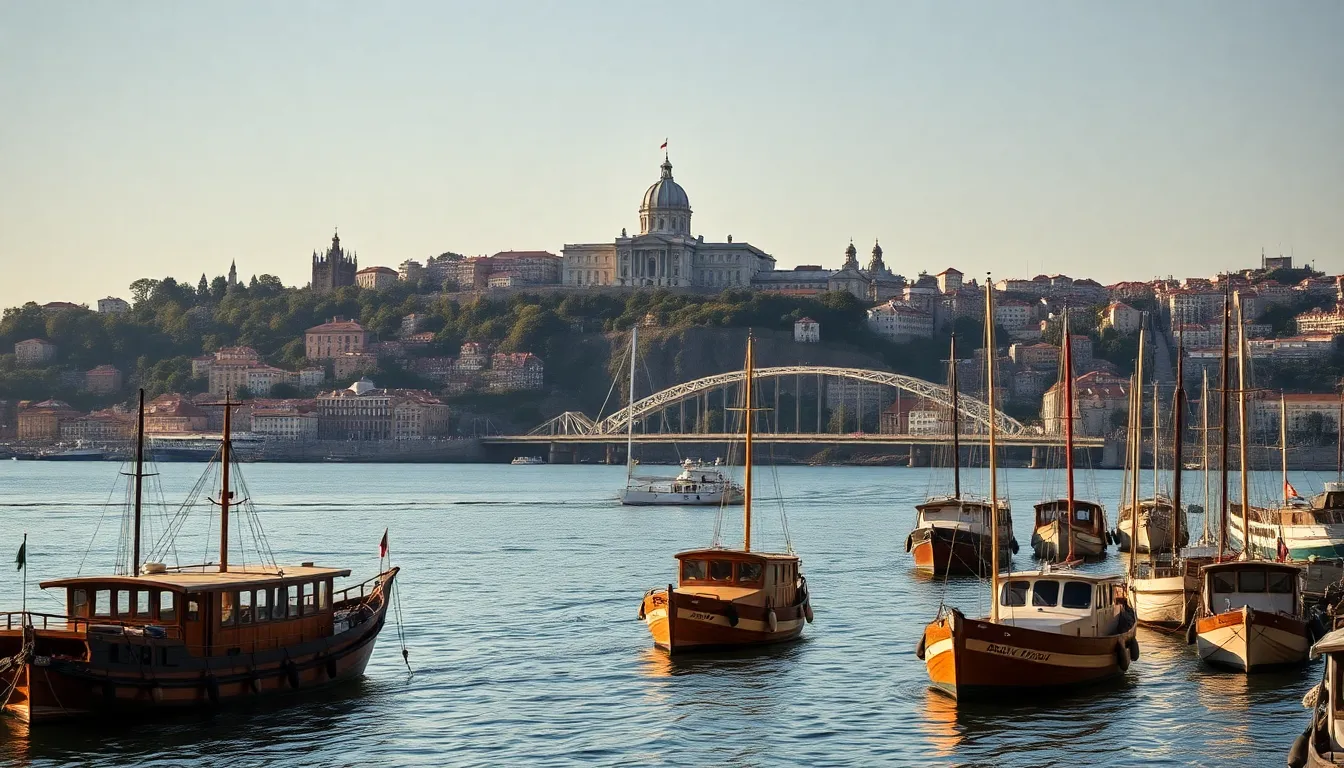
Porto surprises group leaders. They arrive expecting the smaller, rougher northern cousin of Lisbon, and within an hour they are telling me it might be their favorite city of the trip. There is a reason. Porto wears its history without dressing it up. The cathedral, the river, the old streets, the synagogue on the hill all feel lived-in rather than curated, and faith groups respond to that honesty.
It also holds one of the most remarkable Jewish heritage stories in modern Europe, and it sits at a completely different point in the timeline than the medieval ruins elsewhere in Portugal. Most of the country’s Jewish heritage is about loss in the fifteenth century. Porto’s headline story is about return in the twentieth. That contrast is what makes the city worth a full stop rather than a quick pass.
For the national picture, start with our Portugal heritage travel guide. This guide stays in the north.
Why Porto Sits Differently in the Story
Across most of Portugal, the Jewish heritage you visit is medieval and tragic: communities destroyed in 1497, synagogues lost, families forced into secrecy. Porto has that older layer too, but its defining heritage site, the Kadoorie Mekor Haim synagogue, was built in the 1930s. It exists because of a return, not only a loss.
That changes how a group reads the city. In Belmonte or Lisbon, you stand where a community vanished. In Porto, you stand where a community came back into the open after four centuries underground. For a faith group, holding both stories in one trip, the disappearance and the reemergence, is part of what makes a Portugal itinerary so complete.
The Kadoorie Synagogue: Heritage of a Return
The Kadoorie Mekor Haim synagogue is one of the largest synagogues on the Iberian peninsula, and its story is bound to one extraordinary man. Artur Carlos de Barros Basto was a Portuguese army officer of converso descent who, in the early twentieth century, openly returned to Judaism and then devoted himself to bringing the hidden crypto-Jews of northern Portugal back to open practice. He has been called the Portuguese Dreyfus and the apostle of the Marranos.
Barros Basto raised funds across the Jewish world, including from the Kadoorie family of Shanghai, and the synagogue was completed in 1938. Then his story turned painful. He was forced out of the army on charges widely seen as antisemitic persecution, and the great movement of return he had hoped for never fully materialized. He died without seeing his work vindicated; the Portuguese parliament only formally rehabilitated him decades later.
When I bring groups into the Kadoorie synagogue, I tell them his story first, because the building means little without it. This is not just a beautiful sanctuary. It is the monument of a man who tried to undo four hundred years of forced silence and paid for it. Our deeper guides to the Kadoorie synagogue and to Barros Basto and the Marranos carry the full account, and they are worth reading before you visit.
The synagogue is active today, and visits need to be arranged in advance. For groups, that coordination is part of what a heritage operator handles. Standing inside, with Barros Basto’s story in mind, is one of the emotional high points of a northern Portugal itinerary.
Porto Cathedral and the Christian Layer
Porto Cathedral, the Se do Porto, crowns the highest point of the old city. Like Lisbon’s cathedral, it began in the twelfth century as a fortress-church, Romanesque and heavy, built in an age when a cathedral was also a stronghold. Over the centuries it gathered Gothic and Baroque additions, including a beautiful cloister lined with the blue-and-white azulejo tiles that define the Portuguese visual world.
For Christian groups, the cathedral anchors Porto’s faith story, and its terrace offers one of the great views over the city and the river. The walk down from the cathedral toward the water passes through the oldest streets in Porto, the medieval tangle where the city began. That descent, from the Christian high ground down into the working city by the river, mirrors the kind of layered walk that makes Portuguese cities so rich for heritage travel.
Porto is also a natural gateway to the deeper Christian heritage of the north. Braga, one of the oldest Christian cities in the Iberian peninsula and the seat of Portugal’s primate archbishop, sits a short distance away, along with the great pilgrimage stairway of Bom Jesus do Monte. Many of my groups pair Porto with a day in Braga’s religious heritage and the dramatic Bom Jesus do Monte. Porto is also a starting point for pilgrims walking the Camino Portugues to Santiago.
The Riverfront and the Working City
The Douro riverfront, the Ribeira, is the soul of Porto. It is a UNESCO-listed district of tall, narrow houses stacked up the hillside, with the river below and the famous bridge connecting Porto to the port wine cellars of Vila Nova de Gaia on the far bank.
I include the riverfront in every Porto itinerary not as a sightseeing add-on but as a breathing space. Heritage travel is intense. A group that has spent the morning with the story of Barros Basto and the cathedral needs an afternoon by the water, watching the boats, feeling the ordinary life of the city. Porto is a working place, not a museum, and the Ribeira is where you feel that most.
It is also where the conversations happen. Some of the most meaningful moments on any trip I lead are not at the monuments at all. They are over a long lunch by the river, when the group starts to process what they have seen. Build that time in. It is not wasted.
How to Structure a Porto Visit
Porto works well as a one-to-two-day stop, often paired with the surrounding north.
A focused single day covers the cathedral and the old streets in the morning, the Kadoorie synagogue when access is arranged, and the riverfront in the afternoon. If you have two days, add Braga and Bom Jesus, which together make a strong half-day to full-day excursion into Christian heritage.
A few practical notes. Porto is steep, more so than people expect, with the cathedral and synagogue both on high ground and the river at the bottom. For mixed-age groups, plan the descents rather than forcing climbs, and use the coach for the uphill returns. The Kadoorie synagogue requires advance arrangement for group visits, so do not leave it to chance. And the weather in the north is wetter and cooler than Lisbon or the south, so build a little flexibility into outdoor plans.
For groups of fifteen or more, the group leader travels free with Heritage Tours. When Porto sits inside a full north-and-center Portugal route, that threshold is easy to reach. You can see how the regions connect in our 9-day Portugal heritage itinerary and on the Portugal destination page.
FAQ: Porto Heritage Travel
What is the Kadoorie synagogue in Porto?
It is one of the largest synagogues on the Iberian peninsula, completed in 1938. It was built largely through the efforts of Captain Artur Barros Basto, a Portuguese officer of converso descent who returned openly to Judaism and worked to bring the hidden crypto-Jews of northern Portugal back to open practice. The synagogue is active today and is the central Jewish heritage site in northern Portugal. Group visits need to be arranged in advance.
Who was Barros Basto?
Artur Carlos de Barros Basto was an early twentieth-century Portuguese army officer of converso descent who openly returned to Judaism and led a movement to bring crypto-Jews back into the open. He raised the funds for the Kadoorie synagogue. He was later forced out of the army on charges widely regarded as antisemitic, and was only formally rehabilitated by the Portuguese parliament decades after his death. He is often called the apostle of the Marranos.
Is Porto Cathedral worth visiting?
Yes. The Se do Porto sits on the highest point of the old city and began as a twelfth-century fortress-church, later gaining Gothic and Baroque additions and a tiled cloister. It anchors Porto’s Christian heritage and offers sweeping views over the city and the Douro. The walk down from the cathedral leads through Porto’s oldest streets to the riverfront.
Can I combine Porto with other heritage sites?
Yes. Porto is an excellent base for the religious heritage of northern Portugal. Braga, one of the oldest Christian cities in Iberia, and the great pilgrimage stairway of Bom Jesus do Monte are both close by. Porto is also a common starting point for pilgrims walking the Camino Portugues to Santiago de Compostela.
How long should a faith group spend in Porto?
One to two days. A single focused day covers the cathedral, the Kadoorie synagogue, and the riverfront. With two days, you can add Braga and Bom Jesus do Monte for a fuller picture of northern Christian heritage.
Porto tends to win groups over, and the Barros Basto story stays with people long after the trip ends. If you are weighing whether to give the north a proper stop, I would say give it the time. I am happy to help you fit it into a wider Portugal route.
Contact us whenever you would like to talk it through.