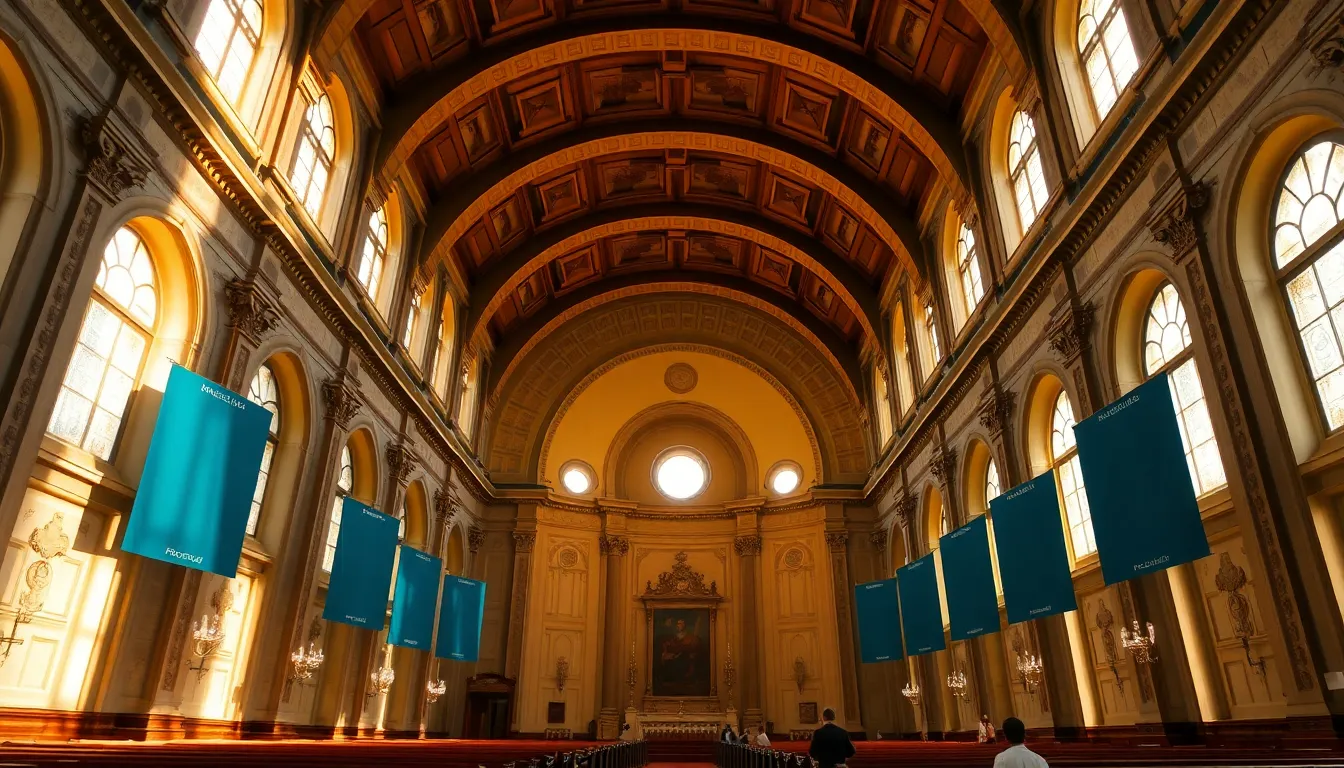
I bring most groups to Porto at the end of their Portugal journey, and there is a reason for that. By the time we reach the Kadoorie Mekor Haim synagogue, the group has already walked through the erased Judiaria of Alfama, stood in the intact medieval synagogue at Tomar, and met the crypto-Jewish story in the interior. They have absorbed the long arc of loss and secrecy. And then they walk into the Kadoorie, one of the largest synagogues on the Iberian Peninsula, and the scale of it stops them.
It is a building that says, plainly and without apology, that Jewish life in Portugal is not only a memory. It is also a present-tense fact. That is a powerful note to end on. But the story of how this synagogue came to exist is even more remarkable than the building itself.
A Synagogue Built by Returning Secret Jews
The Kadoorie Mekor Haim was completed in 1938. To understand why that is extraordinary, you have to understand the man behind it, and you have to understand the community he was trying to rebuild.
In the early 20th century, Porto and the surrounding region of northern Portugal still held descendants of the crypto-Jews, families who had been forcibly converted in 1497 and had practiced Judaism in secret across the generations that followed. Many no longer knew the full content of their faith. They knew they were different, that their families did certain things differently, that there was a hidden identity passed quietly down. But centuries of secrecy had worn the practice down to fragments.
Into this came Captain Artur Carlos de Barros Basto, a decorated army officer who had discovered his own Jewish roots and formally returned to Judaism. He devoted himself to bringing the crypto-Jews of the north back to open Jewish life. He traveled the interior villages, he taught, he organized, and he dreamed of a synagogue in Porto that would serve as a visible center for this revival.
Barros Basto’s vision needed funding, and that is where the name on the building comes from. The Kadoorie family, a prominent Sephardic Jewish family with roots in Baghdad and a presence across the global Jewish world, provided major support. The synagogue was named Mekor Haim, source of life, with the Kadoorie name honoring that support. Donations also came from Jewish communities abroad who were moved by the story of a man trying to bring secret Jews home after four centuries.
The result, completed in 1938, was a synagogue of real grandeur, large enough to anticipate a flourishing community. It stands as one of the largest synagogues on the Iberian Peninsula, built in a moment of enormous hope.
Hope Meeting History
There is a hard truth folded into this story, and I never skip it with a group, because it is part of what makes the Kadoorie matter.
The synagogue was completed in 1938. The revival movement that built it did not flourish as Barros Basto had hoped. His campaign met resistance and suspicion, and he himself was persecuted and stripped of his army rank in a process that cast a long shadow over the work. The community that gathered in the great building remained small. For many years, the Kadoorie was a magnificent synagogue with only a modest congregation to fill it.
I tell the fuller story of Barros Basto in a separate piece, because the man deserves it, and because the dignity of his life and his trial is its own subject. For now, what matters at the synagogue itself is this: the building was made for a hope that history did not fully grant in his lifetime. Standing inside it, you feel both things at once, the soaring ambition and the long wait.
And then, the turn. In recent decades, the Porto Jewish community has experienced a genuine revival, drawing new members, including descendants reconnecting with Sephardic roots and families relocating to the city. The great building that once echoed with a small congregation has, in our own time, begun to be filled. The hope of 1938 arrived, just much later than its builder lived to see.
That is the story I want my groups to carry out of Porto. Not a tidy triumph and not a simple tragedy, but something truer than either: a vision held against the odds, persecuted in its own day, and quietly vindicated generations on.
Inside the Building
The Kadoorie is genuinely impressive in scale and detail. The sanctuary is large and high, with rich decorative work, a grand ark, and an interior that rewards slow looking. After days of ruins, traces, and intimate medieval rooms, the sheer size of the space lands with real force on a group.
The community has also developed a Jewish museum and visitor presence around the synagogue in recent years, which helps tell the story of Porto’s Jews, the crypto-Jewish history of the north, and the revival. For a heritage group, this turns a single building into a fuller stop, with the history laid out alongside the living congregation.
Visiting the Kadoorie With a Group
Arranging Access
As with any active synagogue, and given real security considerations for Jewish institutions, group visits to the Kadoorie are arranged in advance through the community or a tour operator with established relationships. I always set this up well ahead and tell group leaders not to expect walk-in entry. The community has worked hard to build what it has, and access is coordinated with care.
Conduct and Dress
Modest dress is expected, and men cover their heads in the sanctuary. I brief mixed faith groups before we enter so everyone arrives ready to show the respect a working synagogue deserves. With the Kadoorie especially, where the congregation is part of a living revival, that respect is felt.
Placing It in the Itinerary
I treat Porto and the Kadoorie as the closing movement of a Portugal journey. It connects the Sephardic story of expulsion and secret survival to the present-day reality of return. It also links naturally to Porto’s wider draws, the riverfront, the historic center, the food and wine, so the day balances depth with the pleasures of one of Europe’s most likable cities.
The full sweep of the journey, from Lisbon through the interior to Porto, is laid out in our overview of Jewish heritage in Portugal. To understand the man whose vision built the Kadoorie, read our piece on Captain Barros Basto. And for the oldest surviving synagogue in the country, see the Tomar synagogue. You can see how we build the wider trip on our Portugal destination page.
For groups of 15 or more, the group leader travels free, which makes the planning math easier when you are organizing for a congregation.
FAQ: The Kadoorie Mekor Haim Synagogue
How large is the Kadoorie synagogue?
The Kadoorie Mekor Haim, completed in 1938, is one of the largest synagogues on the Iberian Peninsula. The sanctuary is high and spacious, with a grand ark and rich decorative work. After the intimate medieval rooms elsewhere in Portugal, its sheer scale lands with real force on a visiting group.
Who built the Kadoorie synagogue and why?
It grew out of the revival movement led by Captain Artur Carlos de Barros Basto, an army officer who returned to Judaism and devoted himself to bringing the crypto-Jews of northern Portugal back to open Jewish life. The Kadoorie family, a prominent Sephardic family, provided major funding, which is why the synagogue carries their name alongside Mekor Haim, source of life. It was built as a visible center for a hoped-for revival.
Why does the synagogue have a difficult history?
It was built for a flourishing that did not arrive in its builder’s lifetime. Barros Basto’s revival movement met resistance, and he was persecuted and stripped of his army rank. For many years the great building held only a modest congregation. In recent decades, the Porto Jewish community has genuinely revived, and the synagogue is being filled at last, vindicating the hope of 1938 generations later.
Can heritage groups visit the Kadoorie?
Yes, with access arranged in advance through the community or a tour operator with established relationships, given that it is an active synagogue with real security considerations. Modest dress is expected and men cover their heads in the sanctuary. The community has developed a museum and visitor presence that helps tell the fuller story of Porto’s Jews.
Where does the Kadoorie fit in a Portugal heritage trip?
I treat it as the closing movement. By the time a group reaches Porto, they have walked the erased Judiaria of Alfama, the intact medieval synagogue at Tomar, and the crypto-Jewish interior. The Kadoorie connects that long arc of loss and secrecy to the present-day reality of Jewish return, which is a powerful note to end on.
If your community is planning a journey through Jewish Portugal, Porto and the Kadoorie are where the story turns toward the present and toward hope. I would be glad to help you place it in your itinerary and arrange the visit with the care it deserves.
Contact us whenever you are ready to start that conversation.