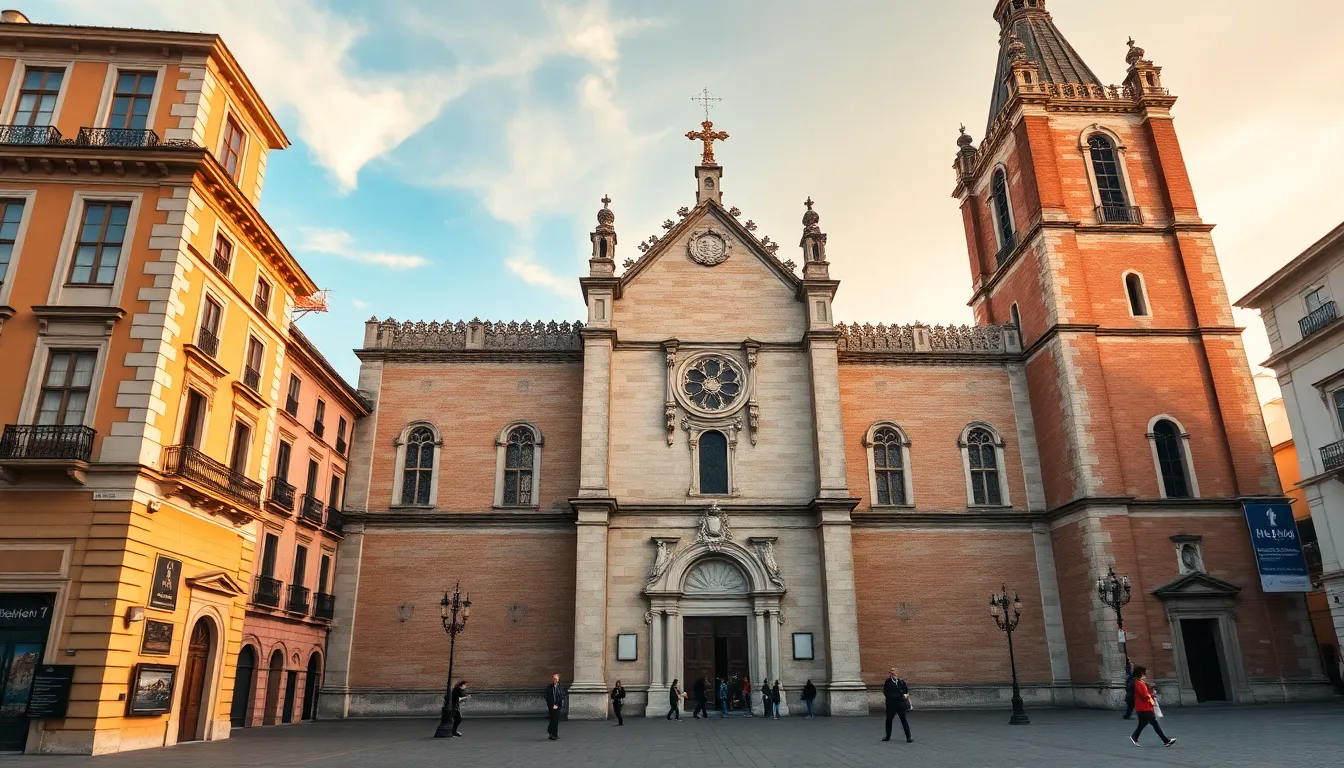
There is an old Portuguese saying I share with every group heading north: “Lisbon plays, Porto works, Coimbra studies, and Braga prays.” When you stand in the center of Braga, you understand why. This is the oldest Christian city in Portugal and one of the oldest archdioceses in the world, a place that has been a seat of Christian authority for roughly seventeen centuries. For faith groups, Braga offers something Lisbon and Fatima do not: the deep, continuous institutional history of the Church in Iberia, still living in the streets.
Let me walk you through it.
The Oldest Christian City in Portugal
Braga was a significant Roman city, known as Bracara Augusta, founded under the emperor Augustus. Christianity took root here early, and by the fourth century Braga had a bishop. That makes its Christian history older than almost anywhere else on the peninsula, predating the founding of Portugal itself by many centuries.
What gives Braga its particular weight is continuity. This has been an episcopal seat, a center of church government, without serious interruption since late antiquity. Over the centuries the Archbishop of Braga held the title Primate of the Spains, claiming a kind of seniority over the other dioceses of the Iberian Peninsula, a claim that produced centuries of rivalry with Toledo in Spain. Whatever you make of the historical dispute, it tells you how seriously Braga’s standing was taken. This was not a provincial church. It was a power.
The Se de Braga: The Ancient Cathedral
The heart of the city is the Se de Braga, the cathedral, and it is the oldest cathedral in Portugal. The current building was begun in the late eleventh century, after the city was restored to Christian rule, on the site of earlier churches. Like Tomar and so many great religious buildings, it grew across the centuries, and walking through it is walking through architectural history: Romanesque foundations, Gothic chapels, Manueline carving, and Baroque gilding all under one roof.
A few things I always make sure groups see here.
The Romanesque core, the oldest fabric of the building, carries the heavy, solid character of the eleventh and twelfth centuries, when this was a frontier church in a recently reconquered land.
The Treasury Museum, the Tesouro-Museu, holds one of the most important collections of sacred art in Portugal: vestments, chalices, reliquaries, and liturgical objects accumulated over nearly a thousand years of cathedral life.
The tombs, including those of Henry of Burgundy and Teresa of Leon, the parents of Afonso Henriques, Portugal’s first king. The founding family of the nation is buried in this cathedral, which ties Braga directly to the birth of the country.
The Baroque organs and the gilded chapels added in the seventeenth and eighteenth centuries, when Braga’s archbishops poured wealth into beautifying the cathedral, give the interior its golden, ornate character.
The Archbishops Who Shaped the City
You cannot understand Braga without understanding its archbishops, because they did not just lead the church here. For long stretches they effectively ran the city. The archbishops of Braga were among the most powerful figures in Portugal, and their ambitions are written across the streets.
The clearest example is the eighteenth century, when Braga was reshaped into a city of Baroque churches, palaces, and squares under the patronage of its archbishops. Walking the historic center, you pass church after church, many of them ornate Baroque foundations from this golden age of episcopal building. The Archbishop’s Palace, a vast complex now partly used by the university and the public library, shows the scale on which these men operated. Braga’s character as a city of prayer and grandeur is largely their making.
For Christian groups, this is a useful encounter with a particular model of the Church, one where religious and civic authority were deeply intertwined for centuries. It raises good conversations about how the faith has held power, used it, and sometimes been compromised by it. Braga lets you have those conversations standing inside the evidence.
Holy Week in Braga: Semana Santa
If there is one time to bring a group to Braga, it is Holy Week. Braga’s Semana Santa processions are among the most famous and most solemn in Portugal, and they draw visitors from across the country and beyond.
Through the week leading up to Easter, the city stages a series of processions that move through the historic center, retelling the Passion. The most striking are the night processions, when the streets are lit by torches and candles, the lights in the squares are dimmed, and hooded penitents and figures in period dress process slowly through the old town to the sound of drums and chant. The Ecce Homo procession and the great processions of Good Friday are particularly moving. For a Christian group, witnessing the Passion enacted through the streets of the oldest Christian city in Portugal, in the days before Easter, is an experience that stays with people.
Timing a trip around Semana Santa requires planning well ahead, because Braga fills during Holy Week and accommodation is tight, but for a congregation that wants to be present for the Passion in a deeply traditional setting, it is worth the effort.
Braga and Bom Jesus
No visit to Braga is complete without climbing to the great sanctuary just outside the city. On a wooded hill above Braga stands Bom Jesus do Monte, with its extraordinary Baroque stairway, one of the most remarkable pilgrimage sites in Portugal. It sits so close to the city that the two belong together on any itinerary. Our dedicated guide to Bom Jesus do Monte and its sacred stairway covers it in full.
For the wider context of where Braga fits among Portugal’s faith landmarks, our overview of spiritual sites in Portugal for faith travelers places it in the full picture, alongside Fatima, Tomar, and the country’s other great sites.
How Groups Visit Braga
A few practical notes.
Give the city half a day at least. Between the cathedral, the historic center, and the climb to Bom Jesus, Braga is not a quick stop. It rewards an unhurried morning and afternoon.
Visit the cathedral Treasury. Many groups walk through the cathedral and skip the museum. The sacred art collection is one of the finest in the country and deepens the visit considerably.
Consider the season. Holy Week is the great time to come, but it requires early booking. The rest of the year, Braga is calmer and easier to navigate, and the cathedral and Bom Jesus are no less impressive.
Pair it with the north. Braga sits in the Minho region of northern Portugal, close to Porto and the Douro, which makes it a natural anchor for a northern leg of a faith itinerary.
And the detail that matters for planning: with Heritage Tours, group leaders travel free with fifteen or more participants, which makes leading your congregation north a more reachable goal than many pastors assume.
You can see how Braga fits into a structured journey on our Portugal destination page, and our group heritage tours page explains how leading a group works.
FAQ: Braga, the Religious Capital of Portugal
Why is Braga called the religious capital of Portugal?
Braga is the oldest Christian city in Portugal, with a Christian community dating to the fourth century and an archdiocese that has continued without serious interruption since late antiquity. Its archbishops held the title Primate of the Spains and were among the most powerful figures in the country. The city is full of churches and was long shaped by its religious leaders, which earned it the saying “Braga prays.”
What is the Se de Braga?
The Se de Braga is the cathedral of Braga, the oldest cathedral in Portugal, begun in the late eleventh century. It blends Romanesque, Gothic, Manueline, and Baroque architecture, holds the tombs of the parents of Portugal’s first king, and contains a major collection of sacred art in its Treasury Museum.
What is Holy Week like in Braga?
Braga’s Semana Santa is among the most famous Holy Week observances in Portugal. Through the week before Easter, solemn processions move through the historic center retelling the Passion, with torchlit night processions, hooded penitents, drums, and chant. It draws visitors from across the country and is a powerful experience for Christian groups, though it requires booking far ahead.
Can you visit Braga and Bom Jesus together?
Yes, and you should. Bom Jesus do Monte sits on a hill just outside Braga, only a short distance from the city center, and the two are naturally combined on any itinerary. Bom Jesus is famous for its Baroque stairway and pilgrimage sanctuary.
Is Braga worth visiting outside Holy Week?
Absolutely. Holy Week is the most dramatic time to come, but the cathedral, the historic center, the Baroque churches, and Bom Jesus are impressive year-round, and the city is calmer and easier to navigate outside the Easter crowds. You can plan the right timing for your group by reaching out through our contact page.
If your community wants to encounter the deep, institutional history of the Church in Iberia, Braga is where that story lives. I would be glad to help you build a northern leg around it, whether you come for Holy Week or for the quiet grandeur of the rest of the year.
Contact us whenever you are ready to begin.