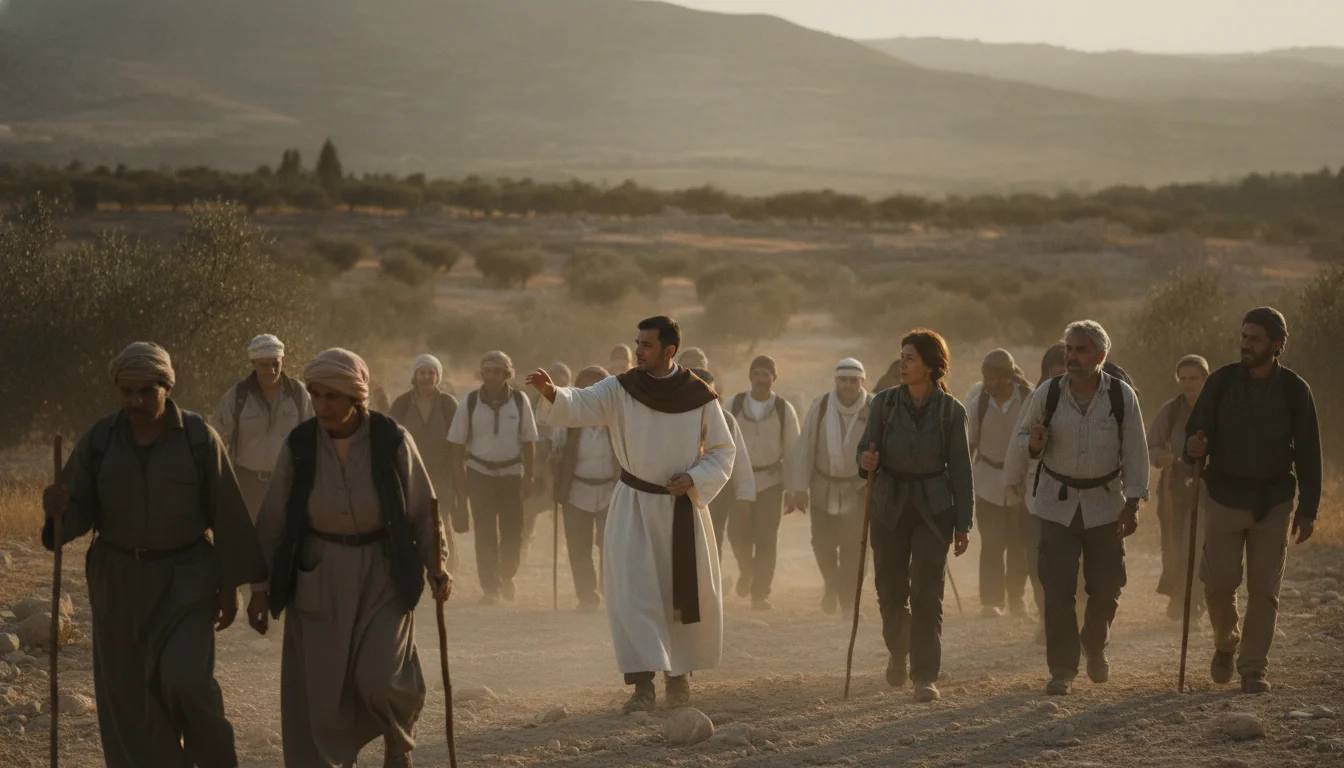
Most pastors who call me about a combined Holy Land and Greece trip start in the same place. They have wanted to walk both for years, they know their people would love it, and they are quietly afraid the whole thing is too big to pull off. Two countries, more moving parts, a longer itinerary, and somewhere in the back of their mind, the question of how they personally afford to lead it. I have built heritage journeys for more than forty years, and I want to take that fear apart piece by piece, because a church group tour of the Holy Land and Greece is one of the most rewarding trips a leader can build, and it is far more reachable than it looks from the outside.
This guide is written for you, the organizer. The pastor, the rabbi, the ministry leader, the person who will recruit the group, hold the dates, and shepherd everyone through. Not for the individual traveler who signs up. Every decision here is framed around what you have to plan, lead, and pay for, and how the free group-leader model changes the math.
Why Combine the Holy Land and Greece in One Trip
The Bible does not stay in one country, and neither should a serious pilgrimage if your people are ready for it. The Holy Land is where the Gospel story lives: Galilee, Jerusalem, the Jordan, the Mount of Olives. Greece is where the church spread: Philippi, Thessaloniki, Berea, Athens, and Corinth, the cities where Paul preached, was jailed, argued with philosophers, and wrote the letters your congregation still reads on Sunday.
Putting them together gives your group a single arc from the life of Jesus to the birth of the early church. People do not just see sites. They watch the story move. For a congregation that has studied Acts, that arc lands hard.
There is also a practical reason. Many of your travelers will make a trip like this once. When they invest the time and the airfare to cross the ocean, giving them both destinations respects that investment. You are not asking them back for a second trip in three years. You are giving them the whole story now.
If you want the full framework for building a trip like this from scratch, start with my guide to planning a group pilgrimage. It covers the sequence I walk every leader through, and this article sits inside that larger picture.
The Free Group-Leader Model, and Why It Changes Everything
Here is the piece that takes the biggest weight off your shoulders. With fifteen or more paying participants, you as the group leader travel free. Your full trip cost is covered: flights, hotels, ground transportation, site entries, and the group meals built into the itinerary. You are not paying your own way and hoping the budget stretches. Your seat is part of how the trip is structured.
This is not a discount. It is a complimentary spot that the economics of a group booking absorb. A group of fifteen paying travelers generates enough margin to carry one more person, and that person is you, because you are the reason the group exists. If you want the fuller explanation of the numbers, I wrote it out in does the pastor travel free and in how many people you need for the leader-free benefit.
For a two-country trip, this matters even more than it does for a single destination. A combined Holy Land and Greece itinerary costs more per person than either country alone, because it is longer and involves more logistics. That means the leader’s seat, if you had to pay for it yourself, would be a larger number. Removing it removes a larger obstacle. I have watched leaders decide a combined trip was impossible, then decide it was obvious, in the span of one conversation, once they understood their own cost was off the table.
What Happens Below Fifteen
Smaller groups are welcome. We run trips for ten to fourteen people regularly, and a combined itinerary works at that size. It simply does not include the free-leader benefit, because the margin that funds the complimentary seat starts at fifteen. In that range you either travel at a participant’s price or the group agrees to absorb a small premium to cover your seat.
My honest advice if you are sitting at twelve committed with a few maybes: plan the trip anyway. Interest firms up once people see real dates and a real itinerary. I have seen many groups cross from thirteen to eighteen in the final two months, purely because the trip stopped being an idea and became a thing on the calendar.
What a Combined Itinerary Actually Looks Like
Leaders relax when they can picture the shape of the trip, so let me give you the common structures.
The most popular version runs ten to fourteen days total. You spend roughly a week in the Holy Land and four to five days in Greece, or the reverse. Which country comes first usually depends on flight routing and where the better connection sits for your departure city. We build the routing around your group, not the other way around.
A typical Holy Land week moves from Galilee in the north, the Sea of Galilee, Capernaum, the Mount of Beatitudes, down through the Jordan Valley to Jerusalem and Bethlehem, with Masada and the Dead Sea often folded in. The Greece portion runs Paul’s route: Thessaloniki and Philippi in the north, Berea, then Athens and Corinth in the south. Some groups add a short Aegean cruise or a day to Meteora if the schedule allows.
If your group leans heavily toward the Pauline story, you can weight the Greece side more and structure it around the footsteps of Paul. If your congregation cares most about the life of Jesus, the Holy Land gets the larger share. That is your call as the leader, and it should reflect what your people have been studying. For the Israel portion specifically, my ten-day Holy Land outline shows how a fuller Israel itinerary comes together, and you can see the destination overview on the Holy Land page and the Greece page.
Church Group Tour to Italy and Greece: The Other Popular Pairing
Not every leader wants the Holy Land in the mix. A church group tour to Italy and Greece is the other combination I build often, and it deserves its own mention because the reasons for choosing it are different.
Italy and Greece together tell the story of the early church spreading west toward Rome. You get Paul’s Greek cities, then Italy: Rome itself, the catacombs, the sites tied to Peter and Paul, and for some groups Assisi or the wider Christian heritage of the peninsula. It is a church-history trip more than a Gospel trip. Congregations drawn to the age of the apostles, the martyrs, and the early Roman church often prefer this pairing over the Holy Land route.
The free group-leader model works identically here. Fifteen paying travelers, and your seat is covered across both countries. The planning rhythm is the same too. If Italy is calling your group, look at the church group tour to Italy guide and the church group tour to Greece guide side by side, and the Italy destination page for the sites. The point is that combining countries is not exotic or fragile. It is something we structure routinely, and the leader benefit holds across the whole trip.
How to Build a Group That Reaches Fifteen
This is where most of your real work sits, so let me be practical.
Start With Your Core, Not the Whole Congregation
You do not need to recruit fifteen strangers. You need the eight to ten people in your community who already want to go, then let them pull others in. Every group I have run started with a committed core. Couples travel together. Friends bring friends. A Bible study that has been in Acts all year travels as a unit. Fifteen is very reachable when you start from the people leaning in rather than the full membership roll. I go deeper on this in recruiting for a church trip.
Give People a Concrete Journey and a Real Date
Vague interest never fills a group. A specific trip on specific dates does. “We are walking from Galilee to Jerusalem, then flying to Greece to walk Paul’s route, next April, twelve days” gives people something to decide about. “We might do a big trip someday” converts no one. Tie the journey to what your congregation is preaching or studying and the interest sharpens fast.
Offer a Payment Plan Early
A combined trip is a larger number per person, so how people pay it matters. Announcing a deposit and a monthly payment schedule up front removes the sticker shock. Most travelers can commit to a manageable monthly amount when they could not write one large check. I lay out the mechanics in the group trip payment plan guide, and it is worth setting this up before you open registration.
Plan Far Enough Ahead
For a combined two-country trip of fifteen to thirty travelers, nine to twelve months is the right runway. That gives people time to budget, request time off, and commit, and it gives you time to build interest, which is the actual work. Trips timed around Easter or the Jewish holidays want the longer end of that range. Earlier is not just about logistics. It is recruiting runway.
What This Costs, Roughly
Leaders always want a number, so I will give you an honest frame rather than a false precision. A combined Holy Land and Greece trip runs higher per person than a single-country trip, because you are covering two sets of hotels, two sets of ground operations, and an internal flight between the countries. The exact figure depends on your departure city, your season, the hotel level, and your group size.
Rather than guess, the right move is a real quote built on your dates and your numbers. I walk through what drives the price in budgeting a church trip and, for the Israel side specifically, in what a church trip to Israel costs. And remember: whatever the per-person price lands at, your seat as the leader comes out of the equation at fifteen travelers.
Your Real Job Once the Money Is Handled
Here is what I most want you to hear. When the free-leader model takes your personal cost off the table, it also frees your attention. You stop being the trip’s accountant and become its shepherd.
That is the point of all this structure. Your role on a combined journey is to read the Beatitudes on the hillside above Galilee, to stand with your people at the empty tomb, to read Acts 16 aloud by the river outside Philippi where Lydia was baptized, to lead a moment of reflection on Mars Hill in Athens where Paul preached to the philosophers. The operator’s job is to make every hotel, coach, guide, and border crossing invisible so you can be fully present. The free seat is part of how we keep your focus where it belongs.
FAQ: Planning a Holy Land and Greece Church Group Tour
How many people do I need for the group leader to travel free?
Fifteen paying participants. At that number, your full trip cost as the leader is covered across both countries: flights, hotels, ground transportation, included site entries, and the meals built into the itinerary. Below fifteen the trip still runs, but the leader pays a participant’s price.
How long should a combined Holy Land and Greece trip be?
Most groups do ten to fourteen days total, splitting roughly a week in the Holy Land and four to five days in Greece. The exact split depends on what your congregation cares about most and how flight routing works from your city.
Is a two-country trip harder to lead than a single destination?
It has more moving parts, but those parts are ours to handle, not yours. Your job stays the same: recruit your group, hold the dates, and shepherd your people. We manage the internal flight, the second set of hotels, and the ground logistics so the added complexity never lands on you.
Can I do Italy and Greece instead of the Holy Land and Greece?
Yes. A church group tour to Italy and Greece is a common pairing that follows the early church spreading west toward Rome. The free group-leader benefit works exactly the same way, and the planning rhythm is identical.
How far ahead should I start planning?
Nine to twelve months for a combined trip of fifteen to thirty travelers, and the longer end of that range for trips timed around Easter or the Jewish holidays. The lead time is mostly about recruiting your group and giving people room to budget, not just about booking.
A combined Holy Land and Greece trip is bigger than a single-country journey, but it is not harder to lead once the structure is right and your own seat is covered. You can see how the group experience works on our group heritage tours page, and when you are ready to put real dates against real numbers, contact us and we will help you build the itinerary and run the leader-free math for your group.