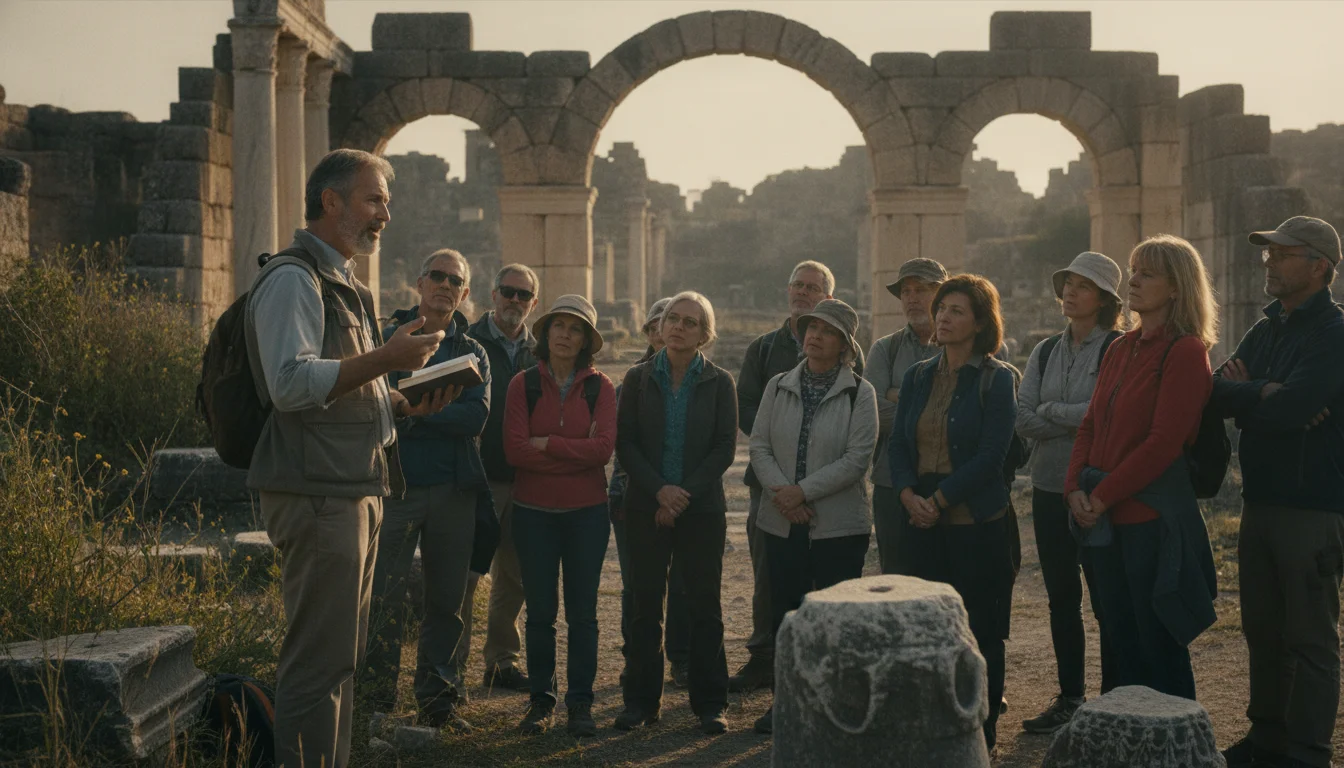
Every group pilgrimage I have helped launch started the same way: one person in a congregation could not shake the idea of taking their people to the places they read about every week. Not a tour. A journey. A pastor who wants his congregation to stand where Paul stood. A rabbi who wants his community to walk Jerusalem, not just study it. If that person is you, this guide is for you.
I have built heritage journeys for more than forty years, for Christian and Jewish groups of every size, from a tight circle of twelve to a full congregation of eighty. In that time I have watched hundreds of leaders go from “I could never pull this off” to standing at the Sea of Galilee with their people around them. The gap between those two moments is not talent or connections. It is a plan.
This is that plan, laid out end to end. I will walk you through every part of planning a church pilgrimage and organizing a group trip: why you are the key, how the free-leader model lets you go without paying, how to choose a destination and dates, how to fill your group, how to budget, and what your real job is once you are on the ground. Each section is an overview. Where a topic deserves its own deep guide, I will point you to it.
Why the Leader Is the Whole Thing
Let me start with the part most leaders underestimate. A group pilgrimage does not happen because a destination is beautiful or because the timing is good. It happens because one trusted person decides to lead it. Your people are not booking a vacation. They are following you somewhere that matters to them, and they are doing it because it is you asking.
That is why the operator’s job is to carry everything you should not have to carry. Flights, hotels, coaches, guides, site access, meals, the thousand logistics that make a group move. Your job is the relationship and the meaning. When those two roles are clear, the trip works. When a leader tries to become a travel agent on top of being a pastor, it usually stalls before it starts.
So the first thing to settle in your own mind is this: you are the reason the trip exists, and you do not have to become an expert in travel logistics to lead it. You bring the people and the purpose. A good operator brings the rest.
The Free-Leader Model: How You Travel Without Paying
Here is the question I hear more than any other, usually with some embarrassment: “How am I supposed to afford to go myself?” The answer surprises most leaders. With fifteen or more paying participants, your seat is covered. Flights, hotel, ground transportation, site entries, the meals built into the itinerary. You travel free.
This is not a discount or a loyalty perk. It is built into the economics of a group booking. Fifteen paying travelers generate enough margin within the trip’s costing to carry one more person, and that person is the leader, because you are the reason the group exists. Larger groups, around twenty-five or thirty, can sometimes open a second complimentary or reduced seat for a co-leader or spouse.
I cannot overstate how much this changes the decision. You are no longer asking your board to fund an expensive trip for the pastor. You are organizing a journey your people pay into, and your participation is part of how it is structured. If you want the full breakdown of the numbers, where the fifteen comes from, and what happens if you only gather twelve, read how pastors afford to lead a trip. It is the single most reassuring piece of math in this whole process.
Choosing the Right Destination
Most faith groups have a destination in their heart before they have a plan. For Christian congregations it is usually the Holy Land, walking where Jesus walked, or Greece and the footsteps of Paul. For Jewish communities it is Israel, Jerusalem and the land itself. You likely already know where your people want to go. The question is which version of that trip fits your group.
Israel is the anchor destination for most first-time group pilgrimages, and for good reason. It holds the Galilee, Jerusalem, the Jordan River, Bethlehem, the Western Wall, and Masada in one compact, well-connected country. If your congregation has been asking for a Holy Land trip, start with our overview of church group trips to Israel, which lays out what a group experience there actually looks like.
The other decision inside the destination is the shape of the itinerary. A Holy Land trip can run seven days or twelve, hit the essentials or go deep. Most groups land on ten days as the balance between depth and what people can take off work. Our 10-day Holy Land itinerary for groups walks day by day through a route that has worked for congregation after congregation, so you can picture the trip before you sell it to anyone.
Picking Dates and Lead Time
Dates decide more than weather. They decide who can come. My rule of thumb: give yourself six to twelve months from decision to departure. Six months is workable for a group of fifteen to thirty. Nine to twelve is better if you are aiming for a larger group, or if you want to travel around a holiday like Easter, Passover, or the High Holidays, when demand and prices climb.
That lead time is not mostly about booking. Booking is fast. The lead time is recruiting runway. It is the months you need for people to budget, request time off, talk it over with a spouse, and commit. A trip announced eight months out fills more calmly and more fully than one announced eight weeks out.
On season: spring and fall are the sweet spots for Israel and Greece, comfortable weather and manageable crowds. Summer is hot but works for groups tied to a school calendar. Winter is quieter and cheaper, with cooler days that many groups actually prefer for walking sites. There is no wrong season, only trade-offs, and the right one depends on who you are trying to bring.
Building the Itinerary
An itinerary is not a list of sites. It is a rhythm. The best group journeys balance the big anchor experiences against enough breathing room that eighty-year-olds and eight-year-olds can both finish the day standing. When I build a route with a leader, I am watching pace as closely as I am watching which sites make the cut.
You do not need to design this yourself. Pilgrimage tour planning is the operator’s craft. What you should bring is intent. Tell me what your congregation is studying, what passages they love, what moment you want them to have. A group walking through the book of Acts wants Caesarea and the places Paul was held. A group focused on the life of Jesus wants Galilee, Capernaum, and the Via Dolorosa. The itinerary is where your teaching and the map meet.
Leave room for the unplanned, too. Some of the most meaningful moments on a pilgrimage are not on the schedule: a spontaneous hymn at the empty tomb, a quiet reading at the water, a communion or a prayer that happens because the place asked for it. A good itinerary protects space for those.
Recruiting and Filling Your Group to Fifteen
This is the part that keeps leaders up at night, so let me be direct. You do not need to recruit fifteen strangers. You need to find the eight to ten people who already want to go, and let them bring the rest. Couples travel together. Friends bring friends. A Bible study or a small group often signs up as a unit. Fifteen is reachable when you start from the people leaning in, not from the whole membership roll.
The two things that move people from “maybe someday” to “count me in” are a real date and a concrete itinerary. Vague interest never fills a group. “We are walking the Galilee to Jerusalem next April, ten days, here is what we will see” lets people actually decide. Tie the trip to something your community is preaching or studying through and the interest sharpens further.
Filling a group is a skill, and it is learnable. I have written a full playbook on it, from your first announcement to handling deposits to what to do when you stall at thirteen. If recruiting is the part you are most worried about, spend your time in recruiting and filling your group. It is the difference between a trip that launches and one that fizzles.
Budgeting and Payment Plans
Two numbers matter to your people: the total price, and how they can pay it. Get both clear early and recruiting gets much easier.
For the total, be honest and specific. A Holy Land group trip has a per-person price that covers flights, hotels, ground transport, guiding, site entries, and most meals, plus a personal-spending buffer for the things that are not included. Guessing at that number, or quoting it vaguely, costs you credibility. For a real breakdown of what a Holy Land trip actually runs and what drives the price up or down, send your people to what a Holy Land group trip costs.
For payment, structure beats sticker price. Almost nobody writes one check for a trip like this. A deposit to hold the seat, then a payment plan across the months before departure, turns a large number into a manageable one. When people can see a monthly figure they can absorb, far more of them say yes. Set that structure up front and put it in your first announcement.
Logistics and Duty of Care
Once people commit, you take on a quiet responsibility: their safety and their peace of mind. You do not have to manage every detail, but you do have to make sure the details are covered. Three things matter most.
First, travel insurance. On a group trip, someone will get sick, a flight will shift, or a family emergency will pull a traveler home. Insurance is what turns those from crises into inconveniences. It is not optional and it is not something to leave to chance. Our guide to travel insurance for a church group explains what to require, what it covers, and how to handle it for the whole group at once.
Second, passports. Every traveler needs a passport valid for at least six months past your return date. Announce this the day you open registration, because renewals take time and a lapsed passport is a common reason a committed traveler drops out.
Third, accessibility. Know your group. If you have travelers with mobility limits, tell your operator early so the itinerary and the coaches can accommodate them. A well-planned trip should let a congregation that spans decades of age travel together comfortably.
Choosing the Right Operator
You will not carry all of this alone, and you should not try. The operator you choose is the single biggest factor in whether the trip is a joy or a grind. The right one handles logistics invisibly, understands that this is a faith journey and not a sightseeing package, and treats you as the leader rather than a customer to be upsold.
Look for genuine faith fluency: an operator who knows the difference between a Christian pilgrimage and a Jewish heritage tour, and who has guided real congregations, not just tourists. Ask how they support the leader, how the free-leader model works with them, and who you will actually talk to when something needs solving. For the full set of questions to ask and the red flags to watch for, read choosing a faith-based tour operator before you sign anything.
The Leader’s Spiritual Role on the Trip
Here is what I most want you to hear, because it is the whole point. When the logistics are handled and your seat is covered, your attention is freed for the thing only you can do. You are not the trip’s accountant or its tour guide. You are its shepherd.
Your role on the ground is to guide your people through an experience that will mark them for years. To read Scripture aloud at the place it happened. To lead communion at the Garden Tomb, or a prayer at the Western Wall. To be present for the people who weep at the Jordan and the ones who go quiet in Jerusalem. Those moments are why they followed you here. Everything else in this guide exists to protect your capacity to be present for them.
That is the trade the whole system is built to make. You handle the relationships and the meaning. The operator handles the rest. When both sides hold up their end, your congregation comes home changed, and so do you.
FAQ: Planning and Leading a Group Pilgrimage
How many people do I need before the group leader travels free?
Fifteen paying participants. At that number, the leader’s full trip is covered: flights, hotel, ground transportation, site entries, and the meals built into the itinerary. Below fifteen the trip is still possible, but the leader pays a participant’s price. Larger groups can sometimes open a second free or reduced seat for a co-leader or spouse.
How far ahead should I start planning?
Six to twelve months. Six is workable for a group of fifteen to thirty. Nine to twelve is better for larger groups or trips timed around a holiday. Most of that time in congregation travel planning is not booking, it is recruiting runway, the months your people need to budget, request time off, and commit.
What if I cannot get to fifteen people?
The journey can still happen. We run trips for ten to fourteen regularly. Those groups just do not qualify for the free-leader benefit, since the economics that fund the complimentary seat start at fifteen. Many groups that begin around twelve reach fifteen before departure once the dates and itinerary become real, so it is worth planning anyway.
Do I have to handle all the travel logistics myself?
No, and you should not try. Flights, hotels, coaches, guides, and site access are the operator’s job. Your job is the people and the purpose. Bring the group and the intent for the trip, and let the operator carry the rest.
How do my travelers pay for the trip?
Almost always through a deposit plus a payment plan spread across the months before departure. A large total becomes manageable when people can see a monthly figure they can absorb. Set that structure up front and include it in your first announcement.
Is travel insurance really necessary for a group?
Yes. On any group trip, someone will get sick, a flight will change, or an emergency will call a traveler home. Insurance turns those from crises into inconveniences. Require it for every traveler and handle it for the whole group at once.
If you are weighing whether a group pilgrimage is realistic for your congregation, the honest answer is that it almost always is, once you see the plan laid out and know your own seat is covered. Start with the piece that worries you most, whether that is the money, the recruiting, or the logistics, and work outward from there. You can see how the whole group experience comes together on our group heritage tours page.
When you are ready to talk through dates, numbers, and what a trip for your community would look like, contact us and we will help you build it from the first step.