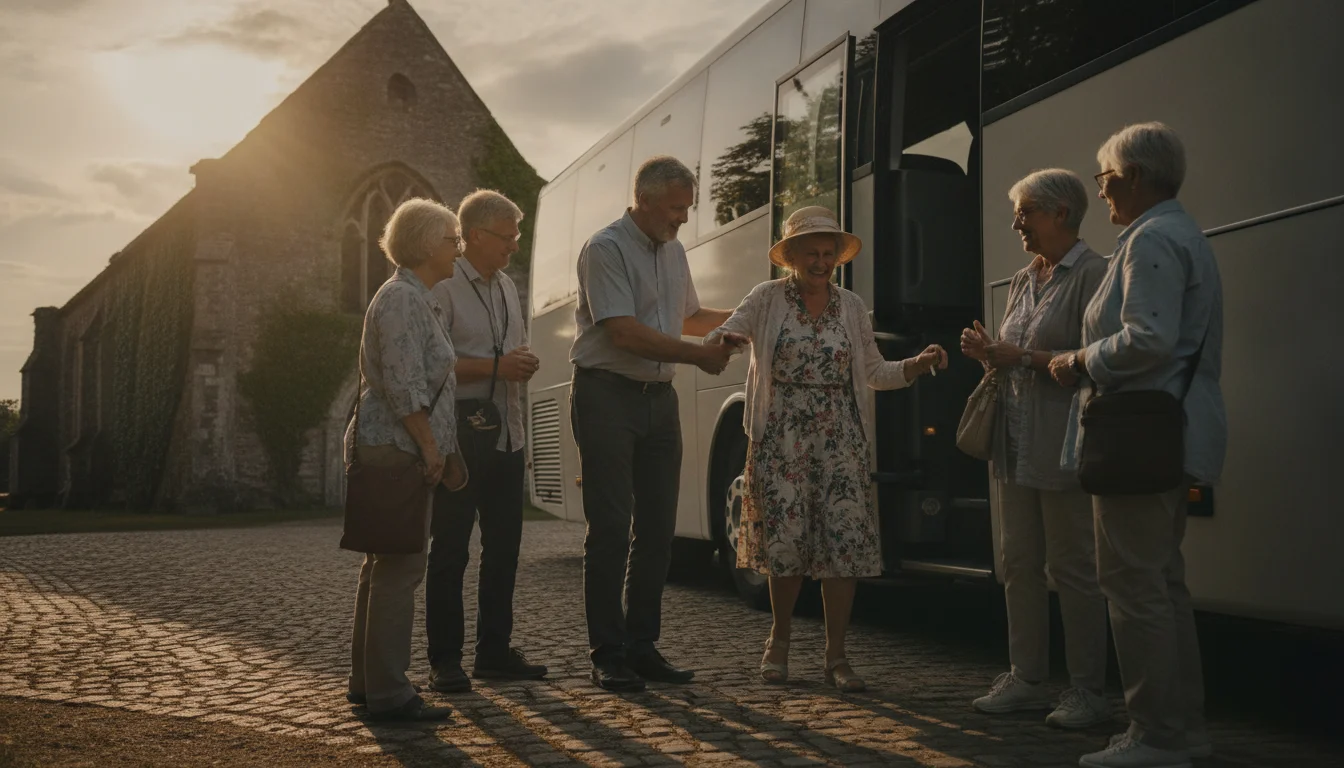
Every pastor and rabbi who calls me about a first group trip eventually asks the same quiet question, usually near the end of the call, almost like they are hoping I will not hear it. “What about Miriam? She is seventy-nine, she uses a walker, and she has been in my congregation for thirty years. Can she come?” The answer is yes, almost always yes, and the fact that you are asking is exactly why your group is going to be well led. The leaders who worry about their oldest travelers are the ones who plan the trips that work for everyone.
I have built heritage journeys for more than forty years, and I want to walk you through how to plan for accessibility and mobility from the organizer’s chair. This is not a checklist about ramps. It is about the decisions you make while recruiting, budgeting, and building an itinerary so that the people who most want to walk in these places actually can. If you have not yet mapped out the wider planning process, start with my complete guide to planning a group pilgrimage and treat this article as the accessibility layer on top of it.
Is a Heritage Tour Ok for Seniors?
Let me answer the biggest fear first, because it stops good trips before they start. Yes, a heritage tour is very much ok for seniors. The average age on the groups I build runs higher than most people expect. Congregational travel skews older by nature, because the people with the time, the savings, and the lifelong desire to see these places are often in their sixties, seventies, and beyond.
What matters is not age. It is honesty about pace and mobility, and a trip built around that honesty. A well-planned heritage journey moves slower than a backpacking trip and faster than a cruise. It uses a private coach, it builds in rest, and it lets people opt out of the hardest climbs without missing the heart of the day. The trips that go wrong for older travelers are the ones that were never designed for them in the first place, where someone booked a generic itinerary and hoped the group would keep up.
So when a member asks whether they are too old for this, your answer as the leader is that the trip will be built to fit the group, not the other way around. That single reframing keeps people in your group who would otherwise quietly bow out.
How to Plan a Group Tour With Older Travelers
The planning work starts long before departure, and most of it is invisible to your travelers. Here is what I want you focused on as the organizer.
Know Your Group Before You Book Anything
You cannot plan for mobility you have not asked about. When people commit to the trip, send a short and warm health and mobility form. Keep it simple. Ask whether they walk without assistance, use a cane, a walker, or a wheelchair, how far they can comfortably walk on uneven ground, whether stairs are a problem, and whether they have any condition the trip should account for. Frame it as helping you build the right trip, not as a test anyone can fail.
You are not collecting this to exclude anyone. You are collecting it so that when we design the itinerary, we know whether we are building for a group that can handle the climb to the Acropolis or one that needs the accessible route and a meeting point at the top. The information changes the trip. Guessing does not work.
Budget for Accessibility Up Front
Accessibility has a cost, and it is far cheaper to plan for than to improvise. A few line items to build into your group budget from the start:
- A coach with a low step or a lift if you have wheelchair users, which sometimes means a slightly larger or specialized vehicle.
- Elevator-equipped or ground-floor-accessible hotels, which occasionally cost more than the cheapest option in a city.
- A little extra time in the schedule, which can mean one more overnight so the days are not brutal.
- Optional porter or assistance help at sites that allow it.
None of these are large expenses spread across a group, but they are real. If your budget is tight, my guide to budgeting a church trip walks through how to price a trip so these items are covered rather than cut. The mistake is pricing the cheapest possible trip and then discovering three of your travelers cannot actually do it.
Plan Earlier When the Group Skews Older
Older groups need more runway, not less. People need time to talk to their doctor, refill and organize medications, arrange for someone to watch the house, and get comfortable with the idea. If your core travelers are mostly retirees, give yourself nine to twelve months rather than six. My guide on how far ahead to plan breaks this down, but the short version is that an older group rewards a longer lead time.
How to Handle Mobility Issues on a Group Tour
This is the practical heart of it. Here is how mobility actually gets managed day to day, and what your job as the leader is versus what the operator handles.
The single most important tool is the coach. A private group coach means your travelers are never walking long distances between sites. We drop close to entrances, we pick up close to exits, and the vehicle becomes a rolling rest point. A member who can walk a site but not the mile of city streets around it is completely fine on a coach-based itinerary. This is why I almost never build heritage trips around public transport or long walking transfers for mixed-age groups.
The second tool is optional segments. On any good itinerary, the hardest parts are designed to be skippable without missing the point. The climb to a hilltop monastery might be optional, with a coffee stop and a view for anyone who stays below. The person who sits out the climb still gets the place, the story, and the community. As the leader, your job is to make sitting out feel normal and dignified, never like falling behind. Say it out loud on day one: “Some parts of this trip are optional by design, and choosing rest is not missing out.” That one sentence from you changes how your oldest travelers experience the whole week.
The third tool is a buddy system. On larger groups I encourage leaders to gently pair travelers so no one is ever navigating a tricky step alone. It builds community and it quietly solves a dozen small mobility moments before they become problems.
And this is where the free-leader model matters more than people realize. When your seat is covered because you have fifteen or more paying travelers, your attention is free. You are not the trip’s accountant, you are its shepherd, and that means you have the bandwidth to keep an eye on Miriam at the top of the steps. If you want to understand how that benefit works, see my guide on whether the pastor travels free.
How to Accommodate Wheelchairs on a Heritage Tour
Wheelchair travelers can absolutely join a heritage tour, and I have led many who did. It requires more specific planning, so here is how I approach it.
First, we talk honestly about the destination. Some sites are fully accessible with paved paths and lifts. Others are ancient, uneven, and were built long before anyone thought about ramps. Modern Israel is generally strong on accessibility, with many major sites offering accessible routes. Older stone sites in Greece, Turkey, and parts of Europe are more mixed. We build the itinerary knowing exactly which sites work fully, which work with assistance, and which need an alternative plan or a comfortable meeting point.
Second, we secure the right transport. A coach with a wheelchair lift or a low accessible step changes everything, and that gets booked at the start, not scrambled for later. For a traveler who can transfer to a coach seat and use a folding chair at sites, the options open up considerably.
Third, we plan the day so the wheelchair traveler is never stranded or separated. There is always a plan for where they wait, who is with them, and how they rejoin the group. Nobody gets left at the bottom of a hill wondering where everyone went.
As the organizer, your part is to flag wheelchair needs early and specifically, ideally as soon as that traveler commits. The earlier I know, the more of the itinerary I can make fully work rather than partially work. A wheelchair user who signs up nine months out can often be built into nearly the whole trip. One who mentions it two weeks before departure is much harder to fully serve.
How to Handle a Mixed Fitness Level Group
Almost every congregational group is mixed. You will have a sixty-two-year-old who hikes on weekends and an eighty-one-year-old with a walker on the same coach. This is normal, and it is very manageable once you stop trying to force one pace.
The trick is a tiered day. Build the itinerary so the core experience is accessible to everyone, and the extra effort is optional for those who want it. The whole group visits the site, hears the teaching, and shares the moment. Then the stronger walkers take the longer climb or the extra ruins while the others rest at a cafe with a view. Everyone reconvenes at the coach. No one is held back, and no one is dragged along.
Your role in a mixed group is to protect both ends. Do not let the fast walkers make the slower ones feel like a burden, and do not let the pace of the group get set by its most impatient member. You set the tone. When the leader treats the slower pace as the natural rhythm of the trip rather than an inconvenience, the whole group relaxes into it.
Two more things help a mixed group hold together. Travel insurance matters more when your group skews older, so make sure everyone is covered before departure. My guide on travel insurance for a church group covers what to look for. And a clear pre-trip briefing, where you walk people through the daily pace honestly, means nobody boards the plane with the wrong expectations. My church group planning checklist includes the pre-departure items that matter most for older travelers.
FAQ: Accessibility and Older Travelers on a Group Pilgrimage
Is a heritage tour ok for seniors, honestly?
Yes. The typical age on congregational heritage trips runs high, and the itineraries are built around a comfortable pace, a private coach, and plenty of rest. The key is choosing an operator who designs for older travelers rather than making them keep up with a generic schedule. Age is rarely the barrier. An unsuitable itinerary is.
How do I handle mobility issues across a whole group?
Collect a simple mobility form when people commit, so you know what you are planning for. Then lean on three tools: a private coach that keeps walking distances short, optional segments so the hardest climbs can be skipped without missing the day, and a buddy system so no one navigates tricky steps alone. Most mobility issues are solved by planning, not by leaving anyone behind.
Can a wheelchair user join a heritage tour?
Yes, with specific planning. It requires the right coach with a lift or low step, an itinerary that flags which sites are fully accessible versus which need an alternative, and a clear plan for each day so the traveler is never stranded. Flag wheelchair needs as early as possible, ideally at signup, so the operator can build the itinerary around them rather than adjusting at the last minute.
How do I keep a mixed fitness level group together?
Build tiered days where the core experience is accessible to everyone and the extra effort is optional. The whole group shares the teaching and the main site, then stronger walkers take the harder add-on while others rest and reconvene at the coach. As the leader, set the tone that the comfortable pace is the real pace, so slower travelers never feel like a burden.
Should older travelers see a doctor before the trip?
Yes, and you should encourage it early in your recruiting. Ask travelers to check with their doctor, organize medications for the trip length, and carry a copy of their prescriptions and any conditions. Pair that with solid travel insurance for the whole group. This is one more reason older groups want nine to twelve months of lead time rather than a rushed booking.
If you are holding back on a trip because you are not sure your oldest or least mobile members can come, that is the wrong reason to wait. A trip built with them in mind is a better trip for everyone. You can see how the group experience is structured on our group heritage tours page.
Contact us and we will help you build an itinerary that fits your actual group, mobility needs and all, so nobody who wants to go has to stay home.