When a pastor or a parish leader first calls me about Italy, the question underneath the question is almost always the same. Not “is Italy worth it,” because everyone already knows the answer to that. The real question is “can I actually pull this off with my people, and will it feed them or just tire them out.” I have built heritage journeys for more than forty years, for Catholic parishes and Protestant congregations alike, and Italy is one of the few destinations where I never have to talk anyone into the value. What I do instead is help leaders shape the trip so it lands as worship and formation, not just sightseeing. That is the whole job, and this guide walks you through how to think about it.
Why Italy Speaks to Every Kind of Congregation
Italy is where the early church went public. Paul arrived in Rome as a prisoner and spent two years there teaching, which is where the book of Acts leaves him. Peter died in Rome. The catacombs still hold the graffiti of believers who prayed there when the faith was illegal. Whatever your tradition, this is shared ground. It sits before the divisions that came later, which is part of why a mixed group can stand together in the same places and each person finds their own footing.
For a Catholic parish, Italy is home in the most literal sense. Rome is the seat of the Church, the Vatican is a pilgrimage in itself, and Assisi, Padua, Siena, and Loreto carry saints your people have prayed to their whole lives. For a Protestant congregation, Italy is where the Scriptures you preach through stopped being far away and started being a real city with real streets. Standing on the Appian Way where Acts 28 says the believers came out to meet Paul does something no sermon illustration can do. I have led both kinds of groups, and the work is to honor what each tradition brings rather than flatten it into a generic tour.
Rome and the Vatican: The Heart of the Trip
Almost every Italy itinerary I build is anchored in Rome, and for good reason. You cannot see it all, so the leader’s real decision is what to make central.
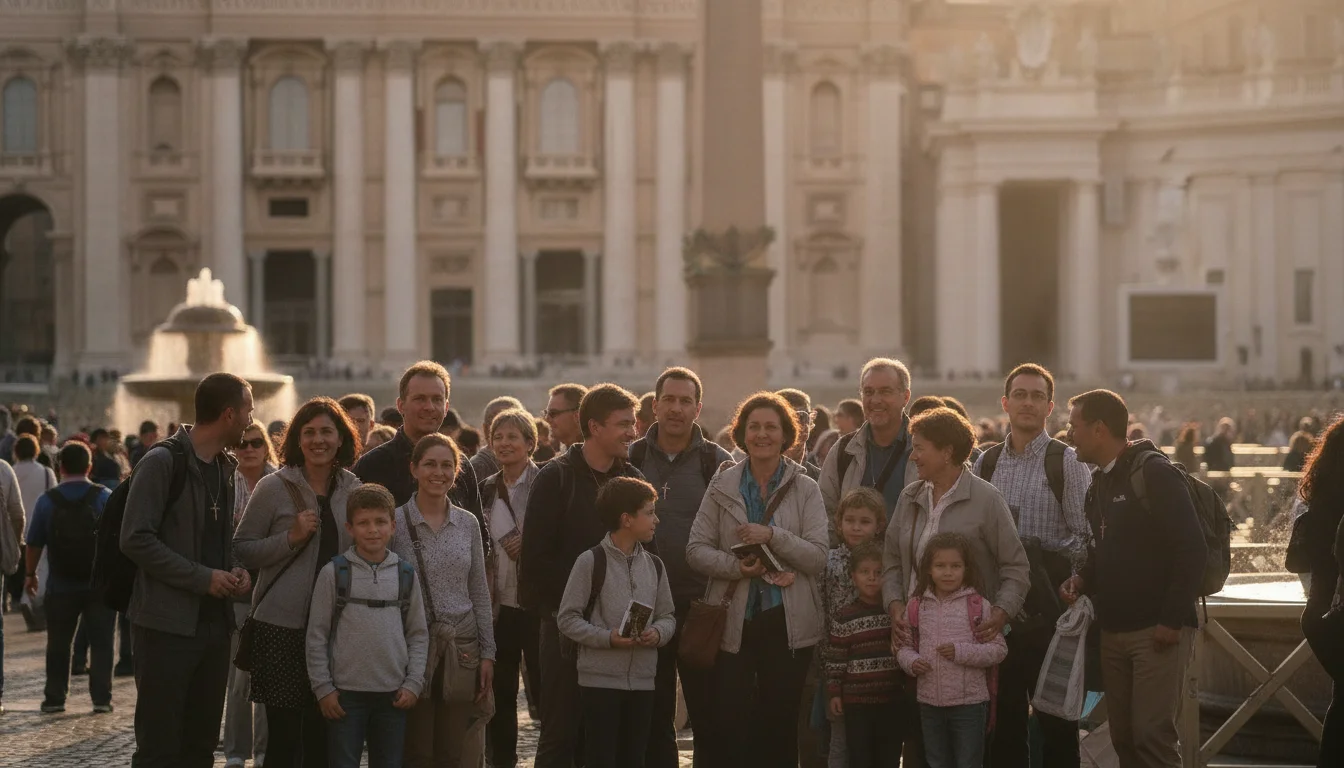
For most groups, three full days in Rome is the floor. That gives you the Vatican, ancient Rome, and the early Christian sites without sprinting. The Vatican day usually holds St Peter’s Basilica, the square where your group photo will be taken, and the Vatican Museums running into the Sistine Chapel. This is a long day on your feet, and it rewards a group that starts early with pre-booked entry so you are not standing in a line that wraps the wall.
The early church day is the one leaders sometimes underrate and then never stop talking about afterward. The Catacombs of San Callisto or Domitilla, the Basilica of San Clemente with its layers going down to a first-century house, the Mamertine Prison where tradition holds Peter and Paul were held, and the Appian Way. This is where a Protestant congregation feels Rome in their own language and a Catholic parish connects the saints to the soil. A good local guide who knows how to read Acts aloud in the right spot is worth more than any single monument.
The ancient Rome day, the Colosseum, the Forum, the Pantheon, gives your people the world the first Christians actually walked into. It sets the stakes. When they later stand in the catacombs, they understand what it cost to believe in that city.
An Assisi Day That Changes the Trip’s Rhythm
If Rome is the trip’s engine, Assisi is its rest. I almost always build in a day or an overnight there, and it is the stop groups thank me for most.
Assisi is Francis and Clare, and the town itself does the teaching. The Basilica of San Francesco with the Giotto frescoes, the tomb of the saint, the Porziuncola down in the valley, the quiet streets that empty out once the day-trippers leave. For a Catholic parish this is deep home ground. For a Protestant congregation, Francis is one of those figures the whole church shares, and the town’s simplicity preaches to everyone regardless of label. An overnight in Assisi, so your group is there in the evening and early morning after the crowds thin, is one of the few upgrades I push leaders toward. The town at dusk is a different place.
Assisi also breaks the intensity of Rome. A congregation that has done three hard days in the city needs a slower day to let it settle, and the hill towns of Umbria give you that.
Building the Early Church Into the Whole Route
The organizers who get the most out of Italy treat the early church as a spine that runs through the trip, not a single afternoon. Rome carries most of it, but you can extend the thread depending on your days and your people.
Some groups add Ostia Antica, the old port where cargo and travelers came into Rome, which gives you a preserved Roman town far quieter than Pompeii. Groups with more time run south to the Bay of Naples for Pompeii and Herculaneum, then to Puteoli, modern Pozzuoli, where Acts 28 says Paul landed in Italy and stayed a week with the believers. Walking off the same harbor Paul walked into makes the text land hard. If your congregation has been preaching through Acts, that southern extension is worth the extra days.
For a Catholic parish, the spine can instead run through the saints: Assisi for Francis and Clare, Padua for Anthony, Siena for Catherine, Loreto for the Holy House. You can build a route that is mostly Marian and mostly saints, or you can weave the two together. When I plan a mixed group with both Catholic and Protestant families, I usually keep Rome’s early church sites central because they belong to everyone, then let the optional afternoons flex toward whatever the group leans into.
How Many Days You Actually Need
This is the practical question every board asks, so let me be plain about it.
A tight Italy trip that still breathes is eight days on the ground. That gives you three days in Rome, an Assisi day, and a couple of days to reach one more region, Florence and Tuscany, or the drive south toward Naples and Pompeii. Eight days is enough to come home formed rather than just exhausted.
Ten days is the sweetest spot for most congregations. It lets Rome sit at three or four days, adds a real Assisi overnight, and gives you room for either Florence and the art of the faith or the southern early-church route without cutting anything to the bone.
Twelve to fourteen days is for the group that wants Rome, Assisi, Florence, and the south. It is a bigger ask on time off and budget, so I only steer larger, committed groups toward it.
Fewer than seven days on the ground and you are really just doing Rome, which can be the right call for a first trip or an older congregation. There is no shame in a focused Rome-only week. It often becomes the trip that convinces a congregation to come back. If you are still weighing the shape of the whole thing, the complete leader’s guide walks through the planning end to end.
The Best Seasons to Take a Congregation
Italy has two windows I point leaders toward, and one I gently steer them away from.
Spring, from April into mid-June, is the best season for most groups. The weather is warm without the July furnace, the light is beautiful, and the countryside around Assisi and Tuscany is green. The one thing to watch is the season around Easter and the days right after, when Rome and the Vatican fill up. For a Catholic parish that wants to be in Rome for Holy Week, that crowding is the point and worth planning around early. For a group that wants the sites without the crush, the weeks after Easter into June are ideal.
Fall, from September into October, is the other strong window. The summer heat breaks, the crowds thin from their August peak, and the harvest light over Umbria and Tuscany is something your photographers will not stop talking about. I lead a lot of congregations in the fall for exactly these reasons.
Summer, July and August, is the season I steer groups away from unless the calendar forces it. Rome bakes, the crowds peak, and much of the country goes on holiday in August, which thins out the local rhythm you actually came to feel. If summer is your only option because of school schedules, we build the days to start early and rest in the afternoon heat, but spring or fall is the better trip nearly every time.
The Free-Leader Model: How You Come Along Without Carrying the Cost
Here is the part that takes the last weight off a leader’s shoulders. On our group heritage tours, when you gather fifteen or more paying participants, the group leader travels free. That means your full trip, flights, hotels, ground transportation, included site entries, and the group meals in the itinerary, is covered. You are not asking your parish or your church to send you on an expensive trip. You are organizing a journey your people pay into, and your seat is built into how the group is priced.
This matters more in Italy than people expect, because a serious Italy itinerary is not one hotel with day trips. It moves, from Rome to Assisi to Tuscany or south to Naples, with coaches, local guides, and pre-booked Vatican and site access. When the leader’s seat sits on top of all that as a personal expense, a lot of pastors and priests quietly decide the trip is not feasible. Remove that one line and it becomes feasible again. Larger groups, around twenty-five or thirty, can sometimes open a second reduced or complimentary seat for a co-leader or a spouse, so if that matters to you, raise it early. If you want the full picture of how the seat is funded, how the free-leader model works lays out the economics, and what a group trip costs breaks down the numbers a board will ask about.
The point of the free seat is not just the money. It frees your attention. Once your own cost is handled, you are no longer the trip’s accountant. You are its shepherd, free to read Acts 28 on the Appian Way, to lead a quiet moment at the tomb of Francis, and to be present for your people in the places that move them. The operator’s job is to make everything else invisible.
What to Ask an Operator Before You Commit
A church trip to Italy lives or dies on the details a good operator handles and a weak one lets slip. Before you sign anything, ask how they book Vatican and Colosseum entry, whether your group gets a dedicated Christian or Catholic guide rather than a generic city guide, how they handle daily Mass or a Protestant devotional time, and how flexible the itinerary is around your congregation’s specific focus. The answers tell you fast whether they build faith journeys or just sell sightseeing with a religious label. For a fuller checklist, choosing a faith-based tour operator walks through what separates the two, and you can see the routes we run on our Italy heritage tours page.
FAQ: Church Group Tours to Italy
How many days do we need for a church group tour of Italy?
Eight days on the ground is the practical floor and still lets the trip breathe: three days in Rome, an Assisi day, and one more region. Ten days is the sweet spot for most congregations, adding an Assisi overnight and either Florence or the southern early-church route. A focused Rome-only week under seven days is a fine first trip, especially for an older group.
Does an Italy trip work for both Catholic parishes and Protestant congregations?
Yes, and it is one of the few destinations where a mixed group thrives. Rome’s early church sites, the catacombs, San Clemente, the Appian Way, belong to the whole church before the later divisions. For a Catholic parish we can lean the route toward the Vatican and the saints in Assisi, Padua, and Loreto. For a Protestant congregation we anchor it in Acts and the early believers. We build the optional afternoons to flex toward whatever your people lean into.
What is the best time of year to take a congregation to Italy?
Spring from April into mid-June and fall from September into October are the two best windows: warm weather, good light, and thinner crowds than summer. Watch the crush around Easter unless being in Rome for Holy Week is the point. We steer groups away from July and August when Rome bakes and much of the country is on holiday.
How does the free group-leader benefit work for Italy?
With fifteen or more paying participants, the group leader travels free, covering flights, hotels, ground transportation, included site entries, and the group meals in the itinerary. Below fifteen the trip still runs, but the leader pays a participant’s price. Groups of around twenty-five or thirty can sometimes open a second reduced or complimentary seat for a co-leader or spouse, so ask about that early if it matters to you.
Can we combine Rome with Assisi and the early church sites in one trip?
Yes, and most of the strong itineraries do exactly that. Rome carries the early church, the catacombs, San Clemente, the Mamertine Prison, and the Appian Way, while Assisi gives your group a slower day of rest and formation around Francis and Clare. Groups with more time run south to Pompeii and Pozzuoli, where Acts 28 says Paul landed in Italy, which lands hard for a congregation preaching through Acts.
If you are weighing whether an Italy trip is realistic for your community, start with a real set of dates and the shape of the days, and the rest tends to firm up fast. Contact us and we will help you build a route that fits your congregation, your calendar, and your group size.