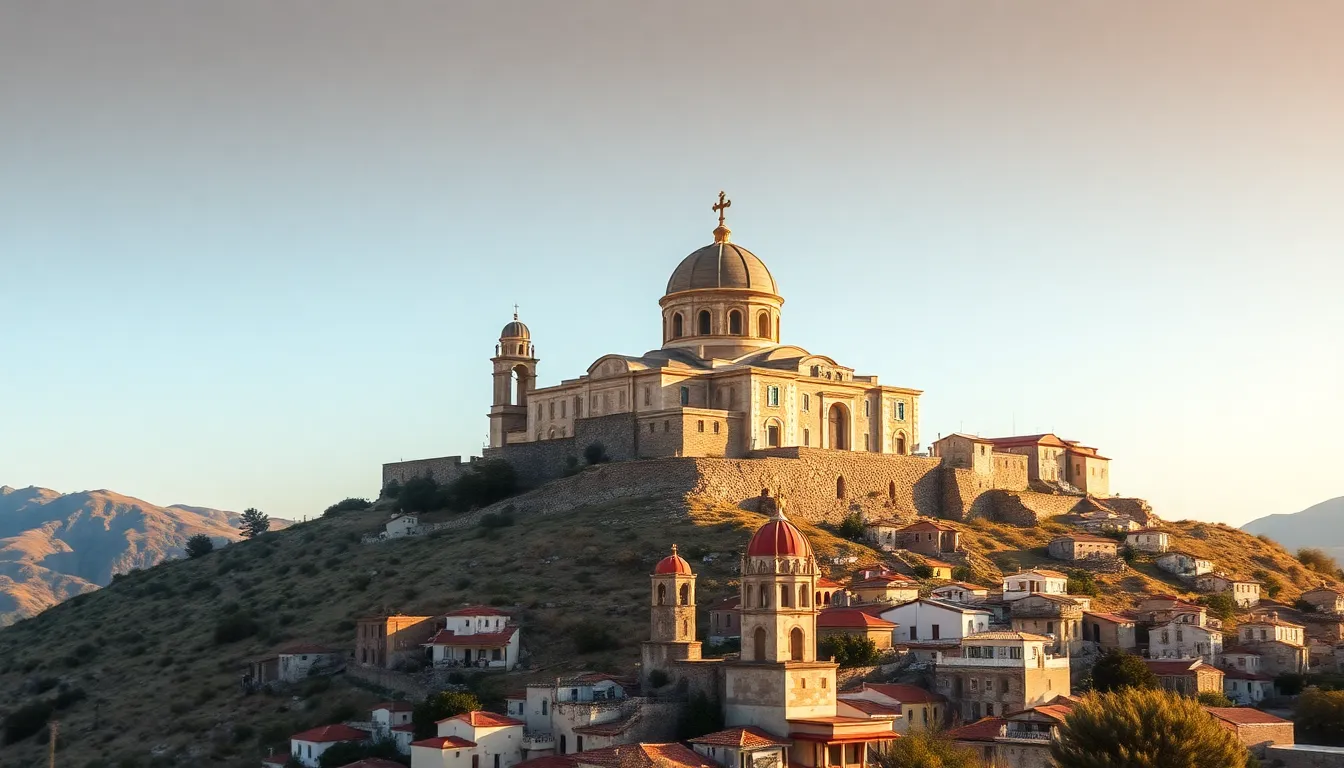
People think of the Greek islands as the beach part of the trip, the reward after the serious heritage days on the mainland. I let them think that for about an hour, until we sail into Patmos and climb to the cave where tradition says John received the Revelation. Then it stops being the beach part. The Aegean is not an add-on to a faith trip. These islands were the stepping-stones the early church moved along, the sea-roads of the apostles, and a place where the Christian, Jewish, and Orthodox stories all left deep marks. Leading a group through them is some of the most rewarding work I do.
Let me orient you to the Aegean the way I would on the deck of the ferry, island by island.
Why the Islands Belong on a Faith Heritage Trip
The Aegean was not empty water between important places. It was the highway. Paul sailed it. John was exiled to it. The early church spread along it, island to island, port to port. When you read the book of Acts, the sea voyages are not filler, they are the connective tissue of the whole mission.
For a group, the islands do something the mainland cannot. They put you on the water the apostles crossed, in the ports they sailed into, on the ground where the New Testament’s final book was written. And they layer the Christian story together with deep Jewish heritage and the long Orthodox tradition that shaped these islands for over a thousand years. The Aegean is where the trip gets both its biblical weight and its breathing room.
Patmos: Where the Revelation Was Written
If you visit one island for heritage, make it Patmos. This small, quiet island in the Dodecanese is where the apostle John was exiled, and where, according to tradition, he received the visions recorded in the book of Revelation. “I, John, was on the island called Patmos,” the text says plainly, and you are standing on it.
There are two sites that anchor a visit. The Cave of the Apocalypse, partway up the hillside, is where tradition holds John received the Revelation. It is a small, dim grotto, now enclosed in a chapel, with the rock face marked at the spots tradition associates with the vision. It is an intimate, holy space, and groups often grow very still inside it.
Above it crowns the Monastery of Saint John the Theologian, a fortified Orthodox monastery founded in 1088, dominating the hilltop town of Chora. It is one of the most important Orthodox monasteries in the world, still active, holding a treasury of icons, manuscripts, and relics. Walking from the cave up to the monastery, your group traces the whole arc from the moment of the vision to the centuries of Christian devotion it inspired. Patmos is the natural island climax of a Greek heritage trip, and it pairs powerfully with the Pauline mainland route in our guide to the footsteps of Paul in Greece.
Rhodes: Crossroads of Faiths and Empires
Rhodes is the big island of the Dodecanese, and it is a different kind of stop, a layered city rather than a single sacred site. Paul landed at Rhodes on his way to Jerusalem, recorded briefly in Acts 21, so it sits on the apostolic sea-road.
But Rhodes earns its place on a heritage trip through its depth. The medieval Old Town, built by the Knights of Saint John, is one of the best-preserved fortified cities in Europe, a UNESCO site you can walk for hours. There is a significant Jewish heritage here too. The old Jewish quarter, La Juderia, holds the Kahal Shalom Synagogue, the oldest in Greece still in use, and a moving museum and memorial to a Sephardic community that flourished for centuries before it was deported in the Holocaust. Add the Orthodox churches and the ancient Greek and Roman remains, and Rhodes becomes a single city where Christian, Jewish, knightly, and ancient layers stack on top of each other. For interfaith groups especially, it is rich ground. I cover the Jewish thread in more depth in our Jewish heritage in Greece guide.
Kos: Healing, Antiquity, and the Sea-Road
Kos is the third of the classic Dodecanese stops, and like Rhodes it sat on Paul’s route, mentioned in Acts 21 as he sailed toward Jerusalem. Its main heritage draw is older: this was the home of Hippocrates, the father of medicine, and the Asklepieion, the ancient healing sanctuary, still stands on a terraced hillside outside town.
Why does that matter on a faith trip? Because the Asklepieion was a religious site, a temple of healing where the sick came to sleep and seek a cure from the god Asklepios. For a group, it is another window into the religious world the early church spoke into, the same kind of context Delphi provides on the mainland. Kos also carries Jewish and Orthodox layers and makes a gentle, walkable stop between the heavier sites. It is a good island for a slower day.
How the Islands Were Stepping-Stones
I like to teach the Aegean as a system, not a set of separate stops. Pull out a map with your group and trace it. Paul sailing from port to port. John exiled across the water to Patmos. The gospel moving island to island along established sea-lanes. The Aegean shows how the faith actually spread in the first century, not in a straight line but along the shipping routes of the Roman world.
That framing turns a relaxing island cruise into a coherent heritage lesson. Each island is a node in a network, and your group sees the whole shape of how the early church crossed the sea. It is one of the most satisfying things to teach, because the geography does half the work for you.
Practical Orientation for Group Leaders
The islands ask for a bit more logistical care than the mainland, and a cruise often makes the most sense for a group.
- A cruise simplifies the islands. For a group, a small-ship or organized Aegean cruise removes the headache of ferries, luggage, and island hotels. You wake up in a new port, tour, and sail on. Most three or four day cruises hit Patmos, Rhodes, and Kos along with others.
- Patmos needs time ashore. The Cave of the Apocalypse and the monastery are both up the hillside from the port. Build in transport and enough time to do both without rushing. The monastery enforces modest dress, covered shoulders and knees, so brief your group ahead.
- Walking and heat. Old Town Rhodes and the Kos Asklepieion both involve walking on uneven stone, often in strong sun. Hats, water, and good shoes. Spring and fall are far kinder, as our best time to visit Greece guide explains.
- Pace it as the trip’s exhale. The islands work best after the dense mainland days. The lighter rhythm and the sea air give your group room to absorb everything they have seen. Our heritage travel guide for Greece shows how to sequence islands with the mainland route.
One thing worth knowing as you plan: with Heritage Tours, the group leader travels free when you bring fifteen or more participants. For a pastor or educator weighing whether to add an island extension, that changes the budget conversation early, and it is worth factoring in from the start.
FAQ: The Aegean Islands for Faith Groups
Which Greek island is most important for Christian heritage?
Patmos, without question. It is where the apostle John was exiled and, by tradition, received the visions recorded in the book of Revelation. The Cave of the Apocalypse and the Monastery of Saint John make it the single most significant island for a Christian group. If you visit only one island for heritage, it should be Patmos.
Can you trace Paul’s journey through the islands?
In part, yes. Paul sailed the Aegean on his voyages, and Acts 21 records him stopping at Rhodes and Kos as he traveled toward Jerusalem. While these were brief port calls rather than long stays, they put your group on the actual sea-roads the apostles crossed, which makes the islands a real extension of the Pauline mainland route rather than just a beach add-on.
Is an Aegean cruise good for a faith group?
For most groups, yes. A small-ship or organized cruise removes the complexity of ferries, luggage, and separate island hotels. You wake in a new port each day, tour the heritage sites, and sail on. A typical three or four day itinerary covers Patmos, Rhodes, and Kos among others, which is a strong heritage core.
What Jewish heritage is there in the Aegean islands?
Rhodes is the standout. Its old Jewish quarter, La Juderia, holds the Kahal Shalom Synagogue, the oldest still in use in Greece, along with a museum and memorial to a Sephardic community that thrived for centuries before its destruction in the Holocaust. Several other islands carry Jewish history too, making the Aegean meaningful for Jewish and interfaith groups.
When should the islands come in a Greece itinerary?
I recommend the islands after the dense mainland heritage days. The lighter rhythm and the sea give your group room to absorb what they have seen on the Pauline route and in the cities. Ending or nearly ending the trip on Patmos, with the Revelation, also gives the journey a fitting sense of completion.
If the Aegean sounds like the part of your trip that would give your group both its biblical climax and its breathing room, I would love to help you build the islands into your route. Patmos in particular is worth the journey. You can see how we shape these trips on our Greece heritage page or learn how the group experience works on our group heritage tours page.
Contact us whenever you are ready to start planning.