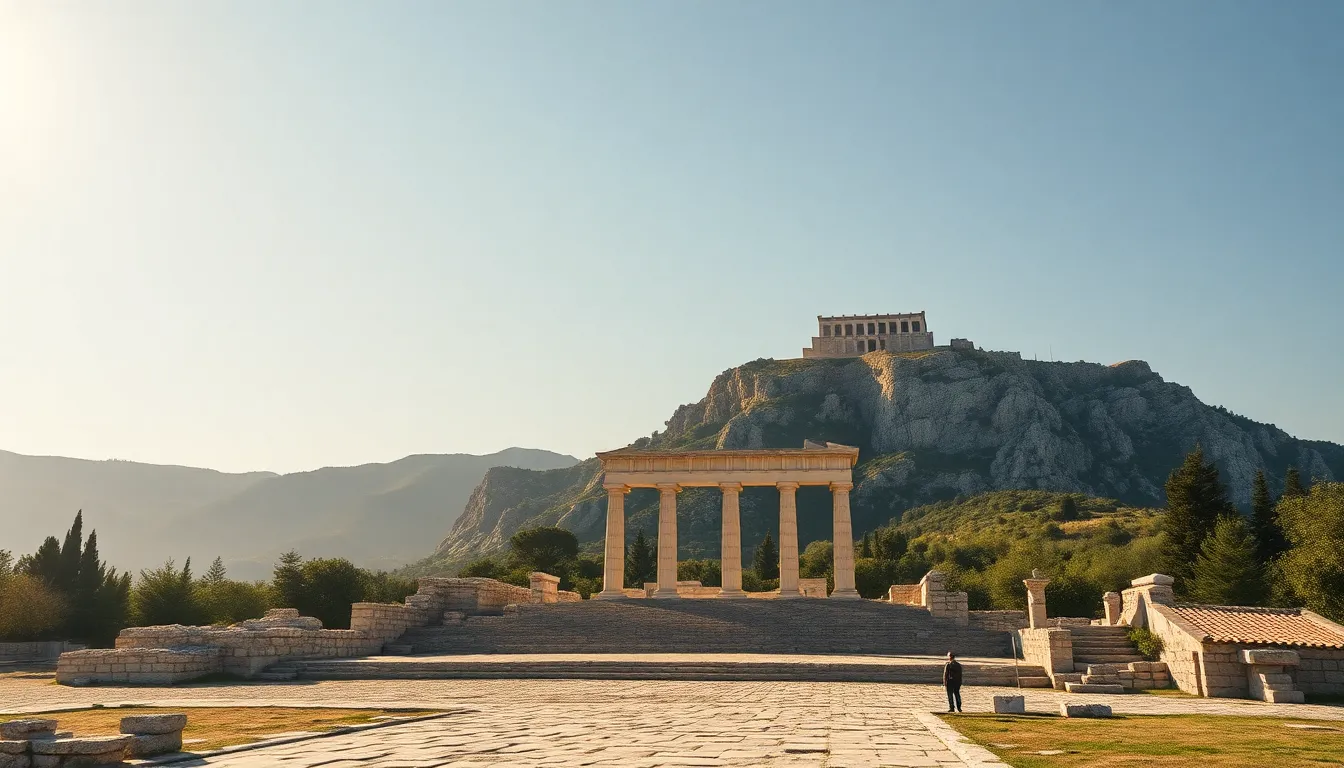
I have led a lot of groups through Greece over the years, and I can tell you the moment it stops being a sightseeing trip and becomes something else. It usually happens at Philippi. We are standing by a small river outside the ancient city, the place where tradition says Lydia was baptized, and somebody in the group reads Acts 16 out loud. The words “we sat down and spoke to the women who had gathered there” land differently when you are sitting in the actual spot. People go quiet. That is the trip I want to help you give your congregation.
Greece is where the New Testament steps out of Asia and into Europe. Paul’s second missionary journey, the one that carried the gospel across the Aegean, is written into the geography of this country. You can follow it almost like a map. And for a faith group, walking that route in order, north to south, is one of the most coherent and moving heritage journeys there is.
Let me walk you through it the way I would walk you through it on the ground.
Why Greece Is the Clearest Place to Trace Paul
Some biblical journeys are hard to follow on the ground because the sites are uncertain or the geography has shifted. Greece is the opposite. The cities Paul visited are still here, many of them excavated and open, and they line up along a route you can actually drive in a sensible order.
Paul arrived in Greece after the vision at Troas, when a man of Macedonia begged him, “Come over and help us.” He crossed to Neapolis, the port, and walked inland to Philippi. From there the journey runs through Thessaloniki and Berea in the north, then south to Athens, and finally to Corinth, where he stayed a year and a half. Acts 16 through 18 is the itinerary. Your trip can be too.
That is what makes Greece such a strong first heritage destination for a Christian group. The story has a beginning, a middle, and an end, and you travel it in sequence. By the time you reach Corinth, your group has lived the arc of the mission.
Philippi: The First Church in Europe
Philippi is where it starts, and I always begin a Pauline journey here for a reason. This is the first place in Europe where the gospel was preached and the first European church was planted. When your group stands here, they are standing at a genuine beginning.
The ruins are extensive. You can see the forum, the basilicas, and the traditional site of the prison where Paul and Silas sang hymns at midnight before the earthquake. A short distance away is the river Gangites, where Lydia, a seller of purple cloth, became the first recorded European convert. Many groups hold a short service or a baptism renewal at the modern baptistery there. I have seen people weep at that riverside. It is a quiet place, and the weight of what happened there is easy to feel.
For a group leader, Philippi also sets the tone. It tells your people that this is not a museum tour. This is their story, and it has a starting line.
Thessaloniki: A Living City With an Ancient Faith
Thessaloniki is different from Philippi because it is a large, busy modern city, not an archaeological park. Paul preached in the synagogue here for three Sabbaths, and the visit ended in an uproar that sent him on to Berea. Two of his letters, First and Second Thessalonians, are written to this community.
What I love about bringing groups here is the layering. You have Roman ruins, Byzantine churches like the Rotunda and Hagios Demetrios, and a city that has never stopped being lived in. Thessaloniki is also one of the most important Jewish heritage cities in the world, once known as the Jerusalem of the Balkans, which makes it a powerful stop for groups interested in both the Christian and Jewish stories. You can read more about that side of the city in our guide to Jewish heritage in Greece.
For a Pauline itinerary, Thessaloniki is the reminder that Paul preached to real communities in real cities, not in a vacuum.
Berea: The City of the Noble-Minded
Berea, the modern town of Veria, gets skipped on rushed itineraries, and I think that is a mistake. The Bereans hold a special place in scripture. Acts says they “received the word with all readiness of mind, and searched the scriptures daily.” For any group that values study and honest inquiry, Berea is meaningful ground.
There is a monument here, the Bema of the Apostle Paul, with mosaics depicting his ministry. It is a fitting place to talk with your group about what it means to test what you hear against scripture. I often pause here longer than the guidebooks suggest, because the lesson of Berea is one most congregations want to carry home.
Athens: Paul on Mars Hill
Then comes Athens, and the Areopagus, and one of the most famous sermons ever preached. Standing on Mars Hill, looking up at the Acropolis, Paul addressed the philosophers and pointed them from their altar “to an unknown god” toward the God who made the world.
For your group, Athens is a study in contrasts. The Parthenon and the ancient agora are extraordinary in their own right, and they frame the encounter perfectly. Your people stand where Paul stood, surrounded by the same temples he saw, and they understand in their bodies what he was up against and what he was offering. I give Mars Hill its own treatment in our guide to the Areopagus in Athens, because it deserves more than a passing mention.
A practical note for leaders: the rock of the Areopagus is smooth and can be slippery. For older group members, this is a place to take it slow and use the stairs.
Corinth: Where Paul Stayed and Wrote
Corinth is the destination, and it is the right place to end. Paul spent eighteen months here, longer than anywhere else in Greece, working as a tentmaker and building a church that would receive two of his most important letters.
The site is rich. You can see the bema, the public platform where Paul was brought before the proconsul Gallio, a detail that helps date the whole New Testament timeline. You can see the temple of Apollo, the agora, and the Acrocorinth towering above. When you read First Corinthians here, the letter’s concerns about a divided, distracted, cosmopolitan church make complete sense, because you are standing in exactly that kind of city.
Ending at Corinth gives your group a sense of completion. They have followed the apostle from his first European convert at Philippi to the mature, complicated church at Corinth. That arc stays with people.
How to Structure a Pauline Greece Itinerary for a Group
Here is the shape I recommend for most congregations:
- Days 1 to 2: Arrive in Thessaloniki, settle, and visit the city’s sites. Use the north as your base.
- Day 3: Philippi and the baptism site of Lydia, with a service or renewal.
- Day 4: Berea, then begin the journey south.
- Days 5 to 6: Athens, the Areopagus, the Acropolis, and the agora.
- Days 7 to 8: Corinth, with time to read the Corinthian letters on site.
Eight days covers the core route comfortably. Add days if you want to include Meteora, the monasteries suspended on their rock pillars, or an island extension to Patmos, where John received the Revelation. For a fuller plan, see our 10-day heritage itinerary for Greece.
One thing worth knowing as you plan: with Heritage Tours, the group leader travels free when you bring fifteen or more participants. That changes the math for a lot of pastors building a trip for their congregation, and it is worth factoring in early.
FAQ: Following Paul in Greece
What is the best order to visit Paul’s sites in Greece?
Travel north to south, the way the journey actually unfolded in Acts. Start at Philippi and Thessaloniki in the north, move to Berea, then head south to Athens and finish at Corinth. Following the biblical sequence makes the whole trip cohere, and your group experiences the mission the way Paul lived it.
How many days do you need to follow Paul through Greece?
Eight days covers the core Pauline route at a comfortable pace. If you want to add Meteora or an island extension to Patmos for the Book of Revelation, plan for ten to twelve days. Rushing this itinerary is the most common mistake I see, and it costs your group the quiet moments that make the trip.
Is a Pauline Greece trip suitable for older congregation members?
Yes, with good planning. Most sites are manageable, though a few, like the Areopagus rock and the Acrocorinth, involve uneven ground. We structure the pace and the walking around the group you bring, and we make sure no one is left out of the meaningful moments.
Can a Pauline itinerary include Jewish heritage as well?
It can, and Thessaloniki is the natural place for it. The city was one of the great centers of Sephardic Jewish life, and a thoughtful itinerary can honor both the Christian and Jewish stories without feeling rushed. We help interfaith and combined groups build this well.
When is the best time of year for a Greece heritage trip?
Late spring (May to June) and early fall (September to October) are ideal. The weather is comfortable for walking the sites, and the summer crowds have thinned. Our guide to the best time to visit Greece breaks the seasons down in detail.
If you are starting to imagine this journey for your congregation, I would love to help you shape it. The route is clear, the sites are real, and the story tells itself once your people are standing in it. You can see how we structure these trips on our Greece heritage page or learn how the group experience works on our group heritage tours page.
Contact us whenever you are ready to start planning.