How to Use This Itinerary, and How to Adapt It
I have been building Greece heritage itineraries for more than two decades, and the question I hear most often is simple: how do we fit it all in? The honest answer is that you cannot. Greece is too layered, too deep, and too spread out for any single trip to cover everything. But you can build a route that gives your group the most meaningful sites in a sequence that makes geographic and spiritual sense.
This 10-day itinerary is designed for Jewish groups, Christian groups, and interfaith groups. It moves south from Athens to Corinth, then north to Thessaloniki and Kavala, with an optional extension to Rhodes. Every day has a theme, not just a schedule. And every section can be adjusted. If your congregation has three days instead of two for Thessaloniki, we can make that work. If Rhodes does not fit your group’s travel comfort, we can replace it with Ioannina and the Romaniote Jewish community.
Use this as a starting point. Then call us and we will shape it around your group.
Days 1 and 2: Athens, the Areopagus, the Ancient Agora, and the Oldest Jewish Community in Europe
Athens is where most groups begin, and for good reason. For Christian groups, the Areopagus is the site where Paul delivered one of the most important speeches in the New Testament, standing on the rocky outcrop above the Agora and addressing the Athenians about the “unknown god.” For Jewish groups, Athens holds something equally significant: one of the oldest continuous Jewish communities in Europe, with records dating back more than 2,300 years.
Day one is for arriving, settling in, and walking the Plaka district to get your bearings. The Acropolis and Parthenon provide the ancient Greek context that makes everything else make sense.
Day two is the heritage day. The Areopagus in the morning, when the light is soft and the crowds have not yet arrived. The Ancient Agora, where Paul walked and debated. And the Romaniote Synagogue of Athens, Etz Hayyim, which connects your group to a Jewish presence that predates Christianity in Greece by centuries.
Day 3: Corinth, Paul’s Letters and the Ancient City
The drive from Athens to Ancient Corinth takes about an hour and a half, and the landscape shifts from urban sprawl to open countryside. Corinth is where Paul lived and worked for 18 months, where he wrote some of his most important letters, and where the early church took root in a city known for its commerce and its complexity.
Walking the ruins of Ancient Corinth, your group stands in the same marketplace where Paul worked as a tentmaker. The bema, the raised platform where Paul was brought before the Roman proconsul Gallio, is still there. For Christian groups, this is where theology became practice. For Jewish groups, the synagogue inscription found at Corinth confirms the Jewish community Paul was engaging with.
The Corinth Canal is worth a stop on the return drive. It is not a heritage site, but it gives the group a moment to breathe between intense days.
Day 4: Delphi (Optional), Ancient Greek Spiritual Heritage
Delphi is a departure from the Jewish and Christian thread, but many group leaders choose to include it because it adds a layer of understanding. This was the spiritual center of the ancient Greek world, the place where pilgrims came for centuries seeking guidance from the Oracle. Standing at Delphi, your group begins to understand the spiritual landscape Paul walked into. The Greeks he addressed at the Areopagus were people shaped by this tradition.
If your group is focused tightly on Jewish or Christian heritage, skip Delphi and add a second day in Corinth or begin the journey north to Thessaloniki a day early.
Days 5 and 6: Thessaloniki, the Jerusalem of the Balkans and Paul’s Letters
Thessaloniki is the emotional center of this itinerary. For Jewish groups, this city was home to the largest Sephardic community in the world. At its peak, Jews made up more than half the city’s population. The nickname “Jerusalem of the Balkans” was not symbolic. It was literal. For Christian groups, Thessaloniki is the city Paul wrote to twice, the community he founded after leaving Philippi, and the site of some of the earliest Christian churches in Europe.
Jewish Heritage: The Jewish Museum, Monastir Synagogue, and Deportation Memorial
Give your group a full morning at the Jewish Museum of Thessaloniki. The collection tells the story of a community that thrived for 500 years and was destroyed in 18 months. The deportation section documents the transport of nearly 50,000 Jews to Auschwitz-Birkenau in 1943. This is difficult material, and your group needs to be prepared for it. I always recommend that group leaders speak with their congregation before arriving. Not to soften what they will see, but to give people permission to feel it.
The Monastir Synagogue, the only surviving synagogue in Thessaloniki, and the Holocaust memorial at Liberty Square round out the Jewish heritage sites.
Christian Heritage: The Early Churches of Thessaloniki
The Church of Agios Dimitrios, built over the site of a Roman-era church, contains mosaics from the 5th century. The Rotunda, originally built as a Roman temple, became one of the earliest Christian churches in the world. These are not museum pieces. They are active places of worship with living congregations.
Day 7: Kavala and Philippi, Where Paul First Set Foot in Europe
This is the day that matters most to many Christian groups. Kavala, the ancient city of Neapolis, is where Paul first landed in Europe after crossing from Asia Minor. From the harbor, you can look out at the same water Paul crossed. Philippi, a short drive inland, is where Paul established the first Christian church in Europe and where Lydia was baptized at the river.
The baptistery site by the river is simple, almost modest. There is no grand cathedral. Just the water and the memory. For many group members, this is the most moving moment of the entire trip.
Days 8 through 10: Rhodes, La Juderia, Kahal Shalom Synagogue, and the Old Town
Rhodes requires a flight or ferry from Thessaloniki (or Athens), and this is worth discussing honestly with your group. The transfer adds travel time and complexity. But what your group finds in Rhodes is unlike anything else in Greece.
The Jewish Quarter of Rhodes, La Juderia, sits inside the medieval Old Town, a UNESCO World Heritage Site. The Kahal Shalom Synagogue, built in 1577, is the oldest synagogue in Greece and one of the oldest in the world still standing. It is also one of the few that still holds services, though on a limited schedule.
Before the war, the Jewish community of Rhodes numbered about 2,000. In 1944, the entire community was deported. Today, Kahal Shalom stands as witness. The Square of the Jewish Martyrs, just steps from the synagogue, marks where the community was gathered before deportation.
For groups with limited time or mobility concerns, Rhodes can be replaced with an extra day in Thessaloniki or a visit to Ioannina, home to the Romaniote Jewish community, one of the oldest in Europe.
Adapting This Itinerary: Jewish Focus, Christian Focus, or Both
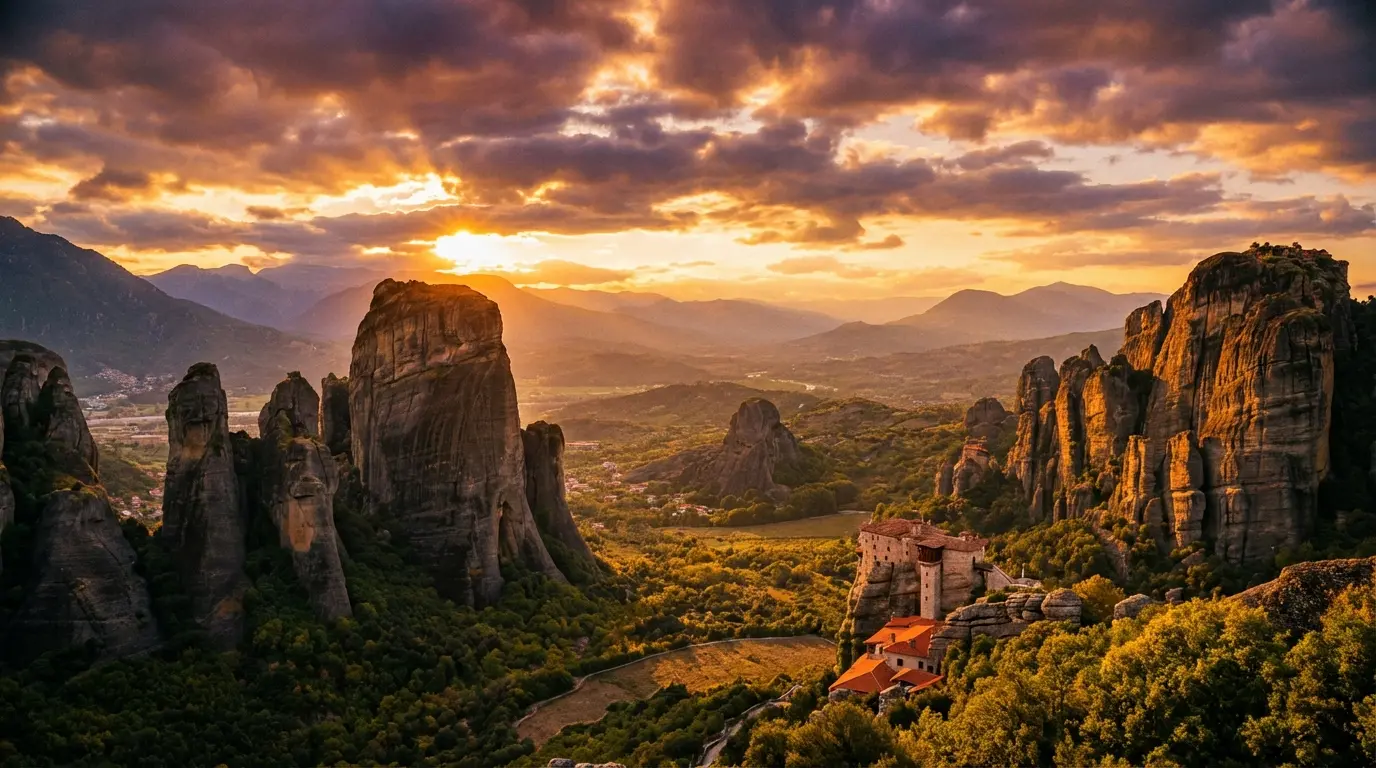
This itinerary works as written for interfaith groups. For a Jewish-focused trip, expand Thessaloniki to three days, add Ioannina, and spend more time at the Jewish museums and synagogues. For a Christian-focused trip, add Meteora (the cliff-top monasteries) and give Philippi a full day instead of a half day.
The beauty of working with Heritage Tours is that this route is a starting point, not a fixed product. We adjust the pace, the emphasis, and the stops based on who your group is and what they came to find.
Frequently Asked Questions About This Greece Heritage Itinerary
What is the best starting city for a Greece heritage tour? Athens is the natural starting point for most groups. The international airport has the best connections, and beginning in Athens gives your group a grounding in ancient Greek history before moving into the Jewish and Christian heritage sites to the north.
How much time should a group spend in Thessaloniki? At minimum, two full days. Three is better, especially for Jewish groups. The Jewish Museum alone deserves a full morning, and the deportation memorial and Monastir Synagogue need unhurried time. Many groups tell us afterward that they wish they had spent less time in Athens and more in Thessaloniki.
Is Rhodes worth adding to a Greece heritage itinerary? For Jewish groups, absolutely. Kahal Shalom Synagogue and La Juderia are extraordinary. For Christian groups, Rhodes adds a beautiful medieval dimension but is less central to the Paul narrative. The honest question is whether your group is comfortable with the island transfer, which adds a flight or ferry.
Can this itinerary serve both Jewish and Christian groups? Yes, and it often does. The overlap between Jewish and Christian heritage in Greece is genuine, not manufactured. Paul preached in synagogues. The cities he visited had established Jewish communities. An interfaith group traveling this route together often finds that the shared history deepens both traditions.
What is the best way to travel between Athens and Thessaloniki with a group? For groups of 15 or more, a private coach is the most comfortable option. The drive is about five hours and passes through beautiful countryside. Domestic flights take about one hour and work well for groups that prefer to save the travel day. We arrange either option based on your group’s preference and pace.
If this itinerary feels like the right starting point for your group, reach out to us. We will sit down with you and shape it around your congregation.