Why Timing a Greece Heritage Trip Is Different from a Regular Trip
For most travelers, choosing when to visit Greece comes down to weather and crowds. Sunny or mild? Packed or quiet? That is a fine way to plan a beach trip. But for a faith community planning a heritage journey, timing involves a different set of questions entirely.
When can your congregation actually travel together? Does your trip overlap with Jewish or Christian holidays that might add meaning to the experience, or complicate it? Are the specific heritage sites you want to visit open, accessible, and manageable for a group of twenty or thirty people?
After more than forty years of planning heritage journeys, I can tell you that the difference between the right month and the wrong one is not the temperature. It is whether your group can stand quietly in the Monastir Synagogue or whether they are shoulder-to-shoulder with summer tourists. It is whether La Juderia in Rhodes feels like a sacred space or a crowded alley.
Here is what I know about each season, written specifically for the rabbis and pastors making this decision.
Spring (March through May): The Strongest Season for Most Heritage Groups
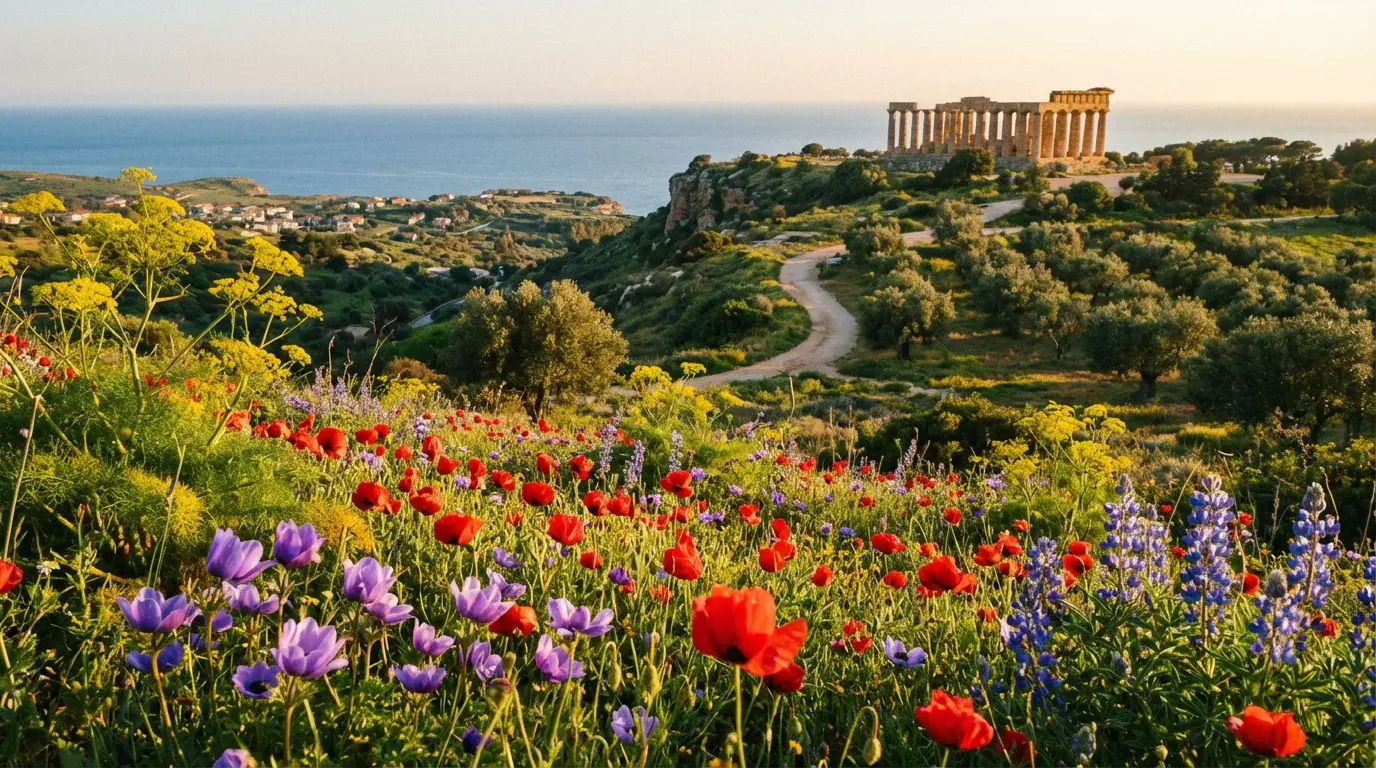
Spring is when Greece is at its best for heritage travel. The weather is mild, the sites are not yet crowded, and the landscape is green and alive. For most groups, this is the season I recommend first.
Holy Week and Orthodox Easter in Thessaloniki
If your trip falls during Greek Orthodox Easter, which moves each year on the Julian calendar, Thessaloniki becomes an extraordinary place to be. The processions, the midnight services, the public celebrations are among the most powerful expressions of living Christian faith anywhere in the world.
This is genuinely worth planning around if your congregation’s schedule allows it. But I want to be honest: Orthodox Easter also means larger crowds in Thessaloniki, higher hotel prices, and the need to book well in advance. The experience is remarkable. The planning needs to account for the complexity.
Passover and Easter Overlap: What to Plan Around
In some years, Passover and Easter fall close together or overlap. For Jewish groups, this means your congregation may not be available to travel during the weeks around Pesach. For interfaith groups, both holidays need to be considered.
The practical advice is simple: check both calendars before choosing your dates. If Passover falls in mid-April, a late April or early May departure avoids the conflict while still capturing the best of Greek spring. We help leaders navigate this every year, and it is always solvable with enough lead time.
Summer (June through August): High Season Trade-offs
Summer in Greece is beautiful. The days are long, the skies are clear, and the energy in Athens and the islands is vibrant. But for heritage groups, summer comes with real trade-offs.
Rhodes in Summer: When the Jewish Quarter Gets Crowded
Rhodes is one of Greece’s most popular summer destinations. The medieval walled city, which is where La Juderia sits, fills with tourists from June through August. A group of twenty people trying to walk the narrow streets of the Jewish Quarter in July will be competing with cruise ship passengers, tour groups, and general tourist traffic.
This does not mean summer is impossible. But the contemplative quality that makes La Juderia meaningful, the quiet of walking streets where a community lived and worshipped for centuries, is harder to find in high season. If Rhodes is central to your itinerary, spring or autumn will give your group a fundamentally different experience.
Thessaloniki is also hotter in summer, with temperatures regularly above 35 degrees Celsius. Walking between heritage sites in that heat is manageable but not comfortable for everyone, especially for older members of your group.
Autumn (September through October): Quieter, Cooler, and Often Ideal
Autumn is the season that surprises most group leaders. The crowds thin significantly after August, the temperatures cool to comfortable walking weather, and the heritage sites feel more accessible and more intimate.
The High Holiday Window for Jewish Groups
For Jewish congregations, autumn presents a scheduling consideration. Rosh Hashanah and Yom Kippur typically fall in September or early October, and most rabbis and congregants will not travel during this period. Sukkot follows shortly after.
The practical window for Jewish groups in autumn is usually mid-October onward, after the holidays have concluded. Late October in Greece is genuinely lovely. The weather is mild, the summer crowds are gone, and the sites, particularly Thessaloniki and Ioannina, feel unhurried and open.
For Christian groups, September and October are excellent without reservation. The Pauline sites in Athens, Corinth, Thessaloniki, and Philippi are all accessible, comfortable, and far less crowded than in summer.
Winter (November through February): Low Season, High Access
Winter in Greece is the quietest season and the most underestimated. Northern Greece, particularly Thessaloniki and Ioannina, gets cold and sometimes rainy. Rhodes is mild but many tourist-oriented services reduce their hours.
The advantage of winter is access. Museums and memorial sites are open but nearly empty. You can spend an hour in the Jewish Museum of Thessaloniki with no one else present. The Monastir Synagogue is yours alone. For groups that prioritize depth over comfort, and for communities with the flexibility to travel in the off-season, winter offers a quality of encounter that no other season matches.
The trade-off is that some outdoor sites, particularly the archaeological areas in Philippi and Corinth, are less enjoyable in cold or wet weather. And some smaller heritage sites in Rhodes and Ioannina may have reduced winter hours. We always confirm site access for winter itineraries before finalizing plans.
The One Month That Surprises Every Greece Heritage Group
October.
If I could choose one month for a heritage group to visit Greece, Jewish or Christian, it would be October. The summer heat has broken. The crowds have thinned dramatically. The light in Thessaloniki and Athens is golden and warm without being harsh. Rhodes’ Jewish Quarter is quiet enough to hear your own footsteps.
For Christian groups, October means the Pauline sites are comfortable and uncrowded. For Jewish groups traveling after the High Holidays, late October offers the best combination of weather, access, and atmosphere.
Hotel prices drop from their summer peak. Domestic flights between Athens, Thessaloniki, and Rhodes are easier to book. And the Greek autumn has a quality of light and stillness that suits a heritage journey in a way that the busy energy of summer simply does not.
If your congregation has flexibility in scheduling, consider October. You will not regret it.
When you are ready to start planning, Heritage Tours builds each itinerary around your community’s calendar, your tradition, and the season that works best for your group. We would be glad to talk it through.
Frequently Asked Questions About Greece Heritage Tour Timing
What is the best month to visit Greece for Jewish heritage sites? Late April through May and mid-October through early November are the strongest windows. Both avoid the summer crowds that make Rhodes’ Jewish Quarter and Thessaloniki’s heritage sites harder to experience at a contemplative pace. October, after the Jewish holidays have concluded, is particularly good.
Is Orthodox Easter in Greece worth planning a trip around? For Christian groups, yes. Orthodox Easter in Thessaloniki is an extraordinary experience of living faith tradition. The midnight services, processions, and public celebrations are deeply moving. However, it requires early booking, typically nine to twelve months ahead, and higher accommodation costs during that period.
Are Greece heritage sites crowded in summer? The major sites in Athens are crowded year-round but manageable. Rhodes’ medieval walled city, including the Jewish Quarter, becomes significantly crowded from June through August with cruise ship and resort tourists. Thessaloniki’s heritage sites are less affected by summer crowds but the heat can be challenging. Ioannina and the northern Pauline sites remain relatively quiet even in summer.
When is Thessaloniki least crowded for a group visit? October through April. Thessaloniki is a year-round city, not a seasonal resort, so it never becomes truly empty. But the tourist traffic drops substantially after September, and the heritage sites, museums, and synagogue are far more accessible for groups during the cooler months.
Is Rhodes’ Jewish Quarter open year-round? La Juderia itself, meaning the streets and the quarter, is always accessible. The Kahal Shalom Synagogue and the Jewish Museum of Rhodes typically operate from April through October, with reduced or appointment-only hours in winter. If your trip falls outside the main season, we confirm access in advance and arrange private openings when possible.