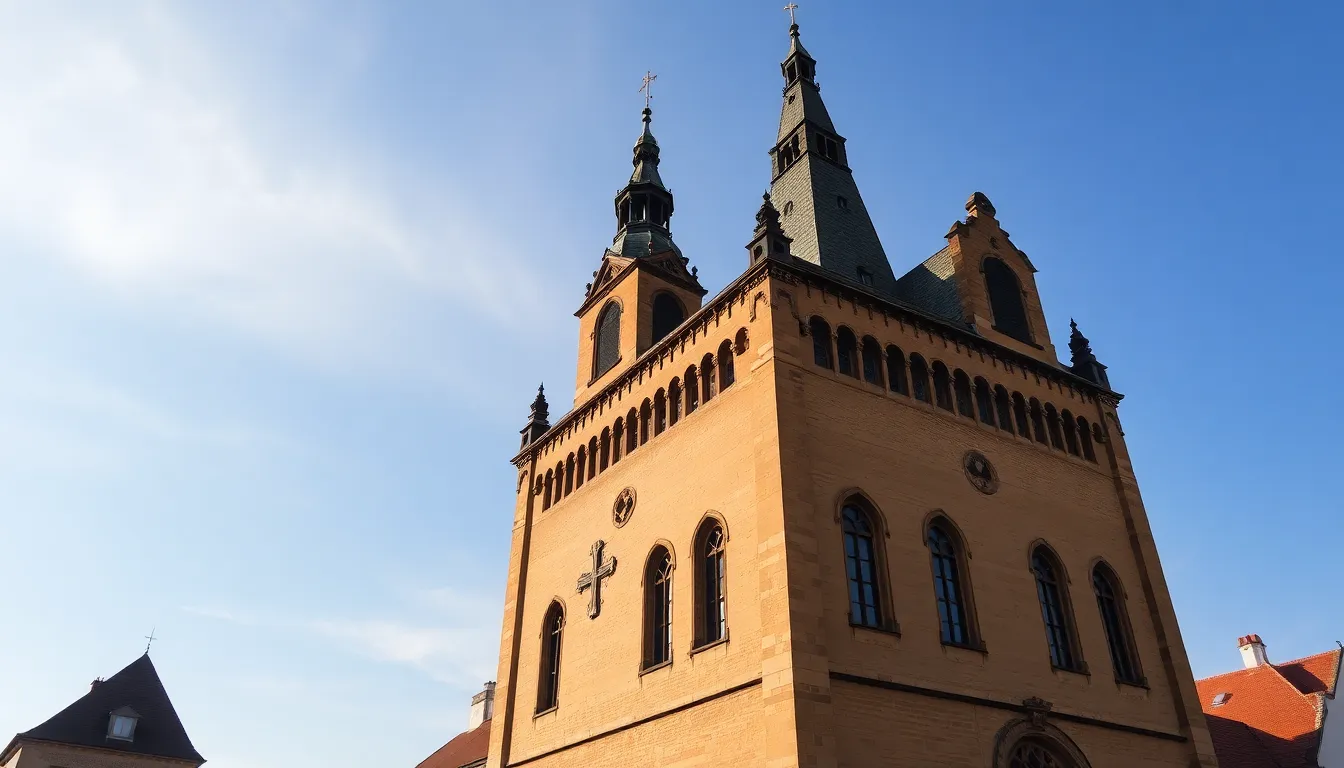
The first time I brought a group to Wittenberg, one of the pastors traveling with us stopped in the middle of Schlossstrasse, looked down the length of the old market street toward the Castle Church tower, and said quietly, “So this is it. This is where it started.” That is the feeling Wittenberg gives people. It is a small town, walkable end to end in twenty minutes, and yet almost everything that happened here in the early 1500s reshaped the Christian church across the world.
I have led faith groups through Germany for years, and I tell every pastor and educator the same thing: if your group’s story runs through the Reformation, Wittenberg is the source. Not a symbol of the source. The actual place. Luther preached here, taught here, married here, raised his children here, and is buried here. You can stand where he stood. For a Protestant congregation, that proximity does something no lecture can.
Let me walk you through the town the way I walk a group through it, so you can see why it deserves a full day and how to plan it well.
A Small Town with an Outsized Story
Wittenberg sits in Saxony-Anhalt, in what was East Germany until 1990. Officially it is now called Lutherstadt Wittenberg, “Luther’s town,” a name the city earned and embraced. In Luther’s day it was the seat of the Elector of Saxony and home to a young university, founded in 1502, where Luther arrived to teach theology in 1508.
That university matters more than people expect. Luther was not a wandering preacher. He was a professor of biblical studies, a Doctor of Theology, lecturing on the Psalms and on Paul’s letter to the Romans. The 95 Theses did not come from nowhere. They came from a scholar who had been reading Scripture closely and had grown convinced that the church’s practice of selling indulgences contradicted the gospel he taught every day in the lecture hall.
The town you walk today still holds the shape of that world. The main axis runs from the Castle Church at one end to the Town Church of St. Mary at the other, with the market square, the university buildings, and the Luther House strung along it. You can see the whole Reformation story laid out on a single street.
The Castle Church and the 95 Theses
On October 31, 1517, Luther posted his 95 Theses on the door of the Castle Church, the Schlosskirche. Whether he nailed them up or sent them to his archbishop first is debated by historians, and honestly, the debate matters less than people think. The church door functioned as the university’s notice board. Posting theses there was an invitation to academic debate, not yet an act of rebellion. What turned it into a revolution was the printing press, which carried his arguments across Germany within weeks.
The original wooden door is gone, destroyed by fire in the 18th century. What stands now is a bronze door installed in 1858, with the Latin text of the 95 Theses cast into the metal. I always pause my groups here before we go inside, because the doorway itself has become the relic, and it helps to explain what actually happened before people read too much into the bronze.
Inside the church, you will find the graves of both Martin Luther and Philipp Melanchthon, his closest colleague and the scholar who systematized Reformation theology. Standing between those two tombs, I have watched more than one group fall silent. I cover the Castle Church in depth in a separate guide to the Schlosskirche and the 95 Theses, because it carries enough history to deserve its own visit.
The Luther House, Where He Actually Lived
A few minutes’ walk east brings you to the Lutherhaus, the former Augustinian monastery where Luther lived as a monk and, later, as a married man with his wife Katharina von Bora and their children. It is now the largest museum of Reformation history in the world.
This is where the man becomes real for a group. You see the lecture room where students gathered, the famous wood-paneled living room (the Lutherstube) where the family ate and where Luther held the freewheeling dinner conversations later collected as his “Table Talk,” and personal objects that bring the household to life. For an educator preparing students, or a pastor wanting their congregation to understand Luther as a husband and father and not only as a theological figure, the Luther House does more than any single site in town. I have written a full guide to the Lutherhaus museum to help you plan that visit, because it can easily absorb two or three hours.
The Town Church of St. Mary, Where He Preached
If the Castle Church is where the Reformation was announced, the Town Church of St. Mary’s, the Stadtkirche, is where it was lived out week to week. This is the parish church where Luther preached most of his sermons, and it holds the claim of being the place where the first Mass in German, rather than Latin, was celebrated. That change sounds small until you sit with it. Worship in the language of the people, so ordinary believers could understand and participate, was one of the Reformation’s most practical revolutions.
The altarpiece, painted by Lucas Cranach the Elder and his workshop, is one of the great artworks of the Reformation. It shows Luther and his circle in scenes of baptism, communion, confession, and preaching, with Luther himself depicted in the pulpit pointing the congregation toward Christ. Cranach was Wittenberg’s most prominent citizen, a painter, a printer, and Luther’s friend, and his fingerprints are all over the town’s visual record.
How I Structure a Day in Wittenberg
After years of bringing groups here, here is the rhythm I have settled on, and I share it freely because a good plan makes the difference between a rushed checklist and a day that lands.
Morning
Start at the Castle Church before the day-tour crowds arrive. The early light on the bronze door, the quiet inside, the graves of Luther and Melanchthon. Give your group time to absorb where they are standing rather than hurrying to the next thing. From there, walk the length of the main street toward the market square, where statues of Luther and Melanchthon stand, and let the group feel the scale of the town.
Midday
Break for lunch on or near the market square. Wittenberg is small enough that you are never far from a café, and a relaxed midday meal gives your group space to talk about what they have seen. The conversations that happen over lunch are often where the trip’s meaning settles.
Afternoon
Spend the afternoon at the Luther House. It is the right place to end the day because it pulls everything together. By now your group has seen where Luther announced his theses and where he preached. The Luther House shows them where he lived all of it out. The Wartburg Castle, where Luther later translated the New Testament, pairs naturally with Wittenberg if your itinerary allows a second Reformation stop.
Practical Notes for Group Leaders
Wittenberg is reachable by direct train from Berlin in about forty minutes, which makes it an easy add to a Berlin-based itinerary or a natural first stop on a dedicated Reformation route through Saxony and Thuringia. The historic core is pedestrian-friendly and compact, which is a gift for groups with older members. Most of the key sites sit within a ten-minute walk of one another.
A few things I have learned the hard way. The Castle Church tower can be climbed, but the stairs are steep and narrow, so set expectations with your group. The Luther House does not rush visitors, which is its strength, so do not over-schedule the rest of your day if you want to give it justice. And the 500th-anniversary years drew large crowds; outside those peak periods, Wittenberg is refreshingly uncrowded, and you can often have the Castle Church nearly to yourselves in the early morning.
One more thing worth saying to any pastor or educator weighing the trip. With Heritage Tours, the group leader travels free with fifteen or more participants. For a church planning a Reformation pilgrimage, that changes the math of the conversation you will have with your congregation, and it makes a Wittenberg-centered trip far easier to build.
You can see how a Wittenberg-based Reformation journey fits into a wider route on our Germany destination page, and our Germany spiritual sites overview lays out the full landscape of faith sites across the country. If you want to understand how the group-leader experience works in practice, our group heritage tours page walks through it.
FAQ: Visiting Wittenberg
Why is Wittenberg called the birthplace of the Reformation?
Because the Reformation as a public movement began here on October 31, 1517, when Martin Luther posted his 95 Theses challenging the sale of indulgences. Luther lived and taught in Wittenberg for most of his adult life, preached in the Town Church, and is buried in the Castle Church. The town was the intellectual center from which Reformation ideas spread across Germany and Europe.
How much time should a group spend in Wittenberg?
A full day. The Luther House museum alone takes two to three hours to appreciate properly, and the Castle Church, the Town Church, and a walk through the historic center fill the rest comfortably. Groups that try to do Wittenberg in two or three hours end up rushing past the sites that give the day its meaning.
Is Wittenberg easy to reach from Berlin?
Yes. Direct trains run from Berlin to Lutherstadt Wittenberg in about forty minutes, which makes it a practical day trip or an easy first stop on a longer Reformation route. The historic core is compact and walkable, with all the major Luther sites within a short distance of one another.
Is Wittenberg suitable for groups with older members?
Generally yes. The historic center is flat, pedestrian-friendly, and compact, so most sites are an easy walk apart. The one exception is the Castle Church tower, which has steep, narrow stairs. The church interiors and the Luther House museum are accessible without difficulty for most travelers.
What is the difference between the Castle Church and the Town Church in Wittenberg?
The Castle Church (Schlosskirche) is where Luther posted the 95 Theses and where he and Melanchthon are buried. The Town Church of St. Mary (Stadtkirche) is the parish church where Luther preached most of his sermons and where worship was first held in German. Both are essential, and they sit at opposite ends of the same main street.