Once a year or so, a group leader tells me they do not want the highlights version. They want the whole thing. A congregation that has saved for years, a sabbatical trip, a milestone anniversary. For those groups, two weeks in Germany is not too much. It is finally enough.
Fourteen days lets you hold all three of Germany’s great faith chapters without sacrificing any of them: the medieval Jewish communities of the Rhine, the Reformation that reshaped Christianity, and the Holocaust memory that changed everyone. Our 10-day route compresses these into a tight survey. This itinerary lets each chapter breathe. If your group leans heavily toward one tradition, our 7-day Reformation and 7-day Jewish heritage routes go deeper on each.
Every transfer below includes hotel pickup and dropoff. Over two weeks and many cities, that logistical care is the difference between a leader who arrives present and a leader who arrives exhausted. We carry the movement so you carry the meaning.
Days 1 and 2: Arrival in Frankfurt and the Old Ghetto
Most international flights land in Frankfurt, so this is where we begin. Day one is gentle: settle in, walk the reconstructed Old Town, and let the jet lag ease at Romerberg Square.
Day two opens the heritage work. The Judengasse Museum sits on the site of one of Europe’s oldest Jewish ghettos, where families lived in a single narrow lane from the 1460s until Napoleon opened the gates. The memorial wall nearby names the Frankfurt Jews murdered in the Shoah. Frankfurt is the right opening because it already holds both the medieval and modern threads the whole trip will follow.
Days 3, 4, and 5: The ShUM Cities, Speyer, Worms, and Mainz
This is the section most tours skip, and it is the one I care about most. Speyer, Worms, and Mainz are the ShUM cities, recognized by UNESCO as the cradle of Ashkenazi Jewish life.
Day three goes to Worms, which deserves a full day. The 11th-century synagogue, the Rashi Chapel where the great commentator studied, and the Heiliger Sand, the oldest Jewish cemetery in Europe, each ask for time. Day four goes to Speyer, where the medieval mikveh is one of the oldest surviving ritual baths in Europe, and the synagogue courtyard tells the founding story. Day five goes to Mainz, seat of Rabbeinu Gershom, where the new synagogue stands on the memory of the old.
Three days here is a real gift. Groups that race through the ShUM cities always wish they had stayed. With two weeks, you do not have to choose.
Days 6 and 7: Erfurt and Eisenach, the Reformation Begins
Now the trip turns to the Reformation, and we follow it where it started. Day six goes to Erfurt, where Luther entered the Augustinian monastery in 1505 and wrestled with how a person stands right before God. The cloister still stands, and Erfurt’s medieval old town gives real texture to Luther’s world.
Day seven goes to Eisenach and the Wartburg Castle, where Luther, hidden as Junker Jorg after being declared an outlaw, translated the New Testament into German in about eleven weeks. That translation shaped the German language itself. The Luther Room where he worked is the emotional anchor of the day. For groups with a musical streak, Bach’s birthplace in Eisenach makes a fitting companion.
Day 8: Lutherstadt Wittenberg, the Heart of the Reformation
Wittenberg gets a full day. The Castle Church door, where Luther posted the 95 Theses in 1517, is the hinge of Western Christian history. The Lutherhaus, the largest Reformation museum in the world, shows Luther the husband and father alongside Luther the reformer. The Town Church of St. Mary is where he actually preached.
For Jewish groups, Wittenberg carries a harder history too. The Judensau relief on the Town Church is a medieval antisemitic carving the city has chosen to keep in place, with an explanatory memorial at its base. Whether to include it is a decision for you and your group, and we will help you think it through honestly.
Day 9: Travel to Nuremberg, Two Stories in One City
Nuremberg holds two stories. The medieval old town is one of Germany’s most intact, with churches, market squares, and half-timbered houses. But heritage groups come for the Nazi Documentation Center, built into the unfinished Party Rally Grounds.
The exhibition there is among the best curated in Germany. It walks your group through how an ordinary city became the site of the Nuremberg Laws, the rallies, and finally the war crimes trials. For group leaders, this is a place to build in time for conversation afterward, because the question Nuremberg raises, how a society does this, hangs over the rest of the trip.
Days 10 and 11: Munich and Dachau
Munich is warm and walkable, and your group will appreciate a morning at the Marienplatz or in one of its historic churches. But the reason heritage groups come is Dachau.
Dachau was the first concentration camp, opened in 1933, about twenty minutes from central Munich. Your group will need at least three to four hours at the memorial site, and I strongly recommend a quieter afternoon or evening afterward. In my experience, groups need space after Dachau. A long lunch, a walk along the Isar, or simply free time. Do not schedule another heavy site on the same day.
For rabbis and pastors, Dachau is where your role matters most. Some people will cry. Some will go very quiet. Both are normal. What matters is that you are present with them.
Days 12, 13, and 14: Berlin, Where Everything Converges
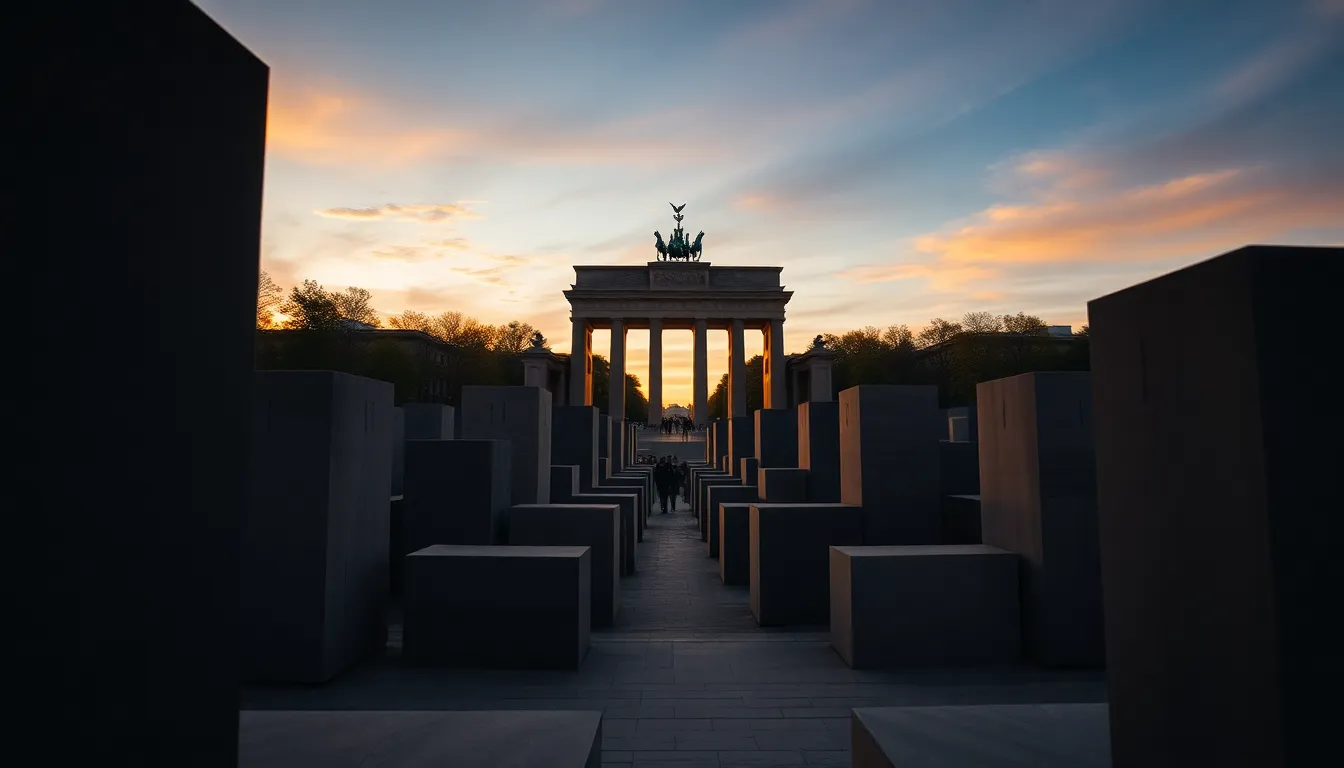
We close in Berlin, where all three chapters meet. Day twelve is for the Memorial to the Murdered Jews of Europe, the field of 2,711 concrete pillars near the Brandenburg Gate, with its Information Center of personal stories below. The afternoon goes to the Topography of Terror, on the former Gestapo headquarters, which lays out plainly how state terror was organized.
Day thirteen is for Jewish Berlin: the New Synagogue on Oranienburger Strasse, the Scheunenviertel with its Stolpersteine, and the Jewish Museum Berlin, designed by Daniel Libeskind, where the building itself is part of the lesson. A drive to the House of the Wannsee Conference, where the murder of European Jewry was coordinated in 1942, can be added for groups ready for it.
Day fourteen is departure from Berlin. I always leave the final morning unhurried. Two weeks holding the birth, the reformation, and the near-erasure of religious life in Germany asks for a closing gathering. After all of it, your group will have things to say, and the last word belongs to the leader.
FAQ: A 14-Day Complete Germany Heritage Itinerary
Who is a 14-day Germany itinerary actually for?
It is for groups who want the whole story rather than the highlights: congregations marking a milestone, sabbatical or study trips, and interfaith groups who want to hold Jewish, Christian, and Holocaust history together without rushing any of it. Two weeks is a real commitment, but for the right group it is the trip they remember for the rest of their lives. If two weeks is too much, our 10-day or 7-day routes cover the essentials.
Is two weeks too long for older travelers?
Not if it is paced well, and pacing is exactly what the extra days buy you. A 14-day trip lets us build in lighter days, rest afternoons, and recovery time after the heaviest memorial sites. We arrange shuttles for any site with a real climb, like the Wartburg, so no one is left behind. For mixed-age groups, the longer itinerary is often more comfortable than a compressed one.
How do you keep the trip from feeling like all grief?
By honoring the full arc. The ShUM cities are about the birth and flourishing of Ashkenazi life. The Reformation towns are about courage and renewal. The Holocaust sites are about loss and memory. Holding all three together is what keeps the trip honest. The medieval and Reformation chapters give your group the strength to face the memorial chapters with open eyes.
Can a 14-day trip lean Jewish, Christian, or interfaith?
Yes, and we shape it. A Jewish-focused version deepens the ShUM cities and Berlin’s Jewish sites and may shorten Wittenberg. A Christian-focused version adds Reformation time and may add Augsburg. An interfaith group usually keeps the itinerary as written, because the sites that matter to one tradition often illuminate the other. Tell us your community, and we build around it.
Which sites need advance group reservations over two weeks?
Quite a few. The Dachau Memorial, the Jewish Museum Berlin, the ShUM synagogues and cemeteries, the Wartburg Castle, and the Lutherhaus all benefit from advance group booking, especially from April through October. We handle every reservation as part of your itinerary planning, so your group leader never chases a single booking form across two weeks.
If your community is ready for the whole story rather than the survey, a two-week Germany journey is the one I would point you to. I would be glad to help you shape it around your people, your traditions, and your pace. Group leaders travel free with fifteen or more participants, which makes a trip this size more reachable than most leaders assume.
Start with our Germany heritage destination page and how we run group heritage tours, then contact us whenever you are ready to begin.