There is a difference between a Reformation tour and a Luther trail. A Reformation tour covers a movement. A Luther trail follows one man, in order, from the room where he was born to the room where he died. I have led both, and for groups who already know the theology and want the biography, the trail is the more intimate trip. You watch a life unfold.
Five days is exactly enough to follow Luther’s life from Eisleben to Eisenach to Erfurt to Wittenberg without padding. This is the tightest of our Germany routes. If your group wants a broader Reformation picture with Worms and the imperial story, our 7-day Reformation itinerary opens it up. If you want the full sweep with Jewish heritage too, see the 10-day Germany route.
Every transfer includes hotel pickup and dropoff. The Luther trail covers real ground across central Germany, and we handle the driving so your group can spend the road time talking, not navigating.
Day 1: Arrival and Eisleben, Where Luther Was Born and Died
Most groups fly into Leipzig or Berlin, both within easy reach of the trail’s eastern end. We begin in Eisleben, which is the only town that holds both ends of Luther’s life. He was born here in 1483 and died here in 1546.
The Birth House and the Death House are both museums now, and visiting them on the same first day gives your group a frame for everything that follows. You stand in the modest rooms of a miner’s son, and you stand in the house where, sixty-two years later, that same man died as the most consequential religious figure in Europe. Everything in between is the trail you are about to walk.
It is a strong, quiet way to begin. I usually keep the first evening light so the group can absorb that bookend before we fill in the middle.
Day 2: Erfurt, the Monastery and the Crisis of Faith
We move to Erfurt, where the young Luther entered the Augustinian monastery in 1505. The story goes that a thunderstorm and a vow drove him to the cloister, abandoning his law studies. Whatever the exact cause, this is where Luther wrestled hardest with the question that would eventually crack open the church: how can a sinful person stand right before a holy God?
The Augustinian Monastery still functions and welcomes visitors. Standing in the cloister, your group is in the place where the doubt lived years before the defiance. Erfurt is also one of Germany’s best-preserved medieval cities, with the Merchants’ Bridge and the cathedral giving real texture to the world Luther knew.
For a pastor, Erfurt is the chapter that makes Luther human. Before the hero of the Reformation, there was a frightened young monk who could not find peace. Groups connect with that.
Day 3: Eisenach and the Wartburg Castle
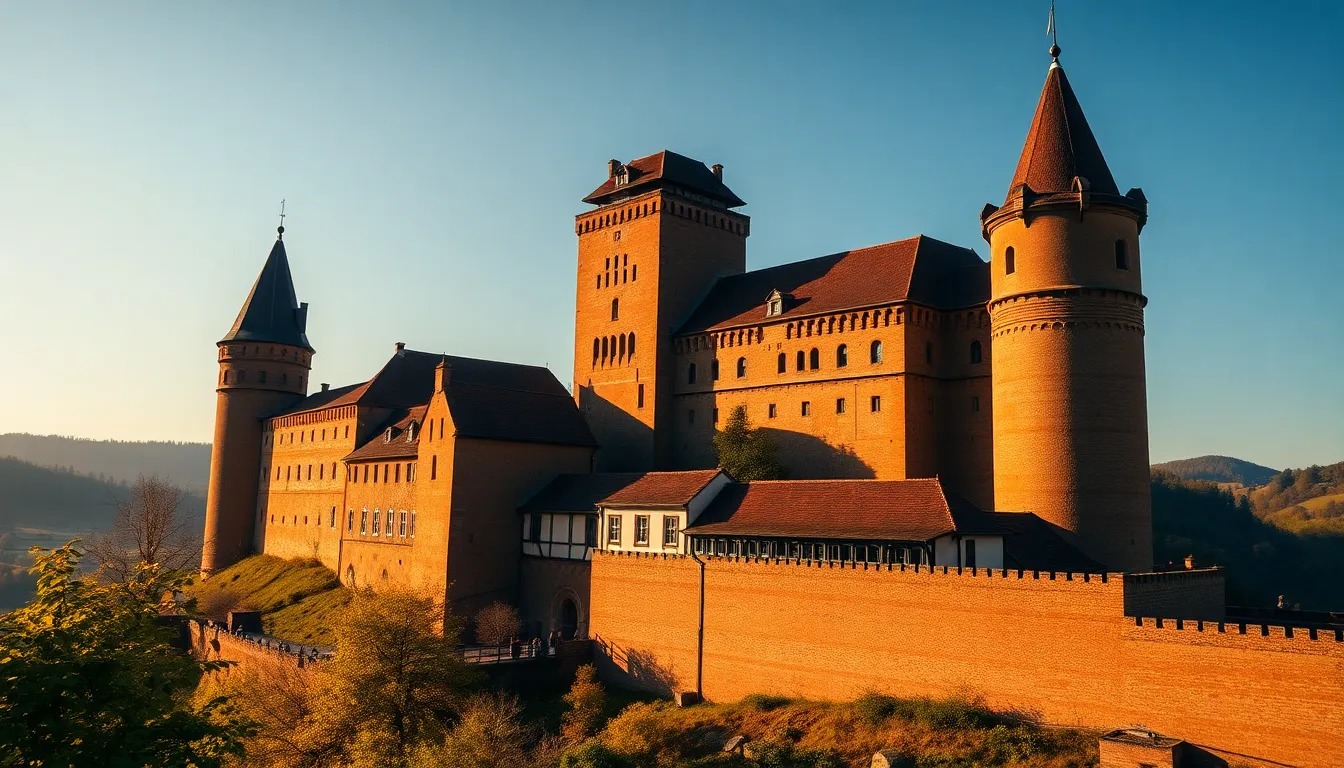
Eisenach holds two Luther chapters. As a schoolboy he lodged here, and the Luther House in town preserves that early stage. But the reason groups come is the Wartburg Castle above the city.
After Luther was declared an outlaw in 1521, friends spirited him away to the Wartburg for his safety. Disguised as a knight named Junker Jorg, he translated the New Testament from Greek into German in about eleven weeks. That translation did not only give ordinary Germans the scriptures. It shaped the German language for centuries. You can stand in the Luther Room where the work was done.
The Wartburg involves a climb to the castle. For groups with members who find the walk hard, we arrange the shuttle in advance so the whole group reaches the top together.
Day 4: Travel to Wittenberg, the Reformer at Work
Today we move east to Wittenberg, where Luther spent most of his adult life. This is where the trail reaches its climax. The Castle Church door, where the 95 Theses were posted in 1517, is the obvious anchor, and the bronze door today carries the Latin text.
But Wittenberg is also where you see Luther the husband, father, professor, and preacher. The Lutherhaus, the former monastery where he lived with Katharina von Bora and their children, is the largest Reformation museum in the world. The Town Church of St. Mary is where he actually preached week after week. Seeing the domestic Luther alongside the defiant one is what makes the trail richer than a single-site visit.
Plan a full day here. Wittenberg is walkable, and the group should have time at the Luther Garden to sit with everything the week has held.
Day 5: Wittenberg Morning and Departure
The final morning is for whatever Wittenberg sites the group wants to return to, and for a closing gathering. Then we transfer to Berlin or Leipzig for departing flights.
I always leave room on this last morning for the group to reflect together. A Luther trail is a biography walked in order, and biographies deserve a last word. After following one man from his birth house to his preaching church, your people will have things to say. Give them the space, and let the leader close it.
How to Pace the Luther Trail for Your Group
The trail covers real ground, roughly from Eisleben in the east to Eisenach in the west and back to Wittenberg, and the temptation is always to add a stop. I would resist it. The strength of a five-day trail is that it stays biographical and unhurried. Every town gets the morning or the afternoon it needs, and the driving between them becomes part of the conversation rather than a dead stretch to endure.
A few practical notes I share with every pastor leading this route. Build a teaching or a short devotion into each town, tied to the chapter of Luther’s life you are standing in. Eisleben is birth and death, the bookends. Erfurt is doubt. Eisenach is exile and the work of translation. Wittenberg is the public stand and the long life of service that followed. When the geography and the teaching line up, your group stops being tourists looking at old buildings and starts walking inside a story.
I also tell leaders to protect the evenings. A trail trip generates conversation, and the best of it happens at dinner or over coffee afterward, not at the sites themselves. Leave those hours open. The reflection your group does together is often what they carry home, more than any single museum.
One last thing on pacing. The five days are deliberately ordered to follow Luther chronologically, and I would keep that order even if a different route looks more efficient on a map. Walking a life forward, from the miner’s son in Eisleben to the anxious monk in Erfurt to the hunted translator at the Wartburg to the settled reformer in Wittenberg, gives the week a shape your group can feel. When the trip ends back near Eisleben’s bookend of birth and death, the whole arc closes on itself. Groups remember stories with a beginning, a middle, and an end far longer than they remember a list of cities, and the trail is built to give them exactly that.
FAQ: A 5-Day Luther Trail Heritage Itinerary
How is a Luther trail different from a Reformation tour?
A Reformation tour covers the broader movement and often includes sites like Worms, Augsburg, and the imperial story, sometimes alongside Jewish heritage. A Luther trail follows the man himself, in the order he lived, from Eisleben to Erfurt to Eisenach to Wittenberg. It is more biographical and more intimate, which suits groups who already know the theology and want to walk the life.
Is five days really enough for the Luther trail?
Yes, if you keep the focus on the core biographical sites. Eisleben, Erfurt, Eisenach, and Wittenberg hold Luther’s whole arc, and five days lets you give each one proper time. Adding Worms or extending into Berlin pushes you toward seven days, but for the trail itself, five is complete and unhurried.
Which Luther site moves groups the most?
It varies, but two come up again and again. The Wartburg in Eisenach, where Luther translated the New Testament into German, surprises people with its weight. And the pairing of the Birth House and Death House in Eisleben on day one gives groups a frame that stays with them all week. Pastors often tell me Erfurt’s monastery hit them hardest, because it is where Luther’s doubt lived.
Can older travelers manage the Luther trail?
Most of it, yes. The towns are walkable and the museums are accessible. The one site that involves a real climb is the Wartburg Castle, and we arrange a shuttle for members who need it so nobody is left out. We pace the driving days so the trail is comfortable for mixed-age groups.
Do these Luther sites need advance booking for groups?
Several do. The Lutherhaus in Wittenberg, the Wartburg Castle, and the Eisleben museums all benefit from advance group reservation, especially from May through September and around Reformation Day on October 31. We handle every booking as part of your itinerary so your group leader never has to.
If your congregation already knows Luther on the page and wants to walk his life on the ground, the trail is the trip I would point you to. I would be glad to shape it around your group’s pace and focus. Group leaders travel free with fifteen or more participants, which makes building the trip easier than most leaders expect.
Start with our Germany heritage destination page and how we run group heritage tours, then contact us whenever you are ready to talk.