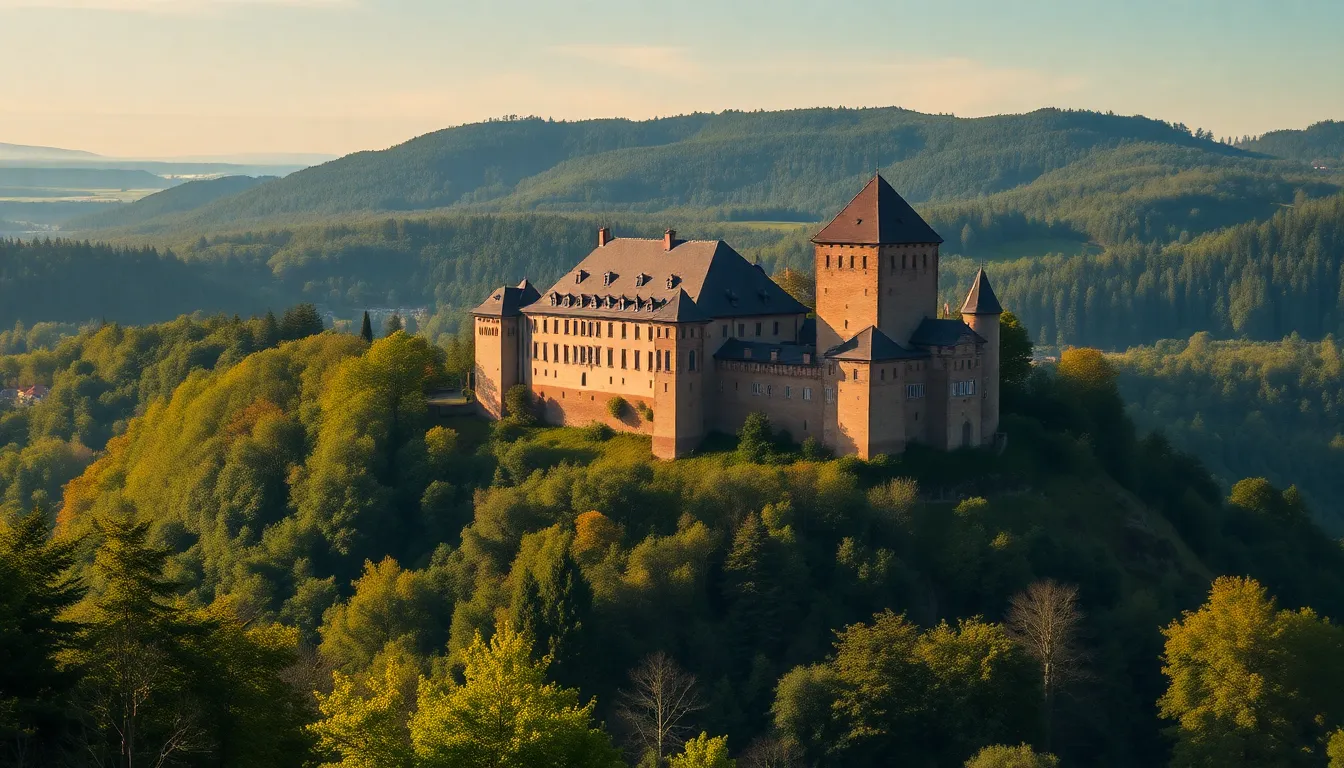
You climb to the Wartburg. That is the first thing I tell every group. The castle sits on a forested ridge high above the town of Eisenach in Thuringia, and the approach, whether on foot up the wooded path or by the short shuttle from the lower car park, is part of the experience. By the time you reach the gate, you understand why this place was chosen as a hiding spot. It is remote, defensible, and quiet. And it was here, in a small wood-paneled room, that a man living under a false name translated the New Testament into German in eleven weeks and changed the language of an entire people.
I have brought faith groups to the Wartburg many times, and it is one of my favorite Reformation sites precisely because it tells a different part of the story than Wittenberg. Wittenberg is where Luther made his stand in public. The Wartburg is where he disappeared, alone and in danger, and did the quiet, patient work that may have mattered most of all. For a pastor or educator leading a group, this castle adds depth that the public sites cannot.
Let me give you the history, walk you through what to see, and share how I plan the visit.
Why Luther Was Hiding
To understand the Wartburg, your group needs to know what happened just before. In 1521, Luther was summoned to the Diet of Worms, a formal assembly before the Holy Roman Emperor Charles V, and ordered to recant his writings. He refused, famously declaring that his conscience was captive to the Word of God. The result was the Edict of Worms, which declared him an outlaw. Anyone could kill him without legal consequence.
This is where his protector stepped in. Frederick the Wise, the Elector of Saxony, did not want his most famous professor murdered on the road. So he arranged a staged “kidnapping.” As Luther traveled home from Worms, masked horsemen seized him and spirited him away to the Wartburg, where he was hidden under the assumed identity of a minor nobleman, “Junker Jorg,” Knight George. He grew out his hair and beard, wore a knight’s clothing, and lived in secret for nearly a year.
I find groups grasp the stakes much better once they understand this. Luther did not retreat to the Wartburg for a peaceful writing sabbatical. He was a condemned outlaw in hiding, cut off from his colleagues, fighting bouts of loneliness and depression, and doing the most important translation work of his life under those conditions.
The Translation That Shaped a Language
In his room at the Wartburg, in roughly eleven weeks during the winter of 1521 to 1522, Luther translated the entire New Testament from the original Greek into German. That speed alone is staggering. But the deeper significance is what the translation did.
Luther did not simply render the text into German. He chose to write in a clear, vigorous form of the language drawn from how ordinary people actually spoke, famously saying a translator should listen to the mother in the home, the children in the street, and the common man in the market. The result was so widely read that it helped standardize the German language itself. Generations of German speakers learned to read on Luther’s Bible. Few translations in any language have had that kind of effect.
For an educator, this is a rich teaching moment. The Reformation’s conviction that ordinary believers should read Scripture for themselves required a Bible they could actually understand. The Wartburg is where that conviction became a physical book. The early printed editions of that translation are on display at the Luther House museum in Wittenberg, which makes the two sites a natural pair on an itinerary.
What to See at the Wartburg
The Wartburg is far more than the Luther connection. It is one of the best-preserved medieval castles in Germany and a UNESCO World Heritage Site, with roughly nine centuries of history layered into its walls. But for a faith group, certain spaces stand out.
The Luther Room
The Lutherstube, the small room where Luther worked and lived as Junker Jorg, is the heart of the visit for a Reformation group. It is simple: wooden walls, a writing desk, a stove. For centuries, visitors were shown a spot on the wall said to mark where Luther threw his inkpot at the devil during a moment of spiritual struggle, a legend that may say more about how later generations imagined Luther than about what actually happened. I tell my groups the story as a legend, not as fact, because honesty serves a heritage trip better than embellishment. The plainness of the room is its power. This is where the work was done.
The Medieval Castle and the Great Hall
The Wartburg’s medieval halls, especially the magnificent Festsaal, the great banqueting hall, give a group the full sweep of the castle’s history. The castle was also home, in the 13th century, to Saint Elizabeth of Hungary, a noblewoman remembered for her radical care of the poor, whose story adds another layer of faith history to the site. And the Wartburg later inspired Richard Wagner’s opera “Tannhauser.” A good guide weaves these threads together so your group sees the castle as a place where many stories converge, with Luther’s among the most consequential.
The Views
The setting itself is worth the climb. From the ramparts, the forested hills of Thuringia roll out in every direction. I always build in a few minutes for groups simply to take in the view and the quiet. After learning Luther’s story, standing where he stood and looking out over the same hills he saw is a contemplative moment that groups remember.
How I Plan the Visit
A few practical notes from many trips, shared in case they help.
Build in Time for the Climb
The Wartburg sits high above Eisenach, and reaching the entrance involves either a walk up a wooded path or a short shuttle followed by a final stretch on foot, including a covered drawbridge and stairs. For groups with older members, I plan this carefully and set expectations in advance. The climb is manageable for most, but it is not flat, and rushing it serves no one.
Pair It with Eisenach
The Wartburg and the town of Eisenach below it belong together on an itinerary. Eisenach is where Luther went to school as a boy, and it is the birthplace of Johann Sebastian Bach, a devout Lutheran whose music carried Reformation theology into the concert hall and the church for centuries. I cover that pairing in detail in my guide to Eisenach and Luther’s schooldays, and I almost always plan the two as a single combined day.
Connect the Outlaw Story to Worms
The Wartburg only makes full sense once a group understands the Diet of Worms that sent Luther into hiding. I make sure to tell that story before or during the visit, so the castle reads as a chapter in a larger arc that runs from Wittenberg, through Worms, to this hilltop, and eventually back into public life. The earlier stages of that arc, including Luther’s years as a monk, are covered in my guide to Erfurt and the Augustinian monastery.
Practical Notes for Group Leaders
Eisenach sits on the main rail line through Thuringia and is reachable by train from cities including Frankfurt and Erfurt, which makes the Wartburg a practical stop on a Reformation route through central Germany. From the town, a shuttle and a walk bring you up to the castle. Allow at least half a day for the Wartburg itself, more if you combine it with Eisenach, which I recommend. Guided tours of the castle interior, including the Luther Room, run regularly, and booking ahead for a group is wise in the busier months.
For pastors and educators weighing the trip, it helps to know that with Heritage Tours the group leader travels free with fifteen or more participants. For a church building a Reformation pilgrimage through Thuringia, that makes the planning conversation with your congregation considerably easier.
You can see how the Wartburg fits into a wider Reformation route on our Germany destination page, and our Germany spiritual sites overview maps the full landscape of faith sites across the country. To understand how the group-leader experience works in practice, take a look at our group heritage tours.
FAQ: Wartburg Castle and Luther
Why was Luther hiding at the Wartburg?
After the Diet of Worms in 1521 declared him an outlaw, Luther’s life was in danger. His protector, Frederick the Wise of Saxony, staged a fake kidnapping to bring him safely to the Wartburg, where Luther hid for nearly a year under the false identity of a nobleman named “Junker Jorg.” He lived in secret, disguised with long hair and a beard, while the storm around him settled.
What did Luther do at the Wartburg?
He translated the entire New Testament from Greek into German in roughly eleven weeks during the winter of 1521 to 1522. He deliberately wrote in clear, everyday German drawn from how ordinary people spoke. The translation was so widely read that it helped standardize the German language and gave ordinary believers Scripture they could understand.
Can you visit the room where Luther worked?
Yes. The Lutherstube, the simple wood-paneled room where Luther lived and translated, is part of the castle visit and is the centerpiece for Reformation groups. It is plain by design: wooden walls, a desk, a stove. Visitors have long been shown a spot said to mark where Luther threw an inkpot at the devil, though that is a legend rather than documented fact.
How do you get to the Wartburg, and is it accessible?
The Wartburg sits on a hill above the town of Eisenach, reachable by a wooded walking path or a shuttle followed by a final stretch on foot, including a drawbridge and stairs. It is manageable for most travelers but not flat, so groups with older members should plan the climb carefully and set expectations in advance.
Should we combine the Wartburg with Eisenach?
Yes, I almost always plan them together. Eisenach, the town below the castle, is where Luther attended school as a boy and where Johann Sebastian Bach was born. Combining the Wartburg with Eisenach makes a full, well-rounded day that covers Luther’s schooldays, his Bible translation, and the Bach connection.