How to Use This Itinerary (and How to Adapt It for Your Group)
I have been building Germany itineraries for over twenty years, and here is what I know: no two groups are the same. A synagogue group from New York will want three hours in Worms. A church group from Texas might want a full day in Wittenberg. Both are right.
What I am giving you here is a framework. Ten days, six cities, and a route that moves through Germany’s three great chapters of faith history: the medieval Jewish communities of the Rhine Valley, the Reformation that reshaped Christianity, and the Holocaust memorials that changed everyone. Use this as your starting point, then call us and we will shape it around your congregation.
Every day listed below includes hotel pickup and dropoff. You will not have to worry about navigating train stations with twenty people and their luggage. We handle the movement so you can focus on the meaning.
Days 1 and 2: Arrival in Frankfurt, the Ghetto, the Judengasse, and the Old Town
Most international flights land in Frankfurt, so this is where we begin. After your group settles in, the first afternoon is gentle. A walk through the reconstructed Old Town, coffee at Romerberg Square, and a chance to let the jet lag settle.
Day two is when the heritage work begins. The Judengasse Museum sits on the site of one of Europe’s oldest Jewish ghettos. Your group will stand in a narrow lane where families lived for three centuries, from the 1460s until Napoleon opened the gates. For a rabbi leading a Jewish group, this is the place to set the tone for the entire trip. For a pastor leading a Christian group, this is where the conversation about Christian Europe’s relationship with its Jewish neighbors begins honestly.
The Museum of Modern Art and the Frankfurt Cathedral round out the day for groups wanting a broader picture.
Days 3 and 4: The Rhine Valley, Worms, Speyer, and Mainz
This is the section of the itinerary that most tour operators skip entirely, and it is the section I care about most.
Worms, Speyer, and Mainz are the ShUM cities, recognized by UNESCO as the cradle of Ashkenazi Jewish life. The synagogue in Worms dates to the 11th century. The Rashi Chapel, just steps away, is where one of Judaism’s greatest scholars taught and wrote. When your group walks into that space, they are standing where Jewish intellectual life in Europe took root.
I recommend a full day in Worms alone. The old Jewish cemetery, the Rashi House museum, and the synagogue deserve time. Groups that rush through this section always tell me afterward they wish they had stayed longer.
Day four takes you to Speyer, where the medieval mikveh is one of the oldest surviving ritual baths in Europe, and then to Mainz, where the new synagogue building sits on the foundations of the old one. The Rhine Valley drive between these cities is beautiful, and it gives your group time to process what they have seen.
Day 5: Nuremberg, the Nazi Documentation Center and Medieval Old Town
Nuremberg is a city with two stories. The medieval old town is one of Germany’s most intact, with churches, market squares, and half-timbered houses. But the Nazi Documentation Center, built into the remains of the unfinished Nazi Party Rally Grounds, is why heritage groups come here.
The exhibition at the Documentation Center is one of the best-curated in Germany. It walks your group through how an ordinary German city became the site of the Nuremberg Laws, the rallies, and eventually the war crimes trials. For group leaders, this is a place where you will want to build in time for conversation afterward.
Days 6 and 7: Munich and Dachau
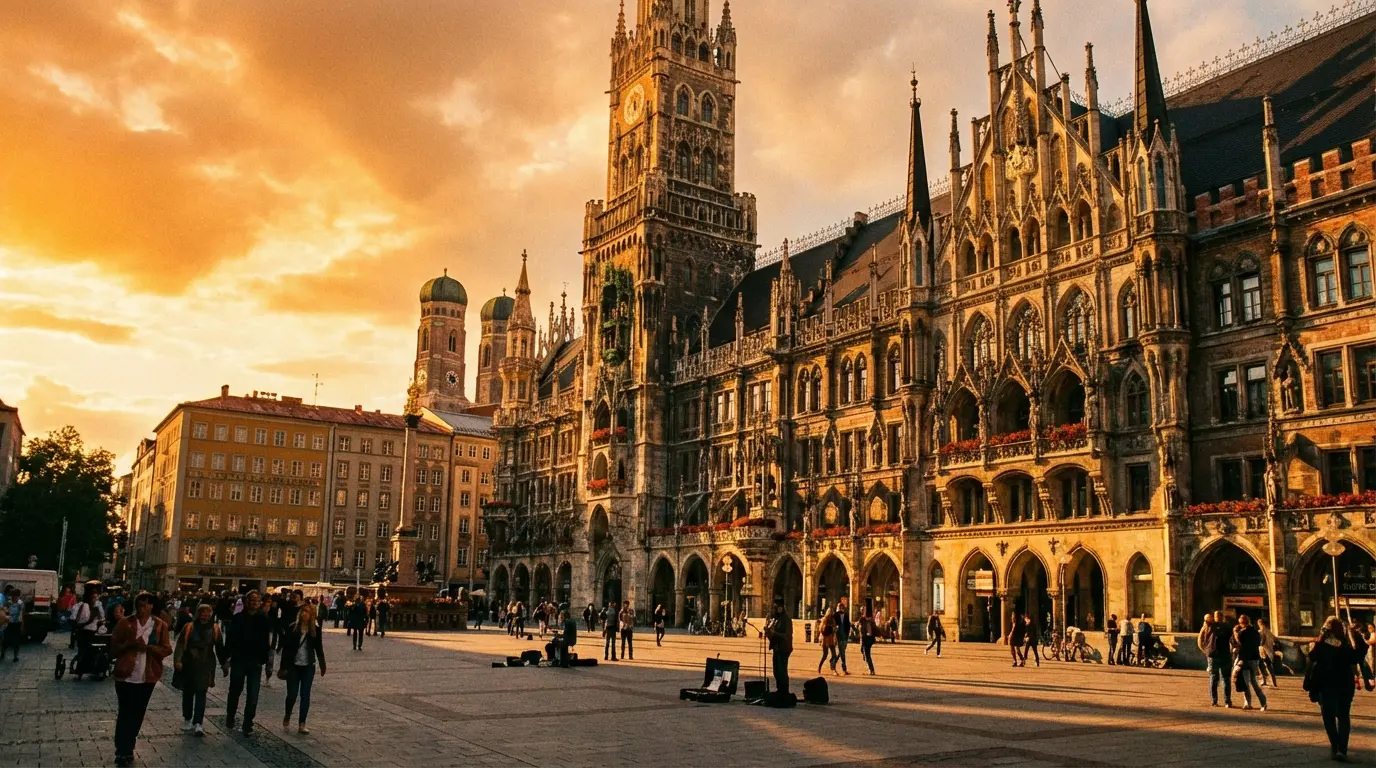
Munich is a warm, walkable city, and your group will appreciate a morning in the Marienplatz or a visit to one of its historic churches. But the reason heritage groups come to Munich is Dachau.
Dachau was the first concentration camp, opened in 1933. It is about twenty minutes from central Munich. Your group will need at least three to four hours at the memorial site itself, and I strongly recommend scheduling a quieter afternoon or evening afterward. In my experience, groups need space after Dachau. A long lunch, a walk along the Isar River, or simply free time at the hotel. Do not schedule another heavy site on the same day.
For rabbis and pastors, Dachau is the site where your role as spiritual leader matters most. Your group will look to you. Some people will cry. Some will go very quiet. Both are normal. What matters is that you are present with them.
Day 8: Lutherstadt Wittenberg, the Reformation Trail
For Christian groups, this is the heart of the trip. Lutherstadt Wittenberg is where Martin Luther nailed the 95 Theses to the door of the Castle Church in 1517. The Lutherhaus museum, the Town Church where Luther preached, and the Castle Church are all within walking distance.
For a pastor leading a Protestant congregation, standing at that church door is a moment you will remember. The town is small enough that your group can walk it comfortably in a day, with time for reflection at the Luther Garden.
For Jewish groups, Wittenberg carries a more complicated history. The Judensau relief on the Town Church is a medieval antisemitic carving that the city has chosen to keep in place, with an explanatory memorial at its base. Whether to include this in your itinerary is a decision for you and your group. We can help you think through it.
Days 9 and 10: Berlin, Holocaust Memorial, New Synagogue, and the Jewish Museum
Berlin is where everything converges. The Memorial to the Murdered Jews of Europe is a field of 2,711 concrete pillars near the Brandenburg Gate. There is no prescribed way to walk through it, which is part of its power. The underground Information Center beneath the memorial contains personal stories that will stay with your group long after they leave.
The New Synagogue on Oranienburger Strasse is Berlin’s most visible symbol of Jewish life, destroyed on Kristallnacht, bombed in the war, and partially rebuilt as a museum and place of memory. The Jewish Museum Berlin, designed by Daniel Libeskind, is one of the most powerful museum experiences in Europe. Plan at least three hours.
For your final afternoon, the Topography of Terror, built on the site of the former Gestapo headquarters, offers a clear and unflinching account of how state terror was organized. It speaks to every tradition and every group.
Adapting This Itinerary: Jewish Focus, Christian Focus, or Both
This itinerary is designed to hold both Jewish and Christian heritage together. But if your group leans strongly toward one tradition, here is how I would adjust:
For a Jewish-focused group, add a second day in the Rhine Valley and spend more time at Berlin’s Jewish sites. You might shorten or skip Wittenberg.
For a Christian-focused group, add time in Wittenberg and consider adding Erfurt, where Luther entered the Augustinian monastery. The Rhine Valley ShUM cities are still worth including because understanding Jewish life in Europe deepens the Christian story too.
For interfaith groups traveling together, keep the itinerary as written. The sites that matter to one tradition often illuminate the other.
If you want help adapting this route for your specific community, reach out to us directly. We build every itinerary around the group, not the other way around.
Frequently Asked Questions About This Germany Heritage Itinerary
What is the best starting city for a Germany heritage tour?
Frankfurt is the most practical starting point for international groups. It has the largest international airport in Germany, and it places your group within driving distance of the Rhine Valley ShUM cities on day two or three. Berlin works well as a starting city too, but it means working the itinerary in reverse.
How much time should a group spend in Berlin vs. the Rhine Valley?
Two days in Berlin is the minimum for a heritage group. The Holocaust memorial, Jewish Museum, and Topography of Terror each deserve real time. For the Rhine Valley, one to two days depending on your group’s connection to Jewish history. Groups with a strong Jewish identity often want two full days for the ShUM cities.
Can this itinerary be done in fewer than 10 days?
Yes, but something will have to go. The most common shorter version is eight days, dropping the Rhine Valley stop and going directly from Frankfurt to Nuremberg. I would not recommend fewer than eight days for a heritage-focused trip. Rushing through memorial sites does not serve anyone.
Is it possible to combine Jewish and Christian heritage sites in one Germany trip?
Absolutely. This itinerary is built to do exactly that. Germany’s Jewish and Christian histories are not separate stories. They overlap, intersect, and sometimes collide. A trip that holds both gives your group a fuller, more honest picture.
Are there any sites in this itinerary that require advance reservations for groups?
The Dachau Memorial Site recommends advance booking for guided group tours, especially from April through October. The Jewish Museum Berlin also benefits from advance group registration. We handle all of these reservations as part of your itinerary planning, so your group leader never has to chase down booking forms.