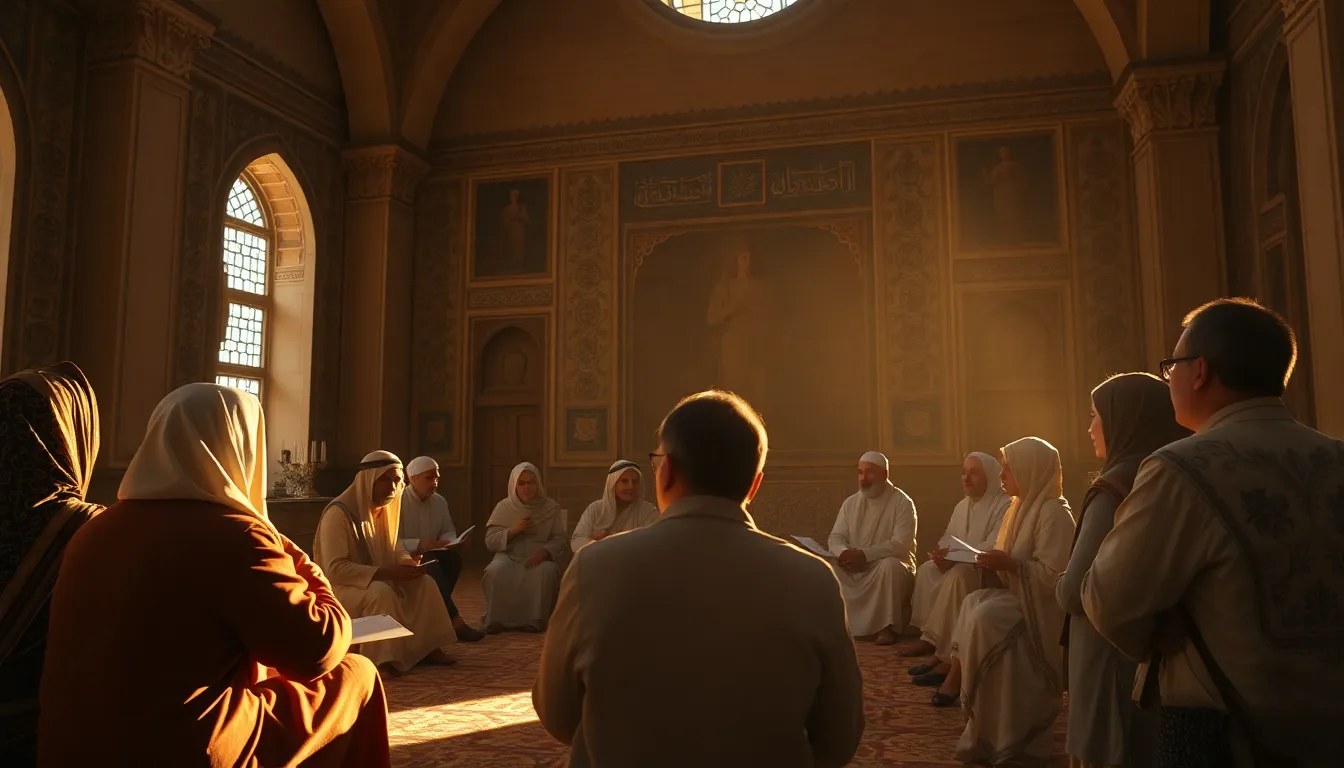
I can usually tell within the first hour on the ground which groups prepared and which ones did not. It is not about who read the most or who can name the most pharaohs. It is something quieter. The prepared groups arrive ready to receive. They stand at a site and something in them is already leaning in, already connecting the place to the text they carry. The unprepared groups are having a wonderful vacation, and there is nothing wrong with that. But they are not having the journey they could have had.
So I have become, over the years, a little evangelical about pre-trip preparation. Not because it makes my job easier, though it does, but because it is the single biggest factor in whether a group’s Egypt experience stays with them for a month or for the rest of their lives. The good news is that preparing your group is not complicated, and you are already equipped to do most of it. Let me show you how I think about it.
Why Preparation Matters More for Egypt Than Anywhere Else
Israel feels familiar to most faith communities before they ever land. The names are on everyone’s lips already: Jerusalem, Galilee, Bethlehem. People arrive with a mental map.
Egypt is different. For most Western congregations, Egypt is the place the story leaves, not the place it lives. People know the Exodus as a narrative arc, but they have rarely sat with the specific geography of it. They know the Holy Family fled to Egypt, but few could tell you where or for how long. The result is that without preparation, your group can stand in front of something genuinely sacred and not quite know what they are looking at.
Preparation closes that gap. It turns a temple from an impressive ruin into the civilization the Israelites were enslaved within. It turns an old Cairo church from a curiosity into the ground where tradition holds the infant Jesus sheltered. The stones do not change. The eyes looking at them do.
Start With the Story, Not the Logistics
When leaders ask me how to prepare a group, their instinct is often to start with packing lists and visa instructions. Those matter, and we handle most of them for you. But the spiritual preparation is a different track, and it should start earlier and run deeper.
Begin with the story your community is going to walk into. For most Egypt trips, that means one of two great narratives, and sometimes both.
For Jewish Groups: Living Inside the Exodus
The Exodus is not background for a Jewish Egypt trip. It is the trip. So the preparation is, in a sense, a slow and careful return to a story your community already knows by heart, with new attention to its physical reality.
I encourage leaders to read through the early chapters of Exodus with their group in the months before travel, but to read them geographically. Where is Goshen? What was the Nile Delta actually like? What does it mean that the store-cities of Pithom and Rameses were built with forced labor? When your community has wrestled with the where and not just the what, the moment they stand in the Delta region or look out toward the Red Sea coast lands completely differently.
I also point Jewish groups toward the long arc of Jewish life in Egypt, which did not end with the Exodus. The Elephantine community near Aswan, the medieval Geniza community of Old Cairo, the synagogues that stood into the twentieth century. This history rewards study, and I go deeper on it in our resource on Jewish heritage in Egypt. A group that understands they are walking through three thousand years of Jewish presence, not just one ancient escape, arrives with a richer sense of what they are part of.
For Christian Groups: The Flight into Egypt
For Christian communities, the spiritual center of an Egypt trip is the Holy Family’s flight from Herod’s violence. It is a brief passage in Matthew’s Gospel, and most congregants have never lingered on it. Preparation means lingering.
Read the flight narrative together. Sit with what it meant: that the infant Jesus was, for a time, a refugee in Egypt, sheltered in the very land from which Israel had once fled. The Coptic tradition has preserved a detailed route of that journey, and learning even a few of its key stops before you travel, the Cave Church at Matariyah, the Church of Abu Serga in Old Cairo, transforms the visit from sightseeing into recognition.
I also encourage Christian groups to learn a little about the Coptic church itself, one of the oldest continuous Christian communities on earth. Standing in a church that was ancient when European Christianity was young hits differently when your group understands what they are looking at.
For Combined and Interfaith Groups: The Conversation
Some communities carry both threads, and some trips bring a rabbi and a pastor together. For those groups, preparation should name the conversation between the traditions rather than picking one. The Exodus is foundational to both faiths. The sites sit within walking distance of each other in Old Cairo. I write about leading these journeys together in the piece on co-leading an interfaith heritage trip, and the preparation principle is the same: give each tradition its full weight, and let the group feel how they speak to one another.
A Simple Structure for Pre-Trip Sessions
Leaders often ask whether they need a formal curriculum. You do not. What works is a short, repeatable structure you can run over a few evenings or a few weeks. Here is the shape I recommend.
Session One: The Story and the Land
Open with the central narrative. Read the key texts together. Lay out the geography, ideally with a simple map. The goal is to connect the story people know to the actual ground they are about to stand on.
Session Two: The History Around the Story
Egypt is layered. The ancient civilization, the Jewish presence across millennia, the early Christian church, the living country today. A session that situates your faith story within that fuller history gives the group depth and prevents the trip from feeling like a single-note pilgrimage.
Session Three: How to Be Present at a Sacred Site
This is the session leaders skip and the one I value most. Talk with your group about how to receive a sacred place. The discipline of silence. The practice of reading the text aloud at the site. The choice to put the phone away for ten minutes. Groups that have talked about presence before they travel are far better at being present once they arrive.
We can provide content for all of these, and we are glad to join a session by video or in person to answer your community’s questions directly. You do not have to build this alone.
Prepare the Heart, Not Just the Head
There is a temptation to make preparation purely informational, a download of facts so no one is confused at the sites. Facts help. But the deeper preparation is of the heart, and it comes mostly from you.
Tell your community why this journey matters to you. Share what the Exodus stirs in you, or what the image of the refugee Christ in Egypt does to your faith. Let them see your own anticipation. A congregation takes its emotional cue from its leader. If you arrive at the Red Sea coast moved, your people will be moved with you. The most important preparation you do is not a handout. It is letting your community feel that this matters to you, repeatedly and out loud, in the months before you go.
Do Not Forget Practical Readiness Feeds Spiritual Readiness
I will say one practical word, because it serves the spiritual goal. A group that is physically prepared, that knows the trip involves heat and walking and early mornings, that has handled its dietary needs in advance and thought through any mobility considerations, is a group free to be present. Discomfort and uncertainty pull people out of the moment. When the logistics are settled and expectations are honest, the heart has room to do its work. Practical preparation is not separate from spiritual preparation. It clears the way for it.
FAQ: Preparing Your Group Spiritually for Egypt
How far in advance should we start spiritual preparation for an Egypt trip?
Begin three to six months before departure. That gives you time to run a short study series without rushing, lets anticipation build naturally, and means the story is settled in people’s minds before they travel rather than being crammed in the final weeks. The practical logistics can come later, but the spiritual preparation rewards a longer runway.
What should we study before an Egypt pilgrimage?
For Jewish groups, read the early chapters of Exodus with attention to geography, and learn the long arc of Jewish life in Egypt from Elephantine through the Cairo Geniza. For Christian groups, sit with the flight into Egypt in Matthew’s Gospel and learn the key Holy Family sites and the Coptic church. Combined groups should study both threads and the conversation between them. We provide content for all of this.
Do we need a formal curriculum or can the leader run preparation themselves?
You can run it yourself. Most effective preparation is a simple three-session structure: the story and the land, the history around the story, and how to be present at a sacred site. You do not need a packaged curriculum. We can supply materials and even join a session to answer your community’s questions, but the sessions work best led by the person who knows your community.
How do we prepare members who are less religiously knowledgeable?
Welcome them and pitch the preparation broadly. The story and the land session works for everyone, regardless of background, because it is narrative and geographic rather than technical. Do not over-filter who belongs on the trip. Some of the most moved travelers I have seen came in with little prior knowledge and left having connected with something they did not expect.
Can Heritage Tours help with the pre-trip sessions?
Yes. We provide pre-trip learning materials you can use with your community, and we are available to join a preparatory session by video or in person to speak to your group and answer their questions. We have done this with many congregations and synagogues. You bring the relationship with your community, and we bring the content and the on-the-ground knowledge.
A prepared group is a group that arrives ready to be changed. The work is not heavy, and you are already most of the way equipped to do it. If you would like help building your pre-trip sessions or want us to speak with your community before you travel, let us know and we will make it happen. You can also explore the full planning picture in our Egypt group tour guide or see what awaits your group on the Egypt destination page.