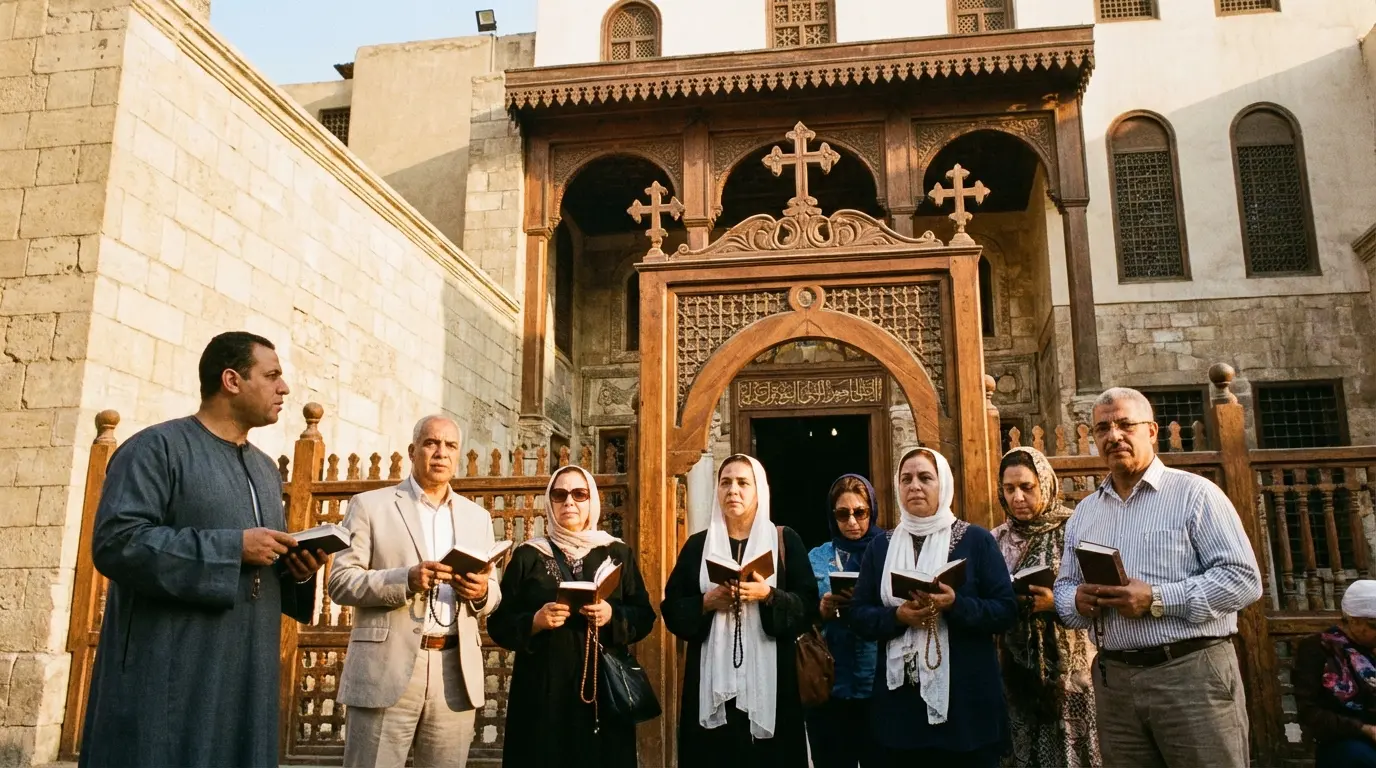
About once a month I get a message from a pastor or a rabbi that goes something like this: “Dina, I’ve been thinking about taking my community to Egypt for years. I just don’t know where to start, and honestly, I’m a little nervous about it.” I love those messages. Not because they make my job easier, but because they tell me that the person writing has already done the most important thing: they have decided that this journey matters enough to pursue.
Egypt is not the easiest trip to organize. It is more complex than Israel, more unfamiliar to most Western faith communities than Jordan or Greece. And it is, in my honest opinion, the most spiritually powerful journey a faith community can take together. For Jewish groups, you are walking the Exodus story on the actual ground. For Christian groups, you are following the flight of the Holy Family and touching the world that shaped the earliest church. For communities that hold both traditions, Egypt is where they converge.
This guide is my attempt to give you everything you need, from the first question of whether Egypt is right for your community to the practical realities of getting there and what we at Heritage Tours handle on your behalf.
Why Egypt Belongs on Your Community’s Heritage Journey
Every destination we work with has its own claim on the faithful traveler. Israel is irreplaceable. Jordan carries the story of Moses and Petra and the baptism site of Jesus. But Egypt holds something different. Egypt holds the beginning.
The Exodus is not just a story in the Torah or a reference in the New Testament. It is the foundational liberation narrative of Western faith. “I am the Lord your God who brought you out of Egypt, out of the house of slavery.” That verse opens the Ten Commandments. The Exodus is why the commandments exist. For a faith community to stand on the soil where that story happened, and to trace that story together, is to do something most communities will tell you changed them.
For Christian groups specifically, Egypt holds the journey of the Holy Family. Joseph, Mary, and the infant Jesus fled to Egypt from Herod’s violence and spent years there before returning to Nazareth. The Coptic Christian tradition has preserved the route of that journey with remarkable specificity, and the churches and sites along that path are among the oldest Christian sacred sites in the world. Standing in the church where tradition says the Holy Family rested is a different kind of connection than reading about it in Bethlehem.
Egypt is also, quite simply, one of the most extraordinary places on earth. The pyramids at Giza, the temples of Luxor and Karnak, the tombs of the Valley of the Kings, the Nile itself. No amount of photographs prepares you for the actual scale and beauty of these places. Your community will not only go deeper in their faith. They will be astonished.
Step 1: Is Egypt the Right Next Trip for Your Community?
The honest answer is: it depends, and the most important factor is not your community, it is the sequence.
Egypt vs. Israel vs. Jordan: How to Sequence Faith Trips
If your community has never traveled together internationally, I would generally recommend starting with Israel. Israel is where most of the geographic anchors of scripture are located, where faith communities feel immediately at home, and where the infrastructure for group travel is extremely well developed. Israel gives your group a foundation.
Egypt works beautifully as either a standalone destination or as a pairing with Jordan. Some of our most meaningful trips combine Egypt and Jordan in ten to twelve days, covering the Exodus narrative on both sides of the Red Sea.
That said, I have worked with first-time travelers who went to Egypt before Israel and had transformative experiences. If Egypt is what calls your community, do not let sequence become an obstacle. What matters is the intention behind the journey.
The Right Group Composition for Egypt
Egypt works well for adults and older teenagers. It is a physically active trip in places, particularly Luxor and Aswan, where the heat can be significant between April and September. I recommend Egypt in the cooler months, October through March, for most groups. The Cairo portion is manageable year-round.
For groups with members who have significant mobility challenges, Cairo’s Jewish and Coptic sites are navigable, but some ancient sites involve uneven terrain. We plan around this when we know about it in advance.
Faith communities that have done Israel trips before tend to take to Egypt enthusiastically. They have the muscle memory for heritage travel. They know how to be present at a sacred site. They arrive ready to receive the experience.
Step 2: Building Your Group (and the 15-Person Threshold)
Most pastors and rabbis I talk with have two practical concerns above all others: cost and group size. They are connected.
The Free Leader Travel Policy: What It Is and How It Works
When you bring 15 or more participants on a Heritage Tours Egypt trip, you as the group leader travel free. Full stop. Your flights, your hotels, your guides, your entrance fees. Our commitment to the group leader relationship is not just a principle, it is built into the economics.
This matters for your community’s budget in a concrete way. A faith community organizing a trip to Egypt does not need to find additional funds to cover their rabbi or pastor. The community’s investment covers the journey for the group. The leader’s presence, which is essential to making the trip spiritually meaningful rather than just educational, is Heritage Tours’ contribution to the partnership.
For groups of 20 or more, we can discuss additional complimentary arrangements. Talk to us.
How to Build Enthusiasm Within Your Community
This is something I think about a lot, because it is where group trips succeed or fail before anyone books a flight. The communities that fill their trips are the ones where the leader is genuinely excited, and that excitement is communicated repeatedly and specifically.
Vague announcements in a bulletin do not build a group. Specific stories do. Tell your congregation why you want to make this journey. Share what the Exodus means to you personally, or what you have read about the Holy Family’s path through Egypt, or what a scholar told you about the Cairo Geniza. Let your community feel your curiosity and your conviction. They will follow that.
A series of pre-trip learning sessions, whether three evenings or six weeks, builds both enthusiasm and a community that will have a richer experience when they arrive. We can help with content for those sessions. We have done this with dozens of congregations and synagogues.
Invite families. Invite your longtime members and your newer ones. Egypt is not just for the deeply committed. It is often the trip that brings in someone who has been on the edges of the community and is looking for something that connects.
Step 3: Designing a Spiritually Intentional Egypt Itinerary
Heritage Tours builds custom itineraries, not packages. What I mean by that is: we do not have a fixed Egypt product that every group gets. We sit down with you and ask what matters most to your community, and we build from there.
That said, there are three primary frameworks for Egypt faith journeys, and understanding them helps you know where to start the conversation.
The Exodus Trail for Jewish Groups
For Jewish communities, the heart of an Egypt journey is the Exodus narrative. This means the Nile Delta region and the sites associated with the Israelite sojourn, Ben Ezra Synagogue and the Cairo Geniza, the ancient Jewish colony at Elephantine near Aswan, the temples and monuments of the Pharaonic civilization that held an entire people in bondage.
A well-designed Exodus-focused itinerary takes eight to ten days and moves from Cairo into Upper Egypt, combining the biblical story with the extraordinary ancient world that surrounds it. You do not sacrifice one for the other. The pyramids and temples are not a distraction from the heritage journey. They are part of understanding Egypt: the civilization the Israelites were enslaved within, and which the Exodus narrative judges and overturns.
For Jewish groups specifically, we also recommend including our resources on Jewish heritage in Egypt as part of your pre-trip preparation. The depth of Jewish history in Egypt, from Elephantine to the medieval Geniza community to the 20th century, rewards preparation.
The Holy Family Journey for Christian Groups
The Coptic Christian tradition has preserved the route of the Holy Family’s journey through Egypt with remarkable care. The traditional path runs from the northeast Delta, where the family is believed to have entered Egypt, down through the Delta to Cairo, and then south into Upper Egypt before returning north.
The key sites along this route include the Cave Church at Matariyah (near the ancient site of Heliopolis, where a sycamore tree is pointed to as a resting place of the Holy Family), the Coptic Quarter of Old Cairo with its Church of Abu Serga built over the crypt where tradition says the family sheltered, and sites further south including the Monastery of the Virgin at Gebel el-Teir.
Standing in the Church of Abu Serga, one of the oldest Christian churches in the world, in the exact spot where tradition has held for nearly two thousand years that the infant Jesus sheltered, is not something you can explain in advance to your congregation. You can only take them there.
Jewish-Christian Combined Egypt Itineraries
Some of our most interesting group trips are interfaith communities, or congregations with deeply biblically literate members who want to follow both the Jewish and Christian threads of Egypt’s story. These itineraries require a bit more care in the planning, because you want to give each tradition its full weight rather than producing a surface-level sampling of everything.
What we have found is that Jewish and Christian heritage in Egypt is not in tension. It is in conversation. Ben Ezra Synagogue and the Church of Abu Serga are within walking distance of each other in Old Cairo’s Coptic Quarter. The Exodus story is foundational to both traditions. The Septuagint, the Greek translation of Jewish scripture produced in Alexandria, shaped the Christianity of the early church. These are not competing narratives. They are layers of the same place.
Step 4: Practical Realities Every Group Leader Needs to Know
I want to be straightforward with you about the practical dimensions of Egypt, because you owe your community honest information, and so do I.
Visas and Entry Requirements for Egypt
Most Western passport holders, including Americans and Canadians, can obtain an Egyptian visa on arrival at Cairo International Airport, or in advance through Egypt’s online e-visa system. Heritage Tours provides step-by-step guidance for every traveler in your group on the visa process, and we flag any changes to requirements well in advance of travel.
Israeli passport holders face different requirements given current conditions, and this is something we navigate carefully with Israeli citizens and dual nationals in your group. Talk to us early if this applies to members of your community.
Safety Context and What to Expect in Cairo
Let me address the safety question directly, because I know it is the first thing on your mind.
Egypt is a safe destination for organized faith group travel. I say this with twenty years of experience bringing groups there, not as a marketing claim. Cairo is a city of 20 million people where travelers are welcomed and where the tourism infrastructure for organized groups is well developed. The Egyptian government takes the safety of tourists seriously, and the tourist zones in Cairo, Luxor, and Aswan are stable and well-managed.
I will also tell you the truth: Egypt is not a risk-free environment in the way that, say, a trip to Germany is risk-free. It is a developing country with all that entails. Cairo’s traffic is extraordinary. The city is large and complex. The political environment in the broader region affects the atmosphere in ways that are worth acknowledging.
What I tell group leaders is this: the risks of Egypt are manageable, and they are manageable precisely because of how we organize the trip. Your group is never navigating Cairo independently. We handle hotel pickup, all transfers, and all site access. Your travelers are with experienced guides who know the city and know how to read situations. You focus on your community and on the experience. We handle the environment.
Your community members will likely ask about safety when you announce the trip. The honest answer to give them is: “We are going with people who have done this for decades. They know Egypt. We are in good hands.”
Managing Dietary Needs for Jewish Groups in Egypt
Keeping kosher in Egypt requires planning and honest expectation-setting. Cairo is not Tel Aviv. There is no established kosher restaurant infrastructure. What is available, and what Heritage Tours arranges, is kosher-style travel: fresh fruits and vegetables, fish, eggs, sealed kosher products brought from home or sourced from the small kosher food options available in Cairo.
For groups where strict kashrut observance is important to all members, we have detailed conversations about this in advance and plan the food dimension of the trip carefully. We have successfully managed this for many synagogue groups. It requires flexibility and good humor, and it has never stopped a group from having a meaningful journey.
Sinai Access and What Has Changed
In earlier years, a full Egypt faith itinerary often included the Sinai Peninsula and a visit to St. Catherine’s Monastery and the traditional site of Mount Sinai. The current situation in Sinai has made this portion of the itinerary more complex to include, and Heritage Tours assesses the Sinai dimension on a trip-by-trip basis based on current conditions at the time of planning.
If Sinai access is a priority for your group, raise it early in our planning conversation so we can give you an honest current assessment. The monasteries and the Sinai landscape are extraordinary, and we want to include them when conditions allow.
Step 5: Working with Heritage Tours: What We Handle
Here is what we take off your plate so you can be the spiritual leader your community needs on this journey.
We handle every visa guidance step. We book and manage all hotels, including the pickup and dropoff from Cairo hotels so your group never navigates the city independently. We arrange all site access and entrance fees, including the advance coordination required for Ben Ezra Synagogue and other Jewish sites that require notice. We manage all ground transportation throughout the country. We provide guides who are not just knowledgeable but deeply versed in the faith dimensions of the places you are visiting.
We also help you prepare. We provide pre-trip learning materials that you can use with your community before departure. We are available to speak at a preparatory session for your congregation or synagogue. We want your community to arrive in Egypt ready to receive what is there.
What you bring is what we cannot provide: your relationship with your community, your pastoral presence, your voice speaking the prayer or the text at the moment when the place and the word meet. That is the irreplaceable part. Everything else is ours to manage.
For a full picture of what Heritage Tours offers in Egypt, including specific itinerary options, visit our Egypt heritage destination page. You can also explore our group heritage tours to Egypt page and learn about private heritage tours if your group prefers a more intimate arrangement.
FAQ: Group Heritage Tours to Egypt
How many people do I need for a group heritage tour to Egypt?
There is no minimum number of participants to travel with Heritage Tours to Egypt. However, the 15-person threshold is significant because at 15 or more participants, the group leader travels free. Groups smaller than 15 are absolutely possible, and we organize them regularly, but the economics are different. Many synagogue and church groups find that starting their outreach with the specific goal of 15 confirmed participants gives them a clear target to build toward.
Do group leaders travel free on Heritage Tours trips to Egypt?
Yes. Group leaders travel free when they bring 15 or more participants. This covers flights, hotels, guides, site entrance fees, and all ground arrangements that are part of the tour package. The only exception is personal expenses: souvenirs, individual meals outside the group program, or personal activities. This policy exists because we believe the group leader’s presence is essential to a meaningful faith journey, and we want to make that presence possible regardless of a community’s budget.
Is Egypt safe for faith group travel right now?
Egypt is a safe destination for organized faith group travel with a reputable operator. Heritage Tours has been bringing groups to Egypt for over twenty years, and our record is built on knowing the ground, assessing conditions accurately, and organizing travel that puts group safety first. Cairo’s tourist zones, Luxor, and Aswan are stable environments for organized group travel. We monitor current conditions continuously and will always give group leaders an honest assessment. If conditions ever warranted caution, we would say so.
What is the best Egypt itinerary for a Jewish group?
For Jewish communities, we typically recommend an eight to ten day itinerary that begins in Cairo with the Coptic Quarter including Ben Ezra Synagogue, includes time in the Delta region for the Exodus narrative sites, and travels south to Luxor and Aswan for the temples and the Elephantine Island Jewish colony. We also recommend time in Cairo’s Jewish Quarter and a visit to either Sha’ar Hashamayim or the Bassatine cemetery depending on the group’s interests. The specific design depends on your community’s priorities, and we build the itinerary in conversation with you. An eight-day Egypt heritage itinerary gives you a solid foundation to plan from.
How does Heritage Tours handle visas and entry for Egypt group tours?
We provide step-by-step guidance for every traveler in your group on the Egyptian visa process, whether they are obtaining a visa on arrival or using the e-visa system in advance. We flag all entry requirements, including any changes to policies, well before your travel date. For group members with complex passport situations, including dual nationals or Israeli citizens, we provide specific guidance for their situation. We do not apply for visas on behalf of travelers, but we make the process as clear and simple as possible so no one arrives at the airport uncertain about what they need.
I have been doing this work for a long time, and I still feel the privilege of it every time I watch a group arrive in Egypt and begin to understand what they are standing in the middle of. If you are a pastor or rabbi who has been holding this idea, let me help you move it forward. Visit our Egypt heritage destination page, or simply reach out and tell me what you are imagining. That conversation is where every great journey begins.