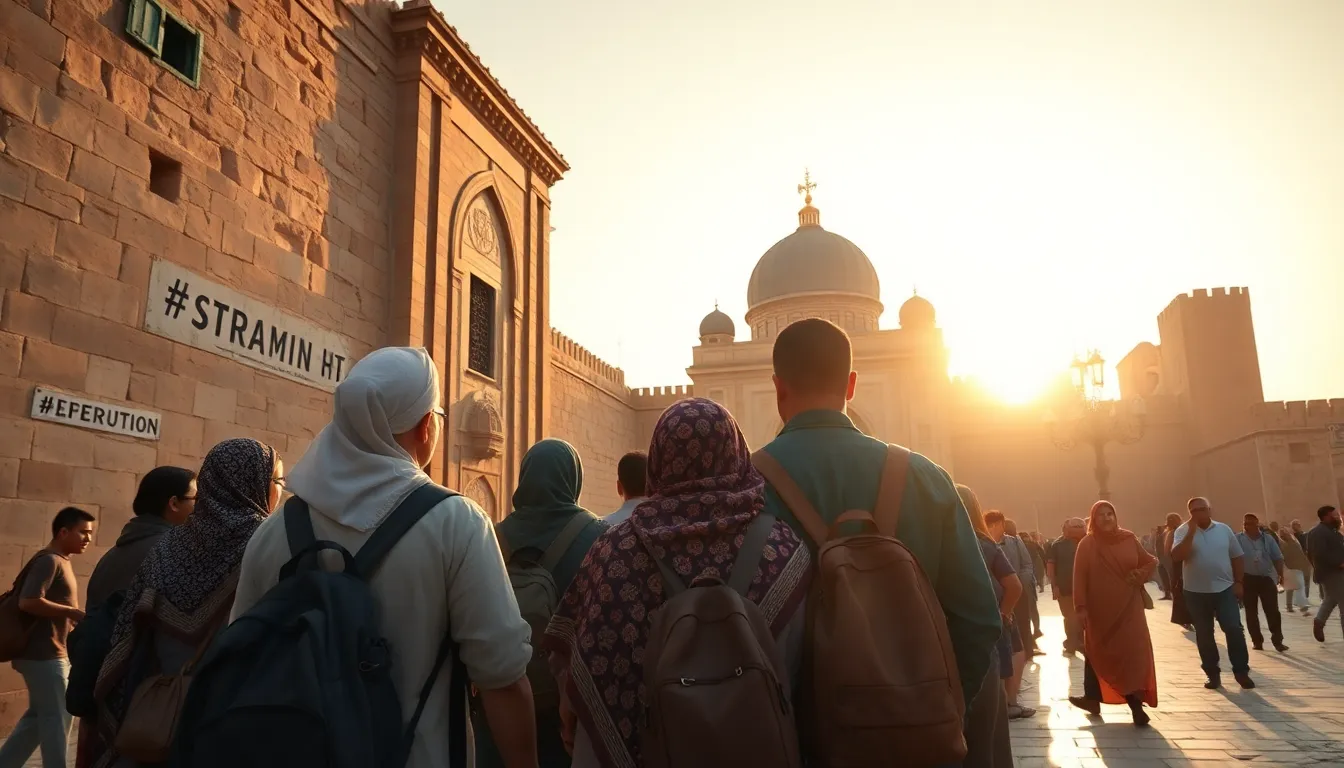
One of the most common worries I hear from a pastor or rabbi planning an Egypt trip has nothing to do with safety or visas. It is this: “I have a few members who would love to come, but they can’t do stairs and long walks anymore. Do I have to tell them no?” And my answer, almost always, is no, you do not. You plan around it. A well-led group with mixed mobility does not leave its slower members behind. It builds the trip so everyone is included in the parts that matter most.
I have taken groups to Egypt that included marathon runners and people using walkers on the same itinerary. It works. But it works because of planning done long before anyone arrives at a site, and because the group leader and I are honest with each other from the start. Let me walk you through how I think about it.
Be Honest About What Egypt Asks of a Body
I will not soften this, because honesty serves your group better than optimism. Egypt is a physically demanding destination in places. The great ancient sites were not built with accessibility in mind. The Valley of the Kings involves walking and ramps and the descent into tombs. Karnak and Luxor are vast, with uneven ancient stone underfoot. The heat between April and September adds real physical load on top of the walking. Some sites have steps with no railing and surfaces that shift under your feet.
None of this makes Egypt off-limits to travelers with limited mobility. It makes Egypt a destination you plan deliberately. The leaders who get into trouble are the ones who assume everyone can do everything and discover the gap at the entrance to a tomb. The leaders who succeed know each person’s real capacity before they leave home.
Start With an Honest Mobility Conversation
The foundation of an inclusive trip is information, gathered early and without embarrassment.
I ask group leaders to have a frank, kind conversation with each member who has any mobility consideration, and to get specifics. Can they walk on flat ground for twenty minutes, or is five their limit? Can they manage a flight of stairs with a railing? Do they use a cane, a walker, or a wheelchair, sometimes or always? How do they do in heat? Is the concern stamina, balance, joints, breathing, or something else?
This is not nosy. It is the opposite. A leader who knows that Margaret can do flat walking comfortably but cannot manage tomb descents can plan Margaret a wonderful day at every site, with a graceful alternative exactly where she needs one. A leader who does not ask discovers the problem in front of the whole group at the worst moment. Specifics, gathered with warmth, are what let us include everyone.
Match the Itinerary to the Group
Once we know the group’s real range, we shape the trip around it. There are several levers we pull, and we usually use more than one.
Choose the Right Season
Heat is a mobility issue in disguise. A site that is manageable in November can be punishing in June for someone with limited stamina. For groups with mixed mobility, I lean hard toward the cooler months, October through March, when the physical load drops and everyone has more in the tank. I write about this in detail in the season-by-season Egypt guide, and for mixed-mobility groups it is one of the most important decisions you make.
Build in Pacing, Not Just Stops
A demanding itinerary exhausts everyone, but it removes the slower travelers first. We build genuine pacing into mixed-mobility trips: fewer sites per day, real rest built into the schedule, midday breaks during the hottest hours, and hotels chosen partly for how restful they are. A slightly less packed itinerary is not a lesser trip. For a mixed group, it is a better one, because everyone is present rather than depleted.
Plan Graceful Alternatives at Demanding Sites
This is the heart of inclusive planning. At a site with a hard section, like a tomb descent or a long uneven approach, we plan in advance what a less mobile traveler does instead, and we make it dignified rather than a consolation prize. That might mean a shaded seated spot with a beautiful view while others descend, time with the guide telling the story at an accessible point, or a nearby section that is just as meaningful and far easier to reach. The goal is that the person who skips the hardest climb is not sitting alone in a parking lot. They are still inside the experience.
Use the Right Equipment and Support
We arrange the practical supports that make a difference: vehicles that are easy to board, wheelchairs where they help, guides briefed in advance on each traveler’s needs, and enough staff that no one is ever left to manage alone. Cairo’s Coptic and Jewish sites are largely navigable, and we know which sites accommodate wheelchairs and which do not, so we can plan honestly rather than hopefully.
Protect the Dignity of Your Less Mobile Members
The logistics are only half the job. The other half is emotional, and it is led by you.
The travelers I worry about most are not the ones who cannot climb. They are the ones who feel they are slowing everyone down. A person who senses they are a burden will start declining things they could actually do, shrinking their own trip to avoid being trouble. The leader’s job is to make sure that never happens.
The tone you set matters enormously. When alternatives are planned in advance and offered as a normal part of the day rather than a special accommodation, no one feels singled out. When the group culture treats including everyone as simply how this community travels, the slower members relax and participate fully. I have watched a whole group quietly reorganize a moment so an older member could be at the center of it, and those are some of the most moving things I see in this work. That culture comes from the top. Set it early, and your group will carry it.
A Word on Honest Self-Assessment
Encourage your members to be realistic with themselves, kindly. Some travelers will insist they can do more than they can because they do not want to miss out, and that can lead to a hard moment in the heat at a difficult site. A gentle, honest pre-trip conversation, paired with the reassurance that there is a good plan for every ability level, helps people make accurate choices. When someone trusts that skipping the hardest climb still leaves them a rich day, they are far more willing to make the wise call. This connects directly to the spiritual preparation you are already doing, because a group prepared in body and expectation is a group free to be present.
FAQ: Mixed Mobility on a Group Egypt Trip
Can someone with limited mobility join a group heritage tour to Egypt?
Yes, with deliberate planning. Egypt’s ancient sites are physically demanding in places, but a well-planned itinerary includes graceful alternatives at the hardest sections, sensible pacing, the right season, and proper support. We have taken groups that included both very active travelers and members using walkers on the same trip. The key is an honest conversation about each person’s real capacity well before departure so we can plan around it.
Which Egypt sites are hardest for travelers with mobility challenges?
The most demanding are the ancient sites with uneven stone and descents, including the Valley of the Kings tombs, the vast grounds of Karnak and Luxor, and any site with steps that lack railings. Heat between April and September compounds the difficulty. Cairo’s Coptic and Jewish sites are largely more navigable. We know which sites accommodate wheelchairs and which do not, so we plan honestly around each traveler’s range.
How do you keep less mobile members included rather than left behind?
We plan a dignified alternative at every demanding section in advance, so a traveler who skips a hard descent is still inside the experience, with a shaded view, time with the guide, or a nearby accessible section, rather than waiting alone. We pace the days, choose cooler seasons, arrange the right vehicles and equipment, and brief guides on each person’s needs. The leader sets a group culture where including everyone is simply how the community travels.
What is the best time of year for a mixed-mobility Egypt group?
The cooler months, October through March, are strongly preferable. Heat is a hidden mobility issue: a site that is manageable in November can be punishing in June for someone with limited stamina. Cooler weather lowers the physical load on everyone and gives slower travelers more reserve. For mixed-mobility groups, season is one of the most important planning decisions you make.
What information should I gather from members before the trip?
For each member with any mobility consideration, find out their comfortable walking distance on flat ground, whether they can manage stairs with a railing, whether they use a cane, walker, or wheelchair and how often, how they handle heat, and the nature of the limitation, whether stamina, balance, joints, or breathing. Gather it early and kindly. Specifics let us plan a full, included day for every person rather than discovering the gap at a site entrance.
No one in your community should have to stay home because they cannot do stairs anymore. With honest planning and the right tone from you, a mixed-mobility group travels Egypt together and stays together. Tell me about your members and what they can do, and I will build a trip where every one of them belongs. When you are ready, reach out to us, and explore how we structure these journeys on our group heritage tours page or the Egypt destination page.