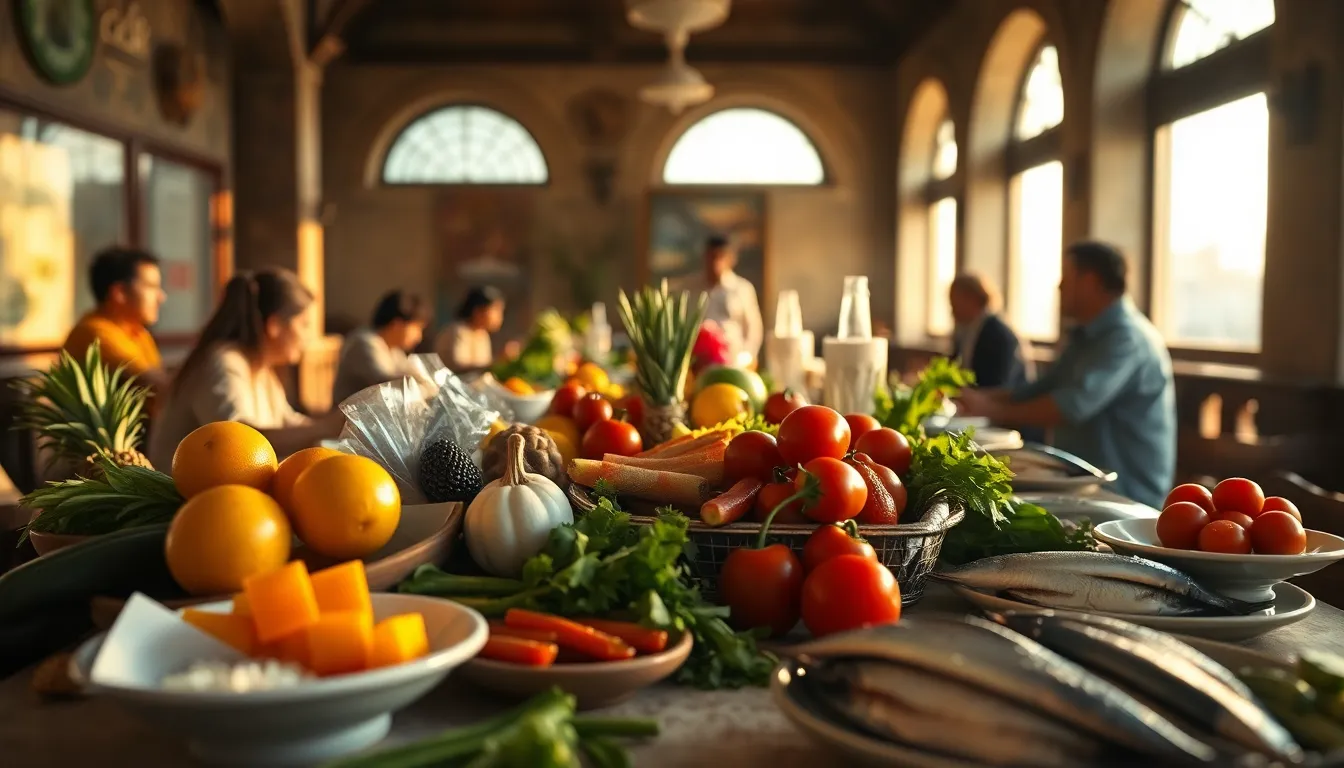
A few years ago I had a synagogue group where, in a single party of twenty-two, I was managing strict kashrut for nine people, two serious nut allergies, a celiac, a vegetarian, and a gentleman whose cardiologist had him on a low-sodium diet. The rabbi was a little anxious about it before we left. By the end of the trip he told me it had been the smoothest food experience he had ever had on a group journey of any kind. Not because Egypt is easy. Because we planned.
Food is one of the things group leaders worry about most and prepare for least. It feels like a detail to sort out on the ground, until you are standing in a Cairo restaurant with eleven different needs and no plan. So I want to give you the honest picture of how dietary needs work across a mixed heritage group in Egypt, and how we make sure no one ends up hungry, anxious, or singled out at the table.
Set Honest Expectations First
The most important thing I can tell you about food in Egypt is to calibrate expectations before you travel, because the worst food experiences I have seen came from surprise, not from scarcity.
Cairo is not Tel Aviv and it is not New York. There is no dense network of certified kosher restaurants. There is no aisle of familiar allergy-friendly packaged foods. What Egypt offers instead is an abundance of fresh, simple, naturally accommodating ingredients, and a hospitality culture that genuinely wants to feed you well. When a group understands that going in, they arrive ready to work with what Egypt actually offers rather than disappointed that it is not what they have at home.
So the first job of the group leader is expectation-setting. Tell your community, well before departure, what food on the trip will look like. Honesty here prevents a hundred small frustrations later.
Kosher: What Is Realistic and How We Manage It
For Jewish groups, kashrut is usually the central dietary question, and it deserves a direct answer.
There is no established kosher restaurant infrastructure in Egypt the way there is in Israel. What we arrange instead is kosher-style travel, built around what is reliably available and what we can bring in. That means fresh fruits and vegetables, fish, eggs, and sealed kosher products either brought from home or sourced from the limited kosher options in Cairo. For many groups, this works beautifully and never feels like a compromise.
When the Group Keeps Strict Kashrut
If strict kashrut observance matters to all or most of your members, we go deeper. We have detailed planning conversations in advance, we coordinate sealed and certified provisions, and we structure meals around what we can guarantee. We have done this successfully for many synagogue groups. It takes flexibility and a bit of good humor, and it has never once stopped a group from having a meaningful journey. What it requires is planning, which is exactly why we raise it early.
When Observance Is Mixed Within the Group
This is common and entirely manageable. Some members keep strict kashrut, others keep kosher-style, others have no restriction. The approach is the same as for any mixed need: we build meals with enough flexibility that the strictest observer is fully accommodated, and everyone else eats happily within that framework. The fresh produce, fish, and egg base of Egyptian cooking makes this far easier than people expect.
I cover the broader picture of dietary planning for Jewish trips in the complete Egypt group tour guide, and it pairs well with the spiritual preparation you are doing alongside it.
Halal: Usually the Simplest Need on the Trip
For groups that include Muslim members, or interfaith groups co-led across traditions, halal is generally the easiest dietary need to meet in Egypt. Egypt is a majority-Muslim country, and the default of most restaurants and kitchens is already halal. Meat is typically halal-slaughtered, pork is rarely present, and alcohol-free options are the norm.
The main thing to communicate to us in advance is the level of strictness around certification, so we can choose venues accordingly. But of all the dietary needs a mixed group brings to Egypt, halal is the one that fits the country most naturally.
Medical and Allergy Diets: Where Precision Matters Most
This is the category I treat with the most care, because the stakes are highest. A kosher preference is a question of observance. A severe nut allergy is a question of safety.
Tell Us Everything, in Writing, Early
For any medical or allergy diet, I ask group leaders to collect the specifics in writing before we travel: the exact allergen, the severity, whether the traveler carries an epinephrine auto-injector, and any cross-contamination concerns. Vague is dangerous here. “She doesn’t do well with nuts” is not enough. “Severe tree nut allergy, carries two auto-injectors, cannot eat food prepared in a kitchen that handles nuts” is what lets us protect that person properly.
How We Build the Safety In
With that information, we brief the kitchens and guides directly, we translate the critical needs into Arabic so there is no language gap at the moment it matters, and we identify safe options at each venue in advance rather than improvising at the table. For the most serious allergies, we plan specific meals around guaranteed-safe preparation. Travelers with medical diets, whether low-sodium, diabetic, celiac, or anything else, get the same advance treatment: we know the need before we arrive, and we plan the menu around it.
Travelers Should Carry Their Own Safety Net
I always advise members with serious allergies to bring their own backup supply of safe snacks and their medication in their carry-on, with the medication in clearly labeled original packaging. We build a safe trip, but personal preparedness is part of the safety net, and the most experienced allergic travelers always carry their own margin.
The Quiet Job: Making Sure No One Feels Singled Out
Here is the part that does not show up on any logistics checklist but matters as much as any of it. The goal is not just that the person with the restriction gets fed. It is that they never feel like a burden.
The way you handle this as a leader sets the tone. When dietary needs are planned in advance and handled smoothly by the team, the celiac is not standing awkwardly while a waiter is confused, and the kosher-keeping members are not negotiating in front of everyone. The food simply arrives. The person eats with everyone else. The restriction becomes invisible, which is exactly what most people with dietary needs most want on a trip.
That invisibility is a product of planning. It cannot be improvised. Every need you tell us about in advance is a moment of potential awkwardness we have already removed before your group sits down.
A Practical Checklist for Group Leaders
Before you travel, gather from every participant: any kashrut or halal observance and its strictness, any food allergies with severity and auto-injector status, any medical diet and its requirements, and any strong vegetarian or vegan preference. Get it in writing. Send it to us early, not the week before departure. The earlier we have the full picture, the more completely we can plan the food so it serves your community and disappears as a worry.
FAQ: Dietary Needs on a Group Egypt Trip
Can I keep kosher on a heritage trip to Egypt?
Yes, through kosher-style travel built around fresh produce, fish, eggs, and sealed kosher products brought from home or sourced in Cairo. Egypt has no established kosher restaurant infrastructure like Israel, so strict kashrut requires advance planning, which we do in detail with groups for whom it matters. We have managed this successfully for many synagogue groups. It takes flexibility and early coordination, and it has never prevented a meaningful journey.
Is halal food easy to find in Egypt?
Yes. Egypt is a majority-Muslim country, so most restaurants and kitchens are halal by default. Meat is typically halal-slaughtered and pork is rarely present. Halal is generally the simplest dietary need to meet on an Egypt trip. The main thing to share with us in advance is your group’s level of strictness around certification so we can select venues accordingly.
How do you handle severe food allergies on a group trip?
We require the specifics in writing before travel: the exact allergen, the severity, auto-injector status, and cross-contamination concerns. We then brief kitchens and guides directly, translate the critical needs into Arabic, and identify safe options at each venue in advance. For the most serious allergies we plan specific meals around guaranteed-safe preparation. We also advise allergic travelers to carry their own safe snacks and clearly labeled medication.
Can you accommodate multiple different diets in the same group?
Yes, and it is common. A single group may include strict kashrut, halal, allergies, and medical diets all at once. The key is collecting every need in writing before departure so we can build meals with enough flexibility to cover the strictest requirement while everyone eats comfortably. Egyptian cooking’s base of fresh produce, fish, and eggs makes accommodating a mixed group far easier than most leaders expect.
What should each participant bring for their own dietary safety?
Travelers with serious allergies should bring a backup supply of safe snacks and their medication in their carry-on, in clearly labeled original packaging. Anyone with a strict requirement benefits from carrying a few familiar safe items as a personal margin. We plan a safe trip on the ground, but personal preparedness is part of the safety net, especially for medical and allergy needs where the stakes are highest.
Food does not have to be the thing you lie awake worrying about. With the right information in our hands early, a mixed group with a dozen different needs eats well, eats safely, and never feels divided at the table. Send us your group’s dietary picture as soon as you have it, and we will build the meals around your people. When you are ready to start planning, get in touch, and take a look at how we structure the whole experience on our group heritage tours page.