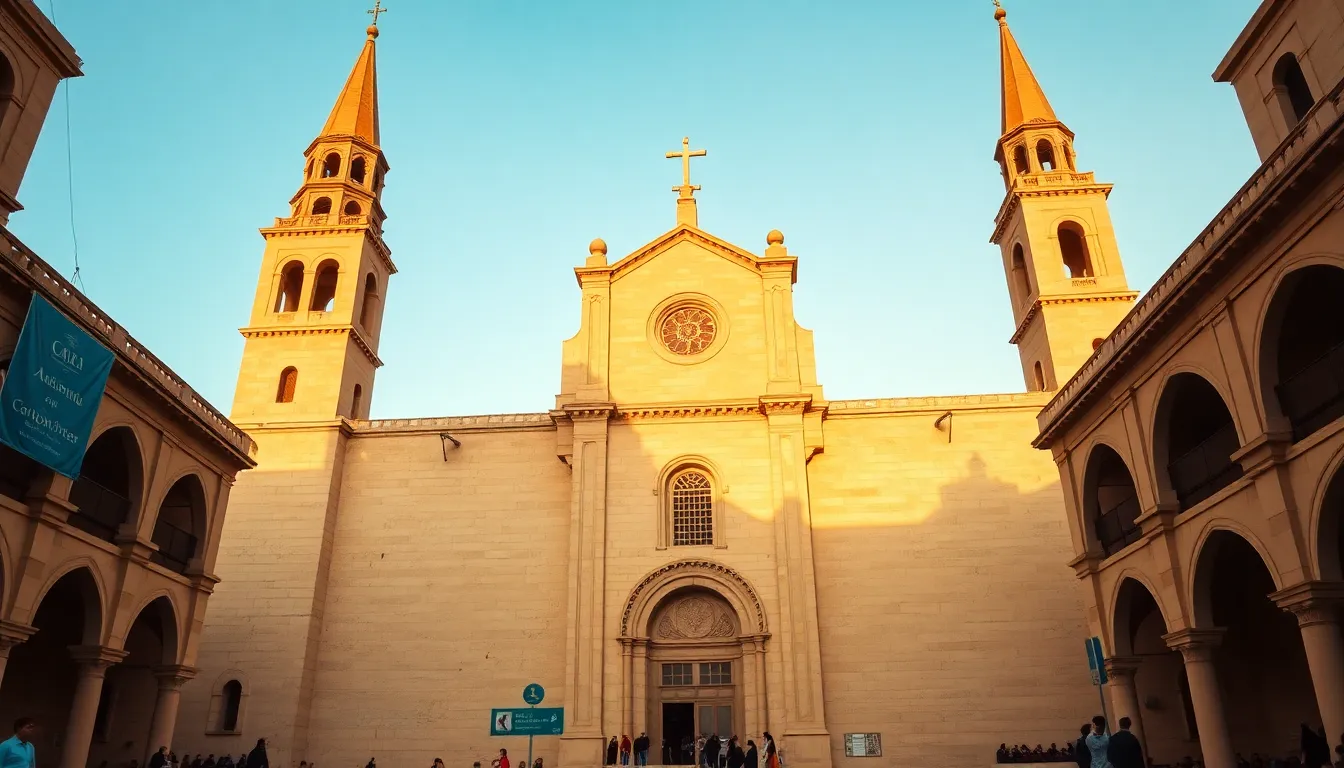
Most pastors come to me with the same assumption about Egypt: it is the Old Testament country, the place of Moses and the Exodus, and that is the whole of it. Then I tell them about the flight into Egypt, about a Coptic church older than most of European Christianity, about desert monasteries where the monastic life itself was born, and I watch the trip change shape in their minds.
Egypt is a New Testament country too. The Holy Family sheltered here. The earliest hermits and monks shaped Christian practice in these deserts. The Coptic Orthodox Church is one of the oldest continuous Christian communities on earth, and it never left. For a Christian group, ten days is the length that lets you trace both the Exodus arc and this deep Christian story without rushing either.
This itinerary is the pilgrimage week-plus I have refined for churches. It pairs naturally with our broader 8-day heritage itinerary, but it leans into the Coptic and biblical Christian story in a way the general framework does not.
Day 1: Arrival in Cairo
Groups land at Cairo International, usually in the afternoon. I never plan a site on arrival day. A church group off a long flight needs to settle, eat together, and rest. If energy allows, a short evening walk near Khan el-Khalili introduces the city gently. Then early to bed.
Recommended base: a hotel in or near Old Cairo, close to Coptic Cairo and the Egyptian Museum, since this quarter anchors the first part of the journey.
Day 2: The Egyptian Museum and Old Cairo
We start at the Egyptian Museum on Tahrir Square. For a Christian group, the value is context. Before you walk the Coptic and biblical sites, you see the civilization the whole biblical story unfolds against, the Egypt of pharaohs and dynasties and the world Moses was raised inside.
Spend focused time in the New Kingdom rooms, the period scholars associate with the Exodus. Then, in the afternoon, walk through Islamic Cairo and feel the layering of empires. The point is to arrive at Coptic Cairo tomorrow already aware of how many civilizations have lived on this same ground.
Reflection moment. In the museum garden, read aloud the opening of Exodus. The story you will trace all week begins here, in this Egypt.
Day 3: Coptic Cairo and the Flight into Egypt
This is the day the trip becomes unmistakably Christian.
The Hanging Church and Coptic Cairo
The Hanging Church, Al-Mu’allaqa, sits suspended above the old Roman water gate of Babylon. It is one of the oldest churches in Egypt, carrying centuries of Coptic liturgy in its icons, its worn wooden screens, its very air. For most Christian groups this is one of the most moving places in all of Egypt. The Coptic tradition descends directly from the earliest Christian communities, and the continuity of worship here is something you feel rather than learn.
The Church of Saints Sergius and Bacchus
A few steps away, the Church of Saints Sergius and Bacchus (Abu Serga) stands over a crypt where tradition holds the Holy Family sheltered during their flight from Herod. Whatever one makes of the specific claim, standing in that crypt and reading Matthew 2 gives the flight into Egypt a physical reality most Christians have never had. The infant Jesus, the long road south, the refuge in a foreign land. Egypt is one of the only places on earth where you can trace that early chapter on the ground.
Reflection moment. In the crypt or the courtyard, read Matthew 2:13-15 and let your group sit with the image of the Holy Family as refugees.
In the same quarter, Ben Ezra Synagogue and its famous Geniza tell the parallel story of Jewish Cairo. For a Christian group, it is a reminder that these communities lived side by side here for a thousand years.
Day 4: The Wadi Natrun Monasteries
About an hour and a half northwest of Cairo, the desert of Wadi Natrun holds some of the most important monasteries in Christian history. This is where Christian monasticism took its early shape, in the fourth and fifth centuries, as men withdrew into the desert to pray. The Monastery of Saint Macarius (Deir Abu Maqar) and the Monastery of the Syrians (Deir al-Surian) are still living, working monasteries with monks who pray the same hours their predecessors prayed 1,600 years ago.
I always slow the group down here. The point of Wadi Natrun is not architecture. It is continuity. You are standing in the cradle of the monastic movement that shaped Christian spirituality across the world, and it never stopped. The monks who greet your group are not reenactors. They are the living end of an unbroken line.
Reflection moment. Ask your group what it means that prayer has not stopped in this desert for sixteen centuries. Let the silence of the place answer.
Day 5: The Land of Goshen and the Nile Delta
The Delta northeast of Cairo is the biblical land of Goshen, where the Israelites settled and labored. Most operators skip it because it offers no dramatic spectacle. I include it because it grounds the Exodus story your group has read all their lives.
At Tell el-Dab’a, Austrian archaeologists have uncovered evidence of a Semitic population living in the eastern Delta during the period scholars connect to the Israelites. I am careful with this: archaeology is not literal proof of the text, and honest faith travel does not claim it is. What it does is show that the geography of the story is real. For most group members, standing in the flat green Delta and feeling the ordinary human texture of the story, the planting and harvesting and building and hoping, is more moving than any monument.
Reflection moment. Let your group stand in the Delta and say it plainly: this is where the story happened. Here.
Day 6: To the Red Sea and Into the Sinai
The drive from Cairo toward Suez takes about two hours across desert the fleeing Israelites would have crossed. We bring the group to the water, read the Song of the Sea from Exodus 15, and let the place carry the words in a way a sanctuary at home cannot.
Then we cross into the Sinai, through the Suez Canal and into a landscape of granite mountains and ancient silence. The drive to the Saint Catherine’s area runs four to five hours through the interior, often with a pause at the oasis of Feiran. Arrive at Saint Catherine’s for dinner, a briefing on the early ascent, and rest.
Day 7: Mount Sinai and Saint Catherine’s Monastery
This is the emotional peak of the journey.
The Ascent Before Dawn
The climb up Jebel Musa, the Mountain of Moses, begins around 2:00 or 3:00 a.m. to reach the summit by sunrise. The mountain rises to 2,285 meters (7,497 feet). The Camel Path takes two to three hours, ending with the steep 750 Steps of Repentance.
It is demanding, and the pre-dawn cold is real. Some members will struggle. And yet I have brought people in their seventies to the top, uncertain they could do it, and watched them call the sunrise the most important morning of their lives. You stand where the Torah says Moses received the commandments, and the weight of the place is undeniable.
Reflection moment. At the summit I read Exodus 19:3. No commentary. Just the text, the place, and silence.
Saint Catherine’s Monastery
At the base of the mountain, Saint Catherine’s has stood since the sixth century, continuously occupied for nearly 1,500 years, one of the oldest functioning Christian monasteries on earth. For a Christian group, the icon collection is among the finest in the world, including icons that survived the Byzantine iconoclasm only because of the monastery’s isolation. The library holds some of the most important early biblical manuscripts outside the Vatican. And in the courtyard, the bramble traditionally identified as the burning bush still grows. Reading Exodus 3 beside it is an encounter that stays with people.
Day 8: The Eastern Sinai Coast at Nuweiba
The drive north to Nuweiba on the Gulf of Aqaba takes about two hours along one of the most beautiful coastlines anywhere, granite mountains dropping straight into clear water. After the intensity of Mount Sinai, this day is the exhale. Some scholars locate the sea crossing here, at the shallow stretch of the Gulf, so we take a second quiet moment at the water with the story. The rest of the day is rest, conversation, optional snorkeling, and an evening meal with the mountains behind you.
Day 9: Return to Cairo and the Grand Egyptian Museum
We return to Cairo, by road or by flight from Sharm el-Sheikh. If timing allows, I like to end the active part of the trip with the Grand Egyptian Museum in Giza and a view of the Pyramids. After a week tracing the Christian and Exodus story, seeing the full sweep of pharaonic Egypt one last time puts the whole journey in scale. The evening is for a group dinner and the beginning of goodbyes.
Day 10: Closing Circle and Departure
The last morning is for one meaningful gathering, not more sites. I recommend a quiet corner of Coptic Cairo, near the Hanging Church or the crypt where the journey turned Christian on Day 3. Read a passage that speaks to refuge, deliverance, and homecoming. Give each person a moment to name one thing they are carrying home. Group leaders tell me this circle is what they remember most. Then flights depart from Cairo International.
Many of our churches extend this into a combined Egypt and Holy Land pilgrimage, following the Holy Family and the Exodus from Egypt into Israel. Our Egypt destination page explains how we build the combined journey, and our group heritage tours page covers the group leader experience. For seasonal timing, including the Coptic calendar and Easter, see our best time to visit Egypt guide.
FAQ: 10-Day Christian Heritage Itinerary for Egypt
What makes Egypt a Christian heritage destination, not just an Old Testament one?
Egypt holds the flight into Egypt, the crypts and churches where tradition places the Holy Family, the Coptic Orthodox Church as one of the oldest Christian communities on earth, and the desert monasteries of Wadi Natrun where Christian monasticism began. The Exodus story is here too, but Egypt’s Christian heritage is just as deep and far less expected.
Should we visit the Wadi Natrun monasteries?
If your group cares about the roots of Christian spirituality, yes. Wadi Natrun is where monasticism took shape in the fourth and fifth centuries, and the monasteries are still living communities. It is one of the most quietly powerful days on the itinerary.
Can a Christian group climb Mount Sinai?
Yes. The pre-dawn ascent is demanding but achievable for most healthy travelers, and it is the emotional peak of the trip for many groups. We plan pacing around your group’s ages and fitness, and cooler months make the climb easier.
Is ten days too long for a first Egypt pilgrimage?
For a Christian group that wants both the Coptic and biblical Christian story and the Exodus arc, ten days is right. It gives Wadi Natrun, the Holy Family sites, the Delta, and Mount Sinai room to breathe. A shorter trip would force you to cut one of them, and each is worth the time.
Can you combine this with the Holy Land?
Yes, and many of our churches do. Following Egypt with Israel traces the Holy Family and the Exodus from Egypt into the Promised Land. We coordinate the full combined pilgrimage, arrivals in Cairo and departures from Tel Aviv.
If you are a pastor or church leader picturing your congregation on this journey, I would love to talk. Not to sell you a trip, but to understand what your community is hoping to encounter in Egypt and whether this pilgrimage framework fits your people. Reach out when you’re ready, and let’s begin the conversation.