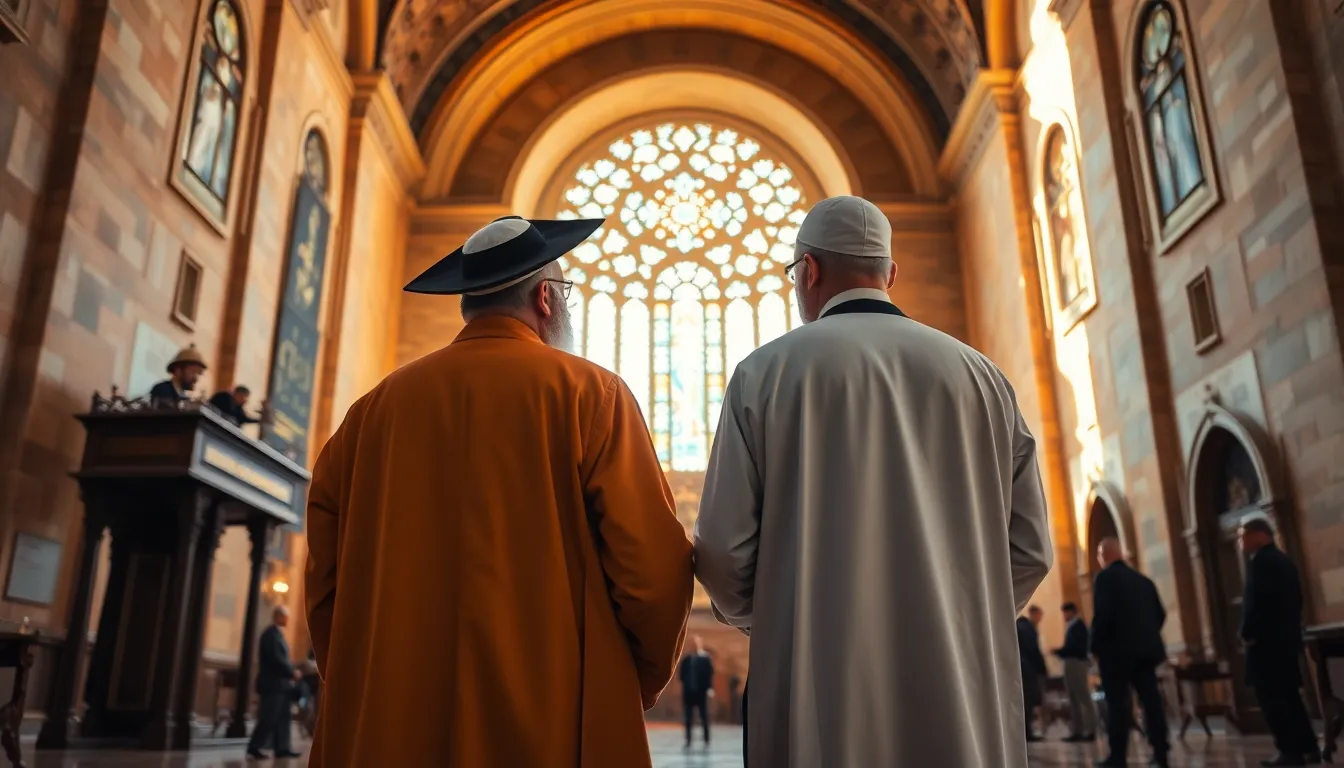
Some of the most powerful trips I have ever run were led by two people who would not, on paper, seem to belong on the same itinerary: a rabbi and a pastor, standing side by side in Old Cairo, each speaking from their own tradition about ground they both hold sacred. I remember one in particular, where the rabbi read from Exodus at a Jewish site in the morning and the pastor read from Matthew’s Gospel at a Coptic church in the afternoon, both within a short walk of each other, and the two groups that had arrived as separate congregations left as something closer to one community. That is what an interfaith Egypt trip can do. It is also a trip you have to lead with real care, because it is easy to do badly.
If you are a clergy leader considering co-leading an Egypt journey with a counterpart from another tradition, I want to give you the honest version: what makes these trips extraordinary, where they go wrong, and how to lead one so that both traditions get their full weight rather than a polite, watered-down blend that serves no one.
Why Egypt Is the Right Place for an Interfaith Trip
Not every destination invites both traditions equally. Egypt does, and that is not an accident of marketing. It is the actual geography and history of the place.
The Exodus is foundational to both Judaism and Christianity. It is the central liberation narrative of the Hebrew Bible and it is woven through the Gospels and the entire Christian imagination. Both traditions read it, claim it, and are shaped by it. When a mixed group stands in the land of Goshen or looks toward the Red Sea coast, they are standing in a story that belongs to all of them.
And the sites themselves sit in conversation. In Old Cairo’s Coptic Quarter, the ancient Ben Ezra Synagogue and the Church of Abu Serga are within walking distance of each other. The Septuagint, the Greek translation of Hebrew scripture that shaped the early church, was produced in Alexandria. These are not competing claims on the same ground. They are layers of one story. Egypt does not force the two traditions into an artificial harmony. It reveals a harmony that was already there. I lay out more of this convergence in the complete Egypt group tour guide.
The Core Principle: Full Weight, Not Watered Down
Here is the mistake that sinks interfaith trips, and I want to name it plainly so you can avoid it.
The instinct, when leading two traditions at once, is to soften everything into a generic, lowest-common-denominator spirituality where nobody is challenged and nobody is specific. The thinking is that vagueness keeps the peace. In practice, vagueness produces a trip where the Jewish travelers feel their tradition was thinned out and the Christian travelers feel theirs was too, and everyone goes home a little disappointed without quite knowing why.
The trips that work do the opposite. They give each tradition its full, undiluted weight. The rabbi teaches Exodus as a rabbi, with all the depth and particularity of the Jewish reading. The pastor teaches the flight into Egypt as a pastor, with the full theological richness of the Christian one. Nobody is asked to flatten their faith to be polite. And precisely because each tradition is offered fully, the travelers from the other tradition receive something real to encounter rather than a blur.
Specificity is not divisive. Specificity is the gift. The deepest interfaith respect is letting each tradition be completely itself, in front of the other, with honesty and confidence.
How to Divide and Share the Leadership
Co-leading is a craft, and the logistics of who leads what shape the whole experience. A few principles I have watched work.
Let Each Leader Own Their Sites
The natural structure is to let each leader take primary teaching responsibility at the sites that belong most to their tradition. The rabbi leads at Ben Ezra Synagogue and the Exodus sites. The pastor leads at the Coptic churches and the Holy Family sites. Each speaks from strength, from deep knowledge, and the group gets the real thing at every stop rather than a generalist gloss.
Invite, Do Not Just Hand Off
The richest moments come when the leader who is not teaching does not simply step back, but participates. When the rabbi, at a Coptic church, offers a reflection on what this story means seen through Jewish eyes, or the pastor, at a Jewish site, speaks about what the Exodus means to Christian faith, the group witnesses genuine encounter rather than two parallel trips sharing a bus. That mutual presence is the thing your travelers will remember.
Agree on the Hard Edges in Advance
You and your co-leader should talk, before you ever leave, about where the theological edges are and how you will handle them. There are points where the traditions read the same text differently, sometimes in ways that matter deeply. The answer is not to avoid those points. It is to agree in advance that you will name the difference honestly and respectfully rather than papering over it. Travelers can feel evasion. They trust honesty. Decide together how you will hold the disagreements with grace.
Prepare Both Communities Before They Travel
An interfaith trip needs more preparation than a single-tradition one, not less, because you are forming one group out of two communities who may not know each other.
I encourage co-leaders to do some joint preparation before departure: shared sessions where both communities learn the story together and begin to know one another. The general principles of spiritual preparation all apply, with an added layer. Prepare each community to receive the other’s tradition with curiosity rather than guardedness. Set the expectation that they will hear teaching from a tradition not their own, and frame that as one of the gifts of the trip rather than something to endure. A group that arrives already mixing, already curious about each other, becomes one community far faster on the ground.
The Practical Details Still Matter
An interfaith group carries the full range of practical needs, often more of them, since you are combining two communities. You will likely have mixed dietary requirements spanning kashrut, halal, and medical diets all at once, and very possibly mixed mobility across two congregations of different ages. None of this is a problem. It simply means the planning conversation is a little fuller, and it is one more reason to start early and tell us everything about both communities up front. We handle the logistics so the two of you can focus on the leadership, which is the part only you can do.
A Note on Tone From the Two of You
The single biggest factor in whether an interfaith trip succeeds is the relationship between the two leaders, and how it is visible to the group. When a rabbi and a pastor clearly respect and enjoy each other, when they can disagree warmly and learn from one another in front of everyone, the whole group takes that as permission. The travelers relax. They start crossing the aisle themselves. The friendship between the leaders becomes the model for the friendship between the communities. So invest in that relationship before you travel. The trip your two communities experience will be a reflection of the one the two of you build first.
FAQ: Co-Leading an Interfaith Egypt Trip
Why is Egypt a good destination for an interfaith heritage trip?
Because both traditions hold the same ground sacred. The Exodus is foundational to Judaism and woven through Christianity, and the key sites sit in literal conversation. In Old Cairo, the ancient Ben Ezra Synagogue and the Church of Abu Serga are within walking distance. Egypt does not impose artificial harmony between the faiths. It reveals a shared story that was already there, which makes it an unusually natural place for a rabbi and pastor to lead together.
How do you keep an interfaith trip from becoming watered down?
By giving each tradition its full weight rather than blending both into a generic spirituality. The rabbi teaches Exodus with the depth of the Jewish reading, the pastor teaches the flight into Egypt with the richness of the Christian one, and neither flattens their faith to be polite. Specificity is the gift, not the threat. When each tradition is offered fully and honestly, travelers from the other tradition receive something real to encounter.
How should two clergy leaders divide responsibilities?
Let each leader take primary teaching at the sites that belong most to their tradition, so each speaks from genuine depth. But invite mutual participation: have the non-teaching leader offer reflections through their own tradition’s lens at the other’s sites. Agree in advance on where the theological differences lie and commit to naming them honestly and respectfully rather than avoiding them. The group remembers the genuine encounter between the two leaders most of all.
Do interfaith groups need different preparation than single-tradition groups?
Yes, more of it. You are forming one group from two communities, so joint pre-trip sessions where both learn the story together and begin to know each other pay off enormously. Prepare each community to receive the other’s tradition with curiosity rather than guardedness, and frame hearing unfamiliar teaching as a gift of the trip. A group that arrives already mixing becomes one community far faster on the ground.
Can interfaith groups still get the free leader benefit and standard logistics?
Yes. The same structure applies, including the free group leader policy at 15 or more participants, and we handle the full range of logistics for both communities at once. Interfaith groups often carry more varied dietary and mobility needs because they combine two congregations, which simply means a fuller planning conversation up front. We manage all of that so the two leaders can focus on the leadership only they can provide.
A trip led well by a rabbi and a pastor together does something few journeys can: it lets two communities discover that they have been reading chapters of the same story all along. If you and a counterpart are imagining leading Egypt together, I would be glad to help you build it so both traditions stand at full height. Talk to us when you are ready, and see how we structure these journeys on our group heritage tours page or the Egypt destination page.