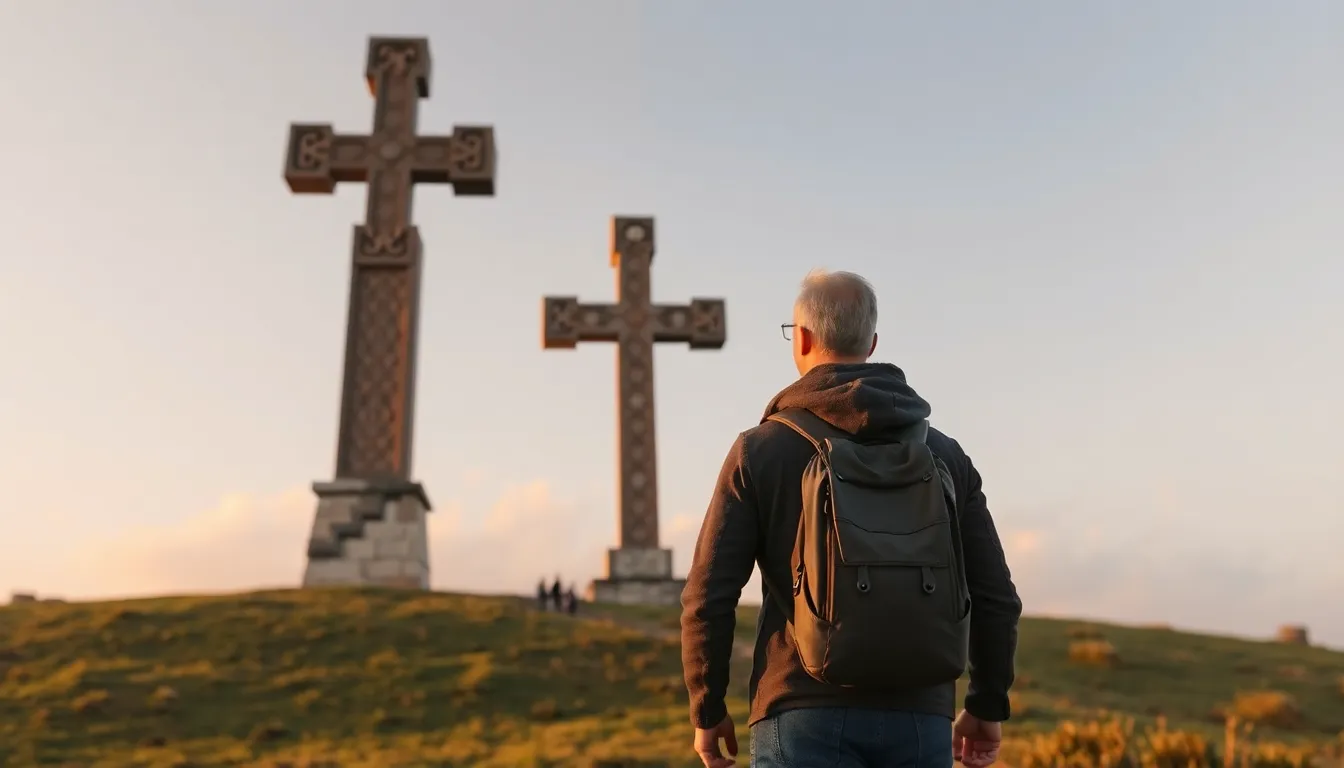
If this is your first time considering a faith heritage tour of Scotland, Wales, and Northern Ireland, I want to start by settling a worry I hear all the time. Group leaders call me half-apologizing that they do not know the history well enough to lead a trip here. Let me put that to rest. You do not need to be a church historian. You need to be a shepherd who wants to bring your people somewhere that will move them. The history, the logistics, the islands, the guides, all of that is what we handle. Your job is to lead your community. Mine is to make sure the ground is ready for them.
So here is the orientation I give every first-timer. Read this and you will understand what these three nations hold, how a trip flows, and how to take the first step without feeling like you need a degree in Celtic Christianity.
First, Understand What These Nations Are
This is the most important thing for a first-timer to grasp, and it is the thing the generic travel sites get wrong. Scotland, Wales, and Northern Ireland are not “the UK with castles.” They are three distinct nations, each with its own deep and separate Christian heritage, and this corner of the world is genuinely one of the great cradles of the faith.
This is the land where Christianity was carried across the sea by the early Celtic saints. It is where Patrick built his church, where Columba founded his community, where the Welsh chapels shook with revival, and where the Reformers and Covenanters held to their faith at real cost. These stories do not run through England. They are their own thread, and they are extraordinary.
To see how the regions and stories fit together, our United Kingdom destination page is the clearest place to start.
The Heritage Threads You Can Build a Trip Around
You do not need to know all of these in depth. You just need to know which one calls to your community. Here are the main threads.
Celtic Christianity and Iona. Off the west coast of Scotland sits the small island of Iona, where Columba founded a monastic community in the sixth century that became a beacon of Christianity for centuries. For many groups, Iona is the spiritual heart of the entire trip. Our deeper guide to Iona and Celtic Christianity is worth your time if this thread speaks to you.
The Welsh Revival of 1904. In 1904 a spiritual awakening swept through Wales, transforming chapels and communities and rippling out across the world. For groups moved by revival and by the Spirit working through ordinary people, the Welsh Revival trail follows the valleys and chapels where it began.
Patrick and Armagh. Northern Ireland holds the story of Patrick, the fifth-century figure who carried Christianity to Ireland and made Armagh his ecclesiastical center. The Patrick and Armagh story anchors a Northern Irish journey.
The Covenanters. In seventeenth-century Scotland, the Covenanters stood for their understanding of the faith against the crown, many of them paying with their lives. For communities drawn to courage under persecution, the Covenanters heritage trail is a sobering and powerful thread.
For a first trip, my advice is simple: pick one thread, or at most two, and build around it. You will come home wanting to return for the others. That is a good problem to have.
What a First Trip Actually Looks Like
Let me demystify the shape of it, because first-timers often imagine something far more complicated than the reality.
A typical first heritage tour runs eight to eleven days. You fly into a major gateway, often Edinburgh, Glasgow, or Belfast, and your local coach driver meets the group. From there you travel as a community to your chosen sites, with one significant encounter per day and unhurried evenings to process together.
A Scotland-first trip might base in Edinburgh, spend a day on the Reformation and Covenanters story, then travel west across to Mull and over to Iona for the heart of the journey. A trip combining Wales and Northern Ireland might pair the revival chapels of the south Welsh valleys with a crossing to Armagh and the Antrim coast.
The pace is gentler than people expect, and deliberately so. Some of the most meaningful moments do not happen at the sites. They happen at dinner, when your congregation talks about what they felt that afternoon at the abbey.
The Practical Things a First-Timer Needs to Know
You do not need to master these. You just need to know they are handled, and a few you should keep in mind.
The weather is changeable. Plan for rain in any season, and pack layers and waterproofs every day. Summer highs sit around 15 to 19°C (59 to 66°F), milder than many first-timers expect, and cooler in spring and autumn. The weather is part of the character of these places, and a prepared group ends up loving it.
The roads are slow and the islands need ferries. This is not a motorway destination. The best sites sit at the ends of single-track lanes and short ferry crossings, and a local coach driver handles all of it so your group never touches a steering wheel. Driving is on the left, and the islands run on ferry timetables we coordinate for you.
Currency is the pound. All three nations use pounds sterling. Cards and tap-to-pay work nearly everywhere, even on the islands, though a little cash is handy for honesty boxes at remote chapels and donation plates.
The terrain asks for sensible shoes. Abbey ruins, cobbles, churchyards, and coastal paths mean waterproof walking shoes with real grip. We build in rest and offer accessible alternatives where the ground is difficult, so mixed-age groups travel comfortably.
For the full practical picture, our travel tips for these nations go deeper on weather, driving, money, and packing. And if anyone in your group has mobility needs, read our guide to accessibility on UK heritage tours before you finalize anything.
When to Go, and How to Start
For a first trip, late spring (April and May) and early autumn (September) are the easiest windows. You get long daylight, mild weather, reliable ferry access to the islands, and crowds that have not hit their summer peak.
As for starting, here is the part that relieves most first-timers. You do not begin by building an itinerary. You begin with a conversation. You tell me about your community, what moves them, what they are hungry for, roughly when they could travel, and how many people might come. From there, we shape the trip together. You are never handed a fixed package and told to take it or leave it.
And one detail that changes the whole conversation for a first-time group leader: with Heritage Tours, the group leader travels free with 15 or more participants. That covers your full trip, flights, hotels, ground transport, ferries, site entries, and included meals. The person taking on the work of organizing the journey pays nothing to take it. If you want to understand what shapes the cost for everyone else, our guide to UK heritage tour costs lays it out plainly.
FAQ: First-Time Heritage Travel to the Celtic Nations
I do not know the history well. Can I still lead a group here?
Absolutely, and most first-time group leaders feel exactly the same way. You do not need to be a historian. Our local guides carry the historical and spiritual depth at every site. Your role is to lead your community spiritually and pastorally, which is the part no guide can do. We handle the history, the logistics, the islands, and the planning so you can focus on your people.
How long should a first heritage tour of these nations be?
Eight to eleven days is the sweet spot for a first trip. That gives you enough time to go deep on one or two heritage threads, like Iona and the Covenanters, or the Welsh Revival and the Patrick story, without racing across slow roads and ferry crossings. Trying to cover all three nations in a short first trip leads to a trip about the inside of a coach. Go focused, and you will want to return for the rest.
When is the best time of year for a first-timer to travel?
Late spring (April and May) and early autumn (September) are the most forgiving windows. You get long daylight for the drives and island crossings, mild weather, reliable ferries to Iona and the other islands, and lighter crowds than high summer. Summer works too, especially for families bound by a school calendar, but it is busier and books up earlier.
Do I need to plan the itinerary myself?
No. You start with a conversation about your community, not a spreadsheet. You tell us who your people are, what moves them, and roughly when and how many might travel, and we shape the itinerary with you from there. You are never handed a fixed package. The trip is built around your community’s story, with your input at every step.
What does it cost, and is it true that the leader travels free?
Heritage travel in these nations is not the cheapest trip, because of the remote sites, the ferries, and the specialist guides, but the group economics help a great deal. The group leader travels free with 15 or more participants, covering flights, hotels, ground transport, ferries, site entries, and included meals. For everyone else, the per-person cost depends on the length, season, and itinerary, and we always provide a fully transparent quote with no surprises.
If a trip like this is stirring in you, the first step is the easiest one. You do not need to know the history, build an itinerary, or have all the answers. You just need to want to bring your community somewhere that will move them.
Reach out whenever you are ready, or take a look at how we run our group heritage tours. I would love to help you take that first step.