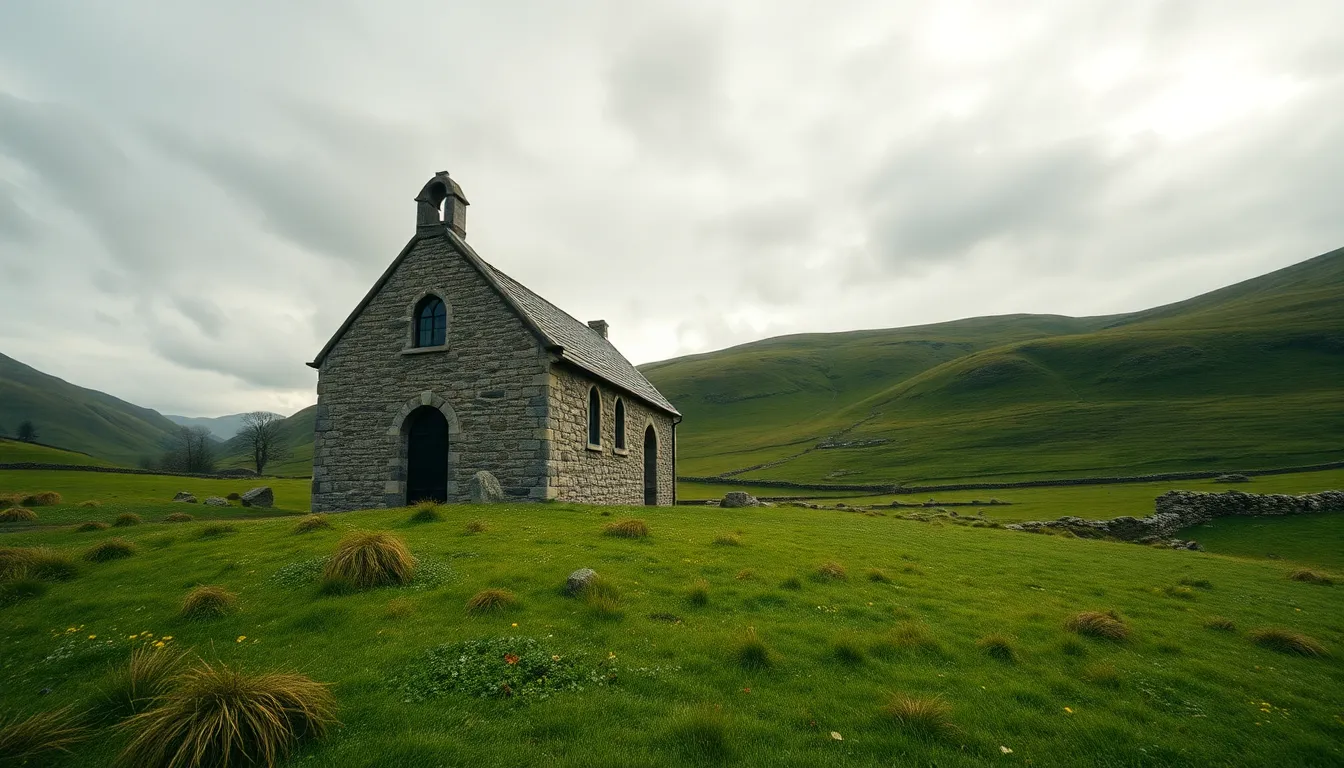
The first time I brought a group of pastors to Loughor, one of them stood outside the chapel and didn’t say anything for a long while. Then he said, quietly, “It started here. In a building this ordinary.” That is the thing about the Welsh Revival of 1904 to 1905. The places where it happened are not grand. They are plain chapels in working towns, set among coal country and chapel rows. And yet for about a year, something moved through this corner of Wales that people are still trying to understand more than a century later.
If you lead a congregation and you want your people to stand where a genuine awakening began, South Wales gives you that. Not a monument to it. The actual rooms. Let me walk you through the trail, because the geography of this revival is part of its meaning.
What Actually Happened in 1904
For about twelve months, beginning in the autumn of 1904, Wales experienced one of the most documented religious awakenings in modern history. The numbers that come down to us are striking. Roughly 100,000 people are believed to have made professions of faith during the revival year. Chapels that had been half empty filled to the doors. Prayer meetings ran past midnight. Mines and pits saw the texture of daily life change so sharply that there are accounts, some better attested than others, of pit ponies confused by the absence of the cursing they were used to hearing.
What I tell my groups is this. The revival did not look like a campaign. There was no advertising, no central organization, no famous building. It moved from town to town along the valleys, often carried by ordinary people who had been to a meeting and went home changed. That decentralized quality is exactly why a heritage trail through it works so well. You are not visiting one site. You are following a movement across a landscape.
Loughor and Moriah Chapel: Where the Fire Caught
The trail begins at Loughor, a small town just west of Swansea. This is where Evan Roberts, the young man whose name became attached to the revival, returned home in the autumn of 1904 and held the meetings that are usually marked as the start of it all. Moriah Chapel in Loughor is the building most associated with those first gatherings.
I want to be careful here, because the history gets simplified. Stirrings were happening in several places in Wales before Loughor, including under the preaching of Seth Joshua and the testimony of a young woman named Florrie Evans in Cardiganshire, who stood in a meeting and said simply that she loved Jesus with all her heart. That moment is often cited as a spark. So Loughor is the place where the revival became visible and gathered momentum, not the only seed. When I bring a group here, I make that point. It keeps us honest, and it actually makes the story richer.
Standing in Loughor, you understand the social setting. This was a chapel-going culture already, soaked in Welsh hymnody and Nonconformist tradition. The revival did not arrive in a spiritual vacuum. It poured into channels that generations of Welsh chapel life had already cut.
The Valleys: Following the Movement North and East
From Loughor, the revival spread through the industrial valleys of South Wales: the Rhondda, the Aberdare and Cynon valleys, Merthyr Tydfil, and onward. These were coal communities, dense with chapels of different Nonconformist denominations, Calvinistic Methodist, Congregationalist, Baptist, and others.
For a group, the valleys are where you feel the scale of it. Drive the Rhondda today and you still see the chapels, many of them now closed or repurposed, standing along the valley floors in numbers that startle first-time visitors. At the height of Welsh chapel culture, towns of a few thousand people might support a dozen or more places of worship. The revival of 1904 swept through all of it.
I usually build in time to stop in one of the valley towns and simply talk with the group about what sustained, and what did not. The revival’s intensity faded within about a year. Some who came in stayed for life. Others drifted. That honest reckoning matters for a congregation. Revival is not a permanent state. It is a visitation, and the question it leaves behind is what you build on it.
The Music: Hymnody as the Engine of the Awakening
You cannot understand the Welsh Revival without understanding Welsh singing. The revival ran on hymns. Meetings were often led not by a sermon but by singing, by spontaneous prayer, by testimony rising from the congregation rather than the pulpit. Evan Roberts himself frequently stepped back and let the meeting move where it would.
The hymn most associated with the revival is “Here Is Love, Vast as the Ocean,” sometimes called the love song of the revival. When I have a group that sings, and many faith groups do, we sing it in one of the chapels on the trail. There is no substitute for hearing those words in the acoustic of a Welsh chapel, the kind of building that was designed so that congregational voices would carry and blend. The architecture itself was built for sound.
Practical Notes for Leading a Group Through Revival Country
A few things I have learned over the years of bringing groups here.
First, the sites are spread out and many are small, so a coach and a knowledgeable local guide make an enormous difference. Some chapels are open by arrangement only. A good operator handles access in advance so your group is not standing outside a locked door.
Second, set expectations gently. This is not Jerusalem. There are no crowds, no major visitor infrastructure at most stops. The power of the trail is in its plainness, but a group expecting a polished attraction can be caught off guard. Tell them in advance what they are coming to see, and why the ordinariness is the point.
Third, pair it with the wider story. The revival connects naturally to other threads of British Christian heritage. Many leaders combine it with sites tied to the earlier Welsh Methodist awakening or with broader UK heritage routes. You can read about the wider landscape on our United Kingdom spiritual sites hub, and the story of Evan Roberts and the Welsh Methodist chapels sits right alongside this one.
FAQ: The Welsh Revival of 1904-05 for Faith Groups
Where exactly did the 1904 Welsh Revival begin?
The revival is most commonly traced to Loughor, near Swansea, where Evan Roberts held meetings at Moriah Chapel in the autumn of 1904. That said, stirrings were already underway elsewhere in Wales earlier that year, including in Cardiganshire under the preaching of Seth Joshua. Loughor is best understood as the place where the revival became a visible, spreading movement rather than the single point of origin.
How long did the Welsh Revival last?
The most intense period lasted roughly a year, from late 1904 through 1905. An estimated 100,000 people made professions of faith during that window. The fervor faded within about a year, though its effects on individuals, chapels, and Welsh communities continued for decades.
Can you actually visit the chapels where the revival happened?
Yes, though many are small and some are open by arrangement only. Moriah Chapel in Loughor is the central site. The chapels of the Rhondda and other South Wales valleys can also be included. Because access varies, it helps to travel with an operator who arranges entry in advance rather than arriving unannounced.
Is the Welsh Revival trail suitable for a group that is not Welsh or Methodist?
Very much so. The 1904 revival is studied across denominations as a case of genuine spiritual awakening, and the questions it raises about how revival begins, spreads, and fades resonate with any Christian congregation. Groups of all backgrounds find the plain chapels and the story of ordinary people carrying the movement deeply moving.
How much time should we budget for the revival sites?
A focused revival trail through Loughor and the valleys can be covered in a full day to a day and a half. Many group leaders fold it into a longer Welsh or wider United Kingdom heritage itinerary, pairing it with broader sites so the revival sits within the larger story of British Christian history.
If your congregation is drawn to the story of how a genuine awakening began in the plain chapels of South Wales, we would be glad to help you build a trail that does it justice. You can explore our wider programs at the United Kingdom destination page, see how the leader experience works on our group heritage tours, or simply contact us to start the conversation.