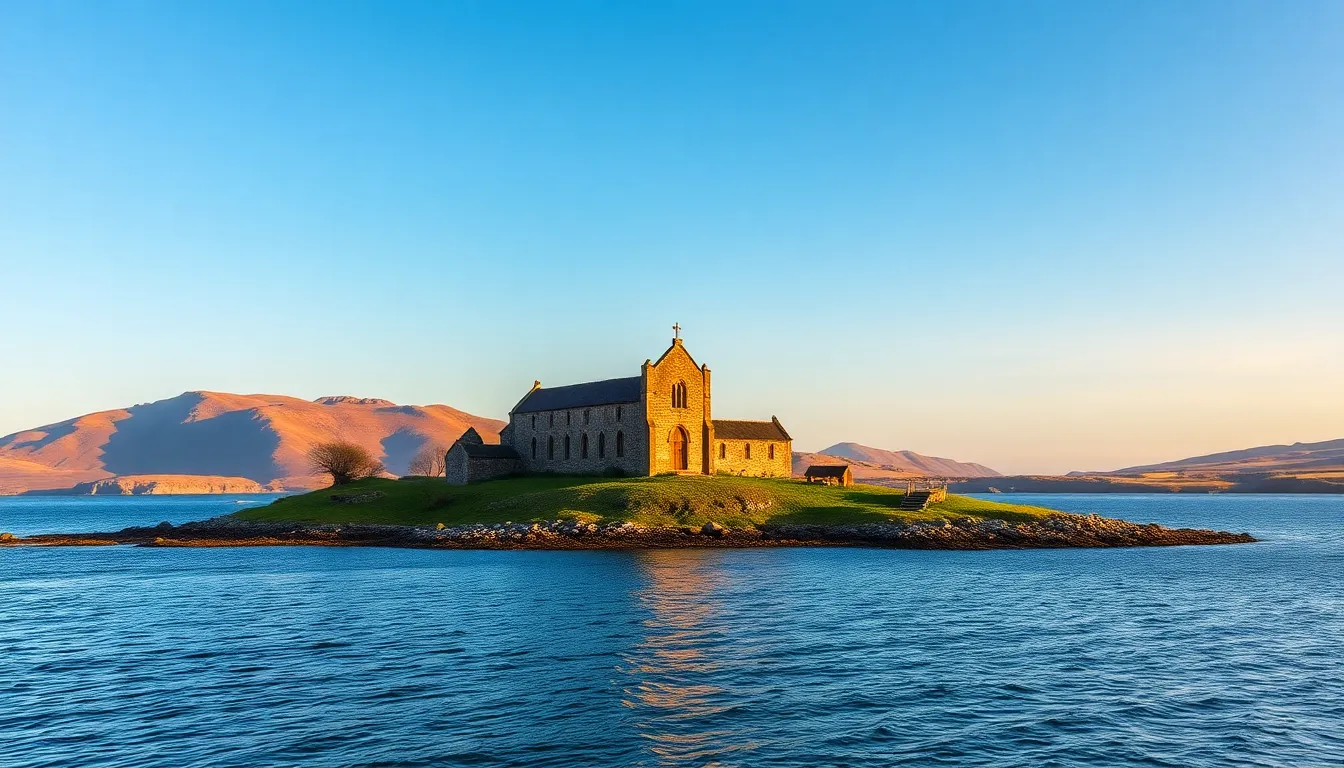
I have taken groups to a lot of grand cathedrals, places built to make you feel small. Iona does the opposite, and that is exactly why it lands so hard. You come off the ferry onto an island you could walk across in an afternoon, the wind is doing its thing off the Atlantic, and somebody usually says some version of the same sentence: “This is where it started?” Yes. This windswept scrap of rock off the west coast of Scotland is where a refugee monk and twelve companions built a monastery in 563 that would go on to christianize half of Scotland and reach deep into northern England. I have watched hardened pastors go quiet on Iona. There is something about the scale of it that tells the truth about how God tends to work.
Let me walk you through Iona the way I would walk you through it on the ground, because it rewards a leader who knows what they are looking at.
Why Iona Matters Out of All Proportion to Its Size
Iona is about three miles long and a mile wide. Fewer than two hundred people live there. And yet for roughly two hundred years it was one of the most important centers of Christian life in northern Europe.
The reason is Columba, an Irish monk of royal blood who left Ireland in 563 with a small band of followers and settled on Iona. From that base he and the monks who came after him evangelized the Picts of Scotland, trained missionaries, and sent them out. The monastery became a school, a library, and a launching point. When the gospel reached the north of England a generation later, it came from Iona, through the monastery at Lindisfarne, not from Canterbury in the south.
For a group leader, this is the headline. Iona is not a minor site you tuck into a Scotland itinerary as scenery. It is one of the two great roots of British Christianity, the Celtic root, as distinct from the Roman mission that landed in Kent. Standing here, your people are standing at a genuine source.
Columba and the Founding of the Monastery
The story behind Columba’s arrival gives the place its weight. Columba did not sail to Iona as a triumphant missionary. He came after a bitter dispute in Ireland that ended in a battle, and tradition says he left in penance, vowing to win for Christ as many souls as had died in that conflict. Whether every detail is exact or not, the shape of it is true to the sources. A man with a complicated past poured the rest of his life into something good, and it outlasted him by fourteen centuries.
He landed, the tradition holds, at a bay on the south of the island, and reportedly climbed a hill to confirm that Ireland was out of sight before he settled. That detail matters for a group. This was a clean break, a man building a new thing rather than running back to the old one.
The original monastery was a cluster of simple wooden and wattle buildings, a far cry from the stone abbey that stands now. But from that humble settlement the work radiated outward. Columba died on Iona in 597, the same year, by a striking coincidence of history, that the Roman mission under Augustine arrived in Canterbury at the other end of the island.
Iona Abbey: What You Actually See Today
The abbey your group walks into is not Columba’s monastery. It is a Benedictine abbey founded around 1200, then restored in the twentieth century by the Iona Community, an ecumenical Christian movement that still maintains worship there today. This matters to explain to your group so they understand the layering. Beneath and around the medieval stone lies the memory of the Celtic settlement.
Inside and around the abbey you will find the things worth lingering over. The high crosses, especially St Martin’s Cross, which has stood in the open air for over twelve hundred years, are among the finest surviving Celtic crosses anywhere. St Oran’s Chapel, the oldest intact building on the island, sits beside the Reilig Odhrain, the ancient burial ground where, by long tradition, dozens of early kings of Scotland were laid to rest. The restored cloister and the abbey church are working spaces of prayer, not a museum behind glass.
I always tell leaders to leave time for the worship rhythm of the Iona Community if the schedule allows. A short service in that abbey, with the sea audible outside, is the kind of moment people carry home.
The Mission That Christianized Scotland
Here is the part I make sure no group misses, because it is easy to look at the pretty crosses and forget what they represent. Iona was not a retreat. It was a base of operations.
From Iona, monks went out to the Picts in the Scottish mainland and highlands, learning, preaching, and planting communities. The monastery trained generations of missionaries. When King Oswald of Northumbria, who had been converted while in exile among the Iona monks, wanted to bring Christianity to his English kingdom, he sent to Iona for help. They sent Aidan, who founded the monastery at Lindisfarne in 635. From Lindisfarne the Celtic mission spread across northern England.
So the line runs Iona to Lindisfarne to much of northern Britain. This Celtic Christianity had its own character, monastic rather than diocesan, with its own way of calculating Easter and its own tonsure, differences that were eventually settled in favor of Roman practice at the Synod of Whitby in 664. But the evangelism came first, and it came from here.
When your group grasps that this small island sent the faith across a third of Britain, the place stops being quaint and becomes monumental.
How Iona Fits a Scotland or Wider UK Heritage Itinerary
Iona takes effort to reach, and that effort is part of the experience. From the mainland you drive across the Isle of Mull, take a short ferry to Iona, and arrive on foot, since most of the island is closed to cars. I tell leaders to embrace the journey rather than apologize for it. The slow approach prepares people.
For pacing, I recommend giving Iona a full day, with an overnight on Mull or Iona itself if your group wants the early morning and evening, when the day-trippers have gone and the island is quietest. That quiet is when Iona does its best work on people.
Iona pairs naturally with the wider story of Celtic and early British Christianity. Many groups link it with the journey of Columba from Ireland, or with the early saints of Wales and Ireland whose lives ran parallel to his. You can see how these threads connect across the islands in our overview of Christian heritage sites across the UK, and trace the man himself in our guide to Saint Columba’s footsteps from Ireland to Iona. Groups drawn to the Welsh and Irish founders often pair Iona with Saint David and St Davids Cathedral.
One practical note worth raising early with your congregation: with Heritage Tours, the group leader travels free when you bring fifteen or more participants. For a pastor building an island pilgrimage like this, that changes the math.
FAQ: Visiting Iona With a Faith Group
Why is Iona called the cradle of Celtic Christianity?
Because Columba founded his monastery here in 563, and from this island the Celtic Christian mission spread across Scotland and into northern England through Lindisfarne. Iona trained the missionaries, preserved the learning, and launched the evangelism that christianized much of Britain outside the Roman mission in the south. It was the source and the engine of the whole movement.
How do you get to Iona, and is it hard for older travelers?
You drive across the Isle of Mull and take a short passenger ferry to Iona, where most of the island is car-free, so there is some walking on foot. The terrain near the abbey is manageable, and we plan the pace around the group you bring. The journey takes a few hours from the mainland, which is why we usually give Iona a full day or an overnight rather than rushing it.
What is the difference between Celtic Christianity and the Roman mission?
Celtic Christianity, rooted in Iona and Ireland, was monastic in structure and had its own customs, including a different way of dating Easter. The Roman mission, which arrived in Canterbury in 597, was organized around bishops and dioceses. The two traditions met and the differences were largely settled at the Synod of Whitby in 664 in favor of Roman practice, but the Celtic mission did the early evangelizing of the north.
Is Iona suitable for non-Catholic and mixed Christian groups?
Yes. The abbey today is maintained by the Iona Community, an ecumenical movement, and the site speaks across denominations. Protestant, Catholic, and Orthodox visitors all find meaning here because the story predates the divisions of later centuries. It is one of the most genuinely shared sites in British Christian history.
How much time should a group spend on Iona?
A full day at minimum, and an overnight if your group wants the quiet early mornings and evenings after the day-visitors leave. That stillness is when Iona makes its deepest impression. Trying to do it as a quick stop fights the nature of the place.
If you are imagining an island pilgrimage like this for your congregation, I would be glad to help you shape it. The journey is part of the gift, and Iona repays every mile it takes to reach it. You can see how we build these trips on our United Kingdom heritage page or learn how the group experience works on our group heritage tours page.
Contact us whenever you are ready to start planning.