The question I wish more group leaders asked me earlier in the planning is this one: “We have three people who can’t manage a lot of stairs and one who uses a wheelchair. Can we still do this trip?” The answer is almost always yes, and the reason I want it asked early is that the honest answer depends entirely on which sites you choose and how we sequence them. Accessibility in Scotland, Wales, and Northern Ireland is not one condition. It changes site by site, sometimes ruin by ruin.
Let me give you the real picture, because vague reassurance helps no one. I would rather you know which abbey has fifty uneven steps before you stand at the bottom of them with someone in your group. For the broader on-the-ground practicalities, our practical heritage travel tips for these nations cover packing and pacing. This piece is about mobility, honestly.
Start With the Truth About Old Stone
Most of what your group has come to see was built between roughly 600 and 1500 years ago, by people who never imagined a coach, a wheelchair, or a hip replacement. That is the heart of the accessibility challenge. A medieval abbey was not designed for level access, and no amount of modern goodwill fully overcomes a spiral stair worn smooth by a thousand years of feet.
So the planning principle is simple: we do not try to force every site to work for everyone. We choose the right sites, build in the right rest, and find the meaningful experience at each one even when part of it is out of reach. A person who cannot climb the tower can still sit in the nave. The encounter is not lost. It is just shaped differently.
Cathedrals and Active Churches: Usually the Easiest
The good news is that the sites that often matter most spiritually are frequently the most accessible.
Active cathedrals and churches, places like St Davids in Wales, Armagh’s cathedrals, Glasgow Cathedral, are generally the best of the bunch for mobility. Because they remain working places of worship with regular congregations, most have invested in level or ramped access at a main entrance, accessible toilets, and seating throughout. The main worship space is usually reachable for a wheelchair user or someone who cannot manage stairs.
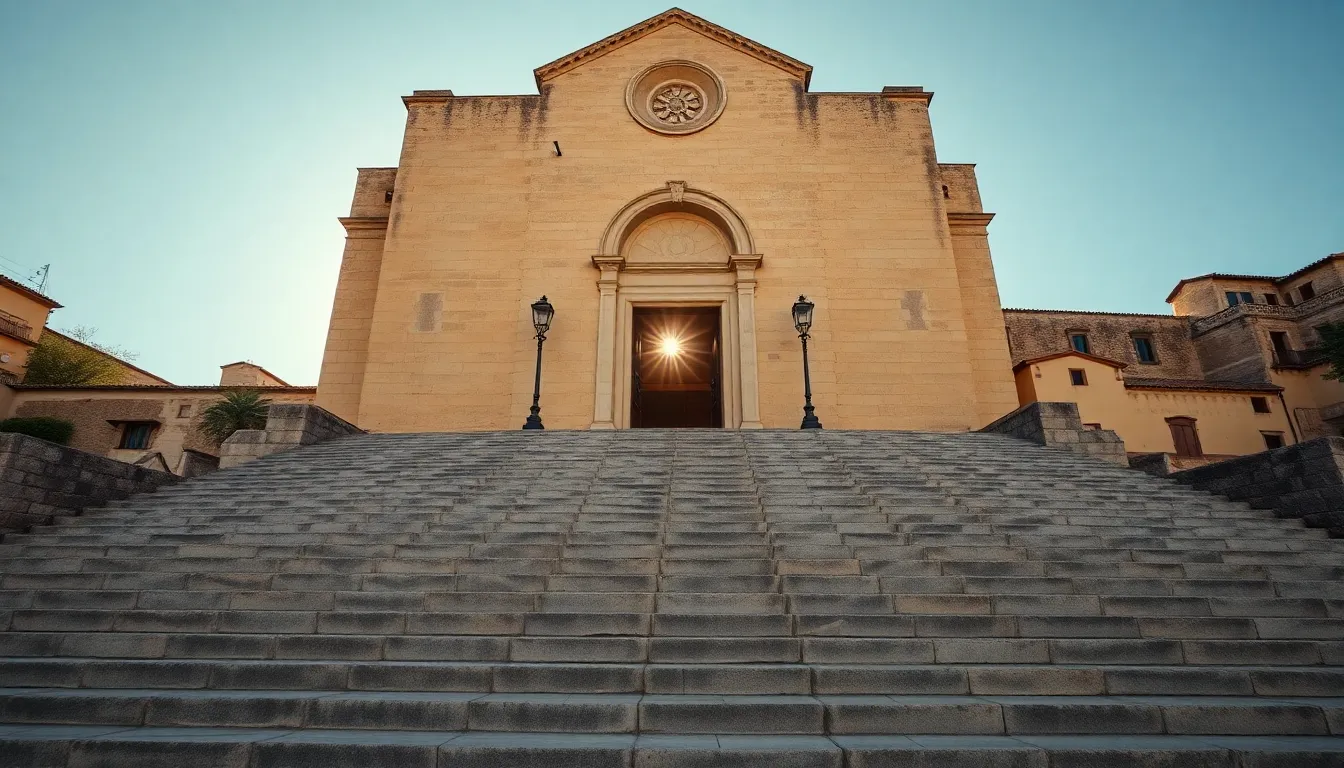
The caveats are real but manageable. Crypts, towers, and upper chapels are frequently up or down steps with no lift. Some approaches sit on a hill, St Davids famously sits below its surrounding land, reached down a flight known locally as the “Thirty-Nine Articles.” We plan for the hill, we find the accessible approach where one exists, and we make sure no one is left waiting alone while others climb.
Ruined Abbeys and Monastic Sites: Highly Variable
This is where it gets genuinely site-specific, and where honesty matters most.
Some major ruined sites have done real work on access. Many of the better-known monastic ruins now have firm, level paths across the principal grounds, visitor centers with accessible facilities, and at least a partial route a wheelchair user can follow. You can often reach the heart of the site and feel its scale, even if the cloister stairs or a remaining tower stay out of reach.
Others are essentially as the centuries left them: grass and gravel underfoot, uneven thresholds, no handrails, scattered steps. For a person with limited mobility these can be difficult and, in wet weather, genuinely unsafe on slick stone. When a site like this is central to a group’s hopes, I am direct in the planning call. We talk about what part of it is reachable, whether a companion can stay alongside, and whether a nearby accessible site might carry the same meaning with less risk.
The wider ground matters as much as the building. Even where a ruin has step-free access, the surface is often grass that turns soft after rain and gravel that resists a wheelchair. A folding travel wheelchair with larger wheels handles these surfaces far better than a slim indoor chair, and that single piece of equipment changes what is possible at half the sites on a typical itinerary.
Castles: The Hardest, and Honestly So
I will not soften this. Castles are the toughest category for accessibility, by design. They were built to be hard to enter and hard to move through, on high ground, behind gates, up spiral stairs. Edinburgh Castle, Stirling, the great Welsh castles like Caernarfon and Conwy: all reward the visitor with extraordinary history, and all present real mobility barriers.
That said, the picture is not all-or-nothing. Several major castles run accessible shuttles up the steep approach, have made the lower courtyards and key exhibitions step-free, and offer detailed access guides before you arrive. A wheelchair user often cannot reach the highest battlements but can reach a great deal of the lower site and the central story. We read each castle’s published access information in advance, decide together how much of it is worth attempting, and plan a comfortable alternative for anyone who would rather not.
Island Sites and Ferries: The Logistics Multiply
The island pilgrimage sites, Iona above all, add a layer of access planning that the mainland does not.
Reaching Iona means a ferry to Mull, a drive across the island, and a second ferry to Iona. The main passenger ferries are generally accessible to foot passengers, including wheelchair users, with crew accustomed to assisting at the ramp. The harder variables are the connections, the weather, and the ground once you arrive. Iona itself has step-free routes to the abbey along firm paths, which is a genuine gift, but a windy crossing on an exposed deck is its own consideration for a frail traveler.
Because island days involve multiple transfers and tide-and-weather timing, I plan them with extra margin for a group that includes members with limited mobility. We never schedule a tight island connection for a group that cannot move quickly. The full picture of these crossings is worth reading before you commit, and our guide to getting to Iona and the island sites walks through the ferries and timings in detail.
How We Build an Accessible Itinerary
In practice, planning an accessible heritage tour comes down to a handful of decisions made early:
- Lead with the accessible anchors. We build the itinerary around the cathedrals, active churches, and better-equipped sites that work for everyone, and treat the harder ruins and castles as choices rather than obligations.
- Sequence for rest. We avoid stacking two physically demanding sites in one day, and we build genuine rest into the schedule rather than apologizing for it later.
- Plan the coach and parking. A coach that can drop close to a site entrance changes the day entirely. We confirm drop-off points and accessible parking in advance, because the walk from the car park is often the real barrier.
- Equip honestly. A sturdy folding travel wheelchair, a folding stool for those who can walk but not stand long, and good footwear handle most of what these sites throw at a group.
- Name the trade-offs out loud. For each demanding site, we agree in advance who is climbing and who is resting, so no one is surprised or excluded in the moment.
Done this way, a group with a real range of mobility travels these nations together, and the people who cannot climb the tower still come home having met the place.
FAQ: Accessibility on UK Heritage Tours
Can a group with wheelchair users do a Scotland, Wales, and Northern Ireland heritage tour?
Yes, with honest planning. We build the itinerary around the most accessible anchors, active cathedrals and churches and the better-equipped sites, where step-free or ramped access, accessible toilets, and seating are common. The harder ruins and castles become choices rather than obligations, with a comfortable alternative for anyone who would rather rest. A folding travel wheelchair with larger wheels handles much of the grass and gravel ground.
Which UK heritage sites are the most accessible?
Active cathedrals and working churches are generally the easiest, because as places of regular worship they have usually invested in level or ramped entrances, accessible facilities, and seating throughout. The main worship space is typically reachable. Crypts, towers, and upper chapels are often up steps with no lift, so we plan around those specific features rather than the building as a whole.
Which sites are the hardest for limited mobility?
Castles and unimproved ruined abbeys. Castles were built on high ground behind gates and spiral stairs, though several now run accessible shuttles and have made lower courtyards step-free. Ruined monastic sites vary enormously: some have firm level paths, others are grass, gravel, and scattered steps with no handrails. We read each site’s access information in advance and decide together how much is worth attempting.
Are the island ferries to Iona accessible?
The main passenger ferries are generally accessible to foot passengers, including wheelchair users, with crew used to assisting at the ramp, and Iona itself has step-free paths to the abbey. The real planning challenge is the multiple transfers, the exposed deck on a windy crossing, and tide-and-weather timing. For a group with limited mobility we schedule island days with extra margin and never plan a tight connection.
What should we bring to make sites more accessible?
A sturdy folding travel wheelchair with larger wheels for grass and gravel, a lightweight folding stool for those who can walk but not stand long, and genuinely good waterproof footwear for slick stone. Tell us about every mobility consideration in your group during planning, even the ones that feel minor, because they shape which sites we lead with and how we sequence the days.
The honest version of accessibility planning is the useful version. Tell me who is traveling and what each person can and cannot do, and I will build an itinerary that holds your whole group together without pretending the old stone is something it is not.
Contact us and let’s plan a tour that works for everyone in your community.