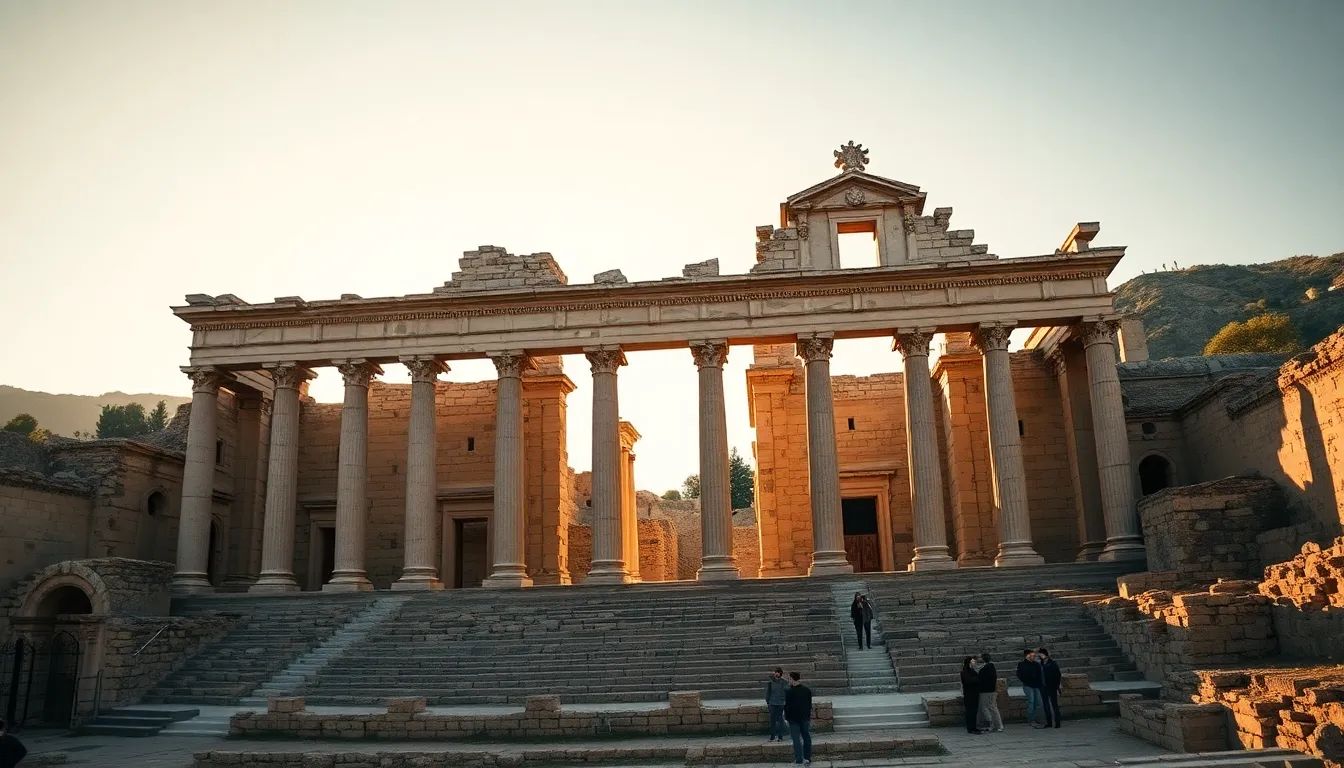
The first time I drove a group through the seven churches of Revelation, I made a mistake. I let us start at Laodicea because it was closest to where we had landed. By the time we reached Ephesus on the last day, exhausted and out of order, I realized I had handed my people the story backward. John did not address those churches at random. He started where the church started, at Ephesus, and worked his way around a real Roman postal road. Once I understood that, the whole trip changed. Now I run it the way the messenger would have carried the letters, and the group feels the logic of it in their bones.
If you are a pastor, a rabbi, or an educator thinking about Revelation 2 and 3 as something more than a sermon series, this is the guide I wish someone had handed me. The seven churches are not seven scattered ruins. They are one circuit, and they tell one story.
Why the Seven Churches Belong Together
John writes to seven specific congregations in the Roman province of Asia: Ephesus, Smyrna, Pergamon, Thyatira, Sardis, Philadelphia, and Laodicea. All seven sit in what is now western Turkey, within a few hours’ drive of one another. They were strung along a circular Roman road, and a courier carrying John’s scroll from Patmos would have landed near Ephesus and visited each city in the order they appear in the text.
That order is not decoration. It is a route. When you take your group through the cities in sequence, you are following the path the letters themselves traveled. For a faith group, that turns seven separate site visits into a single coherent pilgrimage. By the time you reach Laodicea, your people have heard all seven messages in the order John intended, standing in the seven places he meant.
This is also what makes the seven churches one of the cleanest heritage journeys to lead. The geography does the structuring for you.
The Seven Messages, City by City
Here is the spine of the trip. Each church received a message shaped to its situation, and each situation is still legible in the ruins.
Ephesus: The Church That Lost Its First Love
Ephesus heads the list, and rightly so. This was the largest of the seven cities, a port and a center of trade, and the place where Paul spent nearly three years. In Revelation 2, John commends Ephesus for hard work and for testing false apostles, but he delivers a hard line: “You have forsaken the love you had at first.” The call is to repent and return. Standing in the great theater, where Acts 19 records the riot of the silversmiths, your group feels the scale of what this church was and what it risked losing. I cover Ephesus in full in our Ephesus and the church of Revelation guide.
Smyrna: The Church Under Persecution
Smyrna, modern Izmir, receives one of only two letters with no rebuke. John praises a poor, persecuted church and warns of suffering to come, ten days of testing, and promises the crown of life to those who stay faithful unto death. Polycarp, the bishop of Smyrna, would later be martyred here, refusing to deny Christ at the age of eighty-six. The story of Smyrna is the story of faithfulness under pressure, and I give it its own treatment in our Smyrna persecuted church guide.
Pergamon: Where Satan’s Throne Stood
Pergamon sits on a steep acropolis crowned with temples, including the great altar of Zeus that many scholars connect to John’s phrase “where Satan has his throne.” The city was a center of imperial cult worship, and John commends the church for holding fast even where Antipas was killed. He also warns against the teaching of Balaam and the Nicolaitans. The view from that acropolis explains the letter on its own. Our Pergamon and Satan’s throne guide walks the site in detail.
Thyatira: The Working City
Thyatira receives the longest of the seven letters, which surprises people because it is the least visited and least preserved. This was a town of trade guilds, known for its dyers, and it is the hometown of Lydia, the seller of purple cloth Paul met in Philippi. John commends the church’s love and service but confronts the influence of “Jezebel,” who led some into compromise. I unpack Thyatira and its link to Lydia in our Thyatira and Lydia’s hometown guide.
Sardis: The Church With a Reputation
Sardis was an old, wealthy city, once the capital of King Croesus, and by John’s time it was coasting on past glory. The message is blunt: “You have a reputation of being alive, but you are dead.” The ruins here include a vast Roman gymnasium and one of the largest ancient synagogues ever excavated, a reminder that a strong Jewish community lived alongside the church. The call to Sardis is to wake up and strengthen what remains.
Philadelphia: The Open Door
Philadelphia, modern Alasehir, is the other church John praises without rebuke. It was a small congregation with “little strength,” yet faithful, and John promises an open door no one can shut. The remains here are modest, a few pillars of a Byzantine church, but the message is one many small congregations carry home. Faithfulness, not size, is what John honors.
Laodicea: Neither Hot Nor Cold
Laodicea closes the circuit, and the famous rebuke lands hardest when you understand the geography. The city was wealthy, known for banking, black wool, and an eye salve, and it piped in water that arrived lukewarm. John uses all three: lukewarm faith, wretched poverty dressed as wealth, blindness in a city famous for eye medicine. “Because you are lukewarm, neither hot nor cold, I am about to spit you out.” Ending here gives your group the sharpest message last, and it sticks.
How to Route the Circuit
I run the seven churches as a loop, and I keep the biblical order wherever the roads allow it. Here is the shape I recommend for most groups.
- Day 1: Ephesus, with a slow morning before the crowds. This is the anchor and deserves the most time.
- Day 2: Smyrna in Izmir, then north to Pergamon for the acropolis.
- Day 3: Thyatira at Akhisar, then Sardis with its gymnasium and synagogue.
- Day 4: Philadelphia at Alasehir, then Laodicea near Pamukkale to finish.
Four days covers all seven at a pace that leaves room to read the relevant passage at each site. Many groups add a fifth day at Pamukkale, the white travertine terraces beside Laodicea and Hierapolis, where Philip the apostle is traditionally buried. That stop pairs naturally with the end of the circuit. For the wider context of Turkey’s Christian sites, our spiritual sites in Turkey hub maps the whole landscape.
One thing I tell every pastor early, because it changes the budget: with Heritage Tours, the group leader travels free when you bring fifteen or more participants. For a congregation building a Revelation pilgrimage, that is worth knowing before you start counting heads.
Reading the Letters on the Ground
The practice that makes this trip is simple. At each of the seven cities, before anyone wanders off to photograph the ruins, gather the group and read that church’s letter aloud. Two or three minutes. Revelation 2:1 to 7 at Ephesus, 2:8 to 11 at Smyrna, and so on through 3:14 to 22 at Laodicea.
I have watched this turn a row of archaeological sites into a single thread of scripture. People start hearing the seven messages as a set, noticing the pattern John builds, the commendation, the rebuke, the call, the promise to the one who overcomes. By Laodicea, your group is not visiting their seventh ruin. They are hearing the last word of a letter they have been receiving all week.
If a full Revelation pilgrimage is taking shape in your mind, our Turkey destination page shows how we build these circuits, and the group heritage tours page explains how the group experience works.
FAQ: Touring the Seven Churches of Revelation
Where are the seven churches of Revelation located today?
All seven are in western Turkey, within driving distance of Izmir. Ephesus, Smyrna (Izmir), Pergamon, Thyatira (Akhisar), Sardis, Philadelphia (Alasehir), and Laodicea (near Pamukkale) sit along what was a circular Roman road. That is why they can be toured as one continuous loop rather than as separate trips.
In what order should a group visit the seven churches?
Follow the order in Revelation 2 and 3, which matches the route a courier carrying John’s letter would have traveled. Start at Ephesus, then Smyrna, Pergamon, Thyatira, Sardis, Philadelphia, and finish at Laodicea. Keeping the biblical sequence lets your group hear the seven messages in the order John intended.
How many days does the seven churches circuit take?
Four days covers all seven at a comfortable pace, with time to read each letter on site. Many groups add a fifth day at Pamukkale and Hierapolis, which sits beside Laodicea at the end of the route. We build the circuit into wider Turkey itineraries and can adjust the pace to your group.
Which of the seven churches are best preserved?
Ephesus and Pergamon have the most substantial ruins. Sardis has a remarkable gymnasium and one of the largest ancient synagogues ever excavated. Smyrna has its ancient agora. Thyatira, Philadelphia, and Laodicea have smaller remains but carry the same weight of scripture, and Laodicea’s excavations have grown considerably in recent years.
Can the seven churches be combined with other sites in Turkey?
Yes. Most groups pair the circuit with Istanbul and Hagia Sophia at one end and Cappadocia’s cave churches at the other. The House of the Virgin Mary sits beside Ephesus, so it folds naturally into the first day. We help groups decide which additions fit their time and focus.
If you are starting to picture this journey for your congregation, I would be glad to help you shape it. The route is real, the messages are sharp, and the story tells itself once your people are standing in the seven places John named. Contact us whenever you are ready to start planning.